

A Governor And A Mayor Step Aside After US Charges
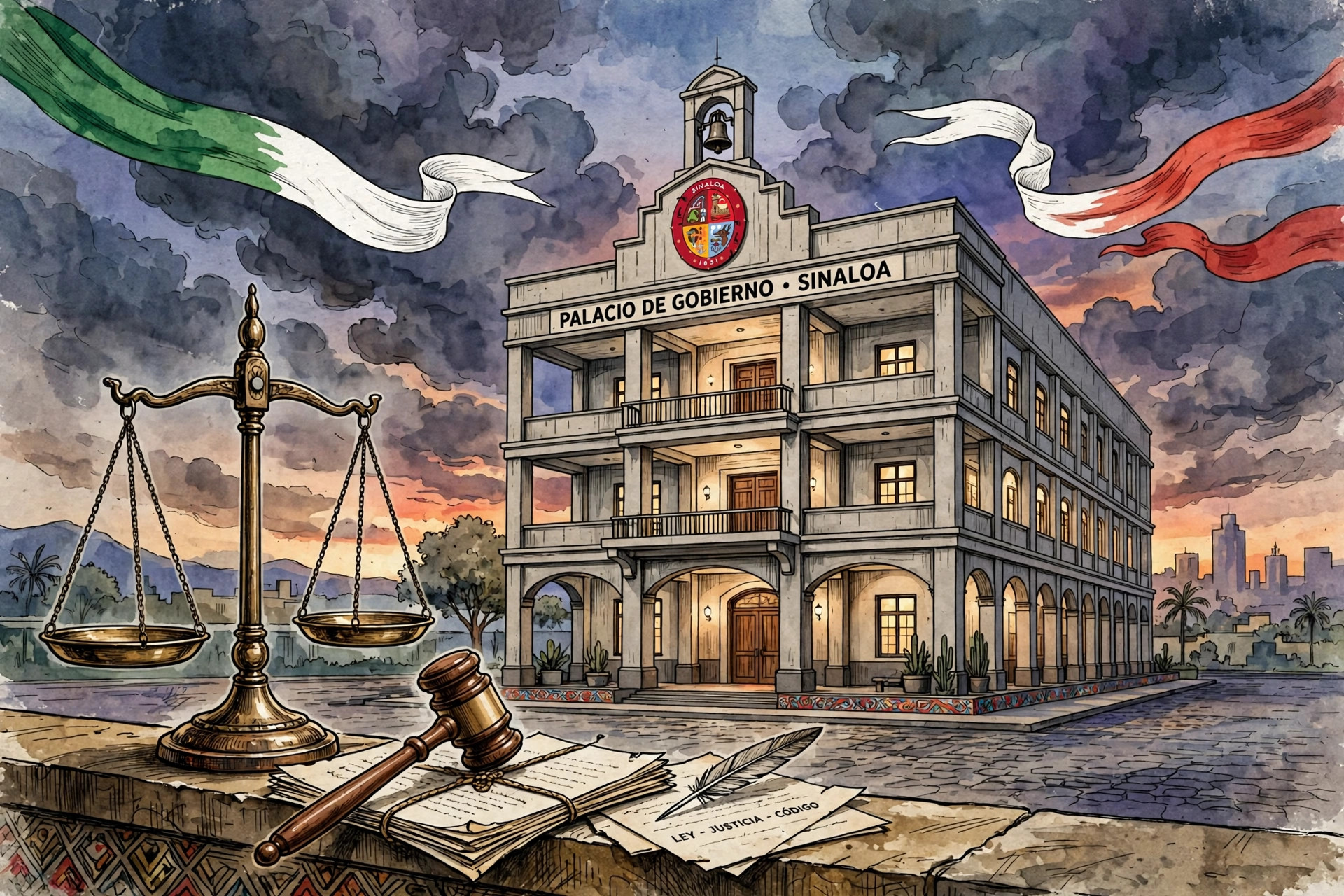
Sinaloa Governor Ruben Rocha Moya announced at midnight on Friday that he would take temporary leave from the office he has held for six years, after United States prosecutors charged him and nine other politicians and security officers with drug trafficking offenses allegedly linked to the Sinaloa cartel. Culiacan Mayor Juan de Dios Gamez Mendivil, the mayor of the Sinaloa state capital, also said he would take leave. Both men denied the charges against them. In a special vote on Saturday, Sinaloa’s local congress appointed Yeraldine Bonilla Valverde, an ally of Rocha and the state’s former secretary of government, as interim governor. The sequence, reported by the Associated Press on October 31, 2026, has shaken Mexico’s political establishment, not only because of who was charged, but because of what the case implies about the relationship between the two neighboring countries.
Rocha is the highest-ranking official named in the indictment, and that fact alone makes the case unusual. United States prosecutors have previously charged Mexican officials, including a former defense minister and a former security chief, but charging a sitting state governor marks a sharp escalation in Washington’s approach to alleged corruption linked to drug trafficking. Prosecutors allege that Rocha protected the Sinaloa cartel and helped it smuggle drugs into the United States in exchange for millions of dollars in bribes. Rocha has denied those allegations, calling them false and malicious, and he has said he is stepping aside to defend himself and to cooperate with the Mexican government’s investigation. Every allegation in this article must be read in that light: these are charges and claims made by prosecutors, denied by the accused, and not yet tested in a trial.
The distinction between stepping aside temporarily and resigning is legally significant, and it explains much of what followed. As governor and mayor, Rocha and Gamez Mendivil enjoy immunity from criminal prosecution, which requires Mexico’s Congress to first impeach them before they can face charges in Mexico. By taking temporary leave rather than resigning, they retain that immunity while they are away from office. The arrangement also allowed Sinaloa’s congress to install an interim governor without triggering a full succession crisis. Bonilla Valverde’s appointment, by a close ally of Rocha, has already drawn attention from critics who question how much will change in practice while Rocha’s political network remains in place, though supporters argue that a temporary leave followed by an orderly interim appointment is exactly what the state’s procedures are designed to produce.
What Prosecutors Allege, And What The Accused Say In Response
According to prosecutors, the ten charged officials worked with cartel leaders to move large quantities of narcotics into the United States, in exchange for political support and bribes. The indictment, unsealed in the Southern District of New York, is said to allege drug trafficking conspiracy and related weapons offenses, and to describe a protection arrangement in which officials allegedly used their positions to shield cartel operations. The United States attorney for the Southern District of New York has been reported as saying that ten people, including the governor, were accused of working with the Sinaloa cartel to distribute massive quantities of narcotics to the United States. Those are the prosecution’s claims, and they have not been proven in court.
Rocha’s response was swift and categorical. In a short video announcement at midnight on Friday, he denied accusations that he protected the Sinaloa cartel and helped it smuggle drugs into the United States for millions in bribes. He said he would take a temporary leave of absence to defend himself against what he called false and malicious allegations and to cooperate with the Mexican government’s investigation. Gamez Mendivil also said he would take leave and denied the charges. In later statements reported in Mexican media, Rocha has described the case as politically driven and has said he will challenge the allegations and demonstrate that they lack any basis. That denial is central to the story: without it, the reader would be left with only the prosecution’s version of events.
One of the most sensitive allegations concerns Rocha’s 2021 gubernatorial campaign. Prosecutors allege that the links extended to that campaign, with members of the cartel’s Chapitos faction accused of backing his bid by interfering in the vote, including by stealing ballots and ballot boxes and by kidnapping and intimidating opposition candidates. The Chapitos are the sons of jailed cartel co-founder Joaquin El Chapo Guzman, and United States authorities have linked some of those charged to that faction. Again, these are allegations, not findings. Rocha won the Sinaloa governorship in 2021 and has governed the violence-plagued state since then, as a prominent figure in the Morena party of President Claudia Sheinbaum and her predecessor. If the campaign allegations were proven, they would raise profound questions about the legitimacy of an election. Until they are tested, they remain claims that Rocha denies.
Other details reported about the indictment have added to its explosive character in Mexico. Some reporting has described handwritten lists said to show monthly bribe payments to officials, and has named other charged figures including a federal senator and a deputy prosecutor in the state attorney general’s office. Those details come from the prosecution’s filings and from reporting on them, and they should be treated as part of the prosecution’s case rather than as established fact. The full indictment runs to dozens of pages, according to reporting, and its contents will be debated in both countries for months. What is not in dispute is the scale of the political shock: ten current and former officials, spanning state and municipal government and law enforcement, charged together in a single American case.
Immunity, Impeachment And The Mexican Investigation
The legal path forward in Mexico is complicated by immunity. Under Mexican law, senior elected officials cannot simply be arrested and tried while they hold office; Mexico’s Congress must first go through impeachment proceedings to strip that protection. That process is political as well as legal, and it requires evidence that satisfies Mexican legal standards, not only American prosecutors. The Mexican attorney general’s office has said that, pending its own investigation, it would not arrest Rocha or the other accused officials as requested by the United States. That decision has been presented by Mexican officials as a matter of due process and sovereignty, and by critics in Washington as a refusal to act. Both descriptions reflect the political positions of their authors, and the underlying legal question remains unresolved.
Mexican authorities have announced their own investigation to determine whether the accusations made by United States authorities have legal grounds under Mexican law. A spokesperson for the attorney general’s office said in a video posted to social media that investigators would assess the case on its merits. That investigation matters for two reasons. First, it is the route by which any Mexican prosecution would have to proceed, since American charges alone do not automatically produce a Mexican trial. Second, its findings will shape President Sheinbaum’s political room to maneuver. If Mexican investigators find credible evidence of crimes under Mexican law, the president’s stated position is that the accused must face the law. If they do not, her government will face intense pressure from Washington to explain why American charges are not being acted upon.
The interim governorship adds another layer. Bonilla Valverde, who previously served as the state’s secretary of government, is an ally of Rocha, and her appointment by Sinaloa’s congress in a special vote on Saturday was a rapid response to the vacancy created by his leave. Supporters of the appointment argue that continuity is valuable in a state already struggling with violence and governance challenges, and that an experienced administrator from within the government is the safest choice for a temporary period. Critics argue that appointing a close ally risks the appearance, if not the reality, of a placeholder administration that protects the outgoing governor’s interests. Neither claim can be settled by the appointment alone. What can be observed is whether the interim administration cooperates fully with federal investigators, maintains public services, and addresses security in a state where cartel violence has already claimed many lives.
President Sheinbaum’s Balancing Act: No Protection, But Trial In Mexico
President Claudia Sheinbaum has tried to strike a balance that satisfies two very different audiences: her own party and public, who expect sovereignty to be defended, and Washington, which expects action against alleged cartel corruption. She has said she would not defend anyone found to have committed a crime, a statement that aligns with her party’s anti-corruption platform and reassures voters who want accountability regardless of party. At the same time, she has vigorously defended Mexico’s sovereignty, saying that if federal authorities found irrefutable evidence against the accused, they would be tried in Mexico, not the United States.
That stance carries real diplomatic risk. The administration of United States President Donald Trump has threatened military action against cartels on Mexican soil, and it has designated several Mexican drug trafficking groups, including the Sinaloa cartel, as foreign terrorist organizations. In that context, a Mexican decision to try accused officials at home rather than hand them over to the United States could be portrayed in Washington as obstruction, even if Mexican officials present it as a straightforward application of their own law. Sheinbaum has also questioned the credibility of the American claims unless they are backed by actual evidence, saying that without clear evidence it is evident that the aim of the charges is political. That language, reported from her morning press conference, will be read in Washington as a challenge, and in Mexico City as a defense of national dignity.
The sovereignty question is not abstract. Mexico’s foreign ministry has complained that cases of this kind are normally handled confidentially under bilateral treaties, rather than being announced publicly first, and it has said it would send a note of protest to the United States embassy. The ministry also said it had received United States extradition requests for various people, and that the attorney general’s office would decide whether to extradite Rocha and the other suspects. That process, like the impeachment question, will take time, and it will be conducted under the glare of media coverage in both countries. The risk for both governments is that a legal process becomes a political confrontation, with each side’s domestic audience pushing it toward a harder line.
Sheinbaum’s own political position complicates matters further. Rocha and Gamez Mendivil are members of her Morena party, and Rocha in particular is a longtime figure in the movement, a former senator aligned with the party’s founder. She has struggled to balance the interests of her party against pressure from Washington to step up the fight against cartels, and this case puts that tension in its sharpest form. Defending a party colleague too warmly risks looking like a cover-up. Abandoning him too quickly risks looking like surrender to foreign pressure. Her formula, that no one who committed a crime will be shielded, but that any trial must be on Mexican terms and on solid evidence, is an attempt to hold both lines at once. Whether it survives contact with the investigation’s findings is an open question.
Sinaloa’s Wider Context: A State Shaped By Cartel War
To understand why this indictment resonates so strongly in Mexico, it helps to understand Sinaloa itself. The northwestern state is the historic home of the Sinaloa cartel, one of the world’s most powerful drug trafficking organizations, and it has endured waves of violence as rival factions have fought for control. Since September 2024, a turf war within the cartel has intensified, following the capture of longtime leader Ismael El Mayo Zambada, who was taken into United States custody after being handed over by leaders of a rival faction. That capture, and the fighting that followed, has left communities in Culiacan and across the state living with roadblocks, shootings and displacement.
Rocha’s name has appeared in that wider story before. In 2024, he was named in a published letter written by Zambada after his capture, in which Zambada said he had been on his way to meet Rocha to settle a dispute. Rocha has denied wrongdoing in connection with that episode, and the letter itself is a claim by a cartel figure, not a judicial finding. But the episode illustrates how closely Sinaloa’s politics and its criminal underworld have been entangled in public perception, and why allegations against a governor land with such force in a state where many residents already suspect that officials and cartels operate in overlapping worlds. That perception, whether fair to any individual or not, is part of the political reality Sheinbaum must navigate.
The cartel’s own history also matters to the American case. Joaquin El Chapo Guzman, the cartel’s co-founder, is serving a life sentence in the United States after his conviction in New York. His sons, known as the Chapitos, have become central figures in the cartel’s current leadership, and American authorities have arrested key figures associated with them, including Ovidio Guzman, captured by Mexican forces in 2023 and later extradited to the United States, and Joaquin Guzman Lopez, also now in United States custody. The indictment’s alleged links between officials and the Chapitos faction therefore sit within a broader American campaign against that faction, which Washington presents as a major source of fentanyl, cocaine, heroin and methamphetamine entering the United States. Mexican critics of that campaign argue that American demand and American weapons flows are part of the same problem, and that focusing only on Mexican officials tells half the story.
What Happens Next: Investigations, Congress And Diplomacy
The immediate future will be shaped by three parallel processes. The first is the Mexican investigation, which must determine whether there are grounds for charges under Mexican law and, if so, whether impeachment proceedings should be initiated. That process will involve the attorney general’s office, the federal Congress and Sinaloa’s state institutions, and it will be watched closely for signs of independence. The second is the American case, which will proceed in the Southern District of New York whether or not Mexico cooperates, though its practical effect on officials who remain in Mexico depends heavily on extradition decisions. The third is the diplomatic track, in which both governments will have to manage a dispute that touches trade, security cooperation and migration, all of which are already sensitive subjects in the bilateral relationship.
For the people of Sinaloa, the most immediate question is more practical: who governs, and how effectively, while the interim governor is in place? Bonilla Valverde inherits a state government facing security challenges, budget pressures and public skepticism. Her ability to demonstrate independence, to maintain services and to cooperate with federal authorities will shape whether the temporary leave is seen as a genuine pause for accountability or as a maneuver to protect a political ally. The state congress’s role will also be scrutinized, since it controls the interim appointment and any future decisions about Rocha’s status.
For the wider region, the case is a test of how far the United States is willing to go in charging foreign officials, and how Mexico responds when its sovereignty and its anti-corruption commitments point in different directions. Previous American cases against Mexican officials have strained relations for years, even when they ended in acquittal or dismissal. This case, involving a sitting governor and a mayor from the president’s own party, has the potential to strain them further, particularly if Washington presses for extradition while Mexico City insists on a domestic process. The fact that both men deny the charges, and that no trial has yet taken place, means that the public debate is currently running ahead of any judicial determination, and that gap is itself a source of tension.
There is also a lesson here about language. In a case like this, the difference between alleged and proven is not a technicality; it is the difference between a fair report and a prejudgment. Prosecutors allege, defendants deny, investigators investigate, and courts decide. Until a court decides, the responsible description of Rocha and Gamez Mendivil is as men charged with serious offenses who deny them and have stepped aside temporarily while those charges are examined. That framing protects the reader from being misled, and it protects the accused from being convicted in print before they have had a chance to answer in court. It also leaves room for the story to develop in either direction, as investigations and proceedings unfold.
What is certain, even at this early stage, is that the indictment has already changed Sinaloa’s politics and Mexico’s diplomatic landscape. A governor has stepped aside, an interim governor has been installed, a president has drawn a line on sovereignty, and a bilateral relationship already under strain has gained a new source of friction. Whether the charges lead to trials, to acquittals, to political realignment or to a prolonged standoff will depend on evidence, on legal process and on decisions yet to be made in Mexico City, Culiacan and New York. For now, the story is one of allegations denied, offices vacated temporarily, and a country waiting to see whether its institutions can handle a case that touches its highest levels of state government.
Sources
USN reviewed reporting from multiple outlets for this story. Read more from ABC7, Times of Oman and Citizen Digital.