

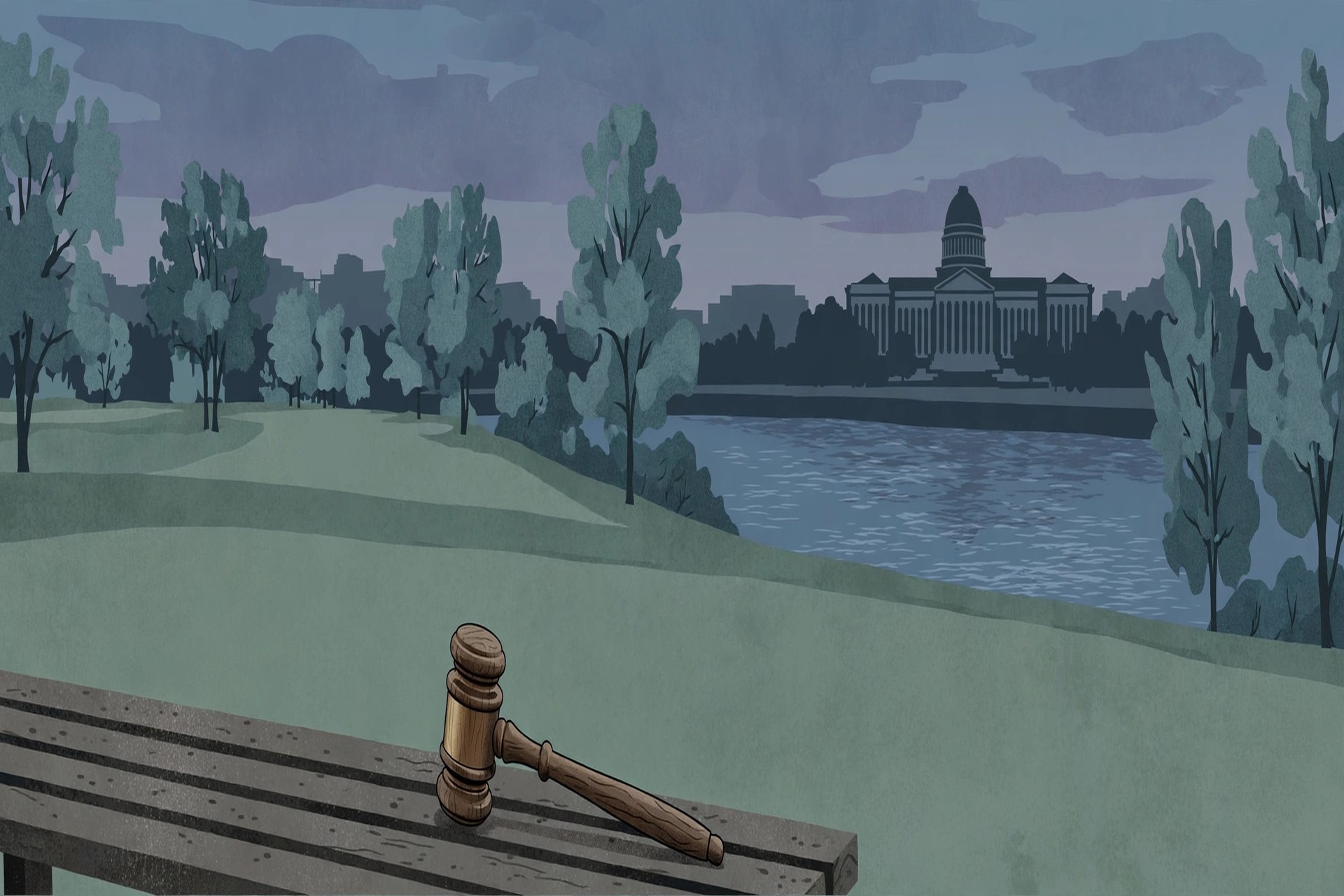
A federal judge in Washington has opened a formal inquiry into whether government lawyers misled her court during litigation over the planned overhaul of East Potomac Golf Links, a historic public golf course on the Potomac River. United States District Judge Ana Reyes announced the inquiry at the end of a contentious hearing on Friday, October 30, saying she would either conduct the examination herself or appoint a special master, an independent court-appointed official, to help her do it.
Reyes was explicit about what the inquiry is not. It is not a finding that any lawyer or official did anything wrong. It is, in her words, an investigation into whether misconduct occurred, and she gave the Justice Department five days to object to the appointment of a special master. That distinction matters, because the inquiry will test allegations, not assume them, and the lawyers and officials involved will have an opportunity to respond.
The case itself began in February, when the DC Preservation League and two local golfers sued to stop the Interior Department from transforming East Potomac, which has operated as a public course since the 1920s, into a championship-style course favoured by President Donald Trump. What began as a dispute about a golf course and environmental review has become, in recent weeks, a dispute about candour in court: what the government knew, when it knew it, and what it told the judge.
The immediate trigger was a series of public statements by the president that appeared to contradict what government lawyers had told the court. On October 18, Trump posted on social media that East Potomac would close on November 15 for 15 months of restoration work on a new design by architect Tom Fazio. Yet in court the previous day, and again in later hearings, government lawyers had said there was no plan to close the course on that date. By October 28, the Justice Department had filed a notice saying the whole of East Potomac Park would close by November 15. Reyes wanted to know how those positions could all be true.
The East Potomac Golf Course inquiry: four questions at the centre
According to reporting of the October 30 hearing, the inquiry will examine four linked questions. The first concerns the felling of hundreds of trees at the course earlier in October. The court was notified only hours before crews began cutting, on a holiday weekend, and Reyes will ask whether that late notice was filed in bad faith, in an effort to evade judicial review, or whether it was simply a failure of coordination under pressure.
The second and third questions concern court declarations by senior park officials. Reyes will examine whether government lawyers told Jessica Bowron, the acting director of the National Park Service, to leave information about renovation plans out of a declaration she submitted to the court, and whether lawyers told Kevin Griess, superintendent of National Mall and Memorial Parks, to put particular budget figures into his declaration. Both questions are framed as matters to be investigated, not as established facts, and the answers will depend on documents, emails and testimony that the inquiry gathers.
The fourth question is broader. It concerns what Justice Department lawyers said about the renovation, in the period up to Associate Attorney General Stanley Woodward’s filing of October 28, which said East Potomac Park would close by November 15. Reyes questioned Woodward for more than two hours at the October 30 hearing, repeatedly comparing his testimony with the president’s public posts. At one point, when Woodward described the October tree felling as part of preparations for closing the course, Reyes replied, in words reported by local television coverage, “News flash,” before Woodward corrected himself and said the felling had not been part of the closure plan.
Woodward, the third-ranking official at the Justice Department, had told the court at an October 19 hearing that there were no plans to close the course for redevelopment by November 15, a day after Trump had posted that it would close by then. At the October 30 hearing, Woodward said an Interior Department official had “put pen to paper” on a redevelopment plan in recent weeks. Reyes pressed him on the gap between those accounts, asking whether the Secretary of the Interior was involved in the project and when, exactly, a plan had come into existence.
How a golf course dispute became a test of candour
East Potomac Golf Links is not an ordinary private club. It is a public course, owned by the federal government and operated by the National Park Service, where Washington residents have played for generations. Its three courses, driving range and miniature golf facilities sit on a peninsula where the Potomac meets the Anacostia, within sight of the capital’s monuments. For many local golfers, it is the most affordable place to play in the city, and that public character is part of why the redevelopment plan has drawn opposition.
That tension, between what was happening on the ground and what was being said in court, sharpened in October. The National Park Service began cutting down hundreds of trees, notifying the judge only about 15 hours before work was due to begin. Reyes responded by ordering a halt to further tree removal until at least October 26 and requiring three business days’ notice of any other permanent changes. In a 70-page ruling the following week, she extended that order, barred further alterations without ten days’ notice while the lawsuit proceeds, and concluded, on a preliminary basis, that the Interior Department likely violated environmental law by segmenting the project.
Those preliminary findings are not a final judgement on the merits of the lawsuit. They are the basis for an injunction, a temporary order designed to preserve the status quo while the case is decided. The government has said it intends to appeal that injunction, and the National Capital Planning Commission is scheduled to consider a Fazio rendering of a new course at its meeting on December 3. The Park Service was due to submit that rendering on the same day the course is scheduled to close, November 15, which is why the closure date has become a focal point for both sides.
What a special master does, and what sanctions could follow
A special master is a neutral person appointed by a court to carry out a specific task, such as gathering facts, reviewing documents or making recommendations. In this case, the special master would assist Reyes in examining the record, questioning witnesses if necessary, and reporting back on whether government lawyers or officials made material misrepresentations, withheld information, failed to correct earlier statements, or interfered with witness testimony. The judge has not yet named a special master, and the government has five days, or five business days in some accounts of the hearing, to object to the appointment itself.
The inquiry could take several forms. Reyes said she might conduct it herself, or she might use a special master, and she also issued a preservation order requiring the government to preserve every document and communication about the golf course planning process. That order reflects a concern she voiced at the hearing: that relevant records might otherwise be lost, and that the court needed to ensure a complete record for review. Preservation orders are not unusual in litigation, but a judge’s decision to issue one on her own initiative, citing a concern about evasion of judicial review, is a sign of how seriously she views the questions before her.
If the inquiry finds that a lawyer made a false statement knowingly, failed to correct it, or otherwise breached professional rules, the consequences could range from a formal reprimand to referral to a disciplinary authority, and, in the most serious cases, sanctions imposed by the court itself. If it finds that officials withheld information or shaped declarations, the court could draw adverse inferences, order further disclosure, or take the conduct into account when deciding the underlying lawsuit. If it finds no misconduct, the inquiry will have served a different purpose: clearing the record and restoring confidence that the court was given accurate information.
What happens to East Potomac now
For golfers and park users, the most immediate question is practical: will East Potomac close on November 15, and if so, what exactly will close? The Justice Department’s October 28 filing said the whole of East Potomac Park, including the course and surrounding recreational areas, would close by that date. The injunction, however, requires ten days’ written notice before the course is closed or permanently altered, and bars further tree removal. How those two positions fit together, and whether the closure will include the driving range, the shorter courses and the academy, remains a question Reyes herself raised at an earlier hearing, when she asked where the notice to the public was.
The December 3 meeting of the National Capital Planning Commission is the next formal milestone. The commission will consider the Fazio rendering, and its decision will shape whether the redevelopment can proceed in the form the administration proposes. An appeal of the injunction is also pending, and a higher court could narrow, lift or uphold the injunction while the underlying lawsuit continues. None of those steps, however, will resolve the ethics inquiry, which runs on a separate track and could continue even if the redevelopment plan changes.
The Justice Department’s courtroom credibility has been under scrutiny in other recent cases as well, and readers following that theme may also be interested in a recent Justice Department statement about the limits on federal staff in another sensitive role (https://usnbreaking.com/justice-department-says-fbi-and-ice-staff-will-not-serve-as-midterm-poll-monitors/). In each instance, the question is not only what the government wants to do, but whether the explanations it gives a court can be trusted. That trust, once lost, is difficult to restore, which is why an inquiry of this kind, even before any finding, attracts attention far beyond the parties to the case.
For now, East Potomac remains open, the injunction remains in force, and the factual record surrounding the administration’s plans is under review. The special master, if appointed, will begin by gathering that record. The government will have its opportunity to object and then to respond. And the public, which has played golf on that peninsula for a century, will wait to learn not only whether the course will close on November 15, but whether the court that oversees its fate was told the truth about when that decision was made.
Sources
USN reviewed reporting from multiple outlets for this story. Read more from Al Jazeera (https://www.aljazeera.com/news/2026/10/30/us-judge-orders-ethics-inquiry-into-trump-lawyers-over-golf-course-case), Law Dork (https://www.lawdork.com/p/federal-judge-orders-misconduct-inquiry) and The Head Pro (https://www.theheadpro.com/news/east-potomac-judge-reyes-ethics-inquiry-special-master/).