

A Death That Has Shaken a Rural County
Health officials in New York have announced the death of a child in Lewis County in connection with the state’s ongoing measles outbreak, a loss that has brought a national public health warning into sharp, local focus. The announcement was made on Monday, 2 November, by the New York State Department of Health, and it immediately changed the way the outbreak is being discussed. Until now, much of the public conversation had centred on case numbers, vaccination rates and emergency declarations. A child’s death gives those figures a human weight that no statistic can carry, and officials in Albany and in Lewis County itself responded in language that reflected grief as well as urgency.
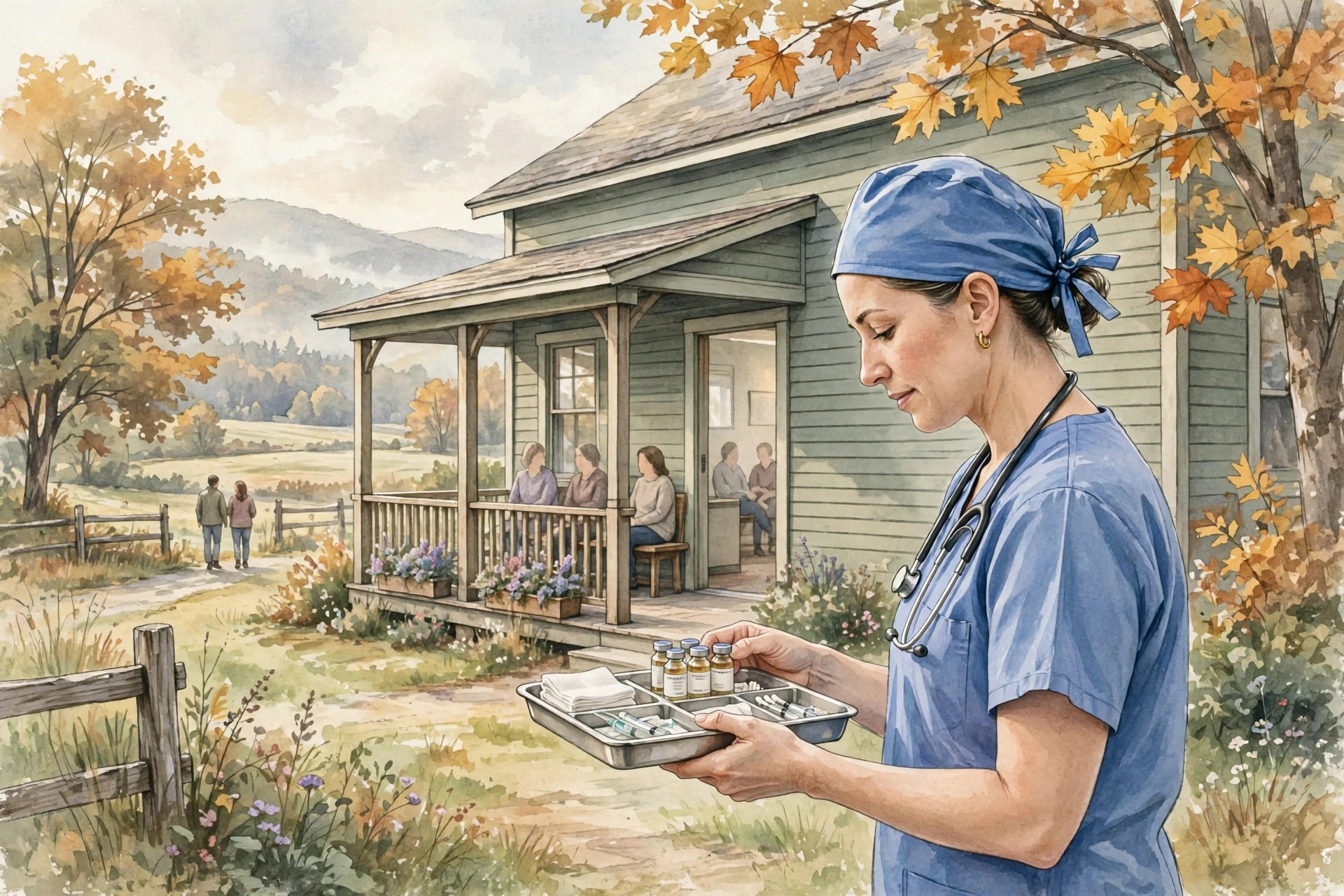
Lewis County sits in the rural north of New York State, far from the dense neighbourhoods of New York City where many people imagine infectious disease outbreaks to take hold. It is a county of small towns, scattered settlements, dairy farms and long roads between neighbours, where the local health department, the school nurse and the family doctor are often known by name. That closeness can be a strength in a crisis, because information travels quickly and people look out for one another. It can also be a vulnerability when a highly contagious virus arrives, because the same schools, churches, sports teams and family gatherings that bind a community together also bring people into close contact.
The state has not published identifying details about the child, and this report does not add any. There is no name, no school and no personal history in the official announcements relied on here, and none should be inferred from the county-level information that follows. What officials have confirmed is the essential fact: a child from Lewis County has died in connection with measles during an outbreak that was already under way in the county, and the state is treating that death as a turning point in its response. For families in the county, the news is first and foremost a bereavement. For the wider state, it is a stark reminder that measles, often described as a childhood illness of the past, can still cause severe illness and death.
Lewis County New York Measles Death: What Officials Have Confirmed
The New York State Department of Health said the death was the first known measles-associated death in New York in more than 30 years. That timespan matters because it explains why many parents, and even some younger health workers, have never encountered measles as a serious, present-day threat. For decades, widespread vaccination kept the virus at bay in the United States, and deaths linked to measles became rare enough to feel like history. The Lewis County death breaks that long quiet period in New York and places the state alongside other parts of the country that have confronted measles outbreaks in recent years, where officials have repeatedly warned that falling vaccination coverage can allow a once-controlled disease to return.
The state health department and the Lewis County health department issued a joint statement offering condolences and urging New Yorkers to make sure their vaccinations are up to date. The statement did not dwell on blame. Its central public health message was practical and forward-looking: check your status, talk to a health care provider or to the local health department if you are unsure, and do not wait for exposure to act. In a rural county, that advice has a particular meaning. Residents may need to travel further to reach a clinic, may rely on a small number of providers, and may first hear about a case through a school notice or a neighbour rather than through a city health alert system. The joint statement was therefore aimed both at grieving families and at neighbours who may be wondering what, if anything, they should do next.
Governor Kathy Hochul also responded to the death, describing it in terms that framed the loss as a warning about what is at stake when progress against preventable illness is eroded. Her statement criticised Washington, linking the broader national environment around vaccination and public health to the conditions in which outbreaks can spread. The governor’s words were political as well as personal, and they will be debated as such. But the core of her message, as reported, was not about party politics in the abstract. It was that a preventable death should force a reconsideration of whether current efforts to protect children from measles are strong enough, and whether the systems built over decades to keep the virus out of classrooms and clinics are being maintained.
A Disaster Emergency Declared in October
The death did not occur in a vacuum. In October, Governor Hochul declared a State Disaster Emergency over measles outbreaks in New York and in neighbouring states, a step that signalled the state government regarded the situation as more than a routine cluster of cases. A disaster emergency declaration is an administrative tool, not a medical treatment, but it matters because it allows the state to mobilise resources more quickly, to coordinate across county lines and to support local health departments that may be stretched by contact tracing, testing and vaccination clinics. In Lewis County, where public health staff numbers are small compared with a large city department, state support can make the difference between a response that keeps pace with new cases and one that falls behind.
State officials have said New York offered resources to Lewis County to support outreach and vaccination work, and that federal experts have also been involved. According to a statement from the Department of Health and Human Services reported by CNN, the Centers for Disease Control and Prevention deployed epidemiologists and other experts at the state’s request. Epidemiologists in an outbreak setting do work that is largely invisible to the public: they trace who may have been exposed, they look for patterns in where and how the virus is moving, and they help local officials decide where vaccination clinics and information campaigns will do the most good. Their presence does not by itself stop an outbreak, but it adds capacity and experience to a local team facing a virus that moves faster than paperwork.
The statewide picture helps explain why officials acted before the Lewis County death. As of 24 October, New York had recorded 178 measles cases, with 170 outside New York City and eight within the city, according to state figures reported in coverage of the announcement. Those numbers show an outbreak that was already statewide in scope, even though its centre of gravity was outside the city. Lewis County itself had recorded 15 cases as of 14 October, and CNN reported that all of those cases were in people who had not received the measles, mumps and rubella vaccine, known as MMR. That county-level detail is important for understanding how the virus found a foothold, but it should not be read as a claim about any individual child, whose personal circumstances have not been published.
Why Measles Spreads So Quickly in Close Communities
Measles is one of the most contagious viruses known to medicine. It spreads through the air when an infected person coughs or sneezes, and it can linger in the air of a room for some time after that person has left. A person can also spread the virus before the distinctive rash appears, which means someone may feel unwell, attend school or work, and only later realise they had measles. In a small community, where children share classrooms, buses and playgrounds and where families gather regularly, those features give the virus many opportunities to find people who are not protected. That is why health officials treat even a small number of cases as a serious event, and why they move quickly to identify contacts and to offer vaccination to those who may have been exposed.
The illness itself usually begins with fever, cough, red eyes and a rash, but it can lead to much more serious complications, particularly in young children and in people whose immune systems are weakened. Pneumonia and swelling of the brain are among the complications doctors watch for, and they are the reason measles is not treated by public health agencies as a mild rite of passage. Most people who are fully vaccinated against measles are well protected, and the MMR vaccine has been used for decades with a long safety record. Two doses are recommended in childhood in the United States, and adults who are unsure of their history are generally advised to check with a health care provider rather than to assume they are covered.
The Rural Response: Schools, Clinics and Neighbours
In Lewis County, the response to an outbreak looks different from the response in a large city, and residents will experience it through familiar local institutions. Schools are often the first place where parents hear practical information, because schools are where exposure can occur and where vaccination records are held. Health officials typically work with school administrators to notify families when a case has been identified, to explain what symptoms to watch for, and to advise anyone who may have been exposed to contact a health care provider promptly rather than simply turning up at a waiting room where others could be exposed. Those messages can feel alarming, especially when they arrive alongside news of a child’s death, but their purpose is to break chains of transmission before they widen.
Local clinics and the county health department carry much of the day-to-day work. In a rural setting, that work may involve travelling vaccination clinics, extended hours, phone lines staffed by people who know the area, and outreach through community organisations, faith groups and employers. State resources offered to the county are intended to support exactly that kind of surge capacity: more hands for contact tracing, more vaccine available where it is needed, and more clear, consistent information in a situation where rumour can travel as fast as the virus. Residents who are unsure about their own vaccination status, or about a child’s status, are advised in general terms to contact their health care provider or the local health department, which can check records and advise on next steps. No specific local phone number or address is published here, because residents should use the official county health department channels already available to them.
Checking Protection and What Comes Next
For readers in New York and beyond, the practical question raised by the Lewis County death is straightforward: am I, and are the children in my care, protected against measles? The general advice from health authorities is to check vaccination records, particularly for children who should have received two doses of MMR, and to speak to a health care provider if records are incomplete or unclear. Adults born before widespread vaccination, adults who have moved between states or countries, and families who have missed routine appointments during periods of disruption may all have gaps they are unaware of. A health care provider or local health department can advise whether a catch-up dose is appropriate, and can explain what to do if someone has been exposed to measles, including the importance of calling ahead before visiting a clinic or hospital.
The death of a child in a small northern New York county should not be reduced to a policy argument, however. Behind the case counts and the emergency declarations is a family that has suffered an irreplaceable loss, and a community that will carry that loss long after the outbreak itself has faded. The most useful response, for officials and for neighbours alike, is the one health departments have urged from the start: offer condolences, share only confirmed information, and take the practical step of checking vaccination protection. If that step is taken widely, in Lewis County and in other communities where coverage has slipped, then a tragedy that officials have described as a warning may at least help prevent the next one.
Sources
USN reviewed reporting from multiple outlets for this story. Read more from CNN [LINK: https://www.cnn.com/2026/11/02/health/new-york-measles-death?cid=external-feeds_iluminar_meta], The Straits Times [LINK: https://www.straitstimes.com/world/united-states/new-york-state-reports-first-measles-linked-child-death-in-over-30-years-amid-outbreak] and Firstpost [LINK: https://www.firstpost.com/world/united-states/new-york-reports-first-measles-linked-death-in-three-decades-amid-outbreak-14057309.html].