

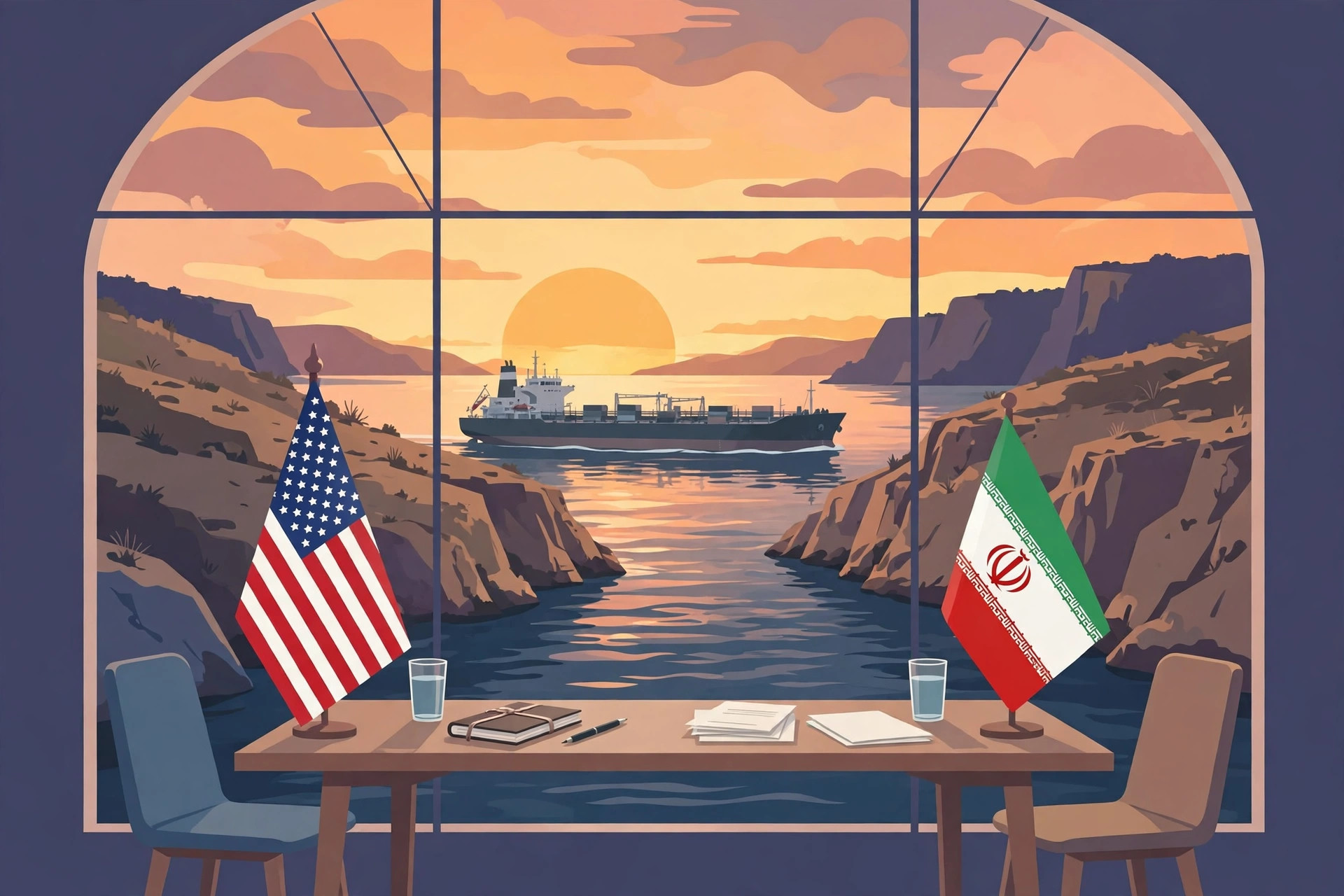
President Donald Trump faces one of the defining decisions of his presidency in the days after the 2026 midterm elections, and it concerns Iran. The war with Iran, now in its eighth month, was blamed by many Republicans for the party’s losses on November 3, when Democrats were projected to win control of both the House and the Senate. Vice President JD Vance said openly that the war was the reason Republicans lost. The president himself acknowledged that the conflict had hurt his party’s candidates. Now, with a Democratic Congress about to take power and with the ability to constrain his military options, Trump must choose between pursuing a negotiated settlement with Tehran and returning to military action. The signals from the White House in the first days of November pointed in both directions at once, and the choice he makes will shape American foreign policy, global energy markets, and the politics of the remaining two years of his presidency.
The public record of the first week of November is a study in contradiction. On Monday, November 2, the day before the election, Trump said “no” when asked whether he was considering strikes on Iran after the midterms, and he posted on Truth Social that “Iran wants a settlement, as soon as possible. It could happen!” His vice president, speaking the same day, said there had been “a number of good conversations with the Iranians” and that both he and the president felt “pretty good about the prospects for potentially coming to a negotiated settlement”. Hours later, however, American officials were telling reporters that the United States had struck Iran’s Qeshm Island on that same Monday, the latest in a series of quiet, limited strikes, and that Gulf states had been told to prepare for a short, intense operation after the midterms. Diplomacy and military action were proceeding in parallel, and it was not clear which track would win out.
Understanding the choice requires understanding the war itself. The conflict began with American and Israeli strikes on February 28, 2026, and no ceasefire has been in force since an earlier truce collapsed in early July, according to Political.org. What followed was a long, grinding confrontation that has now lasted eight months, with American forces engaged in a campaign that has cost lives, strained alliances, and, according to the president’s own party, cost Republicans the midterm election. The war has also shaped the politics of the region, the price of oil, and the calculations of every government with a stake in the Gulf. The question now is whether it ends with a deal, or whether it escalates again.
Trump Iran Deal Or Strikes: The President’s Own Words
The clearest public statements of the administration’s position came on November 2, the day before voters went to the polls. Asked directly whether he was considering strikes on Iran after the midterms, Trump answered “no”, according to the Times of Israel and Haaretz. He then took to Truth Social with a message that was unmistakably optimistic about diplomacy: “Iran wants a settlement, as soon as possible. It could happen!” In a separate post, he pointed to the oil market as evidence that the risk of war was receding, writing that oil prices were “DROPPING LIKE A ROCK, down almost $10 a Barrel, A RECORD, because people feel that there will not be a War with Iran”, as reported by the Times of Israel.
Vice President Vance reinforced the diplomatic message in his own remarks on November 2. He said there had been “a number of good conversations with the Iranians” and that “the president and I both feel pretty good about the prospects for potentially coming to a negotiated settlement”, according to the Times of Israel and Haaretz. Vance also set out the administration’s bottom line with clarity. The United States, he said, requires that Iran must never have a nuclear weapon, and any agreement needs “a firm and verifiable commitment that they don’t rebuild that nuclear program”. That formulation, a verifiable commitment against rebuilding, has been the consistent American demand, and it is the point on which any negotiation will succeed or fail.
At the same time, Vance was careful to keep the military option visible. Trump, he said, “retains kinetic options, he retains non-kinetic options”, a phrase that covers everything from further airstrikes to sanctions and cyber operations. Vance also confirmed that the United States has set no deadline for Tehran, a detail that matters because it removes one source of pressure from the talks while leaving the other, the threat of force, in place. The combination, optimism about a deal, a clear bottom line, no deadline, and a retained military option, is a classic negotiating posture. It is also, given the conflicting reports of the same day, a posture that leaves room for either outcome.
Qatar Mediators Iran Talks: The Diplomacy Under Way
Behind the public statements, a diplomatic process has been under way, mediated principally by Qatar. Qatari mediators held two rounds of talks with Iranian officials in the week before November 2 and returned to Tehran on Monday, November 2, according to the Times of Israel and Reuters. Iranian negotiators were in Doha on Sunday, November 1, for a third consecutive day of talks, Reuters reported on November 1. The tempo of these contacts suggests a process that is active and sustained, not a one-off exchange, and the involvement of Qatar, which has long played a mediating role between Washington and Tehran, gives the talks a channel that both sides trust.
The framework under discussion, as reported by the Thursday Times and Reuters on October 31, has a clear structure. Iran would reopen the Strait of Hormuz, the narrow waterway through which a large share of the world’s seaborne oil passes, in return for American sanctions relief, followed by full talks on the nuclear programme. A seven-day confidence-building sequence was also drafted, designed to give both sides a way to test the other’s good faith in stages rather than committing to a comprehensive agreement all at once. The logic is straightforward: each side gives something tangible, each side gains something tangible, and the process builds toward the harder questions about the nuclear programme itself.
Iran’s conditions, as set out by Foreign Minister Abbas Araghchi, include a demand that the United States lift its naval blockade, and Araghchi has described Tehran’s demands as “reasonable and logical”, according to the Thursday Times. The blockade, and the broader sanctions regime, are the leverage Washington holds, and the question of how much of that leverage is traded away, and in what order, is at the heart of the negotiation. Iran’s Supreme Leader, Mojtaba Khamenei, has meanwhile ordered the armed forces to be prepared to respond to any attacks, warning of an “immediate, impactful, and geographically unrestricted response”, according to Reuters on October 31, a reminder that the military track remains live even while diplomats talk.
Strait Of Hormuz Reopening: Why The Waterway Matters
The Strait of Hormuz is the hinge on which the entire negotiation turns, and its importance explains why it features so prominently in the reported framework. The strait is the only sea passage from the Persian Gulf to the open ocean, and roughly a fifth of the world’s oil supply passes through it. Any disruption to traffic through the strait sends oil prices higher, raises shipping insurance costs, and ripples through the global economy. Iran’s ability to threaten the strait, and its control over access to it, is one of its most powerful cards, and the reopening of the strait in return for sanctions relief is the kind of concrete, verifiable exchange that could anchor a broader deal.
For the United States, the reopening would deliver an immediate, visible benefit: lower oil prices, calmer energy markets, and a reduction in the risk premium that has been built into crude prices since the war began. Trump’s own post about oil prices falling by almost ten dollars a barrel shows how closely he is watching that indicator, and how much political value he attaches to lower prices at the pump. For Iran, sanctions relief would ease the economic pressure that has squeezed its economy for years, and it would do so in a way that could be presented domestically as a victory, a trade rather than a surrender.
The difficulty is that the strait and the nuclear programme are linked, and neither side wants to give up its leverage before the other has delivered. Iran wants sanctions lifted before it makes irreversible concessions on its nuclear programme. The United States wants a verifiable commitment that Iran will not rebuild its nuclear programme before it lifts sanctions. The seven-day confidence-building sequence reported in the press is an attempt to break that deadlock by sequencing small steps, but it requires trust, and trust is in short supply after eight months of war.
Vance Iran War Cost Election: The Political Pressure On Trump
The political context for the decision has changed fundamentally since the midterms. Vice President Vance said on November 4 that the war was the reason Republicans lost, writing that “the president himself said so last night”, and arguing that the party had to reckon with what the war had cost it. Vance also noted that many voters who had backed Trump and Vance in 2024 voted Democrat in 2026, and he listed four demands from voters: end the war, address the cost of living and inflation, put America First, and change the American relationship with Israel. Trump, for his part, said on November 4 that Vance’s post was “largely true” and “largely right”, according to a Reuters summary, an endorsement that gave the vice president’s analysis the weight of the president’s own agreement.
Trump also acknowledged, late on November 3, that the eight-month war had hurt Republican candidates, even as he defended the decision to launch it, and on November 4 he said the war had pushed up gasoline prices in the short term, according to Reuters and BusinessToday. That acknowledgement matters because it connects the war directly to the two issues voters cited most often: the cost of living and the price of petrol. A president who campaigned on bringing prices down now faces the reality that a war he launched has pushed them up, and that voters have punished his party for it.
The new Congress adds a further constraint. A Democratic House and Senate, projected to take control in January, will be able to use hearings, legislation, and the power of the purse to constrain military action, and Reuters analysis on November 4 argued that a weakened Trump, facing a Democratic Congress able to limit his military options, has a greater incentive to seek a deal. The same analysis noted that a full-scale assault now looks less likely, but that limited strikes on nuclear facilities remain possible. China, meanwhile, is stepping up efforts to broker a settlement, according to Reuters, adding another diplomatic track to the mix and another reason for Washington to consider whether a negotiated outcome is within reach.
Iran Nuclear Deal 2026: Deal, Strikes, Or Something In Between
There are, in the end, three broad paths open to the president, and the reporting of the first week of November suggests that elements of all three are already in play. The first is a negotiated settlement, built on the Hormuz-for-sanctions-relief framework, with a verifiable commitment on the nuclear programme as its core. The second is a return to military action, whether in the form of a short, intense operation of the kind Gulf states were reportedly told to prepare for, or in the form of the limited strikes that have continued quietly, including the reported strike on Qeshm Island on November 2. The third is a continuation of the current ambiguity, in which diplomacy and limited military pressure proceed in parallel, and neither a deal nor a major escalation is chosen.
Complicating the choice is the position of Israel. Prime Minister Benjamin Netanyahu is reported to be lobbying for a resumption of attacks, and Trump would not commit to military action when Netanyahu raised the matter in a weekend call, according to the Times of Israel and the Thursday Times. That reluctance to commit, combined with the president’s public optimism about a settlement, suggests that the diplomatic track currently has the president’s favour, but the lobbying from Jerusalem, and the reported preparations for a short operation, suggest that the military option has not been set aside.
The decision will not wait long. The talks in Doha, the movements of mediators, the state of the oil market, and the organising of the new Congress will all force the question in the coming weeks. Trump has said a settlement “could happen”, and his vice president says the prospects are good. But he has also retained his options, and the strikes have not stopped. For a president who has just been handed a midterm defeat that his own vice president attributes to this war, the incentive to end it is powerful. Whether he ends it at the negotiating table or on the battlefield is the choice that will define the next phase of his presidency, and the world will be watching for the answer.
Sources
USN reviewed reporting from multiple outlets for this story. Read more from Times of Israel, Haaretz and Reuters.