

NEW DELHI — Sikkim moved a decisive step closer to its first railway connection on Friday, 27 November 2026, when Indian Railways completed excavation work in Tunnel Number 10, the longest tunnel on the Sivok-Rangpo new line project. The breakthrough, announced by the Ministry of Railways on Saturday, 28 November, means that excavation is now complete in all 14 tunnels of the 45-kilometre broad gauge line that will link Sivok in West Bengal with Rangpo in Sikkim, bringing the only Indian state without a railway station onto the national rail network for the first time.
At 5.3 kilometres, Tunnel Number 10 is the longest of the 14 tunnels on the route. Its excavation was carried out from both ends and through two access tunnels, and when the two excavation fronts met, the tunnelling phase of the project was finished. The Railway Ministry said the remaining work — tunnel lining, track laying and the installation of essential railway safety systems — will now progress. The line is not yet operational, and no date for the first train has been announced, but the completion of tunnelling removes the single hardest engineering obstacle on a project that has taken nearly two decades to reach this point.
For Sikkim, a small Himalayan state of about 650,000 people that has depended entirely on roads and a single airport for its connection to the rest of India, the milestone matters far beyond the construction site. The railway promises a safer, faster and more reliable alternative to National Highway 10, the road that today carries almost everything into and out of the state and is repeatedly cut off by landslides and floods. It also promises cheaper movement of essential goods, better market access for local businesses and a boost for a tourism industry that is the backbone of the state economy.
The Breakthrough in Tunnel Number 10
The announcement came in a release from the Ministry of Railways on 28 November 2026. Indian Railways, it said, had achieved a major breakthrough in the Sivok-Rangpo New Line Railway Project on 27 November with the completion of excavation work in Tunnel Number 10, the longest tunnel on the route. “The breakthrough in this 5.3-km-long tunnel marks the completion of excavation in all 14 tunnels of the project and brings Sikkim a step closer to its first railway connectivity,” the release said.
The scale of the tunnelling effort is what makes the announcement significant. The 14 tunnels account for approximately 86 per cent of the total route length, which means that for most of its 45 kilometres the railway will run underground, through the hills of the eastern Himalayas, rather than along the surface. Tunnel Number 10 alone, at 5.3 kilometres, is longer than many complete railway lines in the plains. Excavating it from both ends and through two access tunnels was a way of working on four faces at once, speeding up a job that would otherwise have taken far longer from a single heading.
With the two excavation fronts now joined, the tunnelling phase is over. What follows is the work of turning excavated rock into a working railway: lining the tunnels, laying track, installing signalling and safety systems, and completing the stations and bridges. The Ministry’s release was careful to describe this as work that “will now progress”, a reminder that the line is still a construction site and that passengers will not be boarding trains at Rangpo until that phase is finished.
The timing of the announcement also matters. The breakthrough came on 27 November, and the Ministry chose to announce it the following day, as the project approaches what reporting in November 2026 put at about 80 per cent overall completion. The current target for the line’s completion is December 2027, a date that has been reported in recent coverage of the project and that now looks more achievable with the tunnelling finished.
The Sivok-Rangpo Railway Line at a Glance
The Sivok-Rangpo line is a 45-kilometre broad gauge new line that passes through Darjeeling and Kalimpong districts in West Bengal and Pakyong district in Sikkim. Almost all of it — about 41.55 kilometres — lies in West Bengal, with only around 3.41 kilometres inside Sikkim itself, a measure of how much of the engineering challenge sits on the approach to the state rather than within it.
Alongside its 14 tunnels, the project includes 23 bridges and will serve the stations of Sivok, Riyang, Melli and Rangpo, along with an underground halt at Teesta Bazaar. The underground halt is a telling detail: at Teesta Bazaar the railway passes through a settlement squeezed between the river and the hillside, and the station has been built below ground because there is simply no room for it on the surface.
At Sivok, the new line will connect with the existing New Jalpaiguri-Alipurduar railway route, linking Sikkim to the national railway network. That connection is the point of the whole project. Once it is made, a passenger boarding at Rangpo will be able to travel on to Siliguri, Kolkata and the rest of India without changing to a road journey, and freight bound for Sikkim will be able to arrive by rail instead of by truck over the mountains.
The line’s route follows the Teesta river valley for much of its length, which is both the reason for its alignment and the source of its difficulty. The valley offers the gentlest gradient through the hills, but it is also narrow, steep-sided and prone to the landslides and floods that have repeatedly damaged the highway that runs beside it. Building a railway here meant accepting that most of the line would have to be underground, and that is why the tunnel count is so high for so short a line.
Why Sikkim Has Waited Nearly Two Decades for a Train
The Sivok-Rangpo project was sanctioned in 2008-09, which means Sikkim has waited more than 18 years for the tunnelling to be finished. The foundation stone for the line was laid in October 2009, and Indian Railways signed a construction contract with the construction company IRCON in May 2010. Yet for years after that, substantial work did not begin, and the project became a familiar example of how slowly infrastructure can move in the Himalayas.
The delays had several causes, and they are worth understanding because they explain both the cost of the line and the care with which it has had to be built. The first was land. The railway needed encumbrance-free forest land from the Government of West Bengal, and the handover took years. In a written reply to a question in the Rajya Sabha in 2019, the then Minister of Railways said the project had suffered on account of the delay in handing over forest land, and that 26 structures falling in the railway alignment still needed to be shifted by the West Bengal government. At that point the latest anticipated cost of the project was given as Rs 4,085.69 crore, with expenditure of Rs 645.77 crore incurred up to March 2019.
The second cause was the environment. The route passes through ecologically sensitive areas, including the region of the Mahananda Wildlife Sanctuary, and it needed clearances before construction could proceed. The National Wildlife Board cleared the project in June 2015, and the Supreme Court of India approved it in February 2016, but with strict conditions: restricted train speeds, wireless animal tracking sensors, and tunnelling only during daytime. Those conditions were imposed because the line runs through habitat used by elephants and other wildlife, and they remain part of how the railway will have to operate once it opens.
The third cause was the terrain itself. Building 14 tunnels and 23 bridges across 45 kilometres of Himalayan hillside is slow work in the best conditions, and the conditions here are among the hardest in India. The rock is fractured, the slopes are steep, and the monsoon brings months of heavy rain. Each of those factors added time, and each added cost: the project cost was estimated at Rs 1,340 crore when it was sanctioned in 2008, and recent reporting has put the current estimated cost at Rs 17,124 crore, more than twelve times the original figure.
That history is important for two reasons. It explains why a 45-kilometre line has taken so long, and it is a warning against treating the December 2027 completion target as certain. The target has slipped many times before — earlier deadlines of 2021, December 2023 and December 2024 all passed with the line still under construction. The difference now is that the tunnelling, the hardest part, is done, and the project is reported to be about 80 per cent complete.
Building a Railway Through the Himalayas
The engineering of the Sivok-Rangpo line is the story of the project. A railway that runs underground for 86 per cent of its length is unusual anywhere in the world, and it is a direct response to the geography of the Teesta valley. Where the valley floor is wide enough, the line runs on bridges and embankments; where it is not, the line goes through the hill.
Tunnel Number 10 illustrates the approach. At 5.3 kilometres it is the longest tunnel on the route, and it was excavated from both ends and through two access tunnels, which meant four working faces advancing towards each other at the same time. That method is faster than driving a tunnel from one end only, but it demands precise surveying: the faces have to meet exactly, hundreds of metres inside a mountain, or the tunnel is unusable. The Ministry’s announcement that the two excavation fronts have now been joined is, in engineering terms, the confirmation that the surveying held.
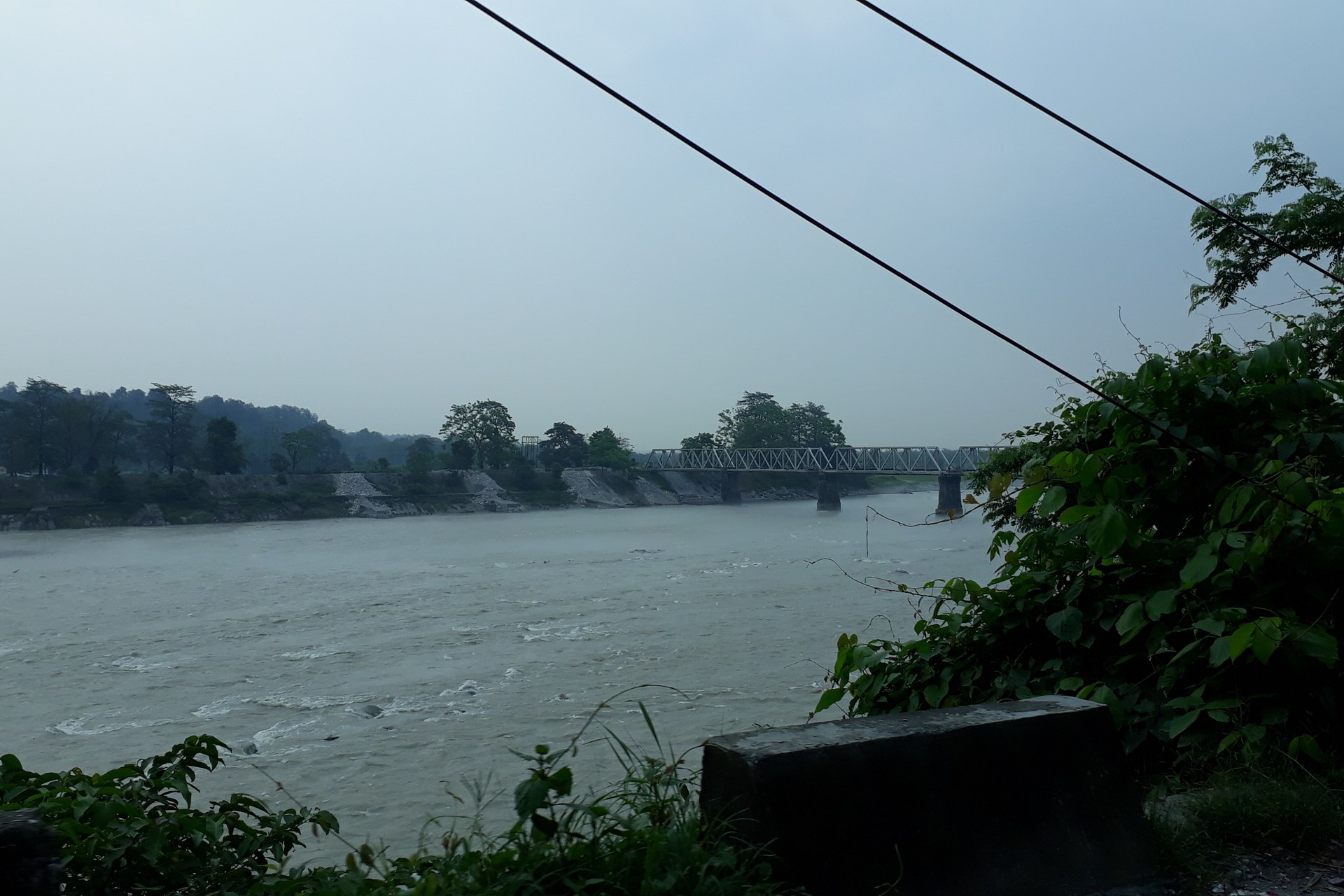
The 23 bridges are the other half of the engineering. They carry the line across the Teesta and its tributaries and across the deep gullies that cut the hillsides, and several of them are major structures in their own right. The existing railway bridge at Sevoke, where the new line begins, already spans the Teesta on the approach to the hills, and the new bridges extend that kind of construction deep into the valley.
There is also a strategic dimension to the engineering that the official announcements rarely emphasise but that has shaped the project from the start. The line is needed, as the Supreme Court noted when it approved the project, for security as well as socio-economic reasons: a railway would help troops and supplies move faster towards the Indo-Tibet border. Sikkim shares a border with China, and the Nathula pass, one of the few open trading and military routes across that border, lies a day’s drive from Rangpo. A railway to Rangpo shortens the supply line to the border considerably, and that is part of why the project has survived so many delays and cost increases when other lines might have been abandoned.
A Safer Alternative to National Highway 10
For the people of Sikkim, the most immediate benefit of the railway will be an alternative to National Highway 10. The highway is the state’s lifeline: almost everything Sikkim consumes arrives by road from Siliguri, and almost everything it produces leaves the same way. But the highway is also fragile. It runs along the Teesta valley, exposed to the same landslides and floods that the railway has been built to avoid, and it is closed or disrupted regularly during the monsoon.
The most severe recent disruption came in October 2023, when a glacial lake outburst flood from South Lhonak lake in north Sikkim sent a wall of water down the Teesta, washing away stretches of the highway, damaging bridges and cutting the state off from the plains for days. The flood was a reminder that Sikkim’s single road link is a single point of failure, and it strengthened the case for a second connection that does not depend on the same valley floor. A railway that runs mostly underground is far less exposed to the floods and landslides that close the highway, and that resilience is one of its main justifications.
The Railway Ministry’s release made the same point in plainer language: once operational, the line will provide direct railway connectivity to Sikkim and offer residents and tourists a safer, faster and more reliable alternative to National Highway 10. The words “safer, faster and more reliable” describe exactly what the highway cannot guarantee, and they are the words that will matter most to the people who use the route.
The benefits the Ministry lists go beyond the journey itself. The rail link is expected to facilitate the movement of essential goods, provide local businesses with better access to markets and give a boost to tourism in the state. Each of those follows from the same fact: moving goods and people by rail is cheaper and more predictable than moving them by truck over a mountain road, and predictability is what businesses and tourists need most. A hotel in Gangtok that can rely on supplies arriving on schedule, and a tourist who can rely on reaching the state on schedule, are both more likely to invest and to return.
Tourism deserves emphasis because it is the backbone of Sikkim’s economy. The state draws visitors for its monasteries, its mountain views, its trekking and its clean air, and the journey to reach it is part of the experience — but also part of the deterrent. A train journey from Siliguri to Rangpo, through 14 tunnels and across 23 bridges with the Teesta below, would itself become an attraction, in the way that mountain railways elsewhere in India have become attractions. The line’s promoters have not said this in so many words, but it is a reasonable expectation: a railway this dramatic, in a landscape this beautiful, will be travelled for its own sake as well as for its destination.
The Cost Question and the December 2027 Target
No honest account of the Sivok-Rangpo project can avoid the question of cost. The line was sanctioned at an estimated Rs 1,340 crore in 2008. By 2019 the government’s own figure for the anticipated cost was Rs 4,085.69 crore. Recent reporting has put the current estimated cost at Rs 17,124 crore. Even allowing for the different bases on which these figures were calculated, the direction is unmistakable: this is a far more expensive railway than anyone planned, and the increase is the price of 18 years of delay, difficult terrain and environmental conditions.
That cost has to be weighed against what the line delivers. Sikkim is a small state, and the traffic on a 45-kilometre line to Rangpo will never match the traffic on a main line in the plains. Judged purely as a commercial railway, the line is unlikely ever to recover its construction cost from fares and freight charges. But railways in the Himalayas are not judged purely as commercial ventures, and this one is no exception. Its value lies in connectivity, in resilience, in strategic access to the border and in the development of a state that has waited longer than any other for a train.
The December 2027 target should be read in that light. It is the latest in a series of targets, and the earlier ones were missed, so it would be wrong to present it as a promise. What can be said is that the target is more credible now than it has been before, because the tunnelling is finished and the project is reported to be about 80 per cent complete. The remaining work — lining, track laying, safety systems, stations and bridges — is substantial, but it is the kind of work that proceeds at a steadier pace than tunnelling, and it does not depend on the same geological luck.
It is also worth being clear about what completion will mean. December 2027, if met, is the target for the completion of construction, after which testing, safety certification and commissioning must follow before the first passenger train can run. The Railway Ministry has not announced a date for the first train, and it would be premature to name one. The honest statement is that Sikkim is closer to a railway than it has ever been, and that the hardest part of the job is now behind it.
Beyond Rangpo: The Longer Railway Map for Sikkim
Rangpo is not the end of the railway map for Sikkim; it is the first stage of it. The line as sanctioned stops at Rangpo, on the border between West Bengal and Sikkim, about 38 kilometres from the state capital, Gangtok. The journey from Rangpo to Gangtok will still be by road, up a steep and winding climb, and the full benefit of the railway will only be felt when the line is extended into the state itself.
That extension is already being assessed. A proposed railway line between Rangpo and Gangtok, approximately 34 kilometres long, is being evaluated as an extension of the Sivok-Rangpo project under the multimodal planning process associated with the PM GatiShakti National Master Plan. The proposal would take the railway from the border town to the capital, and it is the natural next step once the first stage is complete. It has not yet been sanctioned for construction, and it should not be described as if it had been, but its presence in the planning process shows the direction of travel.
A separate final location survey has also been approved for a proposed railway route connecting Melli to Dentam through Jorethang and Legship. That line, around 75 kilometres long, would improve access to southern and western Sikkim, the parts of the state farthest from the Rangpo line. A survey approval is not the same as final approval for construction, and the line may never be built, but the survey shows that the government is thinking about a railway network for Sikkim rather than a single line to its border.
The longer-term vision has included extending railway connectivity from Rangpo towards Gangtok and potentially further towards Nathula, the pass on the China border. Those are separate stages of planning and development, and they will take years, perhaps decades, to realise. But they are worth noting because they change how the Sivok-Rangpo line should be understood. It is not a 45-kilometre branch line to a border town. It is the first section of a railway system for a state that has never had one, and the tunnelling breakthrough of 27 November 2026 is the moment when that system began to look real.
For now, the immediate milestone is the Sivok-Rangpo line itself. Its completion would bring Sikkim onto India’s railway network for the first time, ending a distinction no state should have to hold — the only state without a railway station. The people of Sikkim have waited since 2008 for that distinction to end. With all 14 tunnels excavated, the wait is closer to over than it has ever been.
Sources
USN reviewed reporting from multiple outlets for this story. Read more from Press Information Bureau, The Telegraph and The Economic Times.