

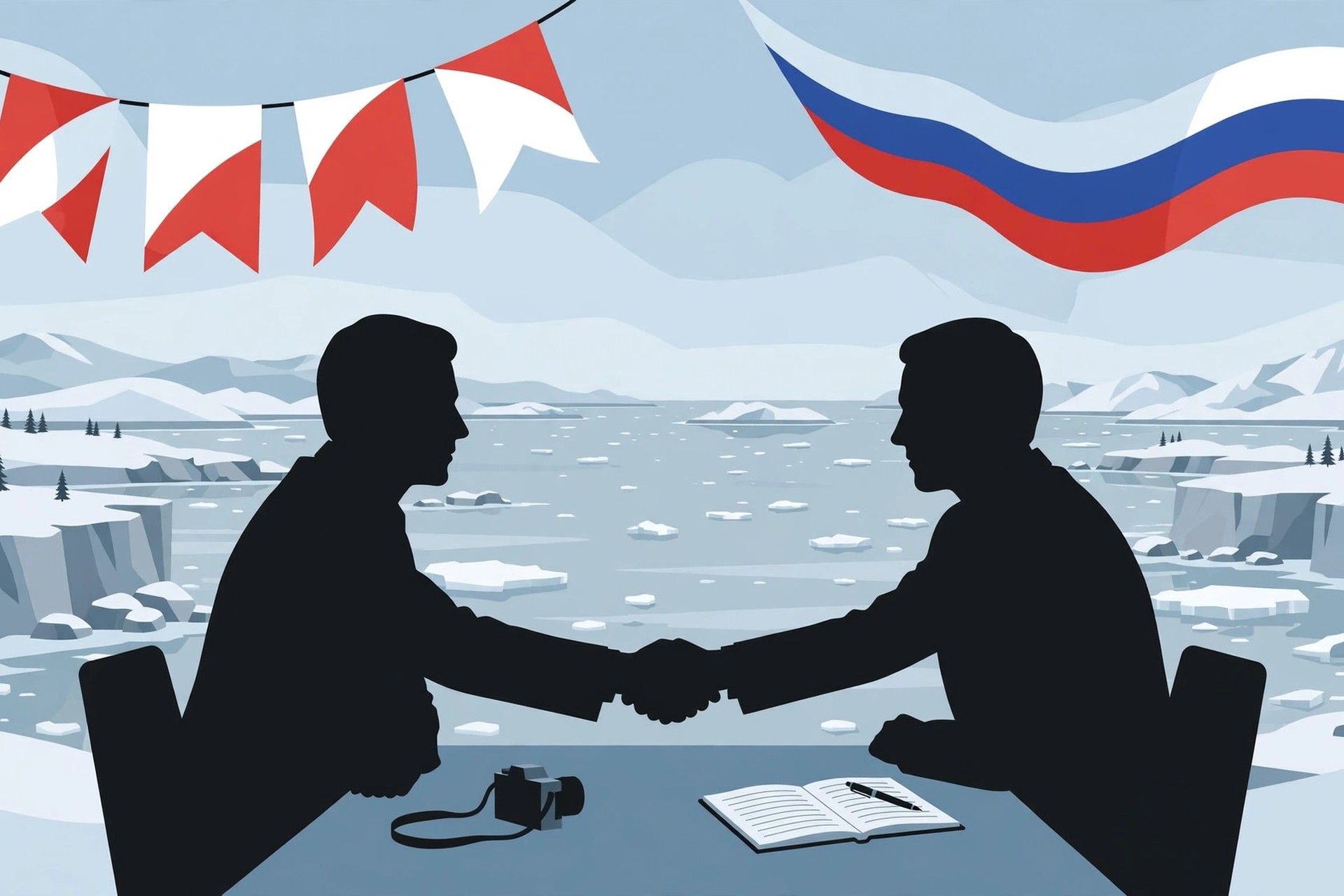
Japan’s foreign minister has strongly demanded the immediate release of a Japanese journalist detained in Russia, in a rare high-level meeting with his Russian counterpart on the sidelines of the Group of 20 foreign ministers’ gathering in Atlanta. Foreign Minister Toshimitsu Motegi told reporters that he had exchanged frank opinions with Russian Foreign Minister Sergey Lavrov on Friday, and that he had pressed for the release of the journalist, who was detained in Russia’s far eastern Sakhalin region on suspicion of espionage. It was the first formal face-to-face meeting between the two countries’ foreign ministers in five years, and it took place at what Motegi himself described as a very delicate time for the protection of a Japanese national.
The journalist, identified in Japanese government statements and in reporting as Yuki Imai, was arrested in Sakhalin last month, according to Russian statements, and is currently detained in Moscow. Imai is a journalist with the Hokkaido Shimbun newspaper, based at its bureau in Yuzhno-Sakhalinsk before his detention, and Moscow’s Lefortovo District Court has ordered his detention for two months, until December 12. Tokyo said this week that its officials had met Imai for the first time since his arrest, a consular access step that, while routine in many detention cases, had not previously been confirmed. Russia’s Foreign Ministry, cited by the Interfax news agency, described the encounter as a brief talk held at Japan’s request, a characterisation that understates, from Tokyo’s perspective, the significance of a meeting that Japan had sought precisely because normal channels have produced no release.
What the Japan Russia journalist Yuki Imai case is about
The facts that are publicly established are narrow, and the gap between them is the story. Russia says Imai was detained in Sakhalin on suspicion of espionage, a charge that, under Russian law, can carry a long prison sentence. Japan says it has strongly demanded his immediate release, and that it needs to provide protection to its national as soon as possible, and that it now has had consular access. What Russia alleges Imai actually did, what evidence it claims to hold, and whether he will be formally charged, tried or expelled, have not been publicly detailed in the reporting reviewed for this article. Readers should therefore treat the espionage accusation as an allegation by Russian authorities, not as an established fact, and should treat Japan’s demand for release as a diplomatic position, not as a legal judgment on the merits of any charge.
That caution matters because journalist detentions in Russia have, in recent years, followed a pattern that press-freedom organisations have criticised: arrest on espionage or related charges, prolonged pre-trial detention, limited public disclosure of evidence, and use of the case as leverage in wider diplomatic disputes. Japan has not, in its public statements reviewed here, accused Russia of holding Imai as a hostage or bargaining chip, and this article does not make that accusation. But the context in which the detention sits, a war in Ukraine, Western sanctions on Russia, and a territorial dispute that has prevented a formal peace treaty since World War II, means that any detention of a foreign journalist will be read diplomatically, whatever its underlying facts turn out to be.
Motegi’s language at the Atlanta press briefing was carefully chosen. He said Japan-Russia relations are in a difficult situation, that it is extremely important to continue communication and patiently engage with Russia, and that he has also strongly called on Russia to take positive actions toward achieving a just and lasting peace in Ukraine. That combination, a firm demand on the journalist, a call for patience in communication, and a broader appeal on Ukraine, is the classic language of a government that wants to press a case without closing the channel through which the case might be resolved. It is also a signal to domestic audiences in Japan that the government is acting, without promising a timeline it cannot control.
Why a meeting in Atlanta matters
The Atlanta setting is significant for two reasons. The first is that the G20 foreign ministers’ meeting itself ended without a joint statement, with divisions over Ukraine, Iran, tariffs and the South China Sea preventing consensus, and with the traditional group photograph cancelled after European diplomats objected to Lavrov’s presence. In that atmosphere, a bilateral meeting between Japan and Russia, even a brief one, stands out as one of the few direct exchanges that actually took place. The second is that Japan and Russia have not held a formal foreign ministers’ meeting since September 2021 in New York, according to Japan’s foreign ministry, which means that the Atlanta encounter, however brief, broke a five-year gap in direct ministerial contact.
The history behind that gap explains why the meeting was so delicate. Japan joined Western sanctions against Moscow over the war in Ukraine, and Russia regards Japan as an unfriendly country, yet the two countries still do business, with Japan a purchaser of Russian liquefied natural gas. They have yet to sign a formal World War II peace treaty because of a territorial dispute over the Kuril Islands, known in Japan as the Northern Territories, seized by the Soviet Union in 1945. Japan protested in August against Russian President Vladimir Putin’s visit to the far-eastern Kuril islands, and against Moscow’s announcement that it would conduct missile tests off one of the disputed islands Putin visited. Against that background, a meeting about a detained journalist is never only about the journalist: it is also a test of whether any channel remains open at all.
For Imai’s family and colleagues, the practical questions are more immediate than the geopolitics: where is he detained, what is his health, does he have legal representation of his choosing, and when will consular officials see him again? Tokyo’s statement that officials met him for the first time this week answers one of those questions, but leaves the others open. Press-freedom groups will be watching for whether Russia provides consular access on a regular basis, whether any charges are published, and whether Imai is allowed contact with his family and lawyers. Those are the markers by which detention cases are usually judged, and they are, for now, largely unmet in public reporting.
What to watch next
Three developments would change the assessment of this case. The first is a formal charge or, conversely, a release or expulsion: either would move the case from a legal process or resolution. The second is a further meeting, whether between ministers, officials or through intermediaries, that suggests the Atlanta exchange opened a negotiation rather than merely registering a demand. The third is a public statement from Moscow that goes beyond the brief-talk characterisation and addresses the substance of the case, including what Imai is accused of doing in Sakhalin and what evidence, if any, has been presented to Japanese officials.
Until one of those developments occurs, the honest summary is that Japan has demanded the release of its detained journalist, Russia has acknowledged a brief meeting, and the two countries remain far apart on Ukraine, on sanctions and on territory. That is a thin basis for optimism, but it is not nothing: in a relationship with no formal peace treaty and no ministerial meeting for five years, a demand delivered face to face is itself a data point. Whether it leads to a release, a trial or a prolonged detention will depend on decisions in Moscow that Tokyo can influence only at the margins, and on a wider war whose end neither capital currently controls. For now, Imai’s case joins a growing list of journalist detentions that test whether international norms about press freedom and consular protection still constrain governments in wartime, or whether they have become, like so much else in this conflict, another casualty of it.
Sources
USN reviewed reporting from multiple outlets for this story. Read more from The Japan Times, Manila Times and Ukrinform.