

A Document Released on the Final Day of Campaigning
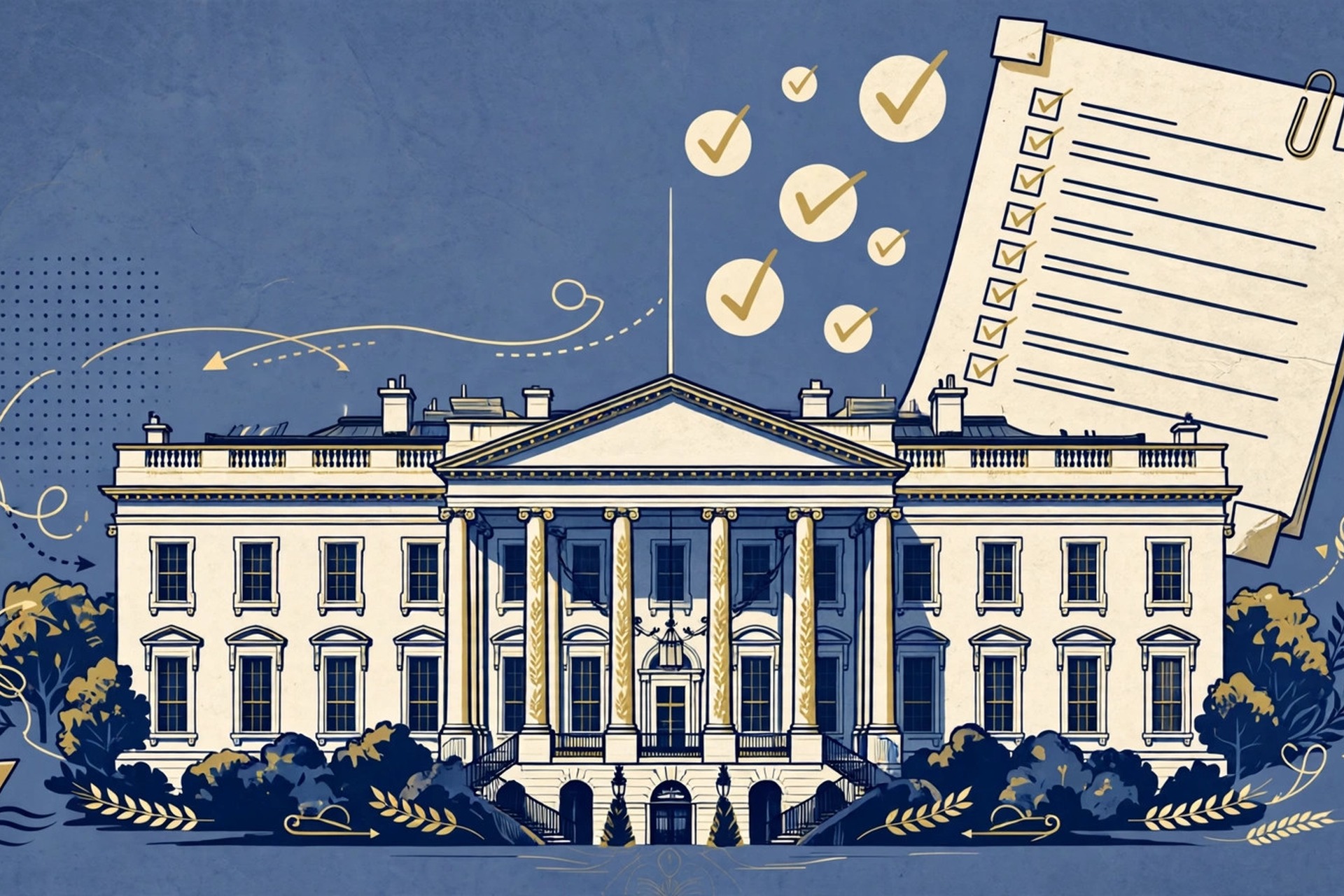
The White House published a lengthy document on Monday, the final day of campaigning before the midterm elections, under the title President Trump’s Second Term: Promises Made, Promises Kept, Results Delivered. The document presents itself as a record of the second term, organised as a list of one hundred and twenty-seven items that the administration says represent promises made during the campaign and kept in office. Each item pairs a quoted promise with a claimed result, and the list spans trade, immigration, the economy, energy, national security, foreign policy, healthcare, education and other areas. The timing of the release, on the eve of voting, is itself part of the story, because the document functions both as an official record and as a campaign argument that voters should judge the administration by what it says it has delivered.
The document’s central claim is sweeping. It describes the second term as the most far-reaching restoration of American sovereignty, strength and prosperity in modern history, and it presents the one hundred and twenty-seven items as evidence for that judgement. Supporters of the administration are likely to read the list as a straightforward account of action taken, and to point to specific items, such as border statistics or trade agreements, as proof that campaign commitments were honoured. Critics are likely to read the same list as a selective and self-assessed record, in which the administration itself decides which promises count, how success is measured, and which inconvenient facts are left out. Both readings can be true at the same time in a limited sense: the document is a real White House publication, and it is also a political document whose claims require independent checking against other sources.
That need for checking is especially clear in the areas where other governments or independent analysts have offered a different account. This article therefore does not treat the White House list as a neutral verdict. It reports what the White House claims, it reports where other parties dispute those claims, and it distinguishes between items that describe an action the administration undeniably took, such as signing an executive order or deploying personnel, and items that describe an outcome, such as a trade deal being secured or a conflict being resolved, where the judgement depends on definitions and on the views of other parties. That distinction is the key to reading the document fairly, and it runs through the sections that follow.
White House 127 Promises Kept List: Trade Claims Under Scrutiny
On trade, the White House says President Trump secured new and improved trade agreements with major trading partners covering more than half of global gross domestic product, including the United Kingdom, the European Union, Japan, China, India, South Korea, Indonesia, Malaysia, Thailand, Vietnam, the Philippines and Cambodia, by using tariffs as leverage. The document presents that list as a single achievement, and it links the India entry to a February fact sheet headlined as a historic trade deal. The difficulty is that the joint statement issued by the United States and India on 6 February announced only a framework for an interim agreement on reciprocal and mutually beneficial trade, not a final signed agreement. The framework said the two sides would promptly implement its terms and work towards finalising an interim agreement, with a view to concluding a broader bilateral trade agreement consistent with a roadmap already agreed in their terms of reference.
Indian officials have, in subsequent statements, described parts of the trade tranches as being legally drafted in October, and have not presented a final bilateral trade agreement as signed or concluded. Commerce and Industry Minister Piyush Goyal said on 15 October that the first tranche had been proceeding through legal processes, a description that is consistent with work in progress rather than a completed deal. Under the February framework, India was to eliminate or reduce tariffs on all American industrial goods and a range of farm products, while Washington set an eighteen percent reciprocal tariff on Indian goods and removed the reciprocal tariff on items such as generic pharmaceuticals, gems and diamonds and aircraft parts. Those details show a substantive negotiation, but they do not turn a framework into a final treaty, and the White House presentation, which groups India with partners where agreements may be further advanced, therefore overstates the position if read as a claim of a completed India deal.
A similar pattern appears in the document’s treatment of South Korea and the Alaska natural gas project. The White House highlighted what it described as a fifty-four billion dollar agreement with South Korea and Taiwan to develop a long-stalled natural gas pipeline in Alaska. Seoul, however, has consistently maintained that its participation remains subject to a commercial viability review and to compliance with its own legal procedures. South Korean ministers have said no decision has been made on whether to invest in the Alaska project, or on the scale of any potential investment, and the bilateral fact sheet made work on the project conditional on commercial viability. Taiwan, for its part, has confirmed plans to buy Alaskan liquefied natural gas and to invest up to four point four billion dollars, but has said key terms, including ownership and financing, still require negotiation. The White House figure therefore describes an announced package and a political commitment to work together, rather than a final investment decision with binding contracts and financing in place.
Peace Claims, Borders and the Question of Credit
The document also credits the administration with brokering peace in eight conflicts, including the conflict between India and Pakistan. That claim is disputed by New Delhi, which has said the halt in hostilities between India and Pakistan followed direct military contact between the two countries’ directors general of military operations, rather than third-party mediation. The dispute is not about whether fighting stopped, which is not in question, but about who should receive credit for the stop, and about whether the word peace, which implies a durable settlement, is the right word for a ceasefire whose underlying disputes remain unresolved. Similar questions arise for other conflicts on the list, where the administration’s role, the durability of any agreement, and the views of the parties themselves may differ from the summary presented in a single line of a White House list.
On immigration, the document presents statistics that are more directly verifiable, although their interpretation remains contested. It says that in fiscal year 2026, Border Patrol recorded just ninety-eight thousand seven hundred and eight southwest border apprehensions, a ninety-five percent drop from more than one point eight million per year under the previous administration, and that nationwide encounters fell to the lowest in the agency’s history. It also says that in August 2026, Customs and Border Protection encountered just seven hundred and sixty-three unaccompanied minors at the southern border, down nearly ninety-five percent from fourteen thousand two hundred and thirty-seven in August 2023. Those figures, if confirmed by agency data, would represent a very large change in border crossings. Critics may dispute the causes of that change, the methods used to achieve it, or its human consequences, but the numbers themselves provide a clearer basis for debate than a claim about a deal whose status depends on another government’s position.
The document also covers areas such as free speech, religious liberty, education and energy, with claims about executive orders dismantling censorship regimes, protecting religious expression in the workplace, establishing a Religious Liberty Commission and a White House Faith Office, and overhauling college accreditation. Each of those items describes an action the administration took, and each can be checked against the executive orders and directives themselves. Whether those actions achieved their stated goals, whether they were lawful, and whether they improved the lives of ordinary Americans are separate questions that will be argued in courts, in Congress and in public debate long after the midterm elections. The list, in other words, is best read as a starting point for that debate, not as its conclusion.
Why the List Matters After the Midterms, Whatever the Result
The political purpose of releasing the list on the final day of campaigning is not difficult to understand. The administration wanted voters, and in particular Republican voters, to go to the polls with a concrete-seeming record in mind, rather than with only the arguments of the campaign trail. A list of one hundred and twenty-seven items, each labelled promise kept, creates an impression of breadth and completion that a single speech cannot. It also creates a record that the administration can point to in the lame-duck session and in the second half of the term, when it will need to defend its record to a Congress whose composition will be determined by the votes counted after Tuesday. If Republicans retain control, the list will be used to argue for continuity. If Democrats gain control, the list will be used to argue that the administration’s claims should be tested through oversight and investigation.
For voters and for journalists, the more useful approach is to treat the document as a set of testable claims, some of which will survive scrutiny and some of which will not. The border statistics, the executive orders, and the trade frameworks are real documents and real numbers that can be examined. The claims about completed trade deals with India and about a fifty-four billion dollar Alaska agreement with South Korea are, on the evidence available from the governments concerned, better described as frameworks and announced packages than as completed deals. The peace claims, including the India-Pakistan claim, are disputed on the question of credit and durability. None of that means the document is without value. It means its value lies in what it reveals about how the administration wishes to be judged, and in the specific claims it makes that can now be checked, one by one, against the record of other governments, agencies and independent analysts.
As the midterm results emerge, the one hundred and twenty-seven item list will not decide who controls Congress, but it will shape the argument about what the second term has meant. Supporters will cite it as proof of delivery. Opponents will cite its disputed items as proof of overstatement. The fairest judgement, for now, is narrower: the White House has published a detailed, self-assessed record of its second term, it has made claims that are in some cases supported and in other cases contested by the very partners named in those claims, and the task of separating the two will continue after the election, when the political incentive to present every framework as a finished deal will be lower, but the public interest in an accurate record will be just as high.
Sources
USN reviewed reporting from multiple outlets for this story. Read more from The White House (https://www.whitehouse.gov/releases/2026/11/president-trumps-second-term-promises-made-promises-kept-results-delivered/), News18 (https://www.news18.com/world/us-midterm-elections-2026-india-us-trade-deal-trump-127-promises-kept-white-house-ws-l-10409757.html) and The Korea Times (https://www.koreatimes.co.kr/amp/foreignaffairs/20261103/white-house-cites-korean-trade-deal-alaska-gas-project-among-trumps-fulfilled-pledges).