

Germany IG Metall Warning Strikes in November 2026: How the Walkouts Spread
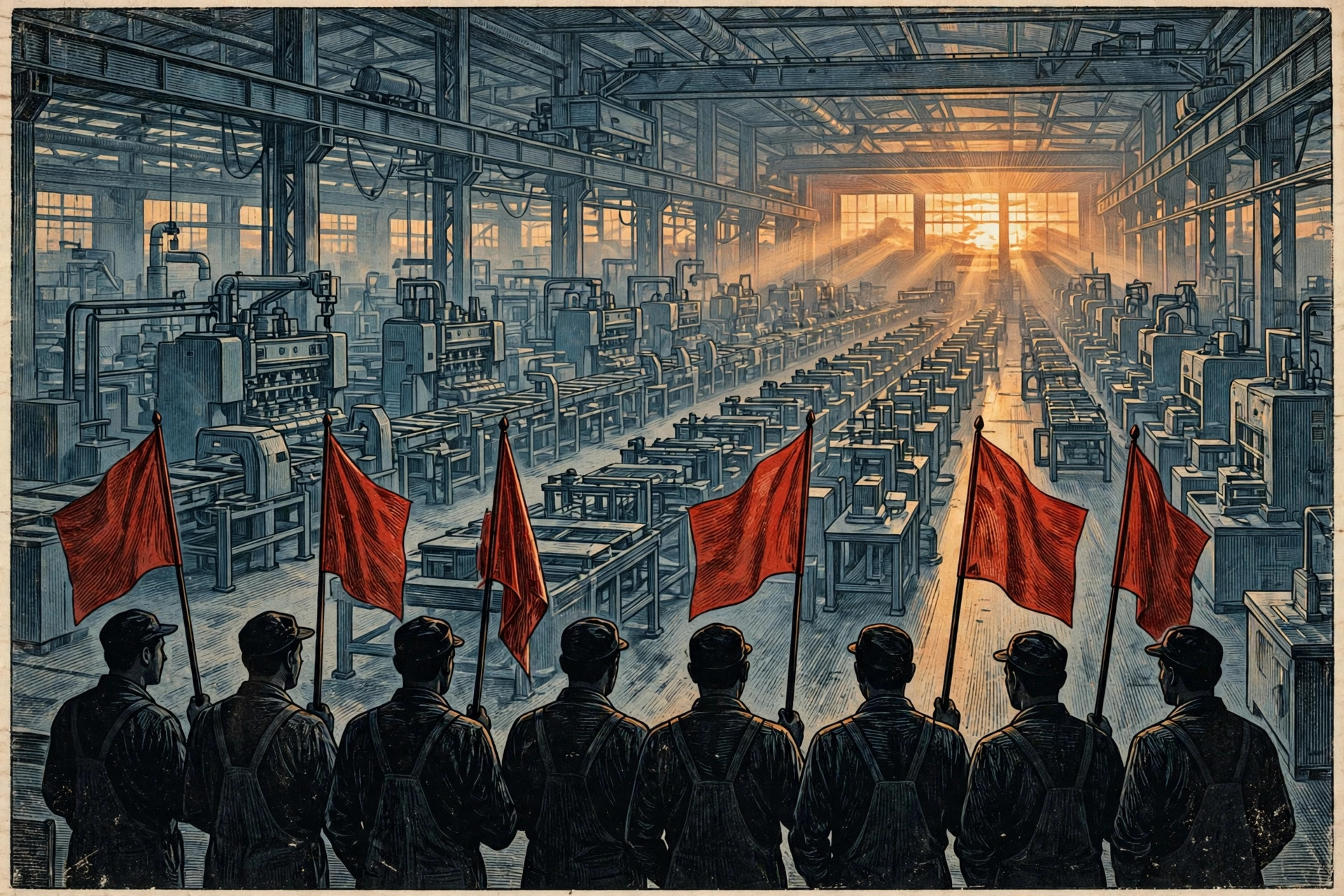
Workers across Germany’s metal and electrical engineering industries began walking off the job in the first hours of Sunday, 1 November 2026, and the action widened sharply on Monday, 2 November, as the country’s largest industrial union stepped up pressure in a pay dispute covering about 3.7 million employees. The first walkout, according to the union, began at midnight at the Thyssenkrupp Rasselstein plant in Andernach, where around 300 employees from that unit and nearby companies stopped work. Other early actions were reported at sites including a mobile communications supplier in Munich, a casting company in Hildesheim and a recycling and rolling mill in Hamburg. By Monday, workers at major manufacturers including Audi, Mercedes-Benz and Tata Steel were also reported to have joined the stoppages, turning what began as a set of overnight actions into a nationwide warning-strike wave.
A warning strike, known in Germany as a Warnstreik, is a short, lawful walkout that a union can call once a no-strike period in collective bargaining has expired. It is not an open-ended strike. Its purpose is to show employers, and the public, how many workers are prepared to act, and to raise the cost of holding out in negotiations, without yet shutting down production indefinitely. That distinction matters for how this week should be read. The union has said the actions will continue through the week and that it plans to publish participation figures on Friday, but at the time of writing no final tally for Monday had been released. Readers should therefore treat the scale of the action as developing, rather than settled, even though the geographic spread reported on Monday was already broad.
The union, IG Metall, said on Monday that it was calling workers out at short notice at more than 2,000 workplaces by the end of the week. Reporting of Monday’s actions named a long list of employers and places, from a march toward the centre of Koblenz and the Opel site in Kaiserslautern to companies in the Frankfurt area and temporary walkouts in Kassel involving Daimler Truck and other firms. The breadth of that list is itself part of the union’s message: this is not a dispute at a single carmaker or a single plant, but a sector-wide bargaining round for Germany’s largest industrial sector, covering car manufacturing, mechanical engineering, electronics and metal production. When a dispute covers that many workplaces, even short stoppages can disrupt supply chains that depend on parts arriving on tight schedules.
For workers, the timing of the walkouts is linked to the expiry of the peace obligation on 31 October. Once that period ended, the union was free to call warning strikes, and it moved within hours. The union’s regional leader for the central district was quoted as describing the midnight action at Rasselstein as merely the start of a massive phase of warning strikes, and the union said further actions would follow in the coming days across Hesse, Rhineland-Palatinate, Saarland and Thuringia, before expanding more widely. That sequence, from a symbolic midnight start to a broader weekday escalation, is a familiar pattern in German bargaining, designed to build momentum while leaving room for a negotiated settlement before any longer strike is considered.
The 5 Percent Demand and the Employers’ Counter-Offer
At the centre of the dispute is a gap between what the union is asking for and what employers have offered, and the gap is wide both in size and in timing. IG Metall is demanding a 5 percent pay rise over 12 months, starting from November, together with measures to protect jobs and production sites and profit-sharing arrangements in sectors that are performing strongly. The union argues that workers need a real increase now, after a period in which household costs have risen sharply, and that profitable parts of the industry can afford to share gains more widely. It has also pressed for extra protection for lower-paid groups and trainees, a point that underlines that the dispute is not only about the headline percentage, but about who benefits and how securely.
Employers, in their offer during the second round of negotiations, proposed a one-off payment equivalent to 1 percent of annual gross pay in the summer of 2027, followed by a 1.3 percent wage increase from July 2028. The proposal would also allow companies facing financial difficulties to withhold the one-off payment. From the employers’ side, that structure reflects the difficult conditions facing much of German industry, above all the car sector, where companies say they are dealing with weak demand, high energy costs, intense competition and the expensive shift toward electric vehicles. A delayed, modest increase, in that argument, is what struggling firms can bear without putting more jobs at risk.
IG Metall has rejected that reasoning outright. The union has described the employers’ proposal as a minus offer, meaning that, once inflation is taken into account, it would amount to a pay cut in real terms rather than a pay rise. Union leaders have said the offer triggered confusion and anger on the shop floor, and the union’s chairwoman was reported as announcing strong warning strikes in response. That language is deliberately blunt, and it is meant to signal to employers that the union does not regard the second-round offer as a basis for compromise. It also signals to members that the union leadership is prepared to escalate if the next round of talks does not move substantially.
Employers, for their part, have criticised the strike action as inappropriate sabre-rattling, according to reporting of their response. That criticism reflects a different view of the same facts: that short walkouts at a moment when many firms are already under strain add disruption without bringing a settlement closer, and that the union’s demand does not reflect what companies can currently afford. Both sides, in other words, are framing the same numbers through opposite lenses. The union sees a delayed 1.3 percent rise as erosion of living standards. Employers see a 5 percent rise as a burden that could deepen the industrial downturn. The negotiations that follow will have to bridge not just a percentage gap, but that difference in how each side describes the state of the economy.
Why Job Security Is Now Central to the Dispute
Pay is the headline, but job security may be the issue that gives this bargaining round its longer significance. Germany’s industrial model has long rested on a bargain in which workers accept wage moderation in difficult times in exchange for commitments to keep plants open and jobs in Germany. That bargain is under strain. Carmakers and suppliers have announced restructuring plans, plant closures have been debated, and workers fear that production, and the skilled jobs that go with it, could move elsewhere or disappear as the industry changes. The union’s demand for guarantees for jobs and sites is therefore not an add-on to the pay claim. It is an attempt to renew that bargain in writing, at a moment when many workers doubt it still holds.
The automotive crisis is the sharpest example. Companies in the car industry face a combination of pressures that would be difficult in isolation and are formidable together: slower sales in key markets, the cost of developing electric models and batteries, competition from new producers, and trade tensions that affect exports. Suppliers that depend on carmakers feel those pressures first, often through shorter orders or demands for lower prices. For workers in those supplier firms, a pay dispute is also a dispute about whether their plant will still be making the same products in two or three years, and whether investment will arrive to retool it. A wage agreement that says nothing about sites and investment, in the union’s view, would leave that question unanswered.
The demand for profit-sharing in strong sectors is the union’s answer to a fairness argument that runs through the dispute. Not every part of the metal and electrical industries is struggling equally. Some firms, product lines and regions are doing better than others, and the union argues that workers in those areas should share in the gains, rather than being held to a sector-wide offer set by the weakest firms. Employers, by contrast, tend to prefer flexibility that lets struggling companies pay less, which is why their proposal includes an exception for firms in financial difficulty. The tension between a common standard and company-level flexibility is a recurring theme in German bargaining, and it is likely to shape any eventual compromise, whether through differentiated payments, opening clauses, or a combination of both.
There is also a generational dimension that is easy to miss in the headline figures. Trainees and lower-paid workers are often the most exposed when a sector restructures, because they have the least seniority and the fewest outside options. By pressing for protections for those groups alongside the general pay rise, the union is trying to prevent a settlement that protects established workers while leaving newer entrants to bear the adjustment. Whether employers accept that framing will depend in part on how much pressure the warning strikes generate, and in part on whether the next round of talks produces a package that both sides can present as a win to their own constituencies.
A Wider European Backdrop of Cost-of-Living Protests
The German walkouts did not arrive in isolation. They came at the end of a weekend in which thousands of people rallied in Berlin and in more than 30 other German cities, and after weeks in which cost-of-living, housing and education concerns have provoked demonstrations across Europe, including in France, Belgium and Spain. In France, student protests resumed as pupils returned to school, and in several countries unions and student groups have led mass rallies that have sometimes turned confrontational. The German warning strikes are a different kind of action from a street protest: they are organised, lawful, sector-specific and tied to a bargaining table. But they draw on a similar public mood, in which many households feel that wages have not kept pace with everyday costs, and that public services and job security have become less certain.
That wider backdrop helps explain why the union’s message has resonated beyond its own membership, and also why employers and governments are watching the dispute closely. A sector covering 3.7 million workers is large enough that its settlement often sets a pattern for other bargaining rounds in Germany. If IG Metall secures a strong increase, other unions may press for similar terms. If it settles for a modest, delayed rise, that too will be read as a signal about what the economy can bear. In that sense, the warning strikes are not only about the workers who walk out this week. They are a test of wage expectations across Europe’s largest economy, at a time when inflation has eased from its peak but household budgets still feel squeezed.
The previous bargaining round offers a useful comparison, and also a warning against assuming an outcome. In 2024, more than 100,000 workers took part on peak days of warning strikes, and the eventual settlement was reached after a period of escalation. The union is plainly hoping for a similar dynamic this time: visible, growing participation that convinces employers to improve their offer before the dispute hardens into a longer conflict. Employers, however, may read the 2024 comparison differently, noting that the economic backdrop has worsened for many firms since then, particularly in cars and related supply chains. History, in this case, does not point in a single direction. It shows that warning strikes can work, and that they do not always produce the headline demand in full.
For American readers, the German dispute is also a reminder of how different labour systems produce different kinds of conflict. Germany’s system of sector-wide bargaining, works councils and lawful warning strikes channels disputes into a structured negotiation, with a peace obligation, formal rounds and a clear escalation ladder. The United States, by contrast, bargains mainly company by company, and strikes, when they happen, tend to be longer and more disruptive at a single employer. The German model does not avoid conflict, as this week shows, but it does contain it within a timetable that both sides understand. Whether that timetable produces a settlement this month will depend on whether the next talks narrow the gap enough for both sides to claim progress.
What Happens Next in the Negotiations
The immediate next step is the negotiating table. Reporting of the dispute has pointed to a further round of formal talks in early November, with a session in Bremen cited as the next meeting, although the precise agenda and the composition of the delegations can change as the week develops. Readers should treat that date as reported, not as a guarantee of a breakthrough. Bargaining rounds of this size rarely settle in a single session after a rejected offer. More often, the talks produce a revised offer, a further exchange of proposals, and another round of warning strikes before a deal emerges, if it emerges at all.
Three questions will shape that process. The first is participation: how many workers join the warning strikes through the week, and whether the union’s Friday figures show growth, stability or a plateau. A rising turnout strengthens the union’s hand. A flat turnout gives employers room to argue that the demand lacks broad backing. The second is the employers’ movement: whether they improve the timing as well as the size of their offer, for example by bringing forward the increase or by adding a more substantial one-off payment, or whether they hold to the 2027 and 2028 timetable. Timing may matter as much as the percentage, because a rise that arrives almost two years after the demand feels, to workers, like a cut in the meantime.
The third question is whether job and site guarantees can be packaged with pay in a way that both sides can accept. A deal that offers a moderate pay rise plus credible commitments on investment and plant security might be easier for the union to sell than a slightly higher pay rise with no such commitments, and easier for employers to accept than a high headline figure alone. Conversely, a deal that offers pay without security may be rejected by members who fear that a short-term gain will be followed by a plant closure. Union members, in the end, vote on any settlement, and their judgement will reflect their own plant’s prospects as much as the national percentage.
Until those questions are answered, the safest summary is a narrow one. Warning strikes began at midnight on 1 November, widened on 2 November to include major carmakers and suppliers, and are set to continue through the week. The union wants 5 percent over 12 months plus job, site and profit-sharing protections. Employers have offered a 1 percent one-off payment in July 2027 and a 1.3 percent rise from July 2028, with an exception for troubled firms. The union calls that a real-terms cut. Employers call the strikes inappropriate. No settlement has been announced, no final participation figure has been published, and no longer strike has been called. USN will follow the Friday participation figures, the next round of talks and any revised offer as this dispute develops.
Sources
Sources: USN reviewed reporting from multiple outlets for this story. Read more from Reuters, Al Jazeera and Daily Sabah.