

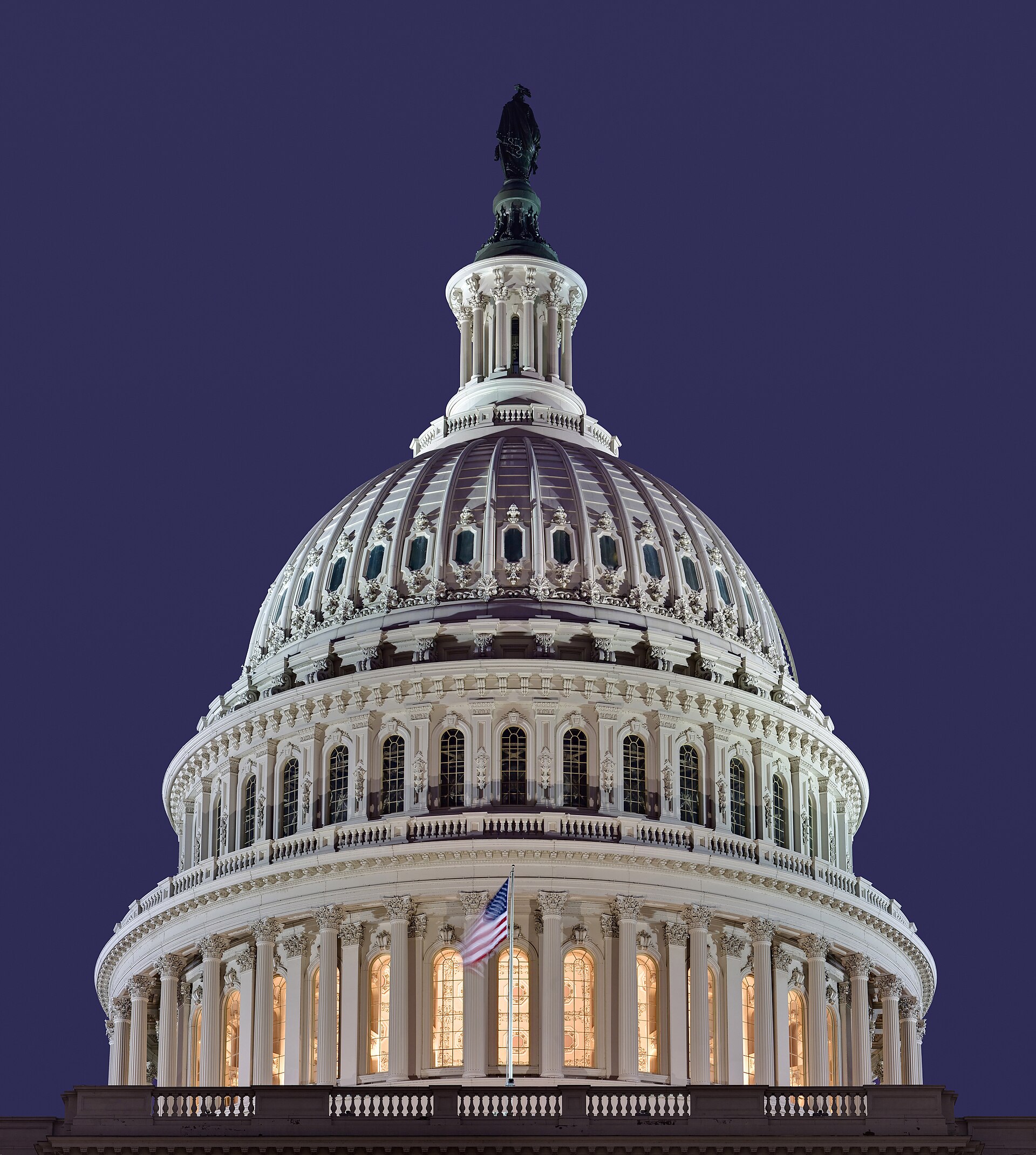
Washington enters December with a calendar that leaves almost no room for error. The Congress elected in 2024 is still in charge, even though voters went to the polls on 3 November 2026. Under the Twentieth Amendment, the new Congress does not take office until noon on 3 January 2027. Until then, the outgoing members — including those who lost re-election or chose to retire — still cast the votes, still chair the committees, and still decide which bills reach the floor. That is what a lame-duck session is: a short, high-pressure stretch in which the old Congress must finish the work it left undone, knowing that the political incentives of its members are about to change completely.
Early projections reported on 4 November pointed to a change in control of Congress, but those projections are not the same as certified results. States still have to canvass and certify their votes, and close races can change during that process. This article therefore treats the election outcome as projected, not final. For the December agenda, that distinction matters less than it might seem, because the same outgoing majorities will vote on the December bills regardless of what the certified results eventually show. What the projections do change is motivation: a party that expects to lose power has a reason to lock in deals now, while a party that expects to gain power has a reason to wait. Both instincts will be visible in every negotiation this month.
The lame-duck Congress returned on 9 November, with a Thanksgiving break in the middle of the session and an expected run through to Christmas. That sounds like plenty of time. In legislative terms, it is not. The Senate and House must share floor time between funding the government, authorising defence policy, extending farm and health programmes, and handling the routine business that piles up at the end of any Congress. Each of those items has its own deadline, its own coalition, and its own failure mode. Lumping them together as one big year-end package is tempting, but it also means that a fight over one item can sink the others.
This article separates the December list into three groups: what must pass, what can be extended for a few weeks or months without immediate damage, and what can slip into 2027 at a real but manageable cost. The distinction is not about importance in the abstract. It is about what happens on a specific date if Congress does nothing.
The December 2026 lame-duck must-pass list, item by item
The single hardest deadline is 11 December 2026. That is when the current continuing resolution, the stopgap funding law signed in September, expires. The law, known as H.R. 6500, funds federal agencies from 1 October through 11 December at roughly prior-year levels. If Congress does not enact either the twelve regular appropriations bills for fiscal year 2027 or another stopgap by that date, a funding gap begins on 12 December, and affected government activities shut down. That is the classic shutdown cliff, and it is separate from the debt limit, which concerns borrowing authority rather than annual spending.
Only three of the twelve appropriations bills had passed the House before the pre-election recess — Agriculture, Military Construction and Veterans Affairs, and National Security and State — and the Senate had not completed comparable floor action on any of them. That gap is the reason a full set of twelve separate bills is unlikely to become law in December. The realistic choices are an omnibus that combines most or all of the bills, a series of smaller minibuses that fund some agencies for the full year while extending the rest, or another short-term continuing resolution that pushes the fight into January or March 2027. Each option carries a trade-off. An omnibus settles spending levels now, which the outgoing majority may prefer if it expects to lose leverage. A short stopgap preserves the incoming majority’s bargaining power, which is why the party projected to gain control often prefers to wait. A hybrid does a bit of both, but it also leaves some agencies in limbo for months.
The spending fight is not only about totals. Negotiators are also arguing over policy riders, defence funding levels, health provisions, and the administration’s authorities. Reports before the election described the administration seeking a record defence total of about 1.5 trillion dollars, a figure Senate Democrats were reported to reject. Those numbers should be read as negotiating positions reported in the press, not as agreed totals, and they illustrate why a funding deal is hard: the two parties are not merely haggling over a percentage point. They disagree about priorities, and a lame-duck session gives neither side much time to bridge that gap. A partial shutdown remains possible if those disputes are unresolved on 11 December, and the political blame for a shutdown in a lame-duck session would fall in complicated ways, since the outgoing Congress would have caused it but the incoming Congress would have to clean it up.
Surface transportation programmes and the National Flood Insurance Program also ride on the 11 December date, because their authorities were extended in the same September stopgap package. If those extensions lapse, highway and transit programmes lose their authorisation and flood insurance authority lapses, even if the money question is handled separately. That is why the December funding vehicle is rarely just a funding vehicle: it becomes the train on which expiring authorities hitch a ride. Members who care about one programme may vote for a package they dislike in other respects simply to keep that programme alive.
Defence authorisation: why the NDAA almost always passes, eventually
The National Defense Authorization Act, the annual bill that sets Pentagon policy, authorises military construction, personnel policy, acquisition rules and Energy Department national-security programmes, is the second must-pass item. The House passed its version of the fiscal year 2027 NDAA in July 2026, but the bill stalled in the Senate. Congress has passed an NDAA every year for more than six decades, and leaders in both parties have described a deal as likely after the election. That record does not guarantee a December outcome, but it does explain why the NDAA is treated differently from other bills: failure would break a long-standing pattern and leave defence policy without its annual authorisation, even though previously appropriated money and existing law would keep the military operating in the short term.
The complications this year are familiar ones. Policy riders, oversight questions, and disagreements over defence spending levels can all delay a conference agreement between the House and Senate versions. Supporters of a quick deal argue that the NDAA is the one bill that should not be held hostage to the funding fight, because troops, military families and defence planning need certainty. Critics of that argument reply that the NDAA’s very popularity makes it a useful vehicle: controversial provisions that could not pass on their own are sometimes attached to it. The practical question for December is whether negotiators can keep the bill focused enough to pass, or whether it becomes a magnet for unrelated disputes that push it into 2027.
If the NDAA slips, the consequences are serious but not immediate in the way a shutdown is. The military does not stop operating on 1 January without an NDAA. What it loses is updated authorisation for new programmes, pay and benefits changes, and policy reforms that Congress intended for the new fiscal year. Over months, that drift matters: programmes designed around the new authorisation cannot start cleanly, and Congress must eventually pass the bill anyway, often under worse time pressure. That is why even members who disagree sharply on defence policy usually prefer a flawed NDAA in December to no NDAA at all.
The farm bill: expired already, with a harder cliff on 31 December
The farm bill is in a different position from funding and defence, because it has already expired. The latest extension of the 2018 Farm Bill expired on 30 September 2026. Crop insurance and Supplemental Nutrition Assistance Program benefits continue for now, because they operate under permanent or separately funded authority, and several major programmes were funded through fiscal year 2031 in the 2025 reconciliation law. But conservation, research, rural development, trade and energy programmes face funding uncertainty, and the Farm Service Agency has paused approval of new Conservation Reserve Program contracts, saying it has no statutory authority to approve contracts after 30 September until Congress acts.
The harder date is 31 December 2026. Commodity and dairy support programmes formally expire on that date, and if Congress has neither enacted a new farm bill nor extended the old one by then, the Agriculture Department would be required to revert to permanent law written in 1938 and 1949. Those old formulas would support some commodities at prices far above current market levels, while modern crops such as soybeans, peanuts and canola would lose their safety net entirely. Farm-state members call the dairy side of this the dairy cliff, because parity-based milk support could, on paper, reach levels near fifty dollars per hundredweight and cause major market disruption. In practice, most analysts expect Congress to act before those formulas are actually implemented, because the cost and disruption would be so large. The risk is not that Congress wants the old law; it is that a December package collapses for unrelated reasons and the farm extension falls with it.
The House passed its farm bill earlier in 2026, and the Senate Agriculture Committee advanced its own version in September, but the two chambers have not reconciled their bills. The central dispute reported in the press is the 2025 law’s shift of nutrition-programme costs to states, which affects how much states would have to pay for SNAP administration and benefits. That dispute is not a technical detail: it determines the bill’s total cost, which budget analysts have put at more than a trillion dollars over ten years, most of it nutrition spending, and it determines whether farm-state and urban members can support the same bill. A short extension that simply pushes the 31 December cliff into 2027 is therefore a plausible December outcome, even if a full new farm bill is not. An extension avoids the permanent-law problem without resolving the underlying fight, and it keeps pressure on the new Congress to finish the job.
Health, tax and other expiring measures: the 31 December second cliff
A second cluster of expirations falls on 31 December. Mandatory funding for the Community Health Center Fund, a temporary 2.5 percent increase in Medicare physician payments, and current funding for Temporary Assistance for Needy Families, known as TANF, are among the items reported as expiring at year-end. The Export-Import Bank’s authorisation also expires on 31 December, and selected public-health and hospital extenders are on the same list. None of these, on its own, shuts down the government. Together, they affect community clinics, doctors’ payments, low-income families, and export financing — constituencies that notice quickly when money stops.
Health extenders are the most likely to be attached to the December funding package, because they are relatively small in budget terms and broadly popular, but they are also vulnerable to being traded away. If negotiators need to shrink a package to get it passed, a health extender that lacks a powerful champion can be dropped with the assumption that it will be revived in January. That assumption is usually correct, but the gap still matters: clinics plan hiring and services around expected funding, and a lapse, even a short one, forces them to make cautious choices. The same logic applies to TANF, where states administer benefits and need to know whether federal funding will continue.
Tax provisions and a possible year-end tax package sit in a greyer category. Some expiring tax provisions have bipartisan support, and a tax package could be attached to a larger December vehicle if negotiators want a sweetener to win votes. But tax policy is also a place where the outgoing and incoming majorities may prefer to wait: the party projected to gain power may want to write tax law in 2027 on its own terms, rather than accept a lame-duck compromise. A tax package is therefore best understood as possible, not must-pass, unless it is carrying an extender that expires on a hard date.
Other items on the year-end list include the Water Resources Development Act, which authorises water infrastructure projects, permitting reform, and a lapsed surveillance authority known as Section 702 of the Foreign Intelligence Surveillance Act, which has been lapsed since June according to pre-election reporting. The surveillance question is politically sensitive and technically complex, and it may not be resolved in December at all. Its lapse does not mean surveillance stops overnight, but it does mean the legal authority Congress intended to renew remains in an uncertain state, which intelligence officials and civil-liberties advocates describe in very different terms. Where a measure is disputed on its merits, rather than merely delayed by the calendar, slipping into 2027 is often the honest outcome.
What can slip, and what slipping really costs
Not everything on the December list must pass in December. A full new farm bill can slip if a short extension prevents the permanent-law cliff. A comprehensive surface-transportation reauthorisation can slip if a short extension keeps programmes running. A Water Resources bill can slip without immediate operational damage, because existing projects continue under prior authorisations. Even the NDAA, for all its history, can slip by weeks without stopping military operations, though the cost grows the longer it slips.
What cannot slip without immediate consequences is government funding itself. A funding lapse is binary: either agencies have legal authority to spend, or they do not. That is why the 11 December deadline dominates the session, and why every other item’s fate depends partly on whether the funding vehicle passes. If funding passes cleanly, extenders attached to it pass too. If funding fails, everything attached to it fails with it, and Congress must start again under shutdown conditions, with public pressure rising by the day.
There is also a procedural cost to slipping. The new Congress that convenes on 3 January will need time to organise: elect leaders, adopt rules, assign committees, and hire staff. It will not be ready on its first day to pass complex funding and farm legislation. A lame-duck Congress that punts everything to January is therefore not merely delaying a vote by a few weeks; it is handing a crowded agenda to a body that is still setting up. That is an argument for doing as much as possible in December, even if the deals are imperfect. It is also an argument that cuts the other way for the incoming majority, which may prefer a messy January to a bad December deal it would have to live with for a year.
How to read the next few weeks
Watch three signals. First, whether House and Senate leaders announce a framework — omnibus, minibuses, or short stopgap — before the Thanksgiving break. An early framework suggests a deal is possible; silence suggests negotiators are still far apart. Second, whether the NDAA conference produces a text that both chambers can vote on without reopening the funding fight. A standalone NDAA vote is a sign that leaders are trying to protect at least one must-pass bill from the larger dispute. Third, whether farm and health extenders appear in the funding vehicle or are left to a separate bill. Extenders in the main vehicle are likely to pass; extenders left behind are at risk.
Readers should also be sceptical of claims that any single party is solely responsible for a December outcome. A lame-duck session, by definition, involves two Congresses at once: the one that is leaving and the one that is coming. The outgoing majority controls the floor, but the incoming majority’s expected preferences shape what the outgoing majority can credibly demand. The president, who remains in office through January 2029, holds a veto over whatever passes, and neither party is expected to hold a veto-proof majority. That structure rewards compromise on must-pass items and punishes brinkmanship, but it does not guarantee compromise. December 2026 will test whether that structure still works when the election has just changed the political map, and the results are still, formally, projected rather than certified.
The stakes are not abstract. If funding lapses, federal workers face furloughs, services slow, and the new Congress inherits a shutdown. If the farm extension lapses, dairy and commodity markets face legal uncertainty. If health funding lapses, clinics and doctors face payment uncertainty. If the NDAA slips, defence planning drifts. None of those outcomes is inevitable. All of them are possible if the few weeks between now and Christmas are spent on positioning for 2027 rather than on passing the bills that only December can pass.
Sources
USN reviewed reporting from multiple outlets for this story. Read more from Holland & Knight, No Labels and WilmerHale.