

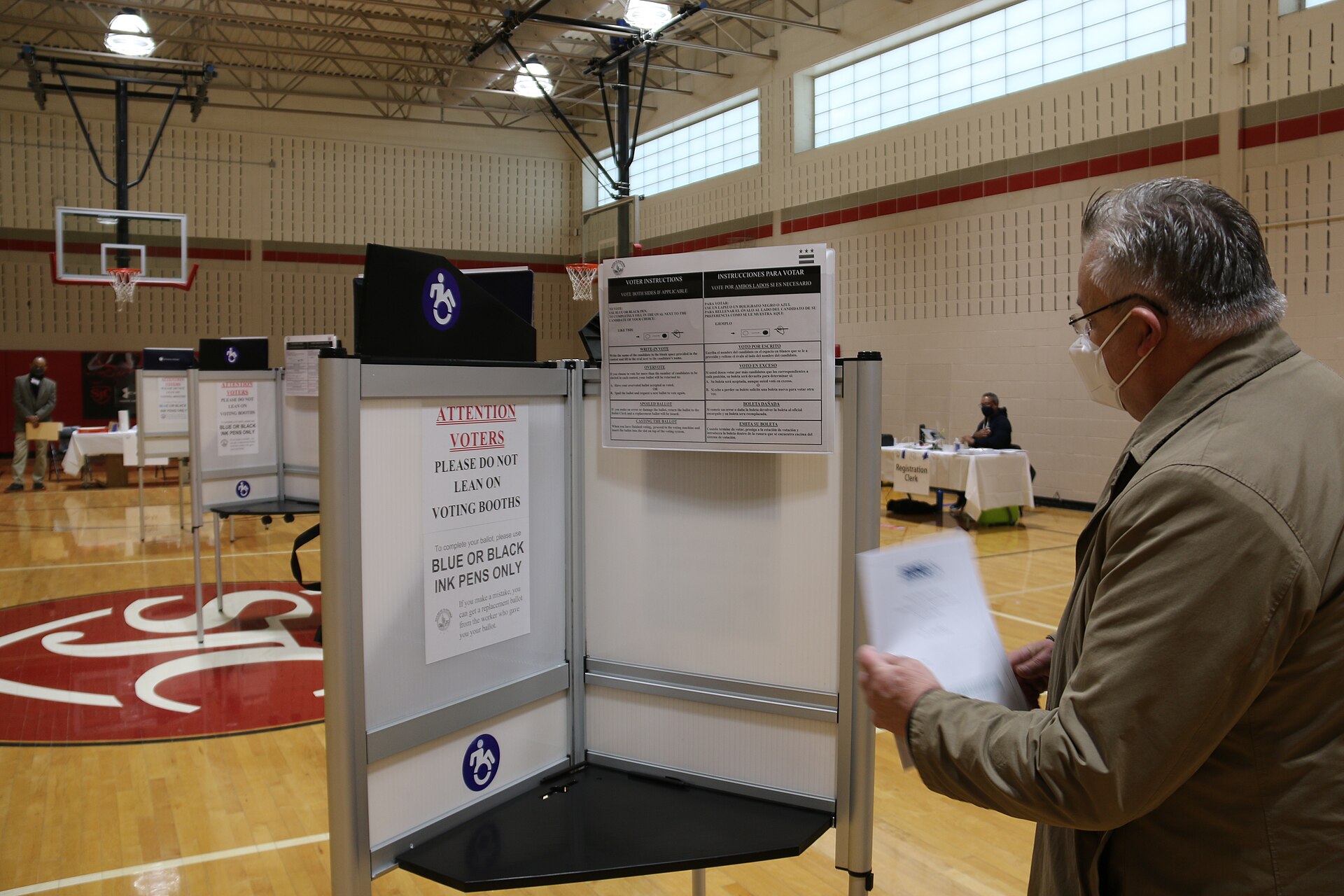
Georgia voters delivered one of the most dramatic election nights in the state’s modern history on Tuesday, November 3, 2026, and yet the story is not quite finished. Democrats swept every statewide executive office on the ballot, won the governor’s mansion for the first time in nearly three decades, and returned Senator Jon Ossoff to Washington with a decisive margin. But control of the Georgia House of Representatives still hangs in the balance, and it will come down to a single contest that voters will decide in a runoff election on Tuesday, December 1, 2026. House District 151, a three-way race in which no candidate secured a majority on election night, is the only race in the state expected to head to a December runoff, and its outcome will determine which party holds the gavel when the Georgia General Assembly convenes in January.
The stakes could hardly be higher. Georgia’s House has been under Republican control since 2004, more than two decades of uninterrupted dominance that survived multiple Democratic waves, redistricting cycles, and shifting demographics. Now, for the first time in a generation, Democrats are on course to take the chamber, according to projections from multiple outlets covering the count. The exact margin, however, remains unofficial and still moving as counties finish counting and certifying their results, and the different tallies published by different news organisations on Wednesday morning did not agree with each other. That disagreement is itself part of the story: in a chamber of 180 seats, a handful of races decided by dozens of votes can swing the majority, and District 151 is the last unresolved piece of the puzzle.
What makes the situation so unusual is the contrast between the clarity of the statewide results and the knife-edge uncertainty in the House. At the top of the ticket, the outcomes were called quickly and by wide margins. Down the ballot, in the state House, the picture was far messier, with several races within recount margins and the overall balance of power depending on results that had not yet been finalised. For Georgia voters, for the two parties, and for anyone watching the national implications of the 2026 midterms, the December 1 runoff in District 151 has suddenly become one of the most consequential single legislative races in the country.
Georgia Election Results 2026: A Democratic Sweep At The Top Of The Ticket
The headline results from Georgia on election night were unambiguous. Senator Jon Ossoff defeated his Republican challenger, former Representative Doug Collins, by a wide margin, with roughly 59 percent of the vote to about 41 percent for Collins, according to results reported by NBC and the Associated Press and carried by the Columbus Times. The Associated Press called the race at 7:56 p.m. Eastern Time on election night, an early call that reflected the size of the gap. Because Ossoff cleared the 50 percent plus one threshold that Georgia law requires for an outright win, no runoff will be held for the Senate seat, the Columbus Times reported. Georgia’s majority-vote rule, which forces a runoff when no candidate wins more than half the vote, has produced famous second rounds in the state in recent cycles, but it will not be triggered for the Senate this time.
The governor’s race produced an equally historic result. Keisha Lance Bottoms, the former mayor of Atlanta, defeated Republican Burt Jones by roughly 8.6 percentage points, about 54.3 percent to about 45.7 percent, according to the Atlanta Press Collective and the Economic Times. Bottoms becomes the first Black woman ever elected governor in United States history, and the first Democrat to win the Georgia governor’s office since 1998. The significance of that milestone was felt well beyond Georgia’s borders, and it capped a night in which Democrats won not only the two highest-profile races in the state but every statewide executive office on the ballot.
According to reporting by Savannah Now and the Cobb County Courier, the Democratic sweep extended through the full slate of statewide executive offices: lieutenant governor, secretary of state, attorney general, and the commissioners for labour, insurance and agriculture, as well as the state school superintendent. It was a clean sweep of the offices Georgians voted on statewide, a result that would have been difficult to imagine even a few years ago in a state that was, until recently, reliably Republican at the statewide level. The breadth of the victories suggested something broader than a single candidate’s appeal: voters across the state, in urban, suburban and some rural counties alike, moved toward Democrats in numbers that overwhelmed Republican incumbents and challengers alike.
All of these results remain unofficial until counties complete their certification and the state certifies the outcome, the Columbus Times noted, and the percentages cited here are based on the counts available in the hours after the polls closed. But the margins in the statewide races were large enough that the outcomes themselves are not in doubt. The uncertainty lies further down the ballot, where the races were closer and the consequences for the balance of power in Atlanta are still unresolved.
Georgia House Majority Democrats: The Count That Would Not Settle
The Georgia House of Representatives is where the night’s drama concentrated. Democrats are on course to take control of the chamber for the first time since 2004, according to projections reported by multiple outlets, but the precise seat count varied from one newsroom to another as results continued to arrive. The Atlanta Press Collective reported a tally of 90 Democrats to 84 Republicans, with five races still uncalled at the time of its report. The Dispatch Times, meanwhile, reported a different count of 93 Democrats to 86 Republicans. Both figures point in the same direction, a Democratic majority, but they differ enough to underline an important caution: these are unofficial, moving counts, and no final seat number should be treated as settled until certification is complete.
The discrepancy is not a sign of error by either outlet. It reflects the reality of a close count in which different organisations apply different thresholds for calling races, update at different times, and rely on different streams of county-level data. In a chamber where the majority threshold is 91 seats, a difference of a few seats in the reported tally is the difference between a comfortable majority and a one-seat edge, and that is why the final outcome depends on the handful of races that remain genuinely undecided. Among those, two stand out for their extraordinary closeness. In District 103, Democrat Chris Luchey was reported ahead by just 27 votes. In District 154, Democrat Harry James was reported ahead by 59 votes. Both margins fall within recount territory, and both races remain unofficial, according to the Atlanta Press Collective and the Dispatch Times. A recount in either district could change the result, and with it the arithmetic of the majority.
The Georgia Senate, by contrast, looks set to remain in Republican hands, albeit narrowly. The Atlanta Press Collective reported a tally of 29 Republicans to 27 Democrats in the state Senate, a slim edge that would leave the upper chamber divided in a way that complicates any party’s legislative ambitions. If the House does flip while the Senate stays Republican, Georgia would enter 2027 with divided government in its legislature, with a Democratic governor, a Democratic-controlled House, and a Republican-controlled Senate, a configuration that would force negotiation on every major bill and test the new governor’s ability to build coalitions across party lines.
Georgia House District 151 Runoff: The Race That Decides Everything
Against that backdrop, House District 151 has taken on an importance far beyond its own boundaries. The district’s race was a three-way contest featuring Republican incumbent Mike Cheokas, Democrat Wolfe, and independent Travis Lockhart, and no candidate won a majority of the vote on November 3, according to the Dispatch Times. Under Georgia law, that triggers a runoff between the top two finishers, scheduled for Tuesday, December 1, 2026. It is the one unresolved contest expected to go to a runoff, and because the overall House balance is so close, the result in District 151 could determine which party controls the chamber.
There is an important note of caution about the identity of the Democratic candidate in the race. Different sources have published different first names for Wolfe, and the discrepancy has not yet been resolved against the official record. Until the Georgia Secretary of State’s results page confirms the candidate’s full name, this report refers to the candidate by surname only. That restraint matters, because in a race this close and this consequential, accuracy about the candidates is as important as accuracy about the numbers. Voters in District 151 will have their say on December 1, and the candidates’ campaigns will have four weeks to make their case in a contest that will now attract attention and resources from across the state and beyond.
The mechanics of the runoff are straightforward. Georgia requires a candidate to win a majority, defined as 50 percent plus one vote, to win outright. When no candidate reaches that threshold in the general election, the top two vote-getters advance to a runoff, and the winner of that second election takes the seat. The rule is set out in state law and explained by Decode the Vote, citing georgia.gov. Turnout in runoffs is typically lower than in general elections, which means that the December 1 contest will be decided by whichever side does a better job of bringing its supporters back to the polls in the middle of the holiday season, a test of organisation as much as of message.
What The December 1 Runoff Means For Georgia
The consequences of the District 151 runoff extend well beyond a single seat. If the Democrat wins, Democrats would secure their path to a House majority, giving the party control of one legislative chamber and the governor’s office for the first time in a generation, and setting up a genuine contest with the Republican Senate over the state’s legislative agenda. If the Republican incumbent holds the seat, the arithmetic changes, and the majority question could hinge on the recounts in Districts 103 and 154, or on other races still being finalised. Either way, the December 1 result will shape the opening of the 2027 legislative session and the first year of Bottoms’ governorship.
For the new governor, the composition of the House will determine how much of her agenda can move in her first year. A Democratic House would give her a partner in the legislature and a route to pass priorities that have been blocked for years. A Republican House would leave her negotiating with a chamber controlled by the opposition, even as she holds the veto pen. For House Democrats, a majority would mean control of committees, the speakership, and the legislative calendar, powers they have not held since 2004. For House Republicans, holding the chamber, even by a single seat, would preserve a check on the new governor and keep the party relevant in state government despite its losses elsewhere.
The national implications are also real. Georgia has become one of the most closely watched states in American politics, a former Republican stronghold that has turned into a genuine battleground, and the 2026 results reinforce that transformation. The Democratic sweep of statewide offices, combined with a possible House majority, would mark the most complete Democratic victory in the state in decades. It would also feed into the broader national story of the 2026 midterms, in which Democrats were projected to win control of the United States House and Senate, according to projections that remained unofficial as counts continued. Georgia’s story is part of that larger picture, but it is also distinctively its own, shaped by the state’s demographics, its history, and the candidates who ran there.
What Happens Next In Georgia
Between now and December 1, several processes will run in parallel. Counties across Georgia will complete their canvasses and certify their results, a process that will firm up the numbers in the close House races and confirm whether the recounts in Districts 103 and 154 change anything. The Secretary of State’s office will publish official results, which will resolve the outstanding questions about candidate names and final tallies. And in District 151, the two runoff candidates will campaign in a compressed, high-intensity race, with early voting expected to open in the days before the December 1 election day.
Voters in District 151 should check with their county election office for early voting dates and polling locations, as runoff logistics can differ from the general election. For the rest of Georgia, the wait will be shorter but no less consequential: once certification is complete, the full shape of the new legislature will be known, and the work of organising the House, choosing its leadership, and preparing for the January session will begin. The December 1 runoff is the final act of Georgia’s 2026 election, and it will decide whether the Democratic wave that swept the statewide offices also carries the state House, or whether Republicans hold on to the last piece of their long dominance in Atlanta. Either way, the result will be watched far beyond Georgia’s borders, because in a chamber balanced on a knife’s edge, a single district’s voters will decide the direction of an entire state.
Sources
USN reviewed reporting from multiple outlets for this story. Read more from Atlanta Press Collective, Columbus Times and Decode the Vote.