

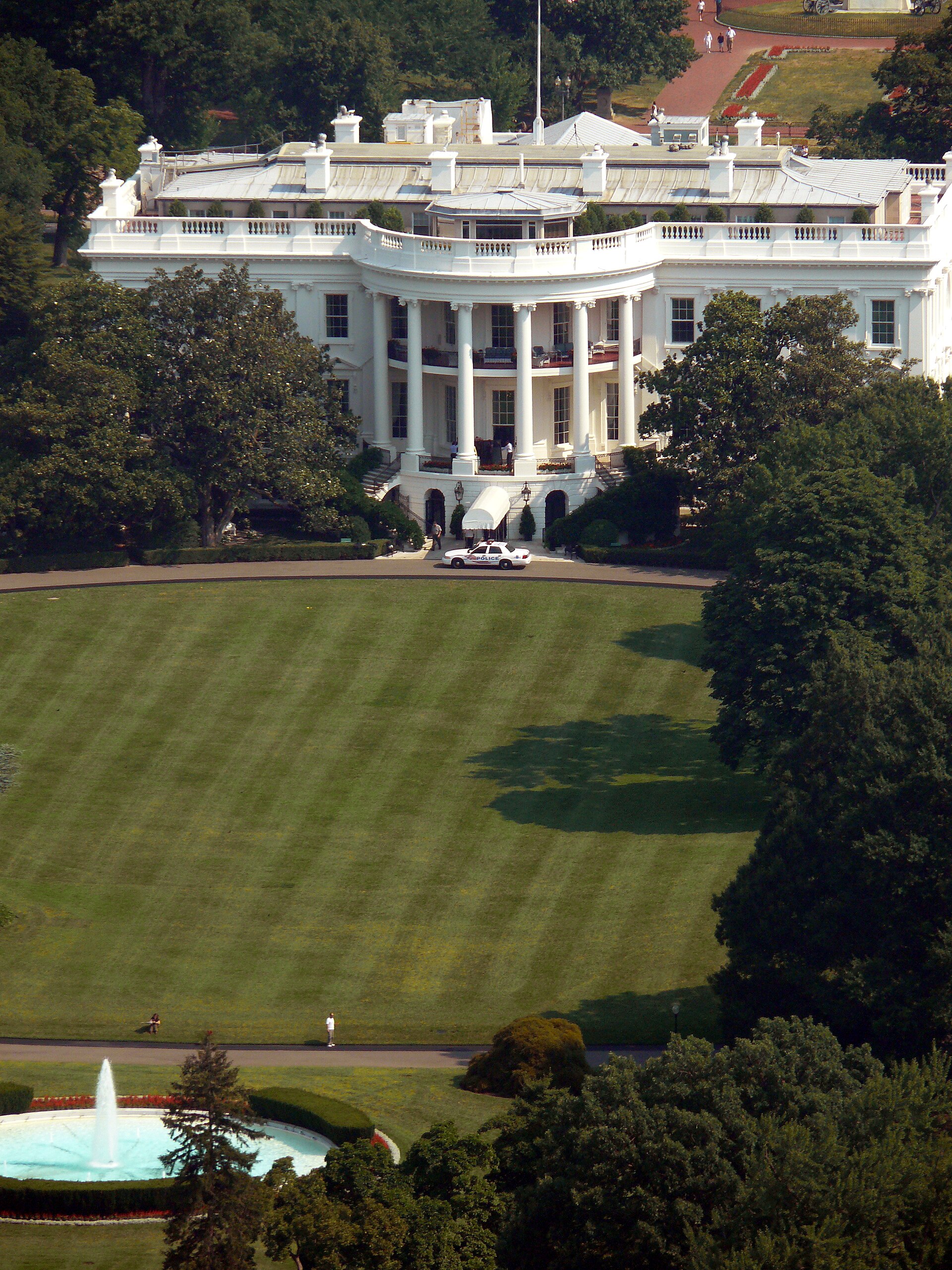
The White House issued a defiant 13-point statement on 4 November 2026, responding to the Democratic takeover of Congress and setting out its position for the final two years of President Donald Trump’s presidency. The statement was titled “President Trump Will Again Defy the Odds, the Fake News, and the Radical Left”, and its tone was combative from the start. It did not present the midterm result as a reason to change course or to seek compromise, but as a challenge that the president would meet by continuing to fight for his agenda.
The statement’s central message was contained in a single sentence that summed up the White House view of the period ahead: “In the final two years of his presidency, Democrats will try — and fail — to reverse everything President Trump has done.” That sentence frames the next two years as a contest in which Democrats will attempt to undo the president’s work, and in which, according to the White House, they will not succeed. It presents the Democratic takeover of Congress not as a settled shift in power that will reshape policy, but as an attempt that is expected to fail.
The statement closed with a shorter and equally direct line: “President Trump will never stop fighting.” That closing line gave the document its public shorthand, and it was repeated in reporting of the statement as the summary of its message. The phrase “never stop fighting” was presented as a promise about the president’s approach to the remainder of his term, and as a warning to Democrats that opposition from Congress would not lead him to withdraw or to abandon the agenda he has pursued.
The White House issued the statement on 4 November 2026, the day after the midterm elections had delivered Congress to the Democrats, according to the reporting. The timing is important, because the statement was a rapid response to a political setback, issued while the result was still fresh and while the implications of a Democratic Congress were still being discussed. It was not a delayed or reflective assessment, but an immediate and defiant reply, intended to set the terms of the debate about what would happen next.
White House 13-Point Statement on Trump and the Democrats
The 13-point statement, as its name suggests, was organised around 13 areas in which the White House expects Democratic opposition. The statement listed 13 areas where it expects that opposition to be focused, including immigration enforcement, taxation, crime, energy production, education, federal spending and the federal judiciary. Those seven areas were named in the reporting summarised here, and they give a clear picture of the range of policy that the White House believes will be contested in the period ahead.
Immigration enforcement was among the areas listed, and its inclusion reflects the prominence of immigration in the president’s agenda. The statement’s warning that Democrats will try to reverse what Trump has done would, in that area, mean an attempt to change or undo the enforcement approach that has been pursued. The White House position, as set out in the statement, is that such an attempt will fail, and that the president will continue to fight for the approach he has taken.
Taxation was also listed, pointing to the economic and fiscal side of the contest ahead. Tax policy affects households, businesses and the federal budget, and a Democratic Congress seeking to reverse the president’s approach to taxation would be seeking to change a central part of his economic agenda. The statement’s inclusion of taxation among the 13 areas shows that the White House expects the fight over the president’s record to extend beyond a single issue, into the wider question of how the economy is managed and how revenue is raised.
Crime was another area named in the statement, and its inclusion underlines the law-and-order dimension of the expected opposition. The White House listed crime alongside immigration enforcement and the other areas as a field in which Democrats will try to reverse what Trump has done. The statement does not, in the reporting summarised here, set out the specific policies at issue in each area, but the naming of crime as one of the 13 areas shows that public safety and law enforcement are expected to be part of the wider political contest.
Energy production was also among the areas listed, pointing to the question of how energy is produced and how energy policy is set. That area has been a source of political disagreement, and its inclusion in the statement suggests that the White House expects Democrats in Congress to challenge the president’s approach to energy. As with the other areas, the White House position is that such a challenge will fail, and that the president will continue to defend his approach.
Education, federal spending and the federal judiciary were the remaining areas named in the reporting summarised here. Education covers schools and the wider question of how education policy is shaped, while federal spending covers the size and direction of government expenditure. The federal judiciary covers the courts and the appointment and role of judges, an area in which the president’s influence can last well beyond his term. Together, the seven named areas cover a broad sweep of domestic policy, from the border and the economy to schools, spending and the courts.
The statement listed 13 areas in total, and only seven were named in the reporting summarised here. The other areas were not detailed in that reporting, and they should not be assumed or invented. What is known is that the statement set out 13 areas, that seven of them were immigration enforcement, taxation, crime, energy production, education, federal spending and the federal judiciary, and that the White House expects Democratic opposition in all 13. The breadth of the list, even as reported, shows that the White House sees the coming contest as wide-ranging, touching many parts of the president’s agenda at once.
The Warning on Impeachment and Reversing the Agenda
Alongside the list of policy areas, the statement warned that attempts to impeach Trump or reverse his agenda would fail. That warning was a central part of the document’s message, and it was presented as a direct response to the Democratic takeover of Congress. With Democrats in control of Congress, the possibility of impeachment and the possibility of legislative reversal are the two most direct tools that a Congress can use against a president, and the White House addressed both of them in the same warning.
The warning on impeachment is significant because impeachment is a constitutional process that Congress can initiate, and a change in control of Congress changes who is in a position to bring such a process forward. By warning that attempts to impeach Trump would fail, the White House was stating its expectation that any such attempt would not succeed, whether because it would not gain sufficient support, because it would not result in removal, or because the president would withstand it. The reporting summarised here does not say that an impeachment attempt has been launched, only that the White House warned that any such attempt would fail.
The warning on reversing the agenda is broader. It covers the 13 areas listed in the statement, and it extends to the president’s record as a whole. The statement’s sentence that Democrats will try, and fail, to reverse everything President Trump has done is a sweeping claim, covering not only one policy or one area, but the whole of what he has done in office. The White House position is therefore not limited to a single fight, but is presented as a general stance for the final two years of the presidency: the agenda will be defended, and attempts to undo it will not succeed.
It is important to distinguish between the warning and the outcome it predicts. The statement is a prediction and a declaration of intent, not a description of what has already happened. It says that Democrats will try to reverse the agenda and that they will fail, and that attempts to impeach Trump would fail. Those are claims about the future, made by the White House in response to a midterm loss. Whether they prove correct will depend on what Democrats in Congress actually do, on how the president responds, and on the wider political process over the next two years. The statement itself does not settle those questions, but it sets out the White House view of how they will be answered.
The tone of the warning also matters. The statement was described as defiant and combative, and its title, “President Trump Will Again Defy the Odds, the Fake News, and the Radical Left”, reinforces that tone. The title presents the president as someone who has defied the odds before and will do so again, and it frames his opponents in terms that are themselves combative. That framing is part of the message, because it presents the coming period not as a time for retreat or for accommodation, but as a time for continued confrontation.
Never Surrender and the Message on Social Media
The White House also posted “NEVER SURRENDER” with a photo of Trump on X on Wednesday 4 November, and posted “PSA: TRUMP IS STILL YOUR PRESIDENT.” Those posts were made on the same day as the 13-point statement, and they carried the same message in a shorter and more direct form. The phrase “NEVER SURRENDER” is a declaration that the president will not give up or concede, even after a midterm loss, while the second post, “PSA: TRUMP IS STILL YOUR PRESIDENT”, is a reminder that, despite the Democratic takeover of Congress, Trump remains president.
The use of X to carry those messages shows how the White House sought to communicate its position beyond the formal statement itself. A formal statement sets out a position in full, with a list of areas and a detailed warning. A social media post, by contrast, reaches a wider audience quickly, in a few words and with an image. By posting “NEVER SURRENDER” with a photo of Trump, the White House gave its message a visual form as well as a verbal one, and by posting “PSA: TRUMP IS STILL YOUR PRESIDENT”, it gave it a form that could be shared and repeated.
The two posts should be understood together with the statement, rather than separately from it. The statement said that President Trump will never stop fighting, and the post said “NEVER SURRENDER”. The two phrases are different in wording, but they carry the same meaning: the president will continue, he will not withdraw, and he will not accept the midterm result as a reason to stop. The second post adds a further point, that the president remains in office, and that the Democratic takeover of Congress does not change that fact.
The date of the posts, Wednesday 4 November, is the same date as the statement, and the day is consistent with the calendar for 2026, in which 4 November falls on a Wednesday and 5 November falls on a Thursday. The timing places the posts in the immediate aftermath of the midterm result, as part of the same rapid response as the statement. They were not a later reflection, but a same-day accompaniment to the formal document, intended to reinforce its message in public.
The choice of language in the posts is also notable. “NEVER SURRENDER” is written in capital letters, giving it the force of a slogan, while “PSA: TRUMP IS STILL YOUR PRESIDENT” uses the form of a public service announcement to make a political point. Both are short, direct and designed to be remembered, and both repeat the core of the statement’s message in a form that is suited to social media. Together, they show that the White House response to the midterm loss was not only a written statement, but a coordinated public message across different channels.
What the Statement Means for the Final Two Years
The 13-point statement sets the terms for how the White House expects the final two years of Trump’s presidency to unfold. It presents those years as a period in which Democrats, now in control of Congress, will try to reverse the president’s agenda, and in which the president will fight to prevent that reversal. That framing turns the next two years into a contest, rather than a period of cooperation or of shared legislation, and it suggests that the White House expects confrontation to be the defining feature of the period ahead.
The statement’s focus on 13 areas shows that the contest, as the White House sees it, will not be limited to one issue. Immigration enforcement, taxation, crime, energy production, education, federal spending and the federal judiciary were the areas named in the reporting, and the statement listed six further areas that were not detailed in that reporting. The range of the list suggests that the White House expects Democratic opposition to be broad, touching many parts of the president’s record at the same time, and that the president’s defence of that record will therefore also need to be broad.
The statement does not, in the reporting summarised here, set out a new policy or a new legislative proposal. It is a statement of position, not a programme for new action. Its purpose is to declare that the president will defend what he has done, and that attempts to undo it will fail. That purpose is political as much as it is substantive, because it is aimed at shaping expectations about the next two years, at reassuring supporters that the midterm loss will not lead to a change of direction, and at warning opponents that their efforts will not succeed.
The Democratic side of the contest is not detailed in the reporting summarised here, beyond the fact of the Democratic takeover of Congress and the expectation that Democrats will try to reverse the president’s agenda. The statement presents that expectation as a fact about what Democrats will do, but it does not quote Democratic leaders or set out their stated plans. A full account of the period ahead would need to include the Democratic position as well, and the reporting summarised here does not provide that detail. What it provides is the White House view, and that view should be reported as the White House view, not as an agreed account of what will happen.
The statement’s prediction that Democratic attempts will fail is also a claim that will be tested by events. A Democratic Congress has legislative power, and it can pass bills, hold hearings and use its oversight role. Whether those powers will be used to try to reverse the president’s agenda, and whether any such attempt will succeed or fail, will depend on the actions taken in Congress, on the president’s use of his own powers, and on the wider political and legal process. The White House statement gives its own answer to those questions in advance, but the answer will only be confirmed or challenged as the next two years unfold.
Reaction and What Happens Next
The immediate reaction to the statement, as reported, was focused on its tone and on its central phrases. The closing line, “President Trump will never stop fighting”, and the social media post, “NEVER SURRENDER”, were the elements most widely noted, because they summed up the statement in a few words. The title, “President Trump Will Again Defy the Odds, the Fake News, and the Radical Left”, was also noted for its combative framing, and for its presentation of the president as someone who has overcome opposition before and will do so again.
What happens next will depend on the actions of both the White House and the new Democratic Congress. The statement sets out an expectation that Democrats will try to reverse the agenda, and that those attempts will fail. If Democrats do bring forward measures to change policy in the areas listed, including immigration enforcement, taxation, crime, energy production, education, federal spending and the federal judiciary, then the contest described in the statement will take a concrete form, and the White House response to each measure will show whether the prediction holds.
Similarly, if an attempt is made to impeach Trump, the White House warning that such an attempt would fail will be tested by the process itself. The reporting summarised here does not say that such an attempt has been made, and it should not be assumed that one will be made. The warning is a statement about what the White House expects if such an attempt is made, not a report that one has already happened.
For now, the reported facts are these: on 4 November 2026, the White House issued a 13-point statement titled “President Trump Will Again Defy the Odds, the Fake News, and the Radical Left”, responding to the Democratic takeover of Congress; the statement said that in the final two years of his presidency, Democrats will try, and fail, to reverse everything President Trump has done, and it closed with the line “President Trump will never stop fighting”; it listed 13 areas where it expects Democratic opposition, including immigration enforcement, taxation, crime, energy production, education, federal spending and the federal judiciary, and it warned that attempts to impeach Trump or reverse his agenda would fail; and on Wednesday 4 November, the White House also posted “NEVER SURRENDER” with a photo of Trump on X, and “PSA: TRUMP IS STILL YOUR PRESIDENT.” That is the record on which any further account of the final two years will be built.
Sources
USN reviewed reporting from multiple outlets for this story. Read more from The Tribune, The Waterbury Times and UNILAD.