

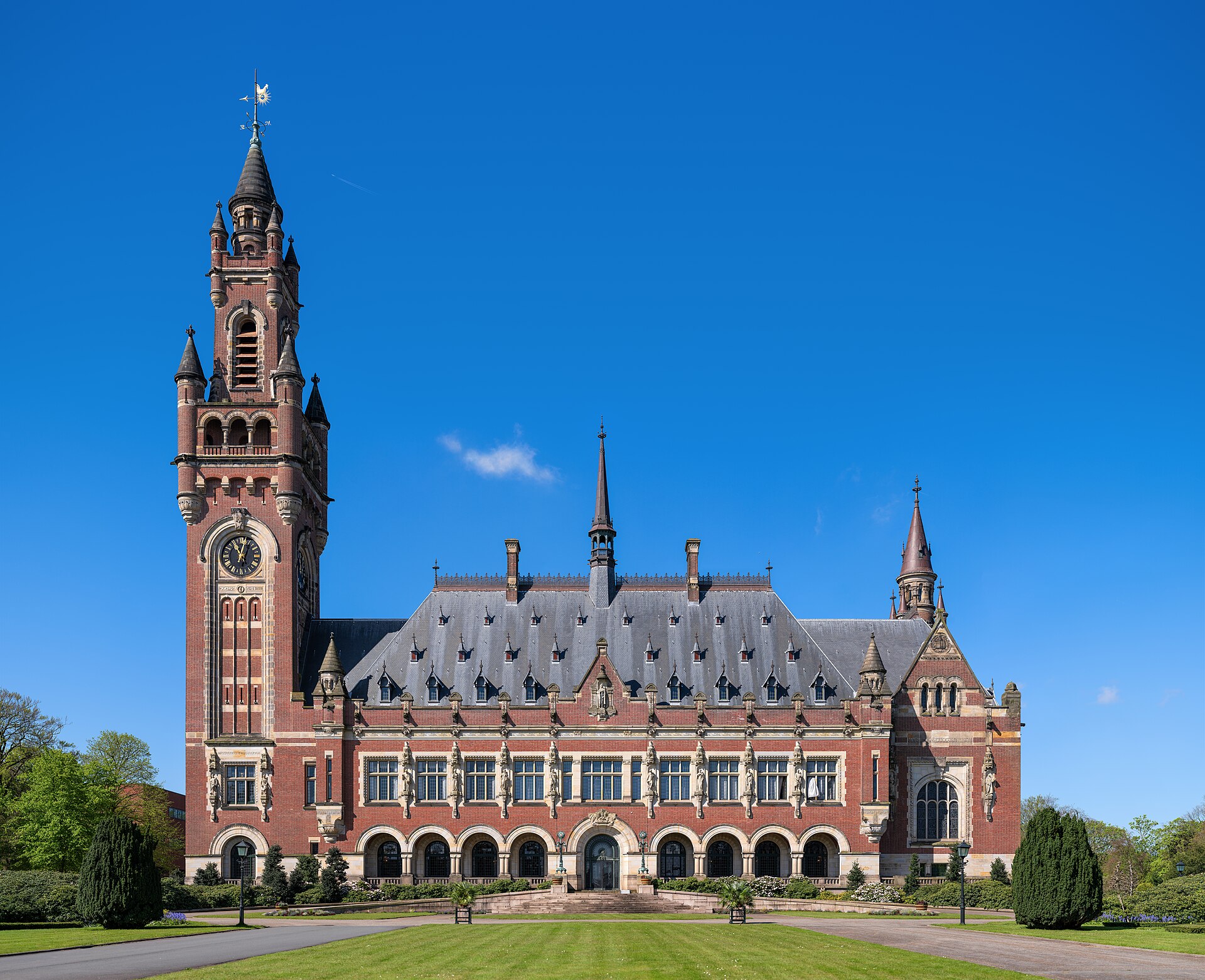
The United Nations has elected five judges to the International Court of Justice, the World Court in The Hague, for nine-year terms beginning on February 6, 2027. The vote took place on Tuesday, November 3, 2026, at United Nations headquarters in New York, where the General Assembly and the Security Council voted separately, by secret ballot, and had to agree on the same five names. The five judges chosen are Dapo Akande of the United Kingdom, Francois Alabrune of France, Mahmoud Daifallah Hmoud of Jordan, Rena Lee of Singapore and Phoebe Okowa of Kenya.
The election matters beyond the courtroom in The Hague because of what is waiting on the Court’s docket. The Court’s president, Judge Yuji Iwasawa, told the General Assembly on October 29, 2026, that 24 contentious cases are pending, covering disputes over territory, human rights and treaty interpretation, a workload described in reporting on the vote as a record. Among them is South Africa’s case accusing Israel of violating the Genocide Convention in its war in Gaza, in which the Court has ordered provisional measures but has not issued a final ruling on whether genocide occurred. The Court also announced on the day of the vote that it will deliver judgment on November 19, 2026, in The Gambia’s case accusing Myanmar of genocide against the Rohingya minority, a judgment that will be final and without appeal.
The five judges will join a bench asked to decide some of the most politically charged questions in international law, at a time when the authority of international courts is itself contested by several governments. Their terms run until February 2036. Three, Akande, Alabrune and Lee, are new to the Court. Two, Hmoud and Okowa, were already serving after being elected to fill vacancies, and have now won full nine-year terms. The election also made history for Singapore: Rena Lee becomes its first judge, and the first female judge from Southeast Asia, on the Court, according to Singapore’s government.
How the ICJ judges election works: two majorities, secret ballots
The election of judges to the International Court of Justice follows a procedure unlike an ordinary United Nations vote, and that procedure explains why the November 3 vote took several rounds. The Court has 15 judges, each of a different nationality, who serve nine-year terms. To preserve continuity, a third of the bench, five seats, comes up for election every three years. The judges elected in any round do not take office immediately: the five chosen on November 3, 2026, will begin their terms on February 6, 2027, the day after the terms of five current members expire on February 5, 2027.
A candidate cannot be elected by one United Nations body alone. Under the Court’s Statute, a candidate must obtain an absolute majority in both the General Assembly and the Security Council, voting independently: at least 97 votes in the Assembly and at least 8 in the 15-member Council. Both bodies vote by secret ballot, at the same time but separately, and a candidate who wins a majority in only one body is not elected. If the two bodies do not agree on all five seats, further rounds are held, and candidates may withdraw between rounds.
Candidates are nominated by national groups in the Permanent Court of Arbitration, not directly by governments, and a candidate may be nominated by more than one group. Before the vote, Akande had received 43 such nominations, Alabrune 40, Lee 33, Okowa 26 and Paik 21, according to reporting ahead of the vote. Nominations signal support, but only the secret ballots in New York decide the outcome.
Nine candidates contested the five seats. Alongside the winners, the ballot included Jin-Hyun Paik of South Korea, Charles Chernor Jalloh of Sierra Leone, Marcelo Vazquez-Bermudez of Ecuador and Luz del Carmen Ibanez Carranza of Peru. Because each General Assembly ballot can support more than one candidate, individual totals add up to far more than the number of member states voting, and should not be read as a headcount of countries.
The fifth seat: how Okowa won after the two bodies split
Four seats were settled in the first round, when the two bodies agreed on the same four names. In the Assembly’s first ballot, Rena Lee led with 151 votes, followed by Francois Alabrune with 146, Dapo Akande with 129 and Mahmoud Daifallah Hmoud with 106, all above the 97-vote threshold. In the Security Council, Akande received 11 votes, Alabrune 13, Hmoud 10 and Lee 13, all above the 8-vote threshold. As all four had a majority in both bodies, General Assembly president Khalilur Rahman declared them duly elected.
The fifth seat was the problem. In the General Assembly, Phoebe Okowa of Kenya led the remaining candidates with 117 votes, ahead of Paik with 92, Jalloh with 82, Vazquez-Bermudez with 73 and Ibanez Carranza with 5. In the Security Council, however, the order was different: Vazquez-Bermudez of Ecuador obtained an absolute majority there, while Okowa received only 6 of the 15 votes. With the two bodies backing different candidates for the last seat, no fifth judge could be declared elected, and the rules required another round.
Withdrawals then decided the outcome. After the second round, Jalloh, Paik and Vazquez-Bermudez withdrew from the contest, with Sierra Leone announcing that it was withdrawing Jalloh’s candidacy and giving its full support to Okowa. That left Okowa and Ibanez Carranza as the remaining contenders for the final seat. In the deciding ballot, Okowa won 183 votes in the General Assembly against 2 for Ibanez Carranza, with six abstentions, and 13 votes in the Security Council against none for her rival. Having obtained an absolute majority in both bodies, Okowa was declared duly elected for a nine-year term beginning on February 6, 2027.
The sequence shows that World Court elections are decided by the intersection of two different electorates: a candidate can lead comfortably in the General Assembly and still fail if the Security Council prefers someone else, and a trailing candidate can win once the field narrows. Okowa’s path from 6 Security Council votes in the first round to 13 in the final round shows how much can change between ballots.
Who the five new ICJ judges are
Dapo Akande, the United Kingdom’s candidate, is the Chichele Professor of Public International Law at the University of Oxford and a fellow of All Souls College, Oxford. Born in Nigeria and originally qualified as a lawyer there, he has taught at Oxford since 2004 and is a member of the United Nations International Law Commission. He has acted as counsel, adviser or expert before the International Court of Justice, the International Tribunal for the Law of the Sea, the International Criminal Court and other tribunals, and has advised governments across all five United Nations regional groups.
Francois Alabrune of France brings a career in French foreign-policy law. He joined the Legal Affairs Directorate of the French foreign ministry in 1988, served as legal adviser to France’s United Nations mission in New York from 1997 to 2000, was deputy director of legal affairs from 2001 to 2004, and was director of legal affairs and legal adviser to the ministry from 2014 to 2022. He helped negotiate treaties including the Rome Statute that established the International Criminal Court, and acted as agent for France before the International Court of Justice, the European Court of Human Rights and the Court of Justice of the European Union. Since 2022 he has been France’s ambassador to the Netherlands and to the international legal institutions in The Hague.
Rena Lee of Singapore, 57, is her country’s ambassador for international law, after more than three decades in Singapore’s public service, including posts at the Attorney-General’s Chambers, the Ministry of Defence and the Intellectual Property Office, where she was chief executive. From 2018 to 2023 she was Singapore’s oceans ambassador, and as president of the United Nations conference on marine biodiversity beyond national jurisdiction she led negotiations to the consensus adoption of the high-seas treaty under the United Nations Convention on the Law of the Sea. Time magazine named her among its 100 most influential people of 2024 for that work. Singapore’s law minister, Edwin Tong, told the General Assembly on October 29 that Lee is an eminently qualified practitioner and diplomat, with expertise in the law of the sea, climate and environmental law, humanitarian law and human rights.
Mahmoud Daifallah Hmoud of Jordan was already a member of the Court, and the new term extends his service to a full nine years. Jordan’s permanent representative to the United Nations in New York since 2021, and previously its ambassador to Singapore, Hmoud was elected to the Court on May 27, 2025, to fill the vacancy left when Nawaf Salam of Lebanon resigned to become Lebanon’s prime minister, for the remainder of Salam’s term expiring on February 5, 2027. Hmoud served on the International Law Commission from 2007 to 2022, chairing it in 2021, and was legal adviser and director of the legal department at Jordan’s foreign ministry between 1999 and 2018.
Phoebe Okowa of Kenya was likewise already on the bench, and her election converts a short remainder term into a full nine-year term. The first Kenyan to serve on the Court, Okowa was elected on November 12, 2025, to the seat vacated when Abdulqawi Ahmed Yusuf of Somalia resigned effective September 30, 2025, for the remainder of Yusuf’s term, also expiring on February 5, 2027. A professor of public international law at Queen Mary University of London, Okowa was elected to the International Law Commission in 2021 and has been Kenya’s appointee to the Permanent Court of Arbitration.
A World Court facing a record caseload
The Court the five judges will join is busier, and more politically exposed, than at any point in its history. Established in 1945 as the principal judicial organ of the United Nations, and based at the Peace Palace in The Hague, the Court settles legal disputes between states and gives advisory opinions on questions referred by United Nations organs and agencies. It is not a criminal court: it does not try individuals, a role belonging to the separate International Criminal Court, also in The Hague. The World Court’s parties are states, its contentious judgments are binding on the parties, and there is no appeal.
The figure of 24 pending contentious cases, given by President Iwasawa on October 29, captures only part of the workload, because advisory proceedings, in which the Court answers a legal question without deciding a dispute between two named parties, run alongside the contentious docket. In recent years the Court has given advisory opinions on questions including states’ climate-change obligations and Israel’s obligations towards the United Nations and humanitarian organisations in the occupied Palestinian territory, the latter in October 2025. Advisory opinions are not binding like contentious judgments, but they carry great authority as statements of international law.
Contentious cases routinely take years from filing to final judgment, passing through written pleadings, hearings on preliminary objections, hearings on the merits and deliberation. The Gambia case, filed in November 2019, will reach judgment seven years later. That pace frustrates governments and victims’ groups that want faster answers, but the Court’s defenders argue that it reflects the complexity of the questions and the need for judgments that losing states will accept as legitimate.
There is also a question of compliance, which no election can settle. The Court has no police force or enforcement arm of its own. If a state does not comply with a judgment, the other party may take the matter to the Security Council, but the Council’s own politics, including the veto held by its five permanent members, can block action. Supporters reply that much of the Court’s work is quieter: settling boundary, treaty and maritime disputes case by case, in a way that prevents disputes from becoming conflicts.
South Africa’s case and the genocide cases still to be decided
Among the pending cases, the one most often cited in reporting on the November 3 election is South Africa’s case against Israel under the Genocide Convention. South Africa accuses Israel of violating the Convention in its war in Gaza. The Court has not decided that central allegation: it has ordered provisional measures, emergency orders intended to protect rights while a case is pending, but it has not issued a final ruling on whether genocide occurred. That distinction matters, because provisional measures are not a finding on the merits, and reporting that treats them as one misstates what the Court has done. The case will continue before the bench that the five new judges join, and its final judgment, whenever it comes, is likely to be one of the most consequential in the Court’s history.
The Gambia’s case against Myanmar, by contrast, is about to reach a conclusion. The Gambia filed the case in November 2019, with the backing of the Organisation of Islamic Cooperation, alleging that Myanmar’s atrocities against the Rohingya violate the Genocide Convention. The Gambia alleges that Myanmar’s forces killed, raped and burned villages with the intent to destroy the Rohingya as a group, driving more than 700,000 people to flee to Bangladesh after a campaign that began in August 2017. Myanmar denies genocide and says its operations were a legitimate counter-terrorism response to insurgent attacks on border police posts. That dispute, over intent as much as over facts, is at the heart of the case.
The case has already passed through the Court’s preliminary stages. In January 2020 the Court ordered Myanmar to prevent genocidal acts against the Rohingya, to ensure its military did not commit such acts, and to preserve evidence. In July 2022 the Court rejected all of Myanmar’s preliminary objections, including its argument that The Gambia lacked standing because it was acting as a proxy for the Organisation of Islamic Cooperation, and confirmed that The Gambia could bring a claim under the Genocide Convention even though it was not itself directly affected. Hearings on the merits were held in January 2026, over three weeks. The judgment scheduled for November 19, 2026, will therefore be the Court’s first final ruling on whether genocide was committed against the Rohingya, and only the third time in its 80-year history that it has delivered a final judgment on the merits of a state-level genocide complaint, after cases involving Bosnia and Herzegovina, Serbia and Croatia.
Both cases illustrate why the bench’s composition matters and why it is also limited. Judges serve in their personal capacity, not as representatives of their governments, and the Statute requires the bench as a whole to represent the main forms of civilisation and the principal legal systems of the world. Governments nevertheless campaign hard for their candidates, as the nomination counts ahead of November 3 showed. The new bench’s range of expertise, from armed-conflict law to treaty negotiation, is what will shape how it handles the cases before it.
What happens next for the new ICJ bench
The immediate next step is the November 19, 2026, judgment in The Gambia’s case against Myanmar. It will be delivered by the current bench, before the five newly elected judges take office, and its outcome has not been reported: any account claiming to know the result before November 19 would be speculation. The judgment will be read at the Peace Palace in The Hague, will be final and without appeal, and will close a case that began seven years ago. If the Court finds that Myanmar violated the Genocide Convention, The Gambia has asked for orders including an end to all violations, criminalisation of genocide under Myanmar’s own law, trials of suspected perpetrators and reparations, including a safe and dignified return home.
The five newly elected judges will then take office on February 6, 2027, joining the ten judges whose terms continue. They will elect a president and vice-president from among themselves and begin work on the remaining pending cases, including South Africa’s case against Israel, whose timetable has not been announced. They will also face the continuing debate about the Court’s role where compliance with judgments is uneven. None of those debates will be settled by a single election, but the November 3 vote ensures that the bench deciding them will include judges whose careers span academia, government legal advice, treaty negotiation and prior service on the Court itself.
For the United Nations, the election was also a test of its procedures. A vote that required several rounds, a split between the two bodies and withdrawals before a final ballot could have produced deadlock. Instead, it produced a full bench for the next nine years, spanning Western Europe, the Middle East, Southeast Asia and Africa. Whether that bench commands confidence will depend not on the vote that chose it but on the judgments it delivers.
Sources
USN reviewed reporting from multiple outlets for this story. Read more from Al Jazeera, United Nations and Channel News Asia.