

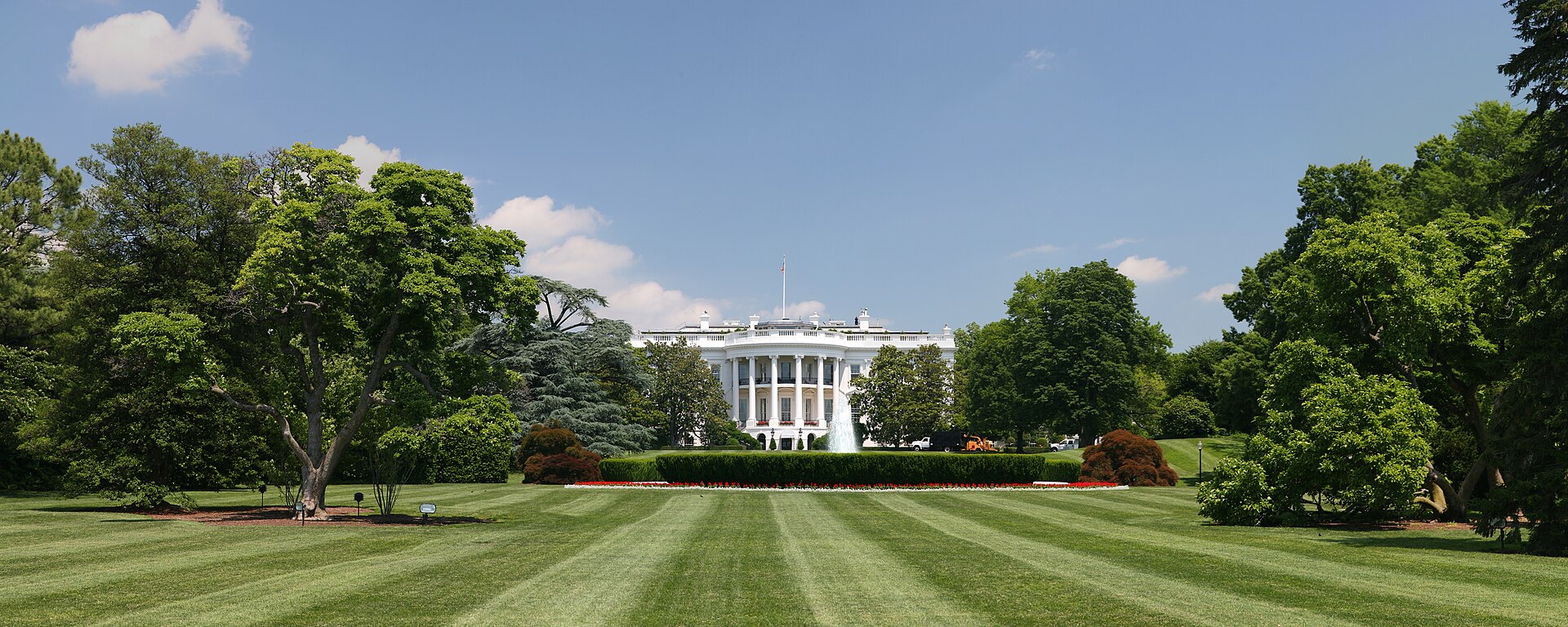
First Lady Melania Trump hosted Russian and Ukrainian officials at the White House on Thursday 5 November 2026, using the meeting to call for a full peace deal between Russia and Ukraine and for an outcome that would last longer than a short pause in the fighting. Her message, as reported, was direct: the parties should aim for something more enduring than a temporary cease-fire. The meeting came as the war nears the end of its fifth year, a point that gives the call for a lasting settlement added weight, because a conflict of that length has already shaped years of diplomacy, humanitarian need and public debate about how it might finally end.
The White House meeting was notable for the fact that officials from both sides were present in the same room with the first lady. In a war in which direct contact between Russian and Ukrainian representatives has often been limited, difficult or indirect, the act of hosting both delegations together was itself a signal. It placed the emphasis on conversation rather than on separate statements, and it placed Melania Trump in a visible mediating role at a moment when the question is not only whether fighting can be paused, but whether a wider agreement can be reached at all.
Melania Trump did not present the meeting as an end in itself. She framed it as part of a longer effort, one that had already produced a concrete, if limited, result in the days before the White House gathering. That earlier result was a six-day localised ceasefire around the Russian-held town of Oleshky, and the first lady’s argument, as reported, was that the step taken there should point towards a broader and more durable settlement, rather than being treated as a sufficient outcome on its own.
The distinction she drew matters. A temporary cease-fire can create space for civilians to move, for aid to reach people who need it and for the immediate risk of harm to fall, even if only for a short period. A full peace deal, by contrast, would need to settle the underlying conflict itself. By calling for something more enduring than a temporary cease-fire, Melania Trump was therefore drawing a line between a humanitarian pause and a political settlement, and urging the representatives in the room to keep the second goal in view even while acknowledging the value of the first.
Melania Trump Russia Ukraine Peace Meeting at the White House
The meeting on Thursday 5 November 2026 brought the first lady together with Russian and Ukrainian officials at the White House. The timing was significant, because it followed closely on the localised ceasefire around Oleshky and on a separate recognition that Melania Trump received the day before. The sequence of events, as reported, suggests a deliberate progression: a local agreement, a public recognition of the first lady’s role, and then a White House meeting in which she pressed both sides to go further.
Hosting the meeting at the White House also gave it a formal setting and a public profile. It was not described as a private or informal exchange, but as a hosted meeting in which the first lady set out her position in front of representatives of both governments. That setting matters in diplomacy, because where a meeting takes place can be as important as what is said in it. A White House meeting signals attention at the highest level, and it puts the discussion on the public record in a way that a less visible encounter would not.
The core of Melania Trump’s message was the call for a full peace deal. The phrase she used, as reported, was “something more enduring than a temporary cease-fire”, and it was presented as the standard by which further progress should be judged. The wording leaves no doubt that a short pause, however welcome, was not the goal she was setting for the representatives. The goal was a deal that would hold, and that would bring the war itself to an end rather than simply interrupting it for a few days.
That call also reflects the scale of the task facing any peace effort at this stage of the war. As the conflict nears the end of its fifth year, the issues at stake are not limited to a single town or a single front line. They involve the wider relationship between Russia and Ukraine, the future of the people living in affected areas, and the question of how a settlement could be made to last. A first lady’s meeting cannot settle those questions on its own, but it can keep them at the centre of the discussion and can remind both sides that the aim is a lasting agreement, not only a temporary arrangement.
The meeting also showed how Melania Trump has positioned herself in this effort. She was not presented simply as a host, but as someone who had already been involved in mediating the Oleshky ceasefire and who was now using that experience to press for a further step. The combination of a practical result in Oleshky and a public call in Washington gave her intervention both a record to point to and a direction to argue for. The record was the ceasefire itself. The direction was a full peace deal.
The Oleshky Ceasefire That Came Before the Meeting
The ceasefire that preceded the White House meeting was a six-day localised ceasefire around the Russian-held town of Oleshky. It was agreed on 23 October and was in effect around 27 October to 1 November. The dates matter, because they show that the agreement was reached before the White House meeting and that it had already run its course by the time the first lady hosted the Russian and Ukrainian officials on 5 November. The meeting was therefore held with a recent, concrete example of what a limited agreement could achieve, and with the question of what should happen next still open.
The ceasefire was localised, which means that it applied to a specific area rather than to the whole conflict. That limitation is important to understanding both its value and its limits. In the area around Oleshky, it created a window in which fighting was paused. Outside that area, the wider war continued. The agreement was therefore a humanitarian measure tied to a particular place, rather than a general settlement, and it should be understood in those terms.
Within that window, about 800 civilians were evacuated from the area, and humanitarian aid was delivered. Those two outcomes are the concrete results reported from the ceasefire. The evacuation of about 800 civilians meant that people who had been in the area during the fighting were able to leave, while the delivery of humanitarian aid meant that supplies and assistance could reach people who remained or who needed support. Together, they show what a pause in fighting, even a short and localised one, can make possible for civilians caught up in the war.
The fact that about 800 civilians were evacuated also gives a sense of the human scale of the agreement. It was not an abstract diplomatic step, but a measure that affected hundreds of people directly. For those people, the ceasefire was not only a political development, but a practical change in their circumstances, allowing movement and assistance that would have been far more difficult, or impossible, while fighting continued in the area.
Melania Trump was reported to have mediated the ceasefire, and that role connects the Oleshky agreement directly to the White House meeting. She was not approaching the representatives as an outside observer commenting on an agreement reached by others, but as someone who had been involved in bringing that agreement about. That involvement gave her a basis for speaking about what a ceasefire can do, and for arguing that the same kind of effort should now be directed towards a fuller settlement.
The six-day length of the ceasefire also helps explain why she stressed endurance. Six days is long enough to allow evacuations and aid deliveries, but it is short when measured against a war that nears the end of its fifth year. A pause of that length can save lives and ease suffering in the short term, but it does not by itself change the underlying situation. By pointing to the Oleshky experience, Melania Trump was able to show that agreement is possible, while also arguing that the next agreement needs to be broader and longer lasting.
Who Attended the White House Meeting
The meeting brought together four named officials from the Russian and Ukrainian sides, alongside the first lady. From Russia, the attendees included envoy Kirill Dmitriev and Russian human rights ombudsman Yana Lantratova. From Ukraine, the attendees included Ukrainian ombudsman Dmytro Lubinets and Ukrainian lawmaker Davyd Arakhamia. The presence of both envoys and ombudsmen, as well as a lawmaker, gave the meeting a mix of diplomatic and human rights representation, reflecting both the political and the humanitarian dimensions of the war.
Kirill Dmitriev attended as a Russian envoy, and his presence at the White House was a notable part of the meeting. An envoy’s role is to represent a government in discussion, and his attendance meant that the Russian side was represented at a senior diplomatic level in the room with the first lady and the Ukrainian officials. The meeting therefore involved direct engagement between the two sides, rather than communication through intermediaries alone.
Yana Lantratova attended as the Russian human rights ombudsman. Her presence, alongside that of the Ukrainian ombudsman Dmytro Lubinets, pointed to the human rights and humanitarian concerns that run through the conflict. Ombudsmen deal with the rights and welfare of people affected by government action and by conflict, and their attendance suggested that the discussion was not limited to high-level politics, but also touched on the situation of civilians and the humanitarian issues that have been central to the Oleshky ceasefire and to the wider war.
Dmytro Lubinets attended as the Ukrainian ombudsman, bringing the Ukrainian perspective on those same humanitarian and human rights questions. His presence meant that both sides’ ombudsmen were in the room, offering a parallel representation of the human impact of the war. That pairing is significant, because it frames the meeting not only as a diplomatic encounter, but as a discussion in which the welfare of civilians was represented on both sides.
Davyd Arakhamia attended as a Ukrainian lawmaker. A lawmaker brings a legislative and political perspective, and his attendance meant that the Ukrainian side was represented not only through its ombudsman, but also through a member of its elected politics. The combination of Lubinets and Arakhamia therefore gave the Ukrainian delegation both a human rights voice and a political voice in the meeting.
Taken together, the list of attendees shows that the meeting was structured to include voices from both governments and from both the diplomatic and the humanitarian sides of the conflict. It was not a meeting of one side alone, and it was not limited to a single type of official. The breadth of the attendance supports the reading of the meeting as an attempt to bring the two sides together in the same conversation, with the first lady as host and mediator.
Letters to Putin and Zelenskyy and the Order of Princess Olga
Alongside the meeting itself, Melania Trump also wrote personal letters to Presidents Vladimir Putin and Volodymyr Zelenskyy for the representatives to deliver. The letters were addressed to the two presidents, and the representatives were to carry them back. That detail matters, because it shows that the White House meeting was intended to reach beyond the room itself. The letters created a direct line from the first lady to each president, carried by the officials who had attended the meeting.
A personal letter from a first lady to a president is a different kind of communication from a public statement. It is direct, it is personal, and it is delivered through a representative rather than announced in public. By writing to both Putin and Zelenskyy, Melania Trump addressed both leaders in the same way, and she did so through the same meeting. The symmetry of writing to both presidents reinforces the impression of an even-handed approach, in which both sides were being asked to consider the same call for a lasting peace.
The contents of the letters were not detailed in the reporting summarised here, and it would be wrong to present their contents as known when they have not been reported. What is known is that the letters were written, that they were addressed to the two presidents, and that they were for the representatives to deliver. That is the extent of the reported fact, and the significance lies in the act of writing to both leaders, rather than in any particular wording that has not been made public.
Separately, on 4 November, the day before the White House meeting, Zelenskyy awarded Melania Trump Ukraine’s Order of Princess Olga. The award was reported as having been given by the Ukrainian president to the first lady, and its timing, the day before she hosted the Russian and Ukrainian officials, placed it in direct sequence with the meeting. The award is a Ukrainian honour, and its presentation to Melania Trump by Zelenskyy was a public recognition from the Ukrainian side.
The award can be understood as a recognition of the first lady’s involvement in the Oleshky ceasefire and in the wider effort to bring the two sides together. It came after the ceasefire had allowed evacuations and aid deliveries, and before the White House meeting in which she called for a full peace deal. In that sequence, the award appears as an acknowledgement of work already done, while the meeting that followed it was focused on work still to be done. The two events together frame Melania Trump’s role as both recognised and continuing.
It is important to keep the two developments distinct. The award was from Zelenskyy, on behalf of Ukraine, while the meeting involved officials from both Russia and Ukraine. The award therefore reflects the Ukrainian side’s view of her contribution, while the meeting itself was a broader engagement involving both sides. Both are part of the same story, but they are not the same event, and they should not be confused with one another.
From a Temporary Ceasefire to a Full Peace Deal
The central question raised by the White House meeting is whether a localised ceasefire can lead to a wider peace. The Oleshky agreement showed that a pause can be agreed, that it can be put into effect for a defined period, and that it can produce humanitarian results. Those are real achievements, but they are limited achievements, and the first lady’s call for a full peace deal was an acknowledgement of that limit. A six-day localised ceasefire is not a peace deal, and treating it as one would mistake a step for a destination.
A full peace deal, as Melania Trump described the goal, would need to be something more enduring than a temporary cease-fire. The phrase points to duration as the key difference, but duration alone is not the only issue. A lasting deal would also need to be broader in scope, covering more than a single town and lasting longer than a few days. It would need to address the war itself, rather than only creating a pause within it. The first lady’s wording keeps the focus on that broader goal, even while recognising the value of the step already taken.
The difficulty of moving from a localised ceasefire to a full deal should not be underestimated, and the reporting summarised here does not suggest that such a deal has been agreed or is imminent. What it reports is a call for such a deal, made by the first lady to representatives of both sides, following a ceasefire that she mediated. The call is significant as a statement of intent and direction, but it is not itself an agreement. The distinction between calling for a deal and reaching a deal is essential, and it should be kept clear in any account of the meeting.
At the same time, the fact that the call was made in a meeting that included both sides gives it a particular character. It was not made in a speech to one side alone, or in a statement issued from a distance. It was made to Russian and Ukrainian officials together, in the White House, after a ceasefire that had involved both sides. That context gives the call a practical grounding that a general appeal for peace would not have. It was rooted in a recent agreement, addressed to the people who had been part of that agreement’s wider context, and delivered in a setting that signalled the seriousness of the effort.
That the war nears the end of its fifth year adds to the urgency of the call. A conflict that has lasted that long has already had a profound effect on the people living through it, and on the wider region. A call for a full peace deal at this stage is therefore not an abstract aspiration, but a response to a prolonged conflict in which temporary pauses, however useful, have not yet brought the fighting to an end. The first lady’s emphasis on endurance reflects that reality, and it frames the Oleshky ceasefire as a beginning rather than a conclusion.
What to Watch Next
Several questions remain open after the White House meeting, and they will shape how the meeting is judged in the days ahead. One is whether the representatives who attended will carry the first lady’s message back to their presidents, including through the personal letters she wrote for them to deliver. The letters provide a direct channel for that message, but the reporting summarised here does not say what response, if any, has been received from either president.
Another question is whether the Oleshky experience will be repeated or extended. The ceasefire was in effect around 27 October to 1 November, and it has now ended. Whether a similar localised agreement will be reached elsewhere, or whether the parties will move directly towards discussion of a broader deal, is not stated in the reporting summarised here. The meeting’s call for a full peace deal suggests that the ambition is to move beyond localised pauses, but it does not by itself show how that move will happen.
A further question concerns the role of the first lady herself. She has now mediated a ceasefire, received a Ukrainian honour, written to both presidents and hosted both sides at the White House. Whether she will continue in that mediating role, and whether further meetings or letters will follow, is not stated in the reporting summarised here. What is clear is that her involvement has, for now, been public, direct and focused on both the humanitarian and the political dimensions of the war.
For now, the reported facts are these: a six-day localised ceasefire around Oleshky, agreed on 23 October and in effect around 27 October to 1 November, allowed about 800 civilians to be evacuated and humanitarian aid to be delivered; on 4 November, Zelenskyy awarded Melania Trump Ukraine’s Order of Princess Olga; on 5 November, she hosted Russian and Ukrainian officials at the White House, including Kirill Dmitriev, Yana Lantratova, Dmytro Lubinets and Davyd Arakhamia, and called for something more enduring than a temporary cease-fire, a full peace deal between Russia and Ukraine. That sequence is the basis for any assessment of the meeting, and it is the sequence that will be tested by what happens next.
Sources
USN reviewed reporting from multiple outlets for this story. Read more from New York Post, Reuters and Channel News Asia.