

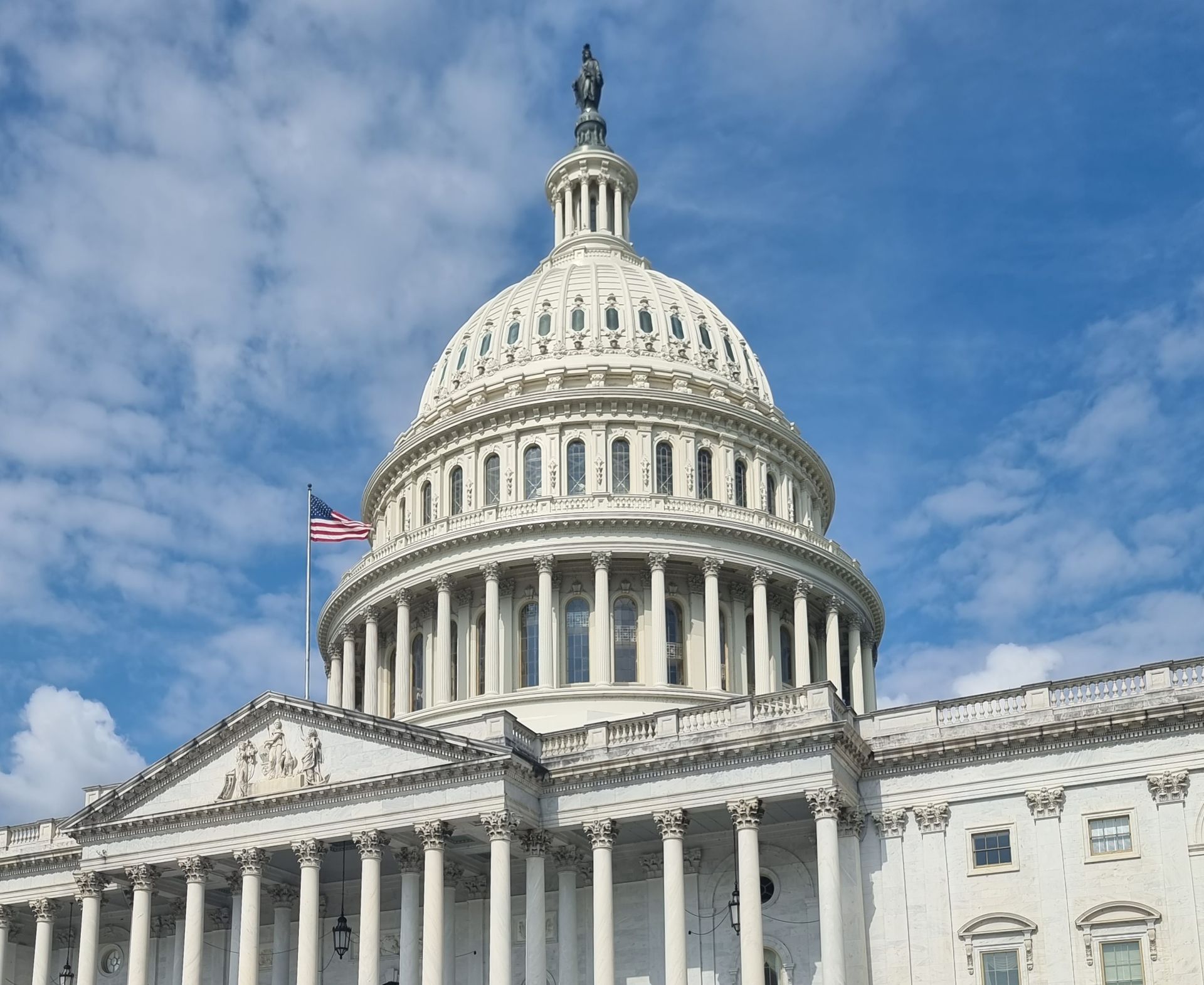
Rep. Thomas Massie, a Republican from Kentucky, told CNN that he plans to force a House vote to impeach Defense Secretary Pete Hegseth when Congress returns next week, setting up a confrontation that would test how much support the effort commands inside his own party. The week in question is the week of November 9, the first week of the lame-duck session, and the vote has not happened yet. Massie has said he will bring the measure back unless Hegseth resigns first, a condition he set out publicly on Thursday 5 November 2026, the same day he restated his intention to press ahead.
The prospect of the vote drew added attention because multiple Republican sources told CNN that they expect the measure to pass. That expectation, if it proves accurate, would mean that a Republican-led effort against a defense secretary serving under a Republican president could succeed in the House, at least in part because of Democratic support. Massie himself has said he expects every Democrat to vote in favour, along with a handful of Republicans, and he has put the odds of passage at better than 50 percent. The vote itself, however, has not taken place, and the outcome will only be known when members actually cast their ballots next week.
Massie laid out the single condition under which he would hold back. Writing on X on November 5, he said: “There is one contingency in which I won’t reintroduce the articles of impeachment: Hegseth resigns.” The message was short and direct, and it framed the choice facing the defense secretary in plain terms. Either Hegseth steps down before Congress returns, or Massie will reintroduce the articles and force the House to take a position on them. There was no suggestion in the message of any other condition, and no indication that Massie was open to a compromise that would leave Hegseth in office.
The move is not a new one. Massie first introduced the articles of impeachment in September, and the measure he plans to bring back next week is a reintroduction of that earlier effort. The fact that he is returning to it now, after the midterm elections, reflects both the timing of the congressional calendar and his own reading of the politics inside the House. Members who lost their seats or chose not to seek reelection will be serving their final weeks in office, and Massie has argued that some of them may now be readier to vote according to their own judgment than they were before the elections.
President Donald Trump, for his part, has made clear that he is not considering replacing Hegseth. Asked on Wednesday whether he was thinking of doing so, Trump said: “No, I think he’s doing a very good job.” The president’s backing gives Hegseth a powerful defender, and it sets up a direct clash between the White House and a member of the president’s own party who is determined to force a vote. Speaker Mike Johnson has also opposed the push, calling it a “stunt” and saying that Hegseth has “done an extraordinary job.” The disagreement is therefore not only between the parties, but within the Republican side of the House itself.
The Massie Hegseth Impeachment Vote: What Happens Next Week
When Congress returns next week, the first week of the lame-duck session, Massie plans to reintroduce the articles of impeachment against Hegseth and to use the privileged status of the resolution to force the House to act. A privileged resolution carries a particular procedural weight in the House, because it cannot simply be left aside indefinitely. If the parliamentarian affirms that the resolution qualifies as privileged, the Speaker has up to two legislative days to schedule a vote on it. That timetable means the House would have to confront the question quickly, rather than letting it drift through the remainder of the session.
The House does have one way of avoiding a direct vote on the merits of the articles. Members could instead vote to table the resolution, which would set it aside without passing judgment on the charges themselves. A vote to table is therefore a likely focus of attention in the days before the measure reaches the floor, because it offers members who are uneasy about the impeachment itself a way of disposing of it without voting against it on substance. Whether such a motion succeeds, or whether the House proceeds to a vote on the articles, will be one of the first things to watch when the resolution is introduced.
Impeachment itself requires only a simple majority in the House. That threshold is lower than the two-thirds vote that would be needed in the Senate to remove an official from office, and it is the reason the House vote is the immediate test. If the House votes to impeach, the question would then move to the Senate, where removal would require a two-thirds vote. Republicans retain their majority in the Senate until the new Congress convenes on January 3, which shapes the arithmetic on that side of the Capitol as well. The House vote next week, however, is the step that comes first, and it is the step Massie is forcing.
The timing of the vote matters for another reason. Massie lost his primary in May and departs Congress in January, so the lame-duck session is his last opportunity to bring the measure to a vote as a sitting member. That personal timetable gives the effort a sense of urgency on his side, because once the new Congress convenes on January 3, he will no longer be in the House to press the case. The vote next week is therefore not only a test of the articles themselves, but also, in practical terms, the final window in which Massie can force the House to decide on them.
Massie told Roll Call on October 26 that the vote is a “week one” issue for the lame-duck session, a phrase that underlines how quickly he intends to move once members return. The description suggests that he does not plan to wait for the session to settle or for other business to take priority. Instead, he intends to put the impeachment question before the House in the opening days of the session, when the chamber is first back in Washington and the lame-duck period is just beginning.
The Articles Massie First Introduced in September
Massie first introduced eight articles of impeachment on September 15-16, 2026, in a 34-page privileged resolution. The resolution accused Hegseth of violating Congress’s war powers and the War Powers Resolution of 1973, and it set out a series of related charges connected to the prosecution of the Iran war. The central allegation was that Hegseth had prosecuted the Iran war without congressional authorization, a claim that goes to the heart of the constitutional division of war powers between Congress and the executive branch.
The resolution also accused Hegseth of disregarding congressional efforts to end the conflict. That charge, as framed in the resolution, presents the defense secretary as having pressed ahead with the war even as Congress sought to bring it to a close. The allegation is distinct from the claim about authorization, because it concerns not only whether the war began with proper authority, but whether the executive branch respected the legislature’s attempts to limit or end it once it was under way. Both charges rest on the same underlying argument, that Congress’s role in decisions about war was not given its proper weight.
A further charge in the resolution concerned the protection of civilians. The articles accused Hegseth of failing to protect civilians, a charge that speaks to the conduct of the conflict rather than to its authorization. The resolution did not, in the reporting summarised here, set out specific casualty figures in support of that charge, and none are stated in this article. The allegation stands as it was framed in the resolution, as a claim about the failure to protect civilians during the conflict, and it is presented here as an allegation made by Massie, not as an established finding.
The resolution also accused Hegseth of carrying out strikes on suspected drug boats. That charge adds a separate strand to the articles, because it concerns a different kind of military action from the Iran war itself. The strikes on suspected drug boats were presented in the resolution as part of the case for impeachment, alongside the war powers charges. As with the other charges, the allegation is Massie’s, and it is reported here as such. The resolution, taken as a whole, therefore combined claims about the authority for war, about respect for Congress, about the protection of civilians, and about a separate series of strikes.
The eight articles were set out in a 34-page document, a length that reflects the scope of the case Massie sought to make. A privileged resolution of that kind is not a short statement of intent, but a detailed document laying out the charges and the reasoning behind them. When Massie reintroduces the articles next week, it will be that case, in its earlier form, that he is asking the House to consider again, unless Hegseth resigns in the meantime.
Why the Vote Was Delayed Until the Lame-Duck Session
The articles were first introduced in September, but no vote took place before the midterm elections. The reason, as reported, was that Speaker Mike Johnson sent lawmakers home early in September, a step that staved off a vote before the midterms. By ending the session early, the Speaker removed the immediate opportunity for Massie to force the question onto the floor, and the articles remained pending as the election campaign proceeded.
The decision to send lawmakers home early was a consequential one, because it meant that members did not have to take a public position on impeaching a defense secretary in the weeks before they faced voters. For members in competitive races, a vote of that kind could have been politically difficult, whichever way they voted. Delaying the question until after the elections therefore spared members that choice at a sensitive moment, but it also meant that the issue would return, unresolved, once the elections were over.
Johnson’s opposition to the push has been clear. He called the effort a “stunt” and said that Hegseth has “done an extraordinary job.” The word “stunt” suggests that the Speaker regards the impeachment push as a political gesture rather than a serious constitutional case, and his praise for Hegseth’s performance reinforces the view that, in the Speaker’s judgment, there is no basis for removing the defense secretary. The two statements together frame the leadership’s position as one of firm support for Hegseth and dismissal of the effort to impeach him.
The delay also changed the political context in which the vote will now take place. Before the midterms, members were facing reelection and the pressures that come with a campaign. After the elections, some members know they will not be returning to Congress, either because they lost their seats or because they chose not to run again. Massie has argued that this change matters, because members who no longer face reelection may be freer to vote according to their own views. The lame-duck session, in that sense, is a different environment from the one in which the articles were first introduced.
It is also worth noting that the articles were introduced on September 15-16, 2026, only weeks before the midterm elections, and that the early adjournment in September left little time for the measure to advance. The sequence of events — introduction in mid-September, early departure from Washington, and then the election — meant that the impeachment question was effectively parked for the duration of the campaign. Its return next week is therefore the resumption of a process that was interrupted, rather than the start of an entirely new one.
The Numbers Massie Is Counting On
Massie told Roll Call on October 26 that he expects every Democrat to vote in favour of the articles, along with a handful of Republicans. That expectation is the basis for his confidence about the outcome, because a vote that draws the full Democratic caucus together with even a small number of Republicans could reach a majority. The arithmetic depends, however, on members actually voting as he expects, and on the size of the handful of Republicans he believes will join the Democrats. A handful is, by its nature, a small and imprecise number, and the result will turn on whether that group is large enough, when added to Democratic votes, to cross the threshold of a simple majority.
Massie put the odds of passage at better than 50 percent, a figure that conveys confidence without certainty. Better than even odds is a meaningful claim, because it suggests that he believes the measure is more likely than not to pass, but it also leaves room for failure. The assessment is his own, made in late October, and it reflects his reading of the House as it stood at that time. The vote itself has not happened, and the odds he cited are a prediction, not a result.
The expectation of Democratic support is a central part of Massie’s calculation. If every Democrat does vote yes, as he expects, then the articles would need only a small number of Republican votes to reach a majority. That dynamic is what makes the position of the handful of Republicans he is counting on so important. Each Republican vote in favour would carry weight beyond its own number, because it would be added to a bloc that is already close to a majority on its own. The question is whether those Republicans will, in the event, vote as Massie hopes.
Massie also made a broader point about the lame-duck session when he spoke to Roll Call. He said: “The membership of the retirement caucus is going to swell on Election Day.” The remark refers to the members who, having lost their seats or chosen not to seek reelection, will be serving their final weeks in the House. His argument is that members in that position, no longer facing reelection, might vote their conscience rather than with an eye to the next campaign. The phrase “retirement caucus” is his own, and it captures the idea that the lame-duck session includes a group of members whose political incentives have changed.
That argument is speculative in the sense that it rests on a judgment about how members will behave once the pressure of reelection is removed. Some members may indeed vote differently when they know they are leaving office, while others may vote exactly as they would have done before. The claim cannot be tested until the vote takes place, and it is presented here as Massie’s reasoning, not as an established fact about how the lame-duck House will vote. What is clear is that Massie believes the change in circumstances works in his favour, and that belief is part of why he is pressing for a vote in the first week of the session.
Trump and Johnson Push Back
The opposition to Massie’s push comes from the most senior figures in the Republican Party. President Trump said on Wednesday that he is not considering replacing Hegseth, and his words were unambiguous: “No, I think he’s doing a very good job.” The statement was made in response to a direct question about whether he was thinking of replacing the defense secretary, and the answer left no room for doubt about the president’s position. Trump is standing by Hegseth, and he is doing so publicly, at a moment when the impeachment effort is about to return to the floor.
The president’s support matters for the politics of the vote, because members of his party will be weighing the impeachment question against the knowledge that the president himself regards Hegseth’s performance as very good. For Republicans who are inclined to follow the president’s lead, that statement is a clear signal. For those who are inclined to support Massie, it is a reminder that a vote for impeachment would put them at odds with the president. The statement does not decide the vote, but it frames the choice that Republican members will face when they cast their ballots.
Speaker Johnson’s opposition is equally clear, and it is expressed in different terms. Where Trump praised Hegseth’s performance, Johnson went further in characterising the impeachment push itself, calling it a “stunt.” The word suggests that the Speaker does not regard the effort as a serious constitutional case, and his accompanying statement that Hegseth has “done an extraordinary job” reinforces the leadership’s support for the defense secretary. The two statements together present a united front from the White House and the Speaker’s office against the impeachment effort.
The disagreement within the Republican Party is therefore visible at the highest levels. On one side is Massie, a member who lost his primary in May and departs Congress in January, pressing for a vote that he believes will pass. On the other side are the president and the Speaker, both of whom have praised Hegseth and dismissed the impeachment push. The vote next week will test which of those positions commands a majority in the House, and it will do so in a chamber where the outcome depends on a small number of Republican votes alongside Democratic support.
Massie’s own position within the party adds a further dimension to the dispute. He lost his primary in May, which means that his effort is being made by a member who will not be returning to the House in the new Congress. That fact does not affect the procedural standing of his resolution, but it does shape how the effort is perceived. Supporters may see it as a matter of principle pursued by a member with nothing left to lose, while critics may see it as the action of a departing member who no longer faces the political consequences of his choices. Both readings are possible, and both are likely to be heard in the debate that surrounds the vote.
How a Privileged Resolution Reaches the Floor
The procedure Massie is using is the privileged resolution, a mechanism that gives an individual member a route to the floor that does not depend on the leadership’s willingness to schedule a vote. A privileged resolution, if the parliamentarian affirms that it qualifies, must be acted upon within a set timetable. The Speaker has up to two legislative days to schedule a vote, which means that the leadership cannot simply ignore the measure once it has been introduced in privileged form. The timetable is short, and it is designed to ensure that a privileged question is dealt with promptly.
The role of the parliamentarian is a procedural one, but it is important. The parliamentarian must affirm that the resolution qualifies as privileged before the timetable applies. That step is a matter of House rules and precedent, and it is the first hurdle the reintroduced articles must clear. If the parliamentarian affirms that the resolution qualifies, the Speaker’s obligation to schedule a vote within two legislative days follows. If the resolution were found not to qualify, the route to the floor would be different, and Massie’s ability to force a vote would be affected.
Even if the resolution qualifies as privileged and a vote is scheduled, the House retains the option of voting to table it. A motion to table, if it succeeds, would set the resolution aside without a vote on the articles themselves. That option is a standard part of House procedure, and it is often the way in which a chamber disposes of a measure that a majority does not wish to consider on its merits. Whether a motion to table is offered, and whether it succeeds, will be decided when the resolution reaches the floor.
The distinction between a vote to table and a vote on the articles matters, because the two votes would send different messages. A vote to table would mean that the House had chosen not to consider the impeachment charges, without passing judgment on whether they have merit. A vote on the articles themselves, by contrast, would require members to take a position on the charges. Massie’s aim is to force the second kind of vote, while those who oppose the impeachment may prefer the first. The procedural steps in the days ahead will determine which kind of vote members are ultimately asked to cast.
The procedure also sets a limit on how long the leadership can delay. With up to two legislative days to schedule a vote, the Speaker’s room for manoeuvre is narrow once a privileged resolution has been introduced and affirmed. That narrow window is precisely why Massie is using the privileged route, because it prevents the measure from being left without a vote, as it was in September when the House adjourned early. The timetable, in short, is designed to force a decision, and Massie is relying on it to do so next week.
What Impeachment Would and Would Not Mean
If the House votes to impeach Hegseth, the immediate consequence would be that the defense secretary had been impeached by the House, a step that requires only a simple majority. Impeachment by the House is not the same as removal from office. Removal would require a separate process in the Senate, where a two-thirds vote would be needed. The House vote next week, if it passes, would therefore be a significant step, but it would not by itself remove Hegseth from his post. The distinction between impeachment and removal is a fundamental part of the constitutional process, and it should be kept clear in any account of what is at stake.
The Senate arithmetic is shaped by the fact that Republicans retain their majority until the new Congress convenes on January 3. A two-thirds vote to remove an official is a high threshold under any circumstances, and it is higher still when the official’s party holds the majority in the chamber. The Senate stage, if the House impeaches, would therefore present a different and more demanding test than the House vote. The House vote is the immediate question, and the Senate would only come into play if the House first votes to impeach.
The historical context is also notable. If the House impeaches Hegseth, he would be only the third Cabinet secretary impeached in American history. That fact underlines how rare impeachment of a Cabinet secretary is, and it places the vote next week in a longer historical frame. The rarity of the step does not by itself determine whether it is justified in this case, but it does show that the House would be taking an action that has happened only twice before for a Cabinet secretary. The historical significance is part of why the vote has drawn so much attention.
It is important to stress what has not happened. The vote has not taken place, and Hegseth has not been impeached. The reporting is about a forthcoming vote, about expectations for its outcome, and about the conditions under which Massie says he will or will not proceed. None of that should be read as a statement that the House has already voted, or that the articles have already passed. The distinction between a planned vote and a completed vote is essential, and this article describes the first, not the second.
The condition Massie has set also means that the vote is not inevitable. If Hegseth resigns before Congress returns, Massie has said he will not reintroduce the articles. That possibility remains open until the House reconvenes, and it is the only contingency Massie has named. Unless that happens, however, Massie has said he will proceed, and the House will have to decide. The days before the vote will therefore be watched not only for signs of how members intend to vote, but also for any indication of whether the resignation Massie has named as the alternative will take place.
What to Watch Next Week
The first thing to watch when Congress returns is whether Massie reintroduces the articles as he has said he will, and whether the parliamentarian affirms that the resolution qualifies as privileged. Those two steps will set the timetable in motion, with the Speaker then having up to two legislative days to schedule a vote. Any delay or procedural question at that stage would be a signal about how the leadership intends to handle the measure, and whether it will seek to dispose of it through a motion to table.
The second thing to watch is the position of the handful of Republicans Massie is counting on. His calculation depends on every Democrat voting yes together with a small number of Republicans, and the vote will turn on whether those Republicans are willing to break with the president and the Speaker. Public statements from Republican members in the days before the vote, and the way they vote on any motion to table, will offer clues about where the final count may land. The expectation reported by multiple Republican sources that the measure will pass is itself a signal, but it is a prediction, and the vote will be the test of it.
A third question is whether Hegseth resigns. Massie has named resignation as the one contingency that would stop him from reintroducing the articles, and the defense secretary’s position will be watched closely in the days before Congress returns. The president has said he is not considering replacing Hegseth and that he thinks Hegseth is doing a very good job, which suggests that a resignation is not expected from the White House side. The possibility remains, however, and it is the only route Massie has identified that would prevent the vote from taking place.
Finally, the vote itself, if it happens, will be judged not only by its outcome but by its margin. A narrow passage would suggest a House divided on the question, with the result resting on a small number of votes. A wider margin would suggest broader support for the articles than Massie’s prediction of a handful of Republicans might imply. Either way, the result will be the first time the House has voted on impeaching this defense secretary, and it will set the terms for whatever follows, including whether the matter moves to the Senate and how the question of removal is addressed there.
For now, the reported facts are these: Massie plans to force a vote to impeach Hegseth when Congress returns in the week of November 9, the first week of the lame-duck session, unless Hegseth resigns; he first introduced eight articles of impeachment on September 15-16, 2026, in a 34-page privileged resolution; the Speaker sent lawmakers home early in September, staving off a vote before the midterms; Massie expects every Democrat to vote yes plus a handful of Republicans and puts the odds of passage at better than 50 percent; multiple Republican sources told CNN they expect the measure to pass; and the president and the Speaker have both defended Hegseth. The vote has not happened yet, and next week will show whether those expectations are borne out.
Sources
USN reviewed reporting from multiple outlets for this story. Read more from CNN, Roll Call and ABC News 4.