

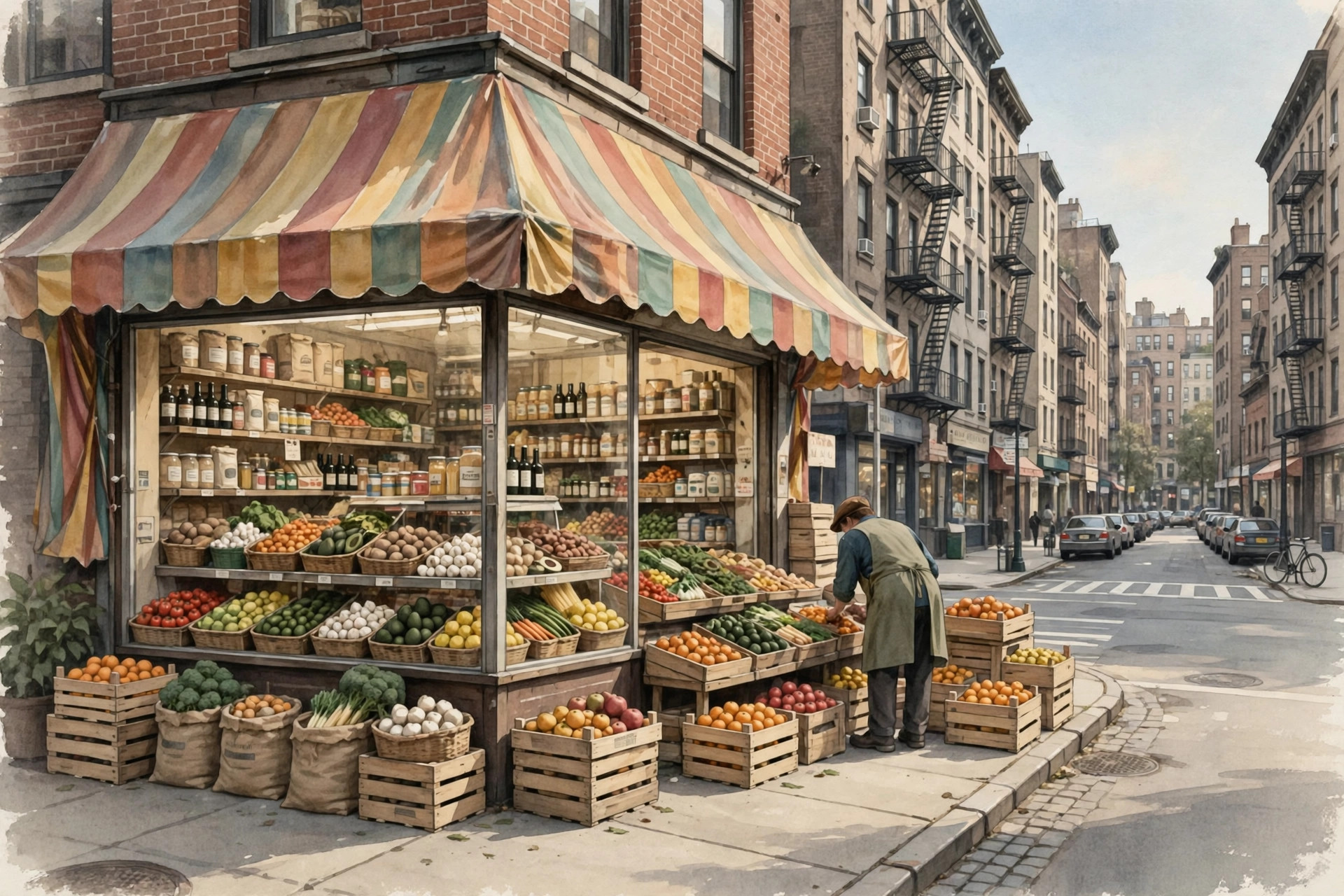
New York City Mayor Zohran Mamdani said on Friday, November 13, 2026, that direct talks with President Donald Trump produced a nationwide delay of at least 90 days for new federal food-stamp rules that threatened to strip thousands of bodegas of their right to accept SNAP benefits, and the Agriculture Department confirmed it. Mamdani announced the deal at a City Hall press conference after speaking directly with Trump and Agriculture Secretary Brooke Rollins, and the department said the new compliance date is February 11, 2027, giving retailers time to add stock, shelving and refrigeration. The rules, in effect since November 4, require stores that accept the Supplemental Nutrition Assistance Program to carry seven varieties in each of four staple food categories, up from three, and without the delay many small stores would have risked losing their authorisation to accept benefits entirely.
The agreement is a striking piece of politics: a democratic socialist mayor of New York City, elected on a platform of challenging the president, winning a concession from that president by picking up the phone. Mamdani said more than 100 New York bodega owners had contacted his office seeking additional time to meet the requirements, and he took their case directly to Trump and Rollins. “I spoke with President Trump and he agreed to give small business owners across America at least a 90-day extension to comply with new SNAP rules,” Mamdani wrote on X. The United States Department of Agriculture, which had previously refused a delay, confirmed it would provide the 90-day reprieve, with a spokesperson telling Newsweek: “Today, the Department will afford retailers 90 more days to get it right.”
The delay is not a reversal, and it is not only about New York. The pause applies nationwide, to bodegas, convenience stores and small grocery shops that make up roughly 70 percent of all SNAP retailers, according to the Food Research and Action Center. The requirements still take effect in February unless they are changed or delayed again, and the agreement does not touch the separate federal SNAP work requirements or the eligibility rules that have already cut enrolment in New York City. But for the more than 10,000 bodegas and corner stores across the city’s five boroughs, and for the small retailers across the country that depend on SNAP sales, the 90 days are the difference between staying in the programme and losing it.
The Deal Announced at City Hall
Mamdani announced the agreement on Friday, November 13, at a City Hall press conference, after conversations with Trump and Rollins that he described as direct and productive. He had formally requested a six-month delay in a letter to Rollins on November 2, warning that implementing the requirements without additional time could threaten neighbourhood food retailers, particularly in communities where residents rely heavily on SNAP to purchase groceries. The department had declined that request and let the rules take effect on November 4. The phone calls that followed changed the answer.
The mayor’s account of the conversations was straightforward: he raised the concerns of small business owners with the president, and the president agreed to the extension. The Agriculture Department’s confirmation followed quickly, with the department saying it would delay enforcement of the new stocking standards from November 13, giving retailers additional time to prepare. The extension takes effect on Friday, November 13, and runs for at least 90 days, with the new compliance date set at February 11, 2027.
The speed of the turnaround surprised even the people who had been pressing for it. The department had issued implementation guidance on September 4, leaving businesses with roughly two months to prepare for the November deadline, and had refused Mamdani’s request for a six-month delay before the rules took effect. That the same department agreed to 90 days within ten days of the rules taking effect, and did so after the mayor spoke to the president, suggests that the political pressure from bodega owners, and from a mayor willing to call the White House, was more effective than the formal letter had been.
The 90-Day SNAP Delay: What Changes and What Does Not
The delay changes the enforcement date, and nothing else. Under the new standards, established by the United States Department of Agriculture, stores authorised to accept SNAP must stock at least seven varieties of food in each of four categories: dairy products, grains, proteins, and fruits and vegetables, with at least three stocking units of each. The previous requirement was three varieties in each category. The standards are set out in the department’s final rule on staple food stocking standards, and they apply to every store that takes food stamps, from supermarkets to corner shops.
What the delay does is move the date on which the department will enforce those standards from November 4 to February 11, 2027. Retailers have until then to add the stock, the shelving and the refrigeration needed to meet the expanded requirements, while continuing to accept SNAP benefits in the meantime. What it does not do is change the requirements themselves, or scrap them. Unless federal policy changes before the new deadline, stores will eventually have to meet the expanded stocking standards, and the 90-day window is a reprieve, not a pardon.
The delay also does not touch the other changes to the programme that have already taken effect. It does not delay the separate federal SNAP work requirements, and it does not change the eligibility rules governing who can receive food assistance. In New York City, SNAP enrolment fell to 1.61 million in August 2026, down from 1.79 million in July 2025, following federal changes to programme eligibility, and that decline will not be reversed by the stocking delay. The agreement is narrow, and its narrowness is part of its politics: it helps small businesses without reopening the larger fight over who qualifies for help.
Why Bodegas Feared Losing SNAP
For New York’s bodegas, the new rules were an existential threat, not a paperwork exercise. The city has more than 10,000 bodegas and corner stores across its five boroughs, according to the city’s Department of City Planning, and SNAP purchases can make up 15 to 30 percent of a typical bodega’s sales. For many small stores, losing the ability to accept SNAP would mean losing a large share of their revenue, and for some it would mean closing altogether.
The problem was not willingness but capacity. A small corner store does not have the shelving, the refrigeration or the storage space of a supermarket, and adding seven varieties in each of four categories, with three stocking units of each, is a physical challenge as much as a financial one. The department issued its implementation guidance on September 4, leaving businesses with roughly two months to prepare, and for many stores that was not enough time to reconfigure their space, source the stock and install the equipment. The warnings from hundreds of New York bodega owners were that the new requirements could put their businesses at risk by making it difficult for them to retain their authorisation to accept benefits.
The stakes extend beyond the stores themselves. Bodegas, convenience stores and small grocers make up about 70 percent of all SNAP retailers, according to the Food Research and Action Center, and there are more than 250,000 retailers authorised to participate in the programme throughout the United States. In neighbourhoods where the bodega is the only food shop within walking distance, losing SNAP authorisation would mean losing access to food for the residents who depend on it. The delay protects the stores, but it also protects the customers who shop in them.
From a Six-Month Ask to 90 Days
Mamdani had asked for more than he got, and he has said so himself. His November 2 letter to Rollins requested a six-month delay, arguing that the rules needed more time for small retailers to adjust. The department declined, and the rules took effect on November 4. The 90 days he won is half of what he asked for, and he has acknowledged that the real challenge will arrive when the extension expires in February 2027.
The gap between the ask and the answer is the measure of the negotiation. A six-month delay would have carried the programme past the winter and into the spring, giving stores time to rebuild their stock gradually. Ninety days, ending on February 11, gives them the winter to make the changes, but it does so on a tight timetable, and it leaves the question of what happens in February open. Mamdani has said the extension is a helpful step, and that the real test is whether the department will use the 90 days to reconsider the rules themselves, or simply enforce them on the new date.
The administration’s position, as expressed by the department’s spokesperson, is that the 90 days are for retailers to “get it right”, which suggests that the department expects compliance, not reconsideration. That framing puts the burden back on the stores, and it means the February deadline will arrive with the same requirements, the same capacity problems and the same risk of losing authorisation for the stores that cannot meet them. The 90 days are a pause, not a solution, and both sides know it.
A Nationwide Reprieve, Not Just a New York One
Although the campaign for the delay was led by a New York mayor on behalf of New York bodegas, the reprieve applies nationwide. The agreement gives bodegas, corner stores and other small retailers across the United States an additional 90 days to comply with the regulations, and the department has confirmed that the delay is national in scope. That breadth is part of why the deal matters beyond New York: the stocking rules affect small retailers in every state, and the capacity problems that New York’s bodegas face are shared by corner stores in every city and town in the country.
The nationwide scope also reflects the way the rules were designed. The stocking standards are federal, and they apply to every authorised retailer, whatever its size or location. A delay that applied only to New York would have been difficult to administer and easy to challenge, and the department’s decision to make it national avoids both problems. It also means that the February deadline will be a national event, with small retailers across the country facing the same test at the same time.
For Mamdani, the nationwide scope is a political asset. A mayor who wins a concession for his own city’s bodegas has done his job. A mayor who wins a concession for small retailers across America has done something larger, and the mayor’s office has been quick to present the deal in those terms. Whether the national framing helps or hurts in the longer term, when the February deadline arrives and the same stores face the same rules, remains to be seen.
What Happens on February 11
February 11, 2027, is the date that now matters. On that day, the enforcement of the new stocking standards resumes, and stores that have not met the seven-variety requirement in each of the four categories risk losing their authorisation to accept SNAP. The department has not said whether it will enforce the rules strictly from that date, or whether it will allow a further grace period for stores that have made a good-faith effort. The 90 days are for retailers to add stock, shelving and refrigeration, and the department’s expectation is that they will do so.
The practical question is whether 90 days is enough. For a store that needs to install a new refrigerator, reconfigure its shelving and establish new supply lines, three months is a tight timetable, particularly over the winter, when deliveries are slower and cash flow is tighter. For a store that needs only to add a few varieties to its existing stock, it is ample. The difference between those two cases is the difference between a store that survives February and a store that does not, and the department has not said how it will distinguish between them.
The political question is whether the delay will be extended again. Mamdani asked for six months and got 90 days, and he has not ruled out asking for more. The department, for its part, has framed the 90 days as time to comply, not as the first instalment of a longer delay. The February deadline will test both positions, and the stores that have used the 90 days well will be in a stronger position than the stores that have not. USN has covered the wider fight over food aid, including the SNAP benefits dispute that reached federal court and the Supreme Court decision that temporarily blocked full SNAP payments.
The Mayor, the President and an Unlikely Alliance
The deal is also a study in the politics of the moment. Mamdani, a democratic socialist who won the mayoralty on a platform of challenging the president, and Trump, a Republican president who has made a career of attacking New York’s Democratic leadership, found common ground on a question that affects small businesses in every state. The mayor called the president, the president agreed, and the department confirmed it. It is the kind of transaction that would have been hard to imagine a year ago, and it is a reminder that the politics of food, of small business and of neighbourhood shops do not always follow the lines of the larger partisan fight.
Whether the alliance lasts is another question. The mayor and the president disagree on almost everything else, from immigration to the war in Iran, and the SNAP delay is a single point of agreement in a relationship defined by disagreement. But for the bodega owners who called the mayor’s office, and for the small retailers across the country who will benefit from the 90 days, the politics of the deal matter less than its substance. They have until February 11 to get it right, and the clock is already running.
Sources
USN reviewed reporting from multiple outlets for this story. Read more from The Times of India, Times Now and PoliAlert.