

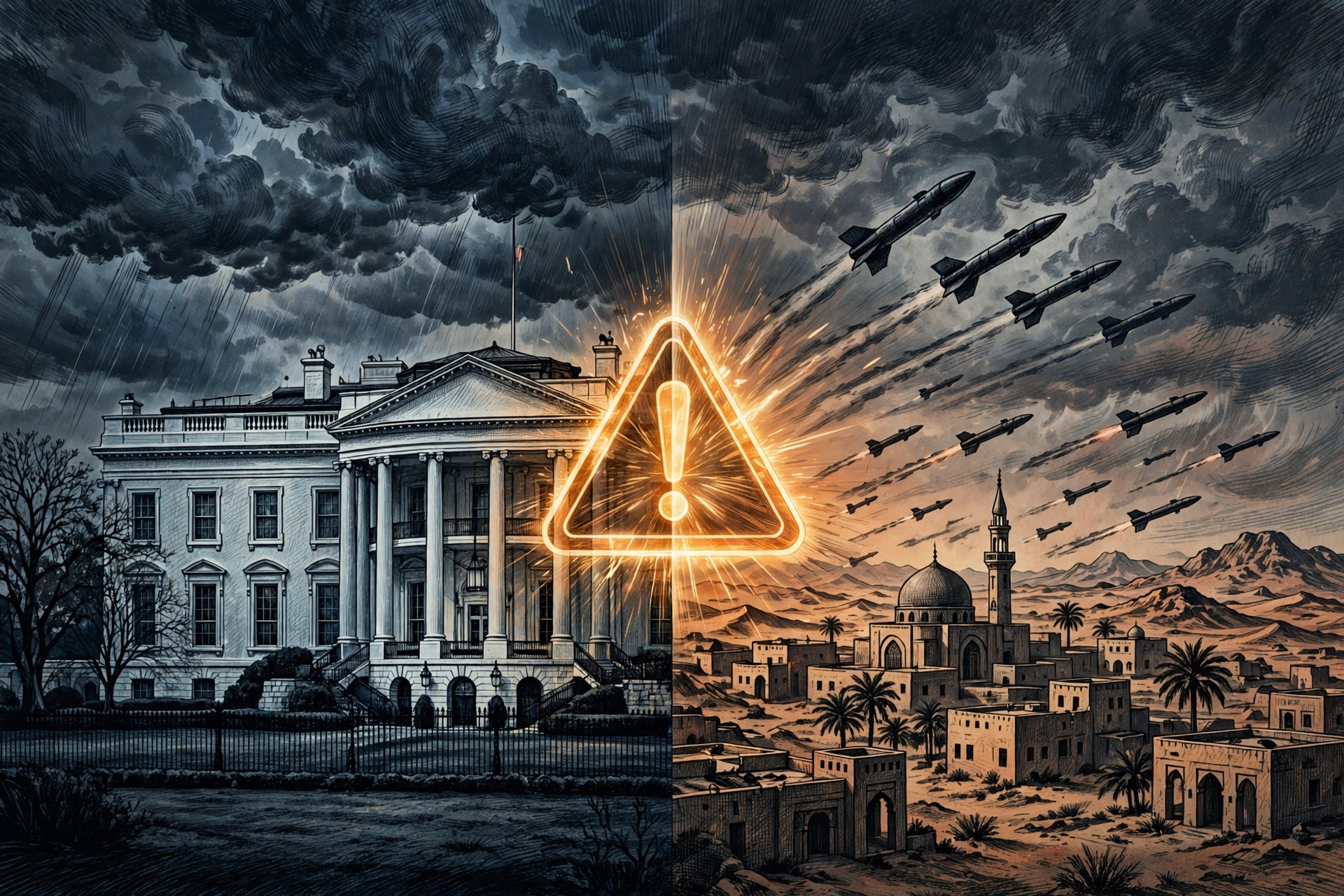
President Donald Trump has warned that Iran may be pursuing chemical and biological weapons after American operations devastated its nuclear capabilities, telling Fox News that there is an indication Tehran is “looking at gas” and “looking at the bio,” and vowing that if Iran attacks the United States, “we wipe them out.” The remarks, made during an interview with Fox News senior White House correspondent Jacqui Heinrich on the sidelines of the Asia-Pacific Economic Cooperation summit in Shenzhen, China, were the president’s most direct public statement yet on the possibility that Tehran is turning to unconventional weapons.
The warning came days after CNN reported that American intelligence had found indications of Iranian planning for possible radiological or chemical attacks against senior administration officials in Washington, and after The New York Times reported that Israeli intelligence had uncovered an alleged Iranian plot to use chemical agents against senior American officials. The claims remain allegations drawn from intelligence reporting, not established facts, and officials disagree about how far any preparations have progressed. The White House has said there is no credible threat to the American homeland at this time, even as security around senior officials has been visibly tightened.
Trump’s comments landed in the middle of a tense and fast-moving confrontation between Washington and Tehran, one that has combined months of military operations with an on-again, off-again diplomatic effort. In the same interview, the president confirmed that the United States remains in contact with Iran and that Tehran wants an agreement, but he insisted that any deal must be lasting, and he left open whether the confrontation would end through negotiation or through further military action. His language was, by turns, threatening and transactional, and it underscored how much of the administration’s Iran policy now rests on the president’s own public signalling.
What Trump Said in the Fox News Interview
Heinrich asked the president about reports of a possible Iranian plot to detonate a radiological device, known as a dirty bomb, in Washington, and about the security concerns that have led some senior administration officials to live on military installations. Trump did not explicitly confirm the details of the reported plot. Instead, he offered a broader claim about the direction of Iran’s weapons efforts, presenting it as a consequence of the damage American operations had inflicted on Tehran’s nuclear programme.
“Well, there is indication that Iran is looking at gases, looking at bio because we’ve shut them out with the nuclear,” Trump said. “Nuclear is much harder, and they’re looking at gas, and they’re looking at the bio. You know, the biological weapons, not nice, and other things.” The phrasing was characteristic of the president’s interview style, but the substance was new: a sitting president publicly asserting that Iran is examining chemical and biological weapons as alternatives to a nuclear programme that Washington has sought to destroy.
Asked whether people in Washington should be alarmed by the reported threat, Trump dismissed the prospect of an imminent attack while promising overwhelming retaliation if one occurred. “I don’t think so. No, I mean, look, if it does happen, we wipe them out,” he said. Pressed on whether that was a promise, he replied: “Oh, I give you my word. Absolutely.” The exchange was the clearest statement yet of the administration’s deterrent posture toward Tehran: no alarm, but a pledge of devastating consequences if the alleged plot were ever carried out.
Trump also introduced an unexplained reference to the beginning of next year. “We’re going to have a new year coming up, and we’ll see what happens after January 1st,” he said, without elaborating on whether he was referring to a potential military operation, a diplomatic development, or another decision concerning Iran. The remark has been widely noted because it hints at a timeline the president has not explained, and because it came in the same conversation as his warning about unconventional weapons.
The timing question sharpened further on 19–20 November. Prime Minister Benjamin Netanyahu reportedly told aides that a renewed war with Iran is “unavoidable”, according to Channel 13 reporting, while Trump replied that he is “not rushing” and added, “We will see what happens after the beginning of the year.” The president has also tasked the Pentagon and intelligence agencies with assessing how Iran would respond to American strike scenarios, according to Axios reporting, a step that keeps the military option live even as the diplomatic track continues.
Trump’s Iran Chemical and Biological Weapons Warning
The significance of Trump’s warning lies less in its detail than in its source. American presidents rarely discuss another country’s alleged chemical and biological weapons efforts in such direct terms, and they rarely do so on the basis of intelligence that their own officials describe as contested. By saying publicly that Iran is “looking at gas” and “looking at the bio,” Trump gave the allegations a presidential imprimatur, and he connected them to a specific policy argument: that the success of American operations against Iran’s nuclear programme has pushed Tehran toward other forms of unconventional warfare.
The warning also fits a pattern in Trump’s handling of Iran. The president has repeatedly combined threats of overwhelming force with expressions of interest in a deal, and he has used public interviews to set the terms of both. In the same conversation with Heinrich, he confirmed that the United States remains in contact with Iran and that Tehran wants to reach an agreement, while insisting that any deal must be strong enough to survive a change of American leadership. “I want a deal so that if we have a stupid president, which is a big possibility, because you know you see some of the people running,” he said, adding that he wanted an agreement capable of outlasting a “bad president” or a “weak president.”
The CNN Report: An Alleged Dirty Bomb Plot in Washington
Trump’s remarks followed a CNN report, published on 16 November, that new American intelligence indicates Iran is developing plans to target senior Trump administration officials by detonating a so-called dirty bomb or a chemical weapon in Washington, DC. A dirty bomb, also known as a radiological dispersal device, is a conventional explosive paired with radioactive material, designed to spread contamination across an area rather than to produce a nuclear explosion. CNN cited seven American officials in its reporting, and said the intelligence included specific locations and potential targets in the nation’s capital.
According to the report, sources familiar with the intelligence characterised the Iranian planning as, for now, an effort to give Tehran options rather than an indicator of an imminent attack. That distinction is important, and it was repeated by several officials who spoke to CNN. The planning, as described, suggests that Iranian officials have discussed possible operations, not that they have decided to carry one out, assembled a device, positioned an operational team, or set a timetable. The report also said that American officials remain divided over whether Tehran possesses the means, the personnel or the intention to execute such an operation.
CNN also reported that American intelligence had intercepted Iranian communications in which it was claimed that materials for an unconventional attack had already been positioned inside the United States. That claim remains unverified. No public evidence has been presented that radioactive material or chemical agents have actually been pre-positioned, and intelligence officials themselves disagree over the credibility of the intercepted communications. The allegation is, at this stage, a claim made in communications that American agencies intercepted, not a fact that has been independently established.
The report prompted a swift response from the White House. White House spokesperson Lauren Bis said the administration is “monitoring any and all potential threats, but at this time there are no credible threats to the homeland.” The statement was notable for its careful wording: it neither dismissed the intelligence nor endorsed the most alarming interpretation of it, and it sought to reassure the public while acknowledging that the threat was being taken seriously. Trump himself, asked about the report the following day, said Iran would “pay a price the likes of which no country has ever paid before” if it attacked Washington, adding that the administration was taking the matter “seriously.”
The New York Times Report and Israeli Intelligence
A separate strand of reporting came from The New York Times, which reported that Israeli intelligence had uncovered an alleged Iranian plot to use chemical agents against senior American officials, and that Israel had shared intelligence with the United States and Gulf Arab governments warning that Iran is considering the use of chemical weapons. According to the Times, Israeli officials argue that the chemical threat from Tehran is now more urgent than the nuclear threat, and they claim Iran is developing technology to deliver chemical weapons by missile or to smuggle them into enemy countries.
The Israeli briefings have divided opinion in Washington. Some American officials take the warnings seriously, and The New York Times reported that American intelligence officials have evidence of stepped-up Iranian efforts to bolster its chemical and biological weapons capacities. Others view the briefings as a pressure campaign by Prime Minister Benjamin Netanyahu to persuade President Trump to resume major combat operations against Iran, and some in the administration believe the Israeli intelligence is “driven by an agenda,” a reference to Netanyahu’s political concerns during the transitional period following last month’s Israeli election. Gulf governments that received the briefings were also reported to be sceptical of the claims.
The debate over the Israeli intelligence intensified last week when Mossad director Roman Gofman visited Washington to present the intelligence to American officials, meeting with CIA Director John Ratcliffe. The visit coincided with reports that Netanyahu is pressing Trump to join Israel in a limited four- to seven-day campaign of airstrikes against Iran, and that Trump is considering plans for another major offensive. A senior Israeli official rejected the suggestion that Netanyahu is pressuring the American president, and the prime minister’s spokesman said Netanyahu always acts to ensure Israel’s security, but the timing of the intelligence briefings and the push for renewed strikes has fuelled the argument that the two are connected.
The prevailing view among American intelligence officials, according to the Times reporting, is that Iran would not preemptively use such weapons against Israel or other regional enemies, and is instead looking to deter large-scale attacks. That assessment, if correct, would mean the chemical and biological weapons efforts are primarily defensive in intent, a very different picture from the one suggested by the idea of a plot to attack Washington. The disagreement over intent is as important as the disagreement over capability, and it is one that the public reporting has not resolved.
Officials Disagree on How Far Preparations Have Progressed
The most consistent theme across the reporting is disagreement. Officials who have seen the intelligence do not agree on how far Iranian preparations have gone, on whether Tehran has the ability to carry out an attack, or on whether it intends to do so. Some point to specific locations and intended targets named in the intelligence, and to the intercepted communications claiming that materials have already been positioned inside the United States. Others question whether Tehran possesses the means, the personnel or the intention to execute such an operation, and they note that no device has been found and no attack has been authorised, as far as is publicly known.
Homeland Security Secretary Markwayne Mullin, speaking after the CNN report, called Iran’s planning “aspirational,” adding that it did not constitute a “new threat.” The description was a deliberate attempt to lower the temperature, and it reflected the view of those officials who see the intelligence as evidence of contingency planning rather than of an operation under way. It also illustrated the difficulty facing the administration: senior officials have offered different characterisations of the same intelligence, and the public has been left to weigh them.
US and Israeli officials have also acknowledged, according to Axios, that while Iran has expanded its chemical-weapons research, it does not currently possess the capability to carry out such attacks. Secretary of State Marco Rubio added on Wednesday that the United States does not face an “imminent threat”, a fresh on-record counterpoint to the alarm in the initial reporting.
An Office of the Director of National Intelligence memorandum dated 23 October, sent to Secretary of State Marco Rubio, warned that Iranian efforts to target American personnel had increased substantially, and that some lethal plots had reached advanced stages in the Middle East and elsewhere. The memorandum adds weight to the argument that the threat is real and growing, but it concerns plots against American personnel broadly, including overseas, and it does not by itself establish that a chemical or radiological attack inside the United States is imminent or even planned in detail.
Heightened Security for Bessent and Other Officials
Whatever the disagreements over the intelligence, the security response has been visible. The Secret Service moved Treasury Secretary Scott Bessent into military housing last week following threats from Iran, a development that was reported independently before the CNN revelations and that has since been confirmed by multiple outlets. Bessent has led the administration’s economic pressure campaign against Tehran, known as Operation Economic Outcast, which targets the regime’s oil revenues and its access to international financial markets, and he has portrayed the death threats against him as evidence that the campaign is working.
Secretary of State Marco Rubio and White House chief of staff Stephen Miller have also reportedly moved to military or other protected accommodation amid the heightened security concerns, according to reporting that followed the CNN story. The moves are precautionary, and they do not by themselves indicate that an attack is expected. But they are a measure of how seriously the administration is taking the threat, and they have become part of the public evidence that something has changed in the security picture for senior officials.
The decision to move officials into military housing is not taken lightly. It disrupts their lives and the lives of their families, and it signals to the public that the government believes a threat is credible enough to warrant extraordinary measures. The fact that the moves were made before the CNN report was published suggests that the intelligence behind them was already circulating within the government, and that the report brought into public view a security posture that had already been adopted in private.
Diplomacy, Deterrence and What Comes Next
The warning about chemical and biological weapons arrives at a moment when the administration’s Iran policy is pulled in two directions. On one side is the military track: months of operations against Iran’s nuclear programme and its armed forces, the economic blockade of its oil exports, and the reported consideration of another round of strikes, possibly in coordination with Israel. On the other side is the diplomatic track: the contacts that Trump confirmed in the Fox News interview, Tehran’s stated interest in a deal, and the president’s insistence that any agreement must be lasting.
Trump’s own account of the diplomacy is revealing. He acknowledged that he had reluctantly agreed to a diplomatic approach involving a memorandum of understanding with Iran, despite preferring binding agreements, and he said the process had delayed progress but had served a useful purpose. “It delayed things a little bit. It wasn’t a mistake. Actually, we got to know them very well during that period, and we got to know that they can’t be trusted,” he said. The remark suggests a president who has concluded that Tehran negotiates in bad faith, and who is therefore more inclined to rely on pressure than on promises.
Iran, for its part, has categorically denied the allegations. Its mission to the United Nations in New York said Iran “considers the use of chemical weapons under any circumstances to be wholly illegitimate and categorically rejects and unequivocally refutes the false and fabricated allegations circulated in this regard.” Foreign Minister Abbas Araghchi called the reports “rubbish,” and Foreign Ministry spokesman Esmaeil Baghaei said those who started the war “are attempting to manufacture a veneer of legitimacy for further aggression and atrocities.” The denials are categorical, and they are consistent with Iran’s long-standing public position that it does not possess chemical weapons. Whether they are believed in Washington is another matter.
What happens next will depend on developments that are, for now, hidden from public view. If the intelligence assessments harden into a clearer picture of Iranian intent, the administration may act on them, whether through further strikes or through additional security measures. If the assessments remain contested, the warnings may serve mainly as a deterrent signal, a way of telling Tehran that Washington is watching and that the consequences of an attack would be severe. The president’s reference to what happens after 1 January suggests that he has a timeline in mind, but he has not shared it, and the coming weeks will be watched closely for signs of which direction he intends to take.
For the public, the essential facts are these: the president has said Iran may be looking at chemical and biological weapons; the intelligence behind that claim is contested and incomplete; the White House says there is no credible threat to the homeland; and senior officials are nonetheless living under heightened protection. Those facts can coexist, and they describe a situation that is genuinely uncertain. The danger, as with all intelligence-driven crises, is that uncertainty will be filled in by assumption, on either side, and that a claim which is still only an allegation will be treated as a settled fact before the evidence has been tested.
Sources
USN reviewed reporting from multiple outlets for this story. Read more from CNN, The Jerusalem Post and The Times of Israel.