

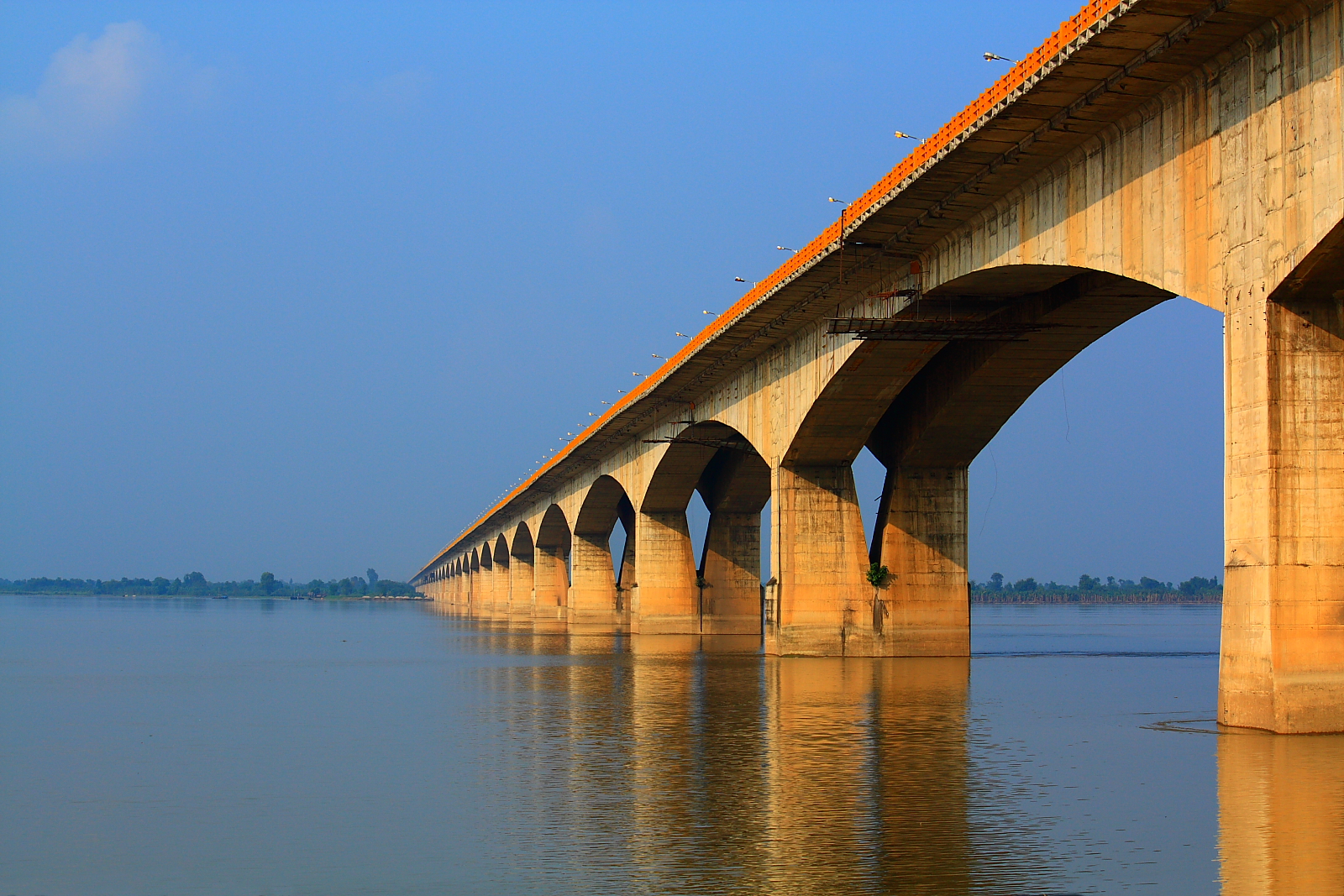
Prime Minister Narendra Modi on 21 November 2026 inaugurated, dedicated to the nation and laid the foundation stones for 227 development projects worth around Rs 34,470 crore in Vaishali, Bihar, in one of the largest single-day infrastructure packages announced for the state this year. The centrepiece was Nitish Setu, a six-lane extradosed cable-stayed bridge across the River Ganga, which the Prime Minister dedicated to the people at a public meeting in the Jafarpatti Industrial Area under the Rajapakar block of Vaishali district. The visit was timed to mark the completion of one year of the present state government’s term, and the Prime Minister chose Vaishali, a district the government describes as a historic land of democracy, for the occasion.
The package spans roads, power, urban infrastructure, water resources, education, healthcare and transport, according to the Press Information Bureau. Projects worth over Rs 15,600 crore were inaugurated, foundation stones were laid for projects worth around Rs 14,450 crore, and the bridge itself, built at a cost of around Rs 4,280 crore, was dedicated to the nation. The Prime Minister also flagged off 100 electric buses under the PM-eBus initiative and took part in housewarming ceremonies for more than 26,900 beneficiaries of the Pradhan Mantri Awas Yojana (Urban). Akashvani reported that the 227 projects presented on the day included the second 660-megawatt unit of the Buxar Thermal Power Project alongside road, power distribution and transmission, irrigation, education, healthcare and urban development works.
For Bihar, the day mattered as much for what the projects connect as for what they cost. The new bridge gives north and south Bihar an additional crossing over the Ganga, easing pressure on the Mahatma Gandhi Setu and the JP Setu, the two crossings that have carried most of the traffic between Patna and the districts across the river for decades. The highway, power and urban works announced alongside it are designed to move farm produce to markets faster, supply more reliable electricity to homes and farms, and give towns cleaner transport and better water and sewerage. Whether that promise is delivered will depend on how quickly the foundation-stone projects move from announcement to construction, and then to completion.
Nitish Setu: the bridge at the centre of the package
Nitish Setu is a six-lane extradosed cable-stayed bridge over the Ganga that connects Kachhi Dargah on National Highway 22 in Patna district with Bidupur on National Highway 322 in Vaishali district, passing through Raghopur Diara. The Press Information Bureau puts the total length of the project at 19.7 kilometres, comprising a 9.7-kilometre main bridge and 10 kilometres of approach roads, at a cost of around Rs 4,280 crore. Some news reports give the figures slightly differently, at 9.76 kilometres for the main bridge and 19.76 kilometres overall, a small difference that reflects rounding in how the approach roads are measured. The bridge was named Nitish Setu in honour of former Bihar Chief Minister Nitish Kumar, on whose watch the project was conceived and brought close to completion, and the Prime Minister said the name was a tribute to his service to the state.
The crossing is significant because of where it lands. Raghopur Diara, the riverine island area the bridge passes through, has long depended on ferries and long detours to reach Patna, and its residents have waited decades for a direct road link to the state capital. The Press Information Bureau said the bridge will particularly benefit residents of Raghopur Diara by improving their access to Patna and to essential services such as healthcare and education. The Prime Minister made the same point in his address, saying the bridge reduces the distance and the difficulties between Patna and Vaishali, and makes it easier to transport crops, fruits, vegetables, milk and curd to major markets, while giving young people easier access to education and older people easier access to healthcare.
The bridge did not open all at once. Its first phase, connecting Kachhi Dargah to Raghopur Diara, was opened to public traffic on 23 June 2025, and the full crossing to Bidupur was completed for the 21 November dedication. The project was executed by a joint venture of Larsen and Toubro and South Korea’s Daewoo Engineering and Construction Company under the supervision of the Bihar State Road Development Corporation. Reports have described the main bridge as India’s longest river bridge, at 9.76 kilometres, ahead of the 9.15-kilometre Bhupen Hazarika Setu over the Lohit in Assam, although the official release does not itself make that claim. After the Prime Minister’s departure on 21 November, police barricades were removed and the bridge was opened to the general public, according to The Hindu.
Highways: six-laning, upgrades and a new corridor
The road works in the package were the largest single element after the bridge itself. Among the projects inaugurated on 21 November were the six-laning of the Aurangabad-Chordaha section of National Highway 19, the Chorma-Bairgania section of National Highway 227F and the Umagaon-Saharsa section of National Highway 327. The Aurangabad-Chordaha stretch, at 39.70 kilometres, was widened from four lanes to six, linking Gaya and Aurangabad with faster all-weather connectivity towards Jharkhand’s industrial areas and markets. The Chorma-Bairgania section of National Highway 227F, at 34.57 kilometres, was upgraded to two lanes with paved shoulders, improving the link between National Highway 27 and the Nepal border and giving remote villages in East Champaran and Sitamarhi better access. The Umagaon-Saharsa section of National Highway 327, at 39.18 kilometres, was also upgraded.
The foundation stones laid on the day point to the next round of highway building. The largest of them is the four-laning of the Sahebganj-Areraj-Bettiah section of National Highway 139W, a 78.94-kilometre greenfield corridor to be developed at a cost of over Rs 3,800 crore, with one detailed report putting the estimate at Rs 3,822.31 crore. The corridor is intended to improve connectivity between Patna, Bettiah and the Indo-Nepal border areas, and the National Highways Authority of India has said it is likely to cut travel time between Sahebganj and Bettiah from about two and a half hours to about one hour once it is complete. The Prime Minister also laid foundation stones for several other highway projects, and said hundreds of crores of rupees would be spent on them, as Bihar’s road network continues to expand.
Taken together, the three inaugurated highway sections and the new corridor cover about 192 kilometres of national highway work, and they form part of a wider push to connect Bihar’s districts to each other, to Nepal and to Jharkhand. The economic logic is straightforward. Bihar’s farms produce milk, vegetables, fruit and grain that must reach markets in Patna and beyond quickly, and its towns depend on road links for trade, jobs and services. Every hour saved on a highway, and every congested river crossing bypassed, lowers the cost of moving goods and people, and that is the argument the government has made for spending at this scale on roads in a state where road transport carries most of the freight.
Power: new generation, evacuation and stronger distribution
The power works in the package cover the full chain from generation to the consumer. The Prime Minister inaugurated Unit 2, with a capacity of 660 megawatts, of the 1,320-megawatt Buxar Thermal Power Project, adding a large block of new generation capacity inside the state. He also laid the foundation stone for the power evacuation project for the Pirpainti Super Thermal Power Project, a 3 by 800-megawatt plant, at an estimated cost of around Rs 3,350 crore. Evacuation infrastructure, the transmission lines and substations that carry electricity from a power station to the grid, is often the slowest part of a power project, so starting it early matters if the Pirpainti plant is to supply power on schedule.
Distribution, the part of the system closest to homes and farms, was also addressed. The inaugurated works include electricity distribution and transmission infrastructure under the Energy Department, including loss-reduction works under the Revamped Distribution Sector Scheme worth over Rs 1,130 crore. Reducing losses in distribution, the electricity that is generated but never billed because of technical losses and theft, is one of the most direct ways to improve the finances of power utilities and the reliability of supply. A floating solar project at Phulwaria Dam in Nawada was also inaugurated, adding a renewable element to a package dominated by thermal power and grid works.
The Prime Minister framed the energy works as a reversal of Bihar’s past. In his address he said there was a time when electricity had not reached thousands of villages in Bihar, and that today the state is becoming a major centre of power generation. He also pointed to decisions taken by the state government over the past year, including an initiative to install 11,000 new tubewells to deliver water to every field, and a decision to ensure 12 hours of electricity for irrigation. For farmers, the hours of power available for pumping water matter as much as the total capacity built, because irrigation determines whether a second crop can be grown, and the government has presented the 12-hour assurance as a direct benefit to agriculture.
Cities in the package: e-buses, housing, water and sewerage
Urban Bihar received a substantial share of the 21 November package. The Prime Minister flagged off 100 modern electric buses under the PM-eBus initiative, giving cities in the state cleaner public transport and reducing the diesel buses on urban roads. Electric buses cost more to buy than diesel buses but are cheaper to run and produce no exhaust emissions on the street, and the government has presented the flag-off as part of a wider shift to cleaner urban transport. The buses were flagged off alongside the highway and power works, underlining that the package was designed to cover movement inside cities as well as movement between them.
Housing was the most personal element of the day. Griha Pravesh, or housewarming, ceremonies were held for more than 26,900 beneficiaries under the Pradhan Mantri Awas Yojana (Urban), marking the handover of pucca houses to urban families. The Prime Minister handed over keys to beneficiaries on the day, and the Press Information Bureau described the ceremonies as an important milestone in providing housing to urban families. The housing numbers form part of a larger picture the Prime Minister set out in his speech, in which he said 43 lakh families in Bihar had received pucca houses, with 11 lakh more approved in August, although those figures cover the housing programme over a longer period and not only the 21 November event.
Water and sewerage works, less visible than a bridge or a highway but central to daily life in towns, were spread across the package. Sewerage infrastructure at Kahalgaon was inaugurated, and foundation stones were laid for sewerage and water-supply projects in Begusarai, Biharsharif, Purnea, Hajipur, Motihari, Danapur, Khagaria, Samastipur, Bodhgaya, Sitamarhi, Saharsa and other urban areas. Restoration and strengthening of canals and embankments was also inaugurated, linking the urban works to irrigation and flood protection in the countryside. The Prime Minister also inaugurated buildings and facilities for educational institutions, residential schools, health services, agriculture, sports and public administration, including the IIT Patna Research Park and hostel and Dr Bhimrao Ambedkar Residential Schools, for which foundation stones were also laid.
Why a river crossing changes Bihar’s economy
A bridge over the Ganga is, in economic terms, a shortcut, and shortcuts have a value that can be measured in hours, fuel and spoiled produce. Before Nitish Setu, traffic between Patna and Vaishali depended heavily on the Mahatma Gandhi Setu, a crossing opened in 1982, and the JP Setu, and both have carried far more traffic than they were designed for. Congestion on those bridges has meant long waits for trucks carrying milk, vegetables and fruit, goods that lose value with every hour on the road. A six-lane crossing with 10 kilometres of approach roads gives that traffic an alternative route, and the government expects it to cut journey times between north and south Bihar, lower transport costs and let farmers in Vaishali and the surrounding districts reach Patna’s markets while their produce is still fresh.
The wider package follows the same logic. Better highways move goods faster, more generation and stronger distribution make power more reliable for small industry and irrigation, and cleaner buses and better water and sewerage make towns more liveable for the workers those industries need. The Prime Minister set out the record of the past year in these terms, citing investment agreements worth over Rs 2 lakh crore, the start of work on a Rs 6,000-crore steel project in Gayaji, a new sugarcane incentive policy to revive closed sugar mills including those at Motihari, and the opening of over 200 new degree colleges in one year, along with approval for the Maa Sita Mahila Vishwavidyalaya for daughters. He also said nearly 75 lakh farmers in the state had received support under the PM Kisan Samman Nidhi, and that support for women’s self-help groups had reached 50 lakh rural women.
Those figures were presented by the Prime Minister as evidence of a state changing direction, and they should be read as his account of the government’s record rather than as independently audited results. The investment agreements, in particular, are proposals and commitments rather than money already spent, and the test will be how much of the Rs 2 lakh crore is converted into factories, jobs and tax revenue. The same caution applies to the foundation stones laid on 21 November. A foundation stone is the start of a project, not its completion, and the Rs 14,450 crore of works in that category will only change lives when the roads are built, the transmission lines are strung and the water reaches homes. The inaugurated works, by contrast, are finished and in use, and Nitish Setu is the clearest example of that distinction.
The naming row and the road to opening day
The bridge’s name became a political argument before it was opened. The state government decided on 13 November 2026 to name the six-lane Kacchi Dargah-Raghopur-Bidupur bridge Nitish Setu, and Chief Minister Samrat Choudhary announced the decision, saying it reflected the affection, respect and gratitude of the people of Bihar for Nitish Kumar. The Prime Minister, dedicating the bridge on 21 November, said it had been named as a tribute to the former chief minister. Leaders from all five ruling National Democratic Alliance constituents were present on the dais, along with the Chief Minister, Deputy Chief Minister Vijay Kumar Choudhary, Union Minister and Hajipur MP Chirag Paswan, and Health Minister Nishant Kumar, the son of Nitish Kumar, whom the Prime Minister embraced on the stage.
The opposition Rashtriya Janata Dal objected to the name. Its national working president, Tejashwi Yadav, said the bridge had already been inaugurated by Nitish Kumar when he was Chief Minister, and that he had himself, as Deputy Chief Minister, proposed naming it after the local leader and freedom fighter Akshayvat Rai. He also said the government had earlier considered naming the bridge after the tenth Sikh Guru, Gobind Singh, before moving away from that proposal. Mr Yadav added that the bridge had been planned in 2015, when the Mahagathbandhan government was in power in the state and he was Deputy Chief Minister, and the RJD sought a share of the credit for the project. The argument is, in substance, about who should be remembered for a bridge that took years to build across changes of government, and it continued on social media and in the days after the inauguration.
The Prime Minister used his address to answer his critics on the wider record rather than on the name alone. He said Bihar had chosen a new path of hope and trust nearly three decades ago under Nitish Kumar’s long tenure as Chief Minister, which he said is now being carried forward by Samrat Choudhary with his blessings. He also attacked previous governments, saying the Congress had ruled for decades with the slogan of removing poverty without removing it, and claimed his government had lifted 50 crore people out of poverty within 12 years. That poverty figure is the Prime Minister’s claim, made in a political speech, and it has not been verified against a single official dataset in the release. The speech, which lasted about 15 minutes, ended with a call to keep up the momentum, and with the Prime Minister saying the development of Bihar could only be felt by coming to the state.
What to watch: delivery, costs and timelines
The first thing to watch is the gap between what was inaugurated and what was only begun. Projects worth over Rs 15,600 crore were inaugurated and are, in the government’s account, complete, while projects worth around Rs 14,450 crore had only their foundation stones laid. Added to the bridge, at around Rs 4,280 crore, the three parts come to roughly Rs 34,330 crore, close to the headline figure of around Rs 34,470 crore once rounding and smaller items are allowed for. The distinction matters because the public benefit of the second group depends entirely on execution. The Sahebganj-Areraj-Bettiah corridor, the Pirpainti evacuation lines, the sewerage and water schemes in a dozen towns and the education buildings will need years of construction, land, clearances and funding before they deliver anything, and Bihar has seen foundation stones laid before that were slow to become finished works.
The second thing to watch is cost. The Press Information Bureau puts the bridge at around Rs 4,280 crore, while The Hindu reported the cost as over Rs 5,500 crore, a difference of more than Rs 1,200 crore that neither report explains. The gap may reflect different definitions, with one figure covering the bridge structure and the other including approach roads, land or financing, but readers should treat the cost as reported differently across sources until the government publishes a detailed break-up. Similar care is needed with the travel-time claims. The National Highways Authority of India has said the Sahebganj-Bettiah journey should fall from about two and a half hours to about one hour, but that is a projection for a corridor that is still to be built, not a measured result.
The third thing to watch is whether the power and irrigation promises reach the farm. Twelve hours of electricity for irrigation, 11,000 new tubewells and a new 660-megawatt unit at Buxar are substantial commitments, but their value will be judged by farmers at the pump and in the field, not in a speech. If the distribution works reduce losses as intended, and if the Pirpainti evacuation lines are ready when the plant needs them, Bihar’s power supply should become more reliable. If they lag, the new generation capacity will be of limited use. The bridge itself is the one part of the package that can already be judged, because it is open and carrying traffic, and its effect on journey times, congestion on the older crossings and trade between north and south Bihar will become clear in the months ahead.
Sources
USN reviewed reporting from multiple outlets for this story. Read more from Press Information Bureau, The Hindu and Akashvani News.