

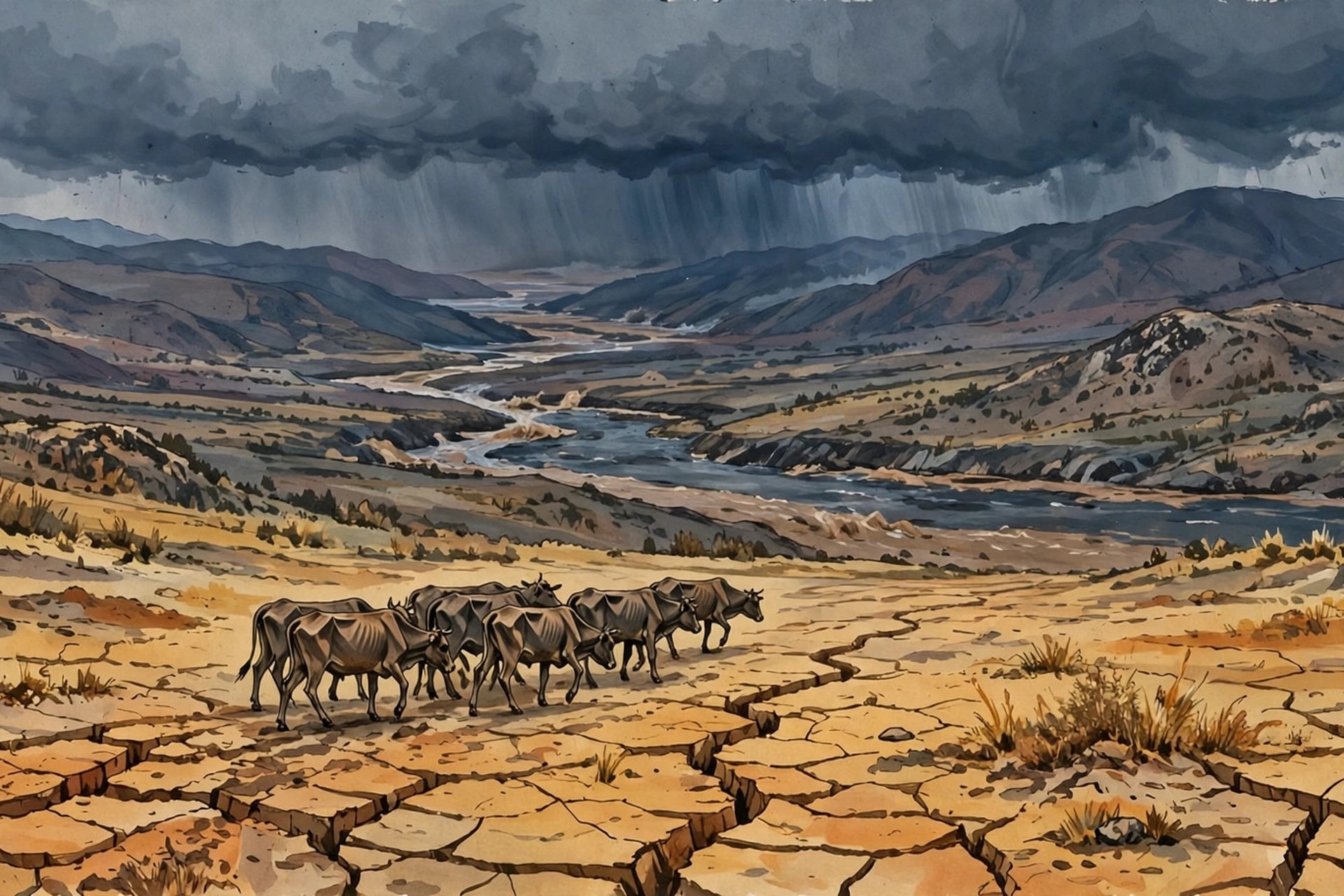
President Rodrigo Paz declared a national state of emergency in Bolivia on October 31, 2026 as the country faces drought and floods driven by a strengthening El Niño event that could worsen over the coming months.
The decree covers six departments and responds to two overlapping crises: a severe drought affecting more than 78,000 families across the country’s agricultural heartland and a flood threat to communities in the lowlands, where rivers are already swollen by early seasonal rains.
In a televised address, Paz said the country is in danger of experiencing a very severe El Niño event, with a peak expected between December 2026 and February 2027. He warned that the phenomenon could simultaneously bring drought to some regions and flooding to others, straining food production, water supplies and transport.
A tale of two disasters
Bolivia’s crisis is shaped by geography. The highlands and valleys, where most of the country’s farming takes place, are suffering from a lack of rain that has destroyed crops and left reservoirs at critically low levels. The lowlands, including parts of Beni and Pando, face the opposite problem: rivers rising rapidly as rains arrive, threatening homes, roads and livestock.
According to the government’s initial assessment, more than 78,000 families have been affected by the drought, with losses in the agricultural sector estimated at more than $200 million. In Santa Cruz, the country’s largest agricultural department, farmers have reported losing up to 60% of their soybean and corn crops, while cattle ranchers in Beni have lost thousands of animals to a lack of water and fodder.
What the emergency decree does
The state of emergency allows the government to redirect funds, mobilise the military for relief operations and fast-track the purchase of food, water and medical supplies. It also enables regional governments to request federal assistance without the usual bureaucratic delays.
Paz said the government has already allocated $50 million for immediate relief, including food packages, water tanks and veterinary supplies for livestock. A further $100 million is expected to be released in the coming weeks for infrastructure repairs and agricultural support.
Why El Niño is hitting Bolivia so hard
El Niño is a natural climate pattern that warms the central and eastern Pacific Ocean, disrupting weather patterns around the world. In Bolivia, it typically brings drier conditions to the highlands and heavier rainfall to the lowlands, a combination that can devastate agriculture and infrastructure.
The World Meteorological Organization (WMO) has forecast that the current El Niño event could become one of the strongest since 1950, with a peak expected between December 2026 and February 2027. The agency has warned that the event could affect weather patterns across South America, Africa and Asia, with consequences for food security and water resources.
The human cost
For families in the drought-affected areas, the crisis is already a daily struggle. In the department of Chuquisaca, farmers have reported that their wells have run dry, forcing them to walk for hours to fetch water. In Tarija, schools have closed early because of a lack of water, while in Cochabamba, hospitals have reported an increase in cases of dehydration and waterborne diseases.
In the lowlands, the threat is different but equally serious. In Beni, where rivers are already at high levels, communities are preparing for the possibility of flooding that could cut off roads and isolate villages for weeks. The government has pre-positioned boats, tents and food supplies in the region, but officials acknowledge that the scale of the potential flooding could overwhelm local resources.
International response
The United Nations and international aid agencies have pledged support for Bolivia’s response, with the World Food Programme announcing it will provide food assistance to 50,000 families in the worst-affected areas. The European Union has also offered to send emergency supplies, including water purification equipment and medical kits.
Neighbouring countries, including Brazil, Peru and Argentina, have offered to share meteorological data and technical expertise to help Bolivia prepare for the coming months. The Andean Community has called for a coordinated regional response to El Niño, which is expected to affect multiple countries in South America.
What happens next
As Bolivia enters the peak of the El Niño season, the government says it will provide weekly updates on the situation, including the number of families affected, the extent of crop losses and the risk of flooding in the lowlands.
Paz has urged Bolivians to take precautions, including storing water, avoiding travel to flood-prone areas and following advice from local authorities. He has also called on the international community to support Bolivia’s response, arguing that the country cannot face the crisis alone.
For now, the state of emergency remains in place, with no end date announced. Officials say it will remain in effect until the El Niño event has passed and the country is no longer at risk of severe drought or flooding.
Sources: CNN, Reuters, BBC News and Al Jazeera.