

Schools in Brevard County, Florida, reopened on Thursday 5 November 2026 after three days of closure caused by record rainfall that flooded roads, homes and campuses across the Space Coast and killed two people in Palm Bay. The reopening, confirmed by Brevard Public Schools and reported by local news outlets on 5 November, ended a shutdown that had kept every public school in the county closed on Wednesday 4 November, the third straight day without classes. The return to school did not mean a return to normal: bus routes in storm-affected areas remained disrupted, and several Melbourne schools stayed under a precautionary boil-water notice through the end of the week.
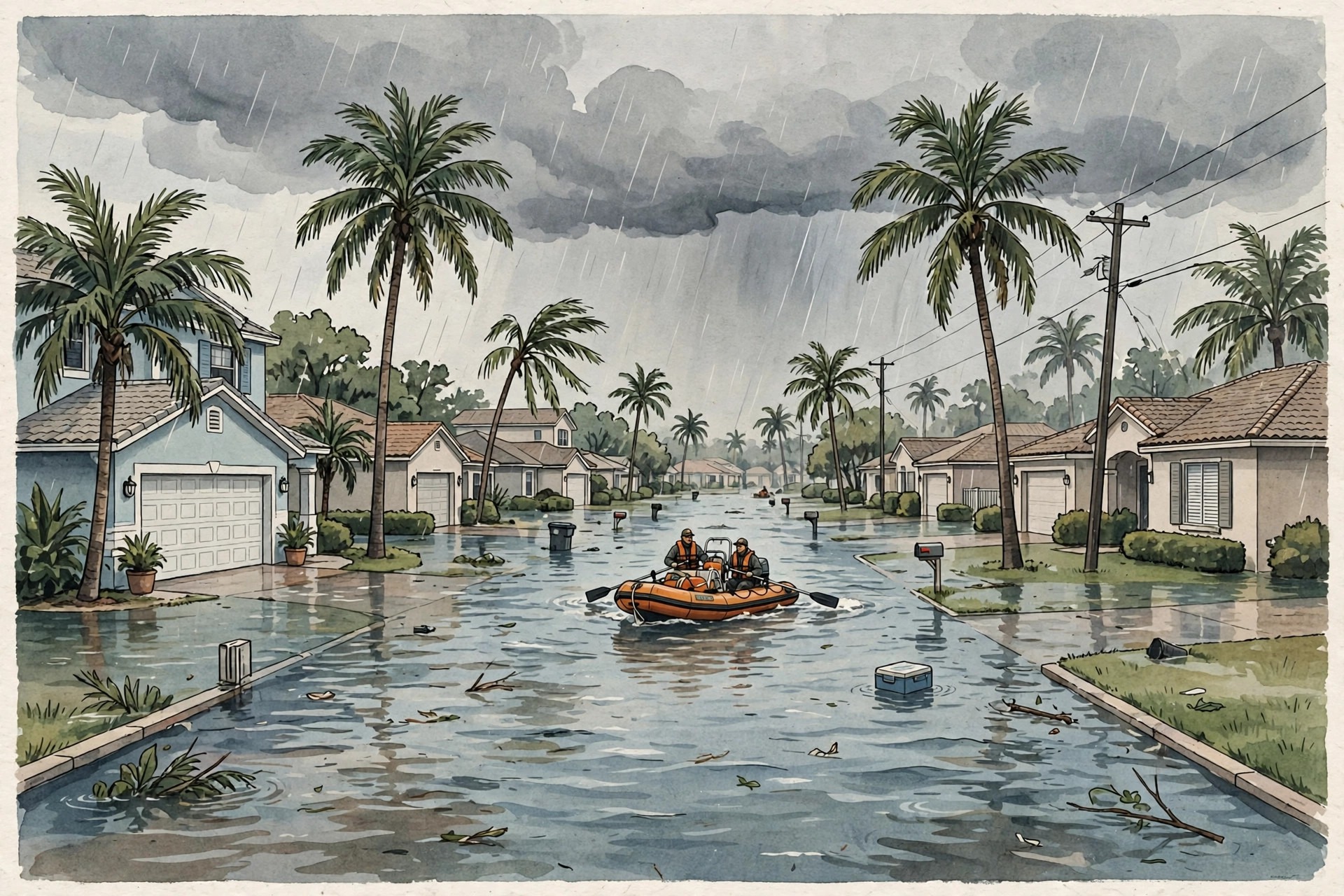
The flooding that caused the closure was described by forecasters and local officials as a once-in-a-thousand-year event. Parts of southern Brevard County received more than 20 inches of rain, much of it on Monday 2 November, and some neighbourhoods reported close to 24 inches. Melbourne recorded its wettest day on record. The rain fell so fast, and in such volume, that drainage systems were overwhelmed, roads became rivers, and neighbourhoods that had never flooded before found themselves under water. Emergency crews carried out hundreds of high-water rescues, and the county’s recovery was still under way days after the rain stopped.
This is a story about Brevard County, on Florida’s central Atlantic coast, and its neighbours Indian River and St. Lucie counties. It is not the same as the flooding reported separately in Palm Beach County, further south, where a different set of schools closed for local flooding in the same week. The two events shared a cause, days of heavy rain across Florida, but they affected different communities, different school districts and different roads. Keeping them separate matters for families trying to find out whether their own child’s school is open, and for readers trying to understand where the worst damage occurred.
Brevard County Florida flooding: record rain on the Space Coast
The deluge struck on Sunday night into Monday morning, 1 to 2 November, when a slow-moving band of heavy rain settled over Florida’s east-central coast. The National Weather Service office in Melbourne, which covers Brevard County, issued a flash flood emergency for West Melbourne and Palm Bay on Monday morning, later extending it to Grant-Valkaria. A flash flood emergency is the Weather Service’s most serious flood warning, reserved for situations where life-threatening flooding is already occurring and where people in the warned area need to move to higher ground immediately.
Rainfall totals were extraordinary by any standard. Southern Brevard County recorded 16 to 22 inches across the event, with the highest totals near Malabar approaching 24 inches from 1 November through late 2 November. Melbourne set a record for its wettest day. The scale of the rain explains why the flooding was so widespread and so persistent: when two feet of rain falls in about two days, no drainage system designed for ordinary storms can carry it away, and water pools in low-lying streets, yards and homes until it can slowly drain or be pumped out.
The flooding also disrupted the state’s midterm election. On Tuesday 3 November, election officials in Brevard County moved several polling places because roads were impassable, and similar moves occurred across eight Florida counties. Voters were urged to check the county elections website before travelling. The fact that an election could be held at all in the midst of such flooding was a credit to election workers, but the disruption was a measure of how thoroughly the rain had interrupted ordinary life.
Schools closed for a third day, then reopening on November 5
Brevard Public Schools closed all campuses and district offices on Monday 2 November and Tuesday 3 November, and then announced a third day of closure on Wednesday 4 November. The district cited four continuing problems: water service, roads, damaged buildings and staffing. Each problem alone might have kept some schools closed. Together, they made a county-wide reopening impossible on Wednesday, even though the rain had largely stopped.
Water service was a particular concern. A major water main break on Port Malabar Boulevard in Palm Bay put nearly 30 schools under a boil-water notice, meaning that tap water had to be boiled before drinking or cooking until the system could be tested and cleared. Damaged buildings needed inspection before students could safely return, and flooded roads made it unsafe for school buses to run their normal routes. Staffing was also affected, because teachers and support staff themselves faced flooded homes and impassable roads.
Neighbouring districts faced similar decisions. Schools in Indian River and St. Lucie counties were also closed on Wednesday 4 November, with both districts hoping to reopen on Thursday 5 November. Indian River County reported 31 roads closed, making bus routes unsafe, while St. Lucie County made its decision with law enforcement, the county emergency operations centre and the National Weather Service. The three counties’ parallel closures show how the same storm system affected the whole Treasure Coast and Space Coast region, even though the worst rainfall was concentrated in southern Brevard.
On Thursday 5 November, Brevard Public Schools reopened campus operations. Transportation, before- and after-school care, and after-school sports and activities resumed as scheduled, according to the district. The reopening came with caveats that families needed to hear. Bus routes in storm-affected areas could be affected, and several schools operating under the City of Melbourne remained on a precautionary boil-water notice through the end of the week. Florida Tech, which had closed for power outages and water disruptions, resumed classes after power and water were restored, and Eastern Florida State College expected to reopen its Palm Bay campus on Thursday, although no official update had been issued at the time of reporting.
Two Palm Bay deaths, causes still unconfirmed
Two people died in Palm Bay during the flooding. Palm Bay Mayor Rob Medina identified them as Joshua Bennett, aged 34, and Archie Richards, aged 78. One of the deaths was reported to have occurred in a vehicle, but the causes of death had not been confirmed in the accounts used for this article, and readers should not assume a cause for either death beyond what officials have stated. The loss of two residents in a single city, in a single storm, has weighed heavily on a community that was already coping with flooded homes and closed schools.
Mayor Medina announced the second death at an afternoon news conference on Tuesday, after the first death had already been confirmed. The staggered announcements reflected the difficulty of confirming information during an ongoing emergency, when first responders are focused on rescues and officials are careful not to release details before families have been notified. The city’s grief has been compounded by the scale of the damage around it: drone photographs of Port Malabar Boulevard showed floodwater stretching across roads and yards, and residents described water entering homes that had never flooded before.
Hundreds of people were rescued from floodwaters across the county. Florida Fish and Wildlife officers alone rescued more than 60 people in Melbourne and Palm Bay, and the total number of rescues across all agencies ran into the hundreds. High-water vehicles, boats and, in some cases, helicopters were used to reach people trapped in homes and vehicles. The rescue effort continued into Tuesday and Wednesday, even as the rain eased, because floodwater receded slowly and some roads remained impassable long after the skies cleared.
State of emergency across seven Florida counties
Governor Ron DeSantis declared a state of emergency on 2 November for seven counties: Brevard, DeSoto, Hardee, Highlands, Indian River, Martin and St. Lucie. The declaration, issued as Executive Order 26-227, allowed state agencies to waive tolls on affected roads, activated price-gouging protections, and gave election supervisors in affected areas the authority to move polling places that were unsafe or cut off. The breadth of the order, covering counties well beyond the worst rainfall, reflected the storm’s reach and the state’s concern that flooding could worsen as rivers rose in the days after the rain.
River flooding was a particular worry after the rain stopped. The National Weather Service warned that the St. Johns River near Cocoa would rise from minor to moderate flood stage by mid to late week, meaning that some roads could stay flooded even as the weather improved. River flooding behaves differently from flash flooding: it arrives more slowly, lasts longer, and can catch people by surprise if they assume the danger has passed when the rain ends. Residents near rivers and low-lying areas were urged to monitor forecasts and road closures even after schools reopened.
Transport was disrupted beyond the school system. Brightline, the passenger rail service between Orlando and West Palm Beach, suspended service on Monday because of high water along its tracks in Brevard County, with no immediate estimate for resumption. County buildings and clerk of court offices closed on Monday, and county libraries closed early. The cumulative effect was a county largely paused for three days, with only emergency services, utilities and recovery crews operating at full strength.
What recovery looks like for Brevard County families
For families, the reopening of schools on Thursday was a welcome sign, but it was only one step in a longer recovery. Homes that took on water need drying, cleaning and repair, and some families will be displaced for weeks. Vehicles damaged by floodwater may be total losses. Businesses that closed for days face lost income and repair costs. The boil-water notices, while precautionary, are a daily inconvenience for schools and households that must boil water before use until testing clears the system.
The district’s decision to reopen with bus routes potentially affected and boil-water notices still in place reflects a balance that school systems must strike after disasters: the longer schools stay closed, the more learning is lost and the harder it is for working parents to return to their own jobs, but reopening too soon can put students and staff at risk. Brevard Public Schools said it would continue inspections, repairs and cleanup, and families were advised to check district communications for route changes and campus-specific notices.
The flooding also raises longer questions for the Space Coast. A storm described as a once-in-a-thousand-year event is, by definition, rare, but Florida has seen several extreme rainfall events in recent years, and communities are asking whether drainage, development and emergency planning have kept pace with the risk. Those questions will be debated in county commission meetings and state planning sessions in the months ahead. For now, the immediate work is practical: clearing debris, repairing water mains, restoring roads, and helping the families of Joshua Bennett and Archie Richards, and the hundreds of residents who were rescued, to rebuild.
Residents who still face flooded roads or water problems should follow Brevard County emergency management and Brevard Public Schools updates, and should never drive through flooded roads. The floodwater that looks shallow can hide washed-out pavement, and the current can be stronger than it appears. That warning, repeated by officials throughout the week, remains the most important safety message as the county moves from emergency response to recovery.
Sources
USN reviewed reporting from multiple outlets for this story. Read more from Florida Today, Fox Weather and Orbis Weather.