

What China Said About the October 31 Patrols East of Taiwan
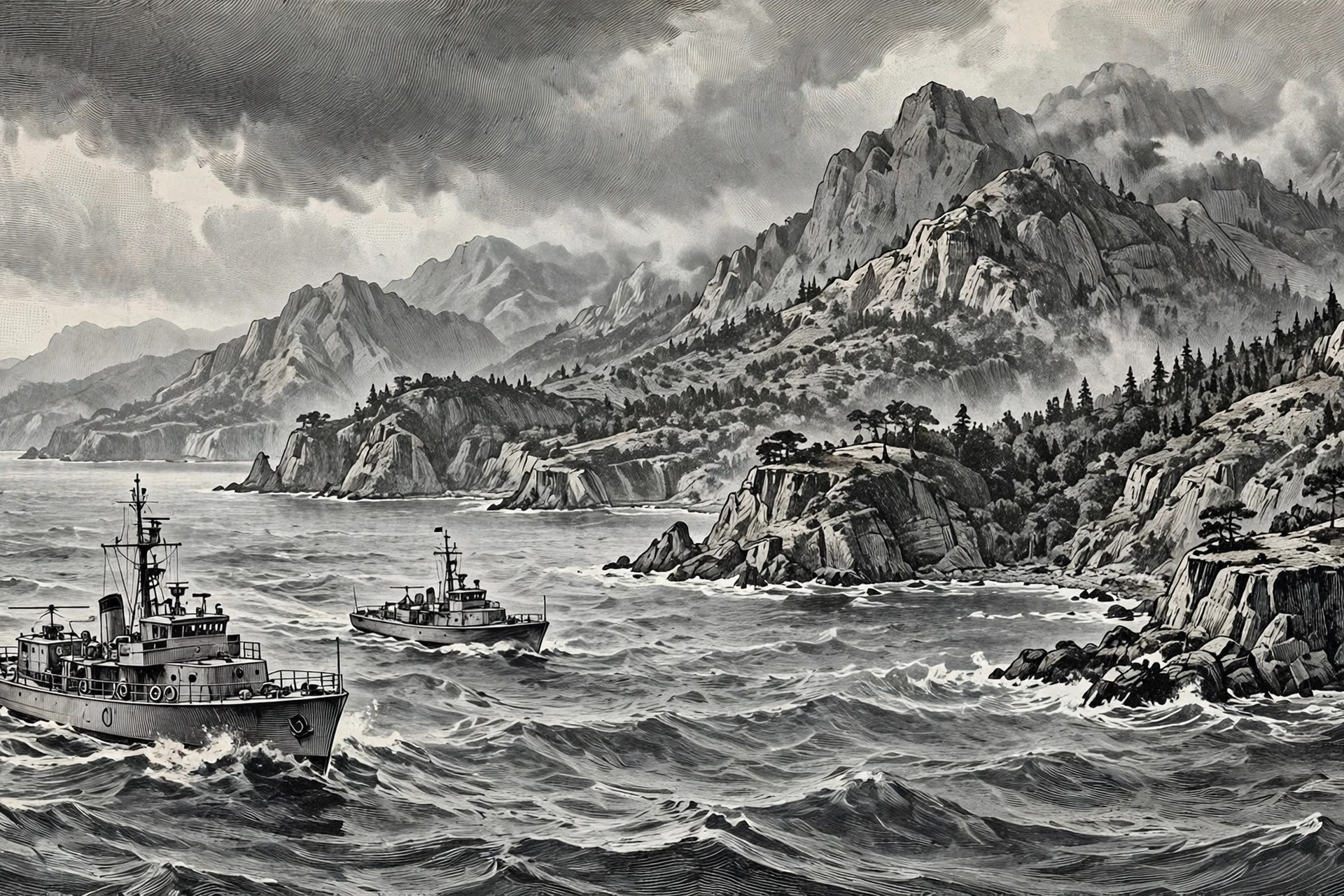
China’s coast guard carried out what it described as routine law-enforcement patrols in waters east of Taiwan island on Saturday, October 31, according to state broadcaster CCTV, as reported by Reuters. The report did not, in the material reviewed for this article, give a precise number of vessels involved in the October 31 patrols, nor did it publish a detailed track of where each vessel sailed. What it did convey, through the coast guard’s own account, was a message of continuity: these patrols are presented by Beijing not as a one-day event, but as part of an ongoing pattern of activity in waters China claims as its own.
Coast guard spokesperson Jiang Lue said the force had continued to strengthen control over the waters since the start of October, in order to protect what he described as the lawful rights and safety of Chinese people, including Taiwan compatriots. He added that the coast guard would continue to step up law-enforcement patrols in waters under its jurisdiction. That language matters, because it frames the activity in legal and administrative terms, as policing rather than as a military operation. Readers should treat that framing for what it is: Beijing’s own characterisation of its actions, not an independent finding about their purpose.
Reuters also reported that such patrols are part of an increase in activity since June in the waters east of Taiwan. That longer trend is important context for the October 31 report. A single day’s patrols, viewed alone, might look unremarkable. Viewed as one more entry in a months-long sequence that began in the summer and intensified in early October, the same patrols take on a different significance for officials in Taipei, for analysts in Washington, and for neighbouring governments watching the same waters. The question that divides the two sides is not whether vessels were present, but what their presence is meant to achieve.
China views Taiwan as its own territory. It recognises no claims of sovereignty by Taiwan, including over the seas around the island. Taiwan rejects Beijing’s claims. That fundamental disagreement shapes almost every sentence uttered about these patrols. When Beijing speaks of waters under its jurisdiction, Taipei hears a sovereignty claim being asserted at sea. When Taipei speaks of monitoring and responding to Chinese vessels, Beijing hears a challenge to what it regards as its own lawful activity. Neither side’s language can be read neutrally, and this article therefore attributes each claim to the side that made it.
China Coast Guard Patrols East of Taiwan: Patrols Are Not Drills
One distinction must be made clearly at the outset, because it is easy to blur in fast-moving coverage. The October 31 activity reported by CCTV and Reuters was described as coast-guard law-enforcement patrols. That is not the same thing as a military drill around Taiwan, and this article is not about such a drill. An earlier USN article covered China military drills around Taiwan, with a carrier deploying east of the island, as a separate story. The two kinds of activity involve different forces, different stated purposes, and different signals, even though they take place in overlapping waters and form part of the same wider contest over Taiwan.
Military drills typically involve the armed forces, often including naval vessels, aircraft, and live-fire or manoeuvre exercises, and they are usually announced or identified as exercises. Coast-guard patrols, by contrast, are presented as law-enforcement work: monitoring waters, asserting jurisdiction, and, in Beijing’s account, protecting people and rights. The distinction does not mean coast-guard patrols are insignificant. In fact, much of the concern expressed by Taipei and by American analysts is precisely that law-enforcement activity can achieve strategic effects without crossing the threshold of open military action. But conflating the two would mislead readers about what happened on October 31, and about who was involved.
That is why the October 31 report should be read on its own terms. It describes coast-guard vessels conducting patrols east of the island, with a spokesperson emphasising strengthened control since early October and a promise of further patrols. It does not, in the reporting reviewed here, describe a carrier group, a large-scale exercise, or a bombardment or blockade being imposed on that day. No blockade was reported as being in force on October 31. The blockade question arises not from what was done that day alone, but from what officials in Taiwan say the pattern of patrols could be preparing for.
Keeping the categories separate also helps readers judge the evidence fairly. If every Chinese vessel movement near Taiwan is labelled a drill, then genuine drills lose their distinct warning value. If every coast-guard patrol is dismissed as routine policing, then a gradual change in who controls waters east of Taiwan may go unnoticed until it is well established. The most accurate account sits between those two errors: patrols are patrols, drills are drills, and the strategic meaning of patrols must be argued from evidence about their frequency, location, and composition, not assumed from the label alone.
Why Taiwan Sees a Possible Blockade Practice
Officials in Taiwan say they believe China is practising for a potential maritime blockade using overlapping military, paramilitary and civilian assets. That assessment has been reported by Reuters in connection with the increased activity east of Taiwan, and it is the central reason Taipei treats the patrols as a security concern rather than as ordinary policing. A maritime blockade, in this context, would mean restricting ships from reaching or leaving Taiwan, putting pressure on the movement of people, supplies and goods. Taiwan is an island, and its east coast faces the open Pacific, so control or disruption of those eastern waters would matter greatly in any crisis, even though much of Taiwan’s trade also moves through other routes.
The assessment rests, as reported, on the combination of different kinds of assets operating in overlapping areas. Military forces, coast-guard ships and civilian vessels can each perform different roles, and together they require Taiwan to monitor several kinds of activity at once. A coast-guard vessel can assert jurisdiction in a way a warship cannot without escalating more visibly. A civilian or research vessel can gather information or maintain a presence while looking less threatening. A military aircraft overhead can add a further dimension. Taiwan’s argument, as reported, is that the pattern across these categories, repeated over months, looks like rehearsal for restricting access, not merely like separate and unrelated sailings.
That argument should be labelled clearly as an assessment by Taiwanese officials, not as a proven fact about Beijing’s intentions. China has not announced a blockade, and no blockade was in place on October 31. Intentions are difficult to prove from vessel movements alone, and Beijing offers a different explanation for the same movements. What can be said with confidence is that Taipei’s officials hold this belief, that they have stated it publicly through reporting, and that it shapes how Taiwan’s coast guard and defence ministry respond day to day. Readers should weigh the assessment alongside Beijing’s denial of any such purpose, which is implicit in its description of the patrols as routine law enforcement.
Taiwan’s own coast guard has also described a wider pattern that it calls grey-zone operations, a term used for activity that applies pressure while remaining below the threshold of open conflict. In a statement to Reuters reported in late October, Taiwan’s coast guard said Chinese operations using law-enforcement, scientific and civilian cover were expanding Beijing’s influence at sea. It said the operations were aimed at assisting what it called battlefield preparation, and it warned that continued activity off Taiwan’s east coast, an important maritime traffic and supply route, could further increase security pressure. Again, this is Taipei’s characterisation, and it is contested by Beijing, but it explains why a coast-guard patrol can be read in Taipei as something more consequential than a traffic stop at sea.
What Beijing Says, and What Taipei Answers
Beijing’s position, as conveyed through the coast guard spokesperson and through the foreign ministry in earlier reporting, is that the waters east of Taiwan are Chinese waters, and that it is therefore legitimate, lawful and beyond reproach for China to carry out activities there. From that standpoint, patrols need no further justification: they are the normal exercise of jurisdiction by a state over its own waters, and any objection from Taipei is itself illegitimate because Taiwan has no separate sovereignty to assert. The spokesperson’s reference to protecting Chinese people, including Taiwan compatriots, fits the same framework, presenting the patrols as protective rather than coercive.
Taipei’s answer is equally direct. Taiwan’s National Security Council Secretary-General Joseph Wu has said China had no legal claim to the waters off the island’s east, according to reporting of an October forum in Taipei. Taiwan’s coast guard, a civilian law-enforcement agency under the Ocean Affairs Council and the Executive Yuan, though it can be mobilised as part of the armed forces during emergencies, has repeatedly challenged Chinese vessels it says entered restricted waters, broadcasting orders in Chinese and English for them to leave. In one incident around the Pratas Islands reported in October, Taiwan’s coast guard said a Chinese vessel approached with its identification system switched off before entering restricted waters, and that the exchange became a dispute over sovereignty conducted by radio. Those details come from Taiwan’s account and have not been independently confirmed in the material reviewed here, but they illustrate how routine encounters at sea quickly become arguments about who owns the water.
The legal disagreement underneath the patrols is therefore not a technical quarrel about fishing or navigation rules. It is the core sovereignty dispute itself, played out in daily encounters between patrol boats. International law on exclusive economic zones and territorial seas is itself contested in these waters, with overlapping claims involving Taiwan, Japan and the Philippines as well as China. Beijing’s claim that the waters are Chinese is not accepted by Taipei, and Taipei’s claim to its own jurisdiction is not accepted by Beijing. No court ruling cited in the reporting reviewed here settles that dispute for the waters east of Taiwan, and readers should not assume that either side’s legal language resolves it.
That unresolved legal question is why the language of law enforcement carries such weight. If a coast guard is genuinely policing its own waters, its presence is unremarkable. If it is policing waters another government claims, its presence is itself a sovereignty assertion. Both sides understand this, which is why the October 31 patrols, though described in a few short sentences by CCTV, drew attention well beyond the vessels involved. The patrols are a way of acting out a claim, day after day, in the hope that repetition will make the claim harder to dispute.
American and Regional Reactions to the Eastern Patrols
American attention to the patrols sharpened in mid-October, when Randall Schriver, chair of the United States Congress’s US-China Economic and Security Review Commission, told a forum in Taipei that Chinese coast-guard patrols east of Taiwan were highly destabilising. He described them as an extension of Beijing’s legal, political and information warfare against Taipei, arguing that a persistent coast-guard presence, though it might look like benign law enforcement, in fact operationalised a sovereignty claim. His remarks, reported by Reuters on October 20, are not the position of the United States government as a whole, and they should not be presented as such. They are the assessment of a commission chair speaking at a forum, and they carry weight because the commission advises Congress, not because they constitute a formal American policy statement.
Schriver’s warning also captured a specific anxiety: that law-enforcement patrols can normalise a presence that would be more controversial if it were imposed by warships alone. Once coast-guard vessels are routinely present, he argued, the step to more assertive control becomes smaller, and the burden of responding falls constantly on Taiwan. Taiwan’s defence ministry, on the same day as Schriver’s forum remarks, reported a separate Chinese joint combat readiness patrol near the island involving 27 military aircraft, including nuclear-capable H-6 bombers. That aircraft activity was distinct from the coast-guard patrols discussed here, and it is mentioned only to show how maritime and air activity can coincide on the same day, increasing the pressure on Taiwan’s monitoring systems. It should not be confused with the October 31 coast-guard patrols.
Regional neighbours are also watching. Taiwan’s coast guard has said Chinese activity since June has increased in overlapping economic waters involving Taiwan, Japan and the Philippines, after Tokyo and Manila announced talks on maritime boundary delimitation in their exclusive economic zones. In late October, Taiwan’s coast guard confirmed details of a Reuters report about a suspected Chinese maritime militia fishing boat, identified as Minfudingyu 07902, which it said operated alongside a Chinese coast-guard ship and a research vessel off Taiwan’s Pacific coast in mid-August, coming as close as about 2.7 nautical miles outside Taiwan’s restricted waters. Taiwan said it dispatched a patrol boat to drive the vessel away and placed it on a priority watchlist. That incident, from August, is not part of the October 31 patrols, but Taiwan cites it as evidence that civilian vessels are being used alongside official ones in the same pattern it fears.
Japan and the Philippines have their own disputes with China in nearby seas, and their governments have not, in the material reviewed for this article, issued a joint statement about the October 31 patrols specifically. Their interest is structural rather than declaratory: if coast-guard patrols can establish a persistent presence east of Taiwan, similar tactics could be applied elsewhere. That is why the patrols are followed closely beyond Taipei, even when no single day’s sailing produces a dramatic incident. The strategic question is cumulative, not episodic.
What Happens Next, and What Remains Unproven
On the evidence available, three things are established. First, China’s coast guard did conduct patrols east of Taiwan on October 31, as reported by CCTV and Reuters, and its spokesperson said control had strengthened since early October and would be stepped up further. Second, Taiwan’s officials believe the wider pattern of patrols, combining military, paramilitary and civilian assets, amounts to practice for a possible maritime blockade. Third, Beijing rejects that interpretation, describing the patrols as routine law enforcement in waters it regards as its own, while Taipei rejects Beijing’s sovereignty claim outright.
What remains unproven is the intention behind the patrols. No document or statement reviewed here shows Beijing ordering a blockade, setting a date for one, or directing coast-guard vessels to rehearse one explicitly. Equally, no evidence reviewed here shows that the patrols are purely administrative, with no strategic purpose. The gap between what vessels do and why they do it is the space in which both sides’ arguments live, and honest reporting must preserve that gap rather than filling it with speculation. A patrol can be both routine in form and strategic in effect, and analysts will continue to argue about which description fits best.
What to watch in the coming days is therefore practical rather than rhetorical. Observers will look for whether patrols east of Taiwan continue at the same frequency, whether they move closer to Taiwan’s restricted waters, whether civilian or militia-type vessels sail alongside coast-guard ships, and whether Taiwan’s coast guard reports further encounters like those around Pratas or off the Pacific coast. They will also watch whether Beijing issues any further statement tying the patrols to a specific legal claim or enforcement action, and whether Taipei or Washington responds with a formal statement rather than forum remarks. Any of those developments would add evidence; none of them, on its own, would settle the question of intent.
For now, the October 31 patrols should be remembered accurately: coast-guard patrols, described by Beijing as routine law enforcement, reported on a Saturday in late October, set against a pattern of increased activity since June and strengthened control since early October, and interpreted in Taipei as possible preparation for a blockade that has not been imposed. That sentence, with all its qualifications, is less dramatic than either side’s preferred version. It is also the version the available evidence supports, and it is the one on which further reporting should build.
Sources
USN reviewed reporting from multiple outlets for this story. Read more from Reuters, Free Malaysia Today and Khaleej Times.