

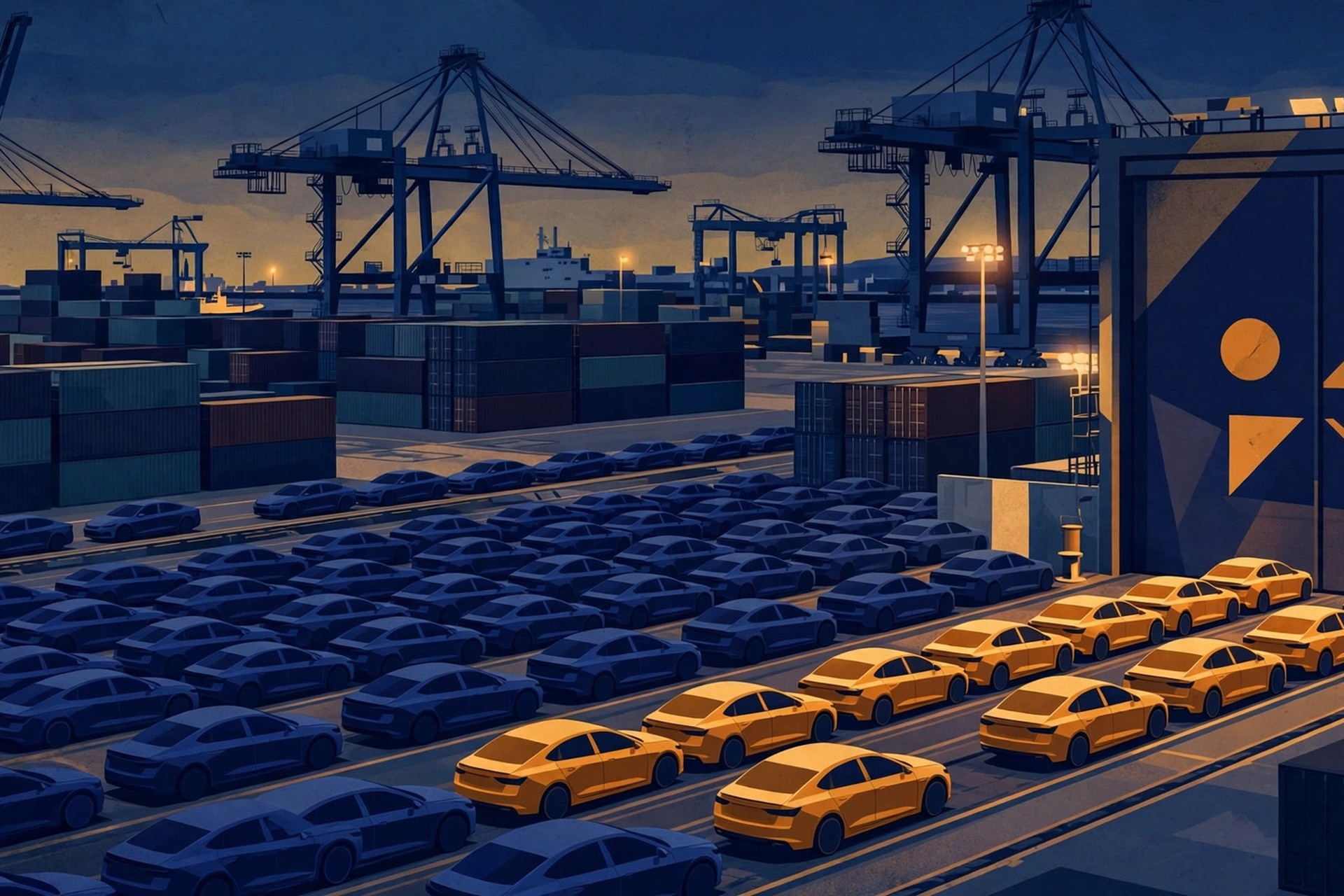
WASHINGTON — On Monday 2 November 2026, the organisation that speaks for nearly all major carmakers in the United States made a blunt request to Congress: when lawmakers return next week, use the short session that remains before the end of the year to pass a permanent ban on Chinese vehicles. The appeal, made on the eve of the midterm elections, turns a long-running argument about trade, technology and national security into a test of what the outgoing Congress can still finish — and what it may leave for a new Congress to start again.
The timing is the story as much as the substance. Congress is out of session for the election period and is due back in Washington in the week beginning 9 November. The session that follows is the lame-duck period, the stretch after an election in which members who have lost their seats, or who are retiring, still hold office until the new Congress begins in January. Floor time in that stretch is scarce, the list of unfinished business is long, and government funding itself expires on 11 December. A bill that does not move quickly in November and December does not simply wait politely; in practical terms, it dies with the session and must be introduced again, pass committee again and find floor time again in a new Congress whose membership and priorities are not yet known.
That urgency explains why the automakers chose this moment. The group behind the appeal is the Alliance for Automotive Innovation, whose members include General Motors, Toyota, Volkswagen and other large manufacturers. Its president, John Bozzella, argued that the American market needs protection from a surge of Chinese imports that, in his view, carry surveillance risks and would undercut companies that have invested heavily in American plants and communities over generations. He also framed the issue as one of national security and industrial strength, saying Congress should defend the country’s defence and advanced manufacturing base rather than allow Chinese carmakers to repeat in the United States the rapid gains they have made elsewhere.
Chinese Vehicle Ban Congress: Where the Bill Stands Now
Despite the force of the appeal, no permanent ban is yet law. The proposal has travelled a considerable distance through Congress without reaching the president’s desk. A Senate committee approved the bill in July 2026, giving it what supporters describe as significant momentum. A version in the House has gathered more than one hundred co-sponsors, a level of support that, on its own, signals broad interest but does not guarantee a floor vote, let alone passage in both chambers and a signature.
In September, the Senate sponsors of the bipartisan effort agreed to hold off on an attempt to fast-track the measure until November, even though supporters said backing for it was overwhelming. That delay is important to understand, because it was a choice about tactics rather than a defeat. Fast-tracking a bill can work only if opponents do not block it, and sponsors evidently judged that November, after the election recess, was a better moment to test whether the bill could move. The automakers’ statement on 2 November was, in effect, an attempt to hold them to that timetable: November has arrived, Congress is about to return, and supporters want the bill finished before the session ends.
What a permanent ban would add, legally, is also worth spelling out, because the United States is not currently an open market for Chinese cars. A rule put in place under the previous administration in early 2025 already has the practical effect of barring Chinese carmakers from selling or building passenger vehicles in the United States, on the ground that connected vehicles could send sensitive driver data back to China. On top of that, Washington maintains tariffs of more than one hundred percent on Chinese electric vehicles. Supporters of a statute argue that a regulation can be changed by a later administration and that tariffs are a trade tool, not a settled prohibition. A law passed by Congress and signed by the president, they say, would be harder to reverse and would give manufacturers, suppliers and investors a clearer long-term rule to plan around.
Critics of that logic would point in the opposite direction, although the 2 November appeal itself did not dwell on their case. A ban written into law would narrow consumer choice, reduce competitive pressure on domestic producers and could invite retaliation against American exporters. It would also settle, by legislation, a question that regulators have so far handled through a data-security rule and through tariffs — two instruments that can be adjusted as technology and trade relations change. Those are policy arguments, not settled facts, and they are part of why even a bill with committee approval and many co-sponsors still has to survive floor debate, possible amendments and a presidential decision.
Why Automakers Point to Europe and to Connected-Car Data
The automakers’ case rests on two pillars, and each deserves separate examination. The first is data and surveillance. Modern cars are, in effect, computers on wheels. They collect location information, driving patterns, voice commands and, in some models, images from cameras and sensors. Supporters of the ban argue that if the company that builds the car, or the software inside it, is subject to direction from Beijing, that stream of information could be exploited. That is presented as a risk argument: the danger is not that every Chinese-built car is already spying on its driver, but that the architecture of a connected car makes large-scale data collection possible, and that a foreign adversary should not be given that opening in the American fleet.
The second pillar is market experience elsewhere, and here the automakers offered a concrete number. Bozzella said the European Union imported more than 1.1 million vehicles from China in the first eight months of 2026, more than in the whole of 2025. The figure is offered as evidence of speed: a market can change quickly once Chinese manufacturers gain a foothold, and American producers do not want to discover the same pattern at home after factories and supply chains have already adjusted. Whether Europe is a fair comparison is open to debate — Europe’s tariffs, consumer tastes, charging infrastructure and trade relationship with China all differ from America’s — but the number explains why supporters speak of a closing window rather than a distant threat.
There is also a third, quieter argument running through the appeal: fairness to existing investment. American, European, Japanese and Korean manufacturers have built plants, trained workforces and developed supplier networks in the United States over decades, often with state and local incentives tied to jobs. Supporters argue that it would be perverse to let a new entrant, backed by a state that subsidises its own industry, undercut those investments on price while carrying the data risks described above. Opponents would reply that competition is precisely what keeps prices down and innovation up, and that protecting incumbents can become an excuse for complacency. Congress, if it takes up the bill, will have to weigh those competing claims about fairness and competition, not merely accept one side’s framing.
Trump, China and the Uncertainty Over a Signature
One complication for supporters is that the president’s own position has not been a simple endorsement of a total ban. In September, President Donald Trump told Fox News that he would accept Chinese car companies building cars in the United States, a remark that alarmed automakers because it appeared to open a door the bill would close. The distinction matters: a company that builds a plant in Ohio or Michigan, hires American workers and sources parts locally is, in the president’s framing, contributing to American manufacturing. A company that ships finished cars from China, or that installs Chinese software and hardware in connected vehicles, raises the data and supply-chain concerns that drive the ban. The bill’s final text, if it reaches the floor, will therefore matter enormously: does it ban cars made in China, cars made by Chinese companies anywhere, or cars containing certain Chinese software and components? Those are different prohibitions with different effects, and the 2 November reporting does not settle which version would be put to a vote.
Beijing’s public position adds another layer. The Chinese foreign ministry has previously urged the United States to respect market-economy principles and fair competition, and has criticised earlier proposals aimed at Chinese companies as unreasonable suppression. That language is diplomatic, but the underlying message is that China regards a permanent, legislated ban as a political act rather than a neutral safety measure, and that it may respond in trade or in other areas. Supporters of the bill would say that is precisely why the measure is needed; critics would say it is a reason to prefer narrower, evidence-based restrictions on data and software over a blanket ban on vehicles by origin. Neither side’s prediction about retaliation can be verified in advance, and readers should treat both as arguments about the future, not as established outcomes.
What the Lame-Duck Calendar Means for the Chinese Cars Bill
The calendar is unforgiving. If Congress returns on 9 November, it has only a handful of working weeks before the end of the session. Government funding runs out on 11 December, and the defence authorisation bill, the farm bill and other unfinished measures are all competing for the same floor time. Aides and lobbyists quoted in the 2 November reporting warned that if Democrats win control of Congress in the midterm elections — an outcome that, as of this writing on election day, 3 November, has not been decided and must not be assumed — there may not be enough time to approve the Chinese vehicle ban before the session ends in December. That warning is a political judgement by people close to the process, not a fact about the election result, and it should be read as such.
There are several ways the bill could still move. The Senate could take it up under an expedited procedure, the House could pass its version and send it to the Senate, or the ban could be attached to a larger, must-pass measure such as a funding or defence bill. Each route has its own obstacles. A stand-alone vote requires floor time and sixty votes in the Senate to overcome a filibuster on most legislation. Attachment to a larger bill requires the agreement of the leaders negotiating that bill, and it invites objections from members who oppose the ban but support the underlying measure. Conversely, if the new Congress is seated in January with a different majority, the bill’s sponsors would need to rebuild their coalition, reintroduce the text and start the committee process again — a delay of months at least, and possibly a change in the bill’s content.
For car buyers, the practical effect of the current situation is limited in the short term: the existing connected-vehicle rule and the high tariffs already keep Chinese passenger cars out of the American market in any significant number. The fight over a permanent ban is therefore less about what a consumer can buy next month and more about the long-term structure of the industry. Will the United States lock in, by statute, a separation between its auto market and Chinese manufacturers? Will it instead keep the question in the hands of regulators, who can tighten or loosen the rules as technology changes? Or will a future administration reverse course and invite Chinese investment in American plants, as the president’s September remarks suggested might be acceptable? Those are the questions the lame-duck session may answer, or may defer.
What is certain is that the automakers have now put their demand on the record at the moment of maximum leverage: the day before Americans voted, with Congress about to return and with the clock on the current session visibly running down. Whether lawmakers answer that demand with a law, with a delay, or with silence will be one of the first tests of what the outgoing Congress intends to do with its remaining weeks. As of this writing, no vote has been scheduled, no result has been claimed, and the bill remains what it has been since July: advanced, supported by many members, and still not law.
Sources
USN reviewed reporting from multiple outlets for this story. Read more from Deccan Herald, The Korea Times and SRN News.