
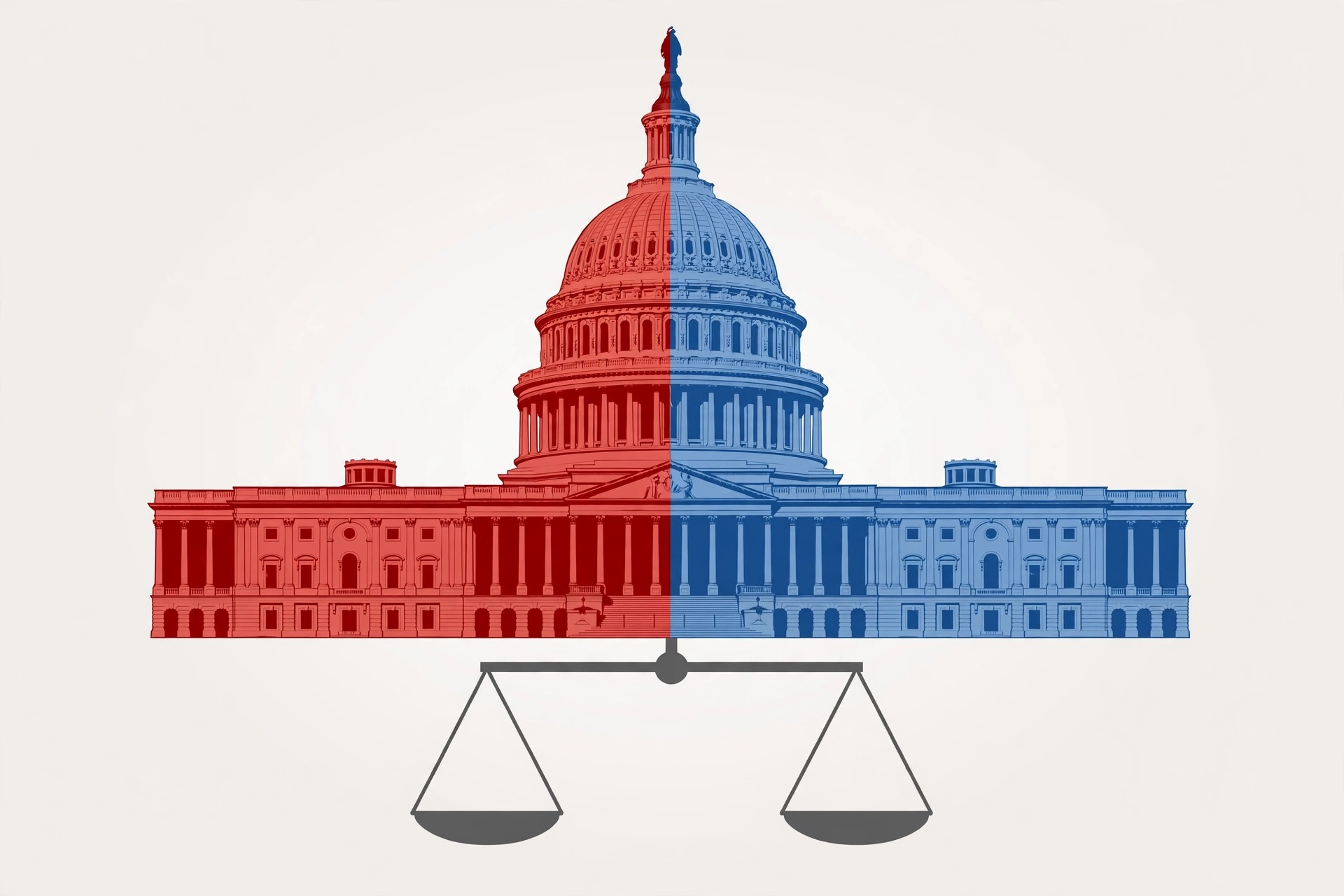
How the Congress Control Fight in 2026 Will Be DecidedThe midterm elections of 2026 put the direction of the United States Congress back in front of voters, with every seat in the House of Representatives and roughly a third of the Senate on the ballot at the same time. That combination is what makes a midterm so consequential even though the presidency is not on the ballot. Control of a chamber is not a symbolic prize. It decides which bills get a vote, which nominees move forward, which committees hold hearings, and how hard it is for the president to turn a proposal into law. At the time of writing, no chamber had been decided, and nothing in this article should be read as a prediction of an outcome. The purpose here is simpler: to explain the mechanics, the arithmetic, and the practical differences each possible balance of power would create in Washington in 2027 and beyond.The basic structure is worth stating plainly because it shapes everything else. The House has 435 voting seats, and all of them are contested in a midterm. The Senate has 100 seats, and 35 of them are contested in this cycle. Members of the House serve two-year terms, so the entire chamber faces voters every two years. Senators serve six-year terms on a staggered cycle, so only a portion of the Senate is ever on the ballot at once. That difference matters. A single midterm can remake the House completely, while the Senate changes more gradually, seat by seat, cycle by cycle. It also means that a party can gain ground in one chamber and lose ground in the other, producing the divided government that has become a familiar feature of American politics. The House: All 435 Seats and a Narrow Margin. Before the vote, Republicans held a narrow majority in the House, with figures reported in the range of 218 to 219 seats depending on the source and the timing of the count. Small variations of this kind are normal in reporting on the House, because vacancies occur when members resign, pass away, or move to other offices, and a seat can sit empty until a special election fills it. The precise figure on any given day therefore matters less than the broader picture: the majority was small, and a small number of seat changes could alter which party holds the gavel. In the House, 218 seats are needed for a majority when all 435 seats are filled, so a party starting from a narrow position does not have much room to lose seats and still keep control. Reporting before the election put the number of net gains Democrats would need to take the House at around three seats. That figure should be understood as arithmetic, not as a forecast. A net gain counts seats gained minus seats lost, so a party could win several new seats and still fall short if it loses seats elsewhere. It could also cross the threshold by a single seat, which would leave the new majority almost as narrow as the old one. A one- or two-seat majority changes the politics of governing in practical ways. Party leaders must keep nearly every member of their own side together on close votes, individual members gain leverage, and absences caused by illness or travel can suddenly matter. A larger majority, by contrast, gives leaders room to lose a handful of votes and still pass legislation. Voters deciding House races are therefore deciding not only a national balance but also how much breathing room the governing party will have. The Senate: 35 Seats and the Arithmetic of a Flip. The Senate entered the midterm with Republicans holding a 53 to 47 advantage, counting independents who caucus with the Democrats on the Democratic side of the tally, as reported by The Indian Express. As with the House, the headline number deserves a brief explanation. The Senate has 100 seats, and its formal party breakdown does not always capture how members actually organise. Independent senators who caucus with a party vote with that party on organisational questions such as who serves as majority leader, so they are normally counted with that side when analysts describe control of the chamber. The 53 to 47 figure therefore describes the working balance before the election, not a list of party registrations alone. With 35 Senate seats contested, Democrats would need a net gain of around four seats to take control, according to pre-election reporting. That is a steeper climb than in the House for two reasons. First, only a third of the chamber is on the ballot, so the map of contested seats limits how much can change in one cycle. If most of the seats up for election are already held by one party, that party has more seats to defend and more opportunities to lose ground, while the other party has fewer targets to aim at. Second, Senate races are statewide contests, often expensive and closely watched, and they can turn on a mix of national mood, local issues, and the personal standing of the candidates. A four-seat net gain is possible in American politics, but it requires winning in several different kinds of states at once, not just running up a margin in one region. What a Change in the House Would Mean for Laws and Investigations. The House matters most in two areas: legislation and oversight. On legislation, the party in control sets the floor agenda. The Speaker, elected by the majority party, and the majority leadership decide which bills reach a vote and in what form. A bill that passes the Senate but is never brought to the House floor cannot become law, however popular it may be elsewhere. Conversely, a House majority can pass bills that signal its priorities even when it knows the other chamber or the president may block them. Those votes still matter politically, because they force members to take public positions and they shape the debate for the next election cycle. Oversight is the second, and often more visible, power. House committees can summon officials, request documents, and hold public hearings. The chair of each committee comes from the majority party, and chairs have wide discretion over what their committee investigates. Supporters of strong oversight argue that it is an essential check on executive power, a way for Congress to expose waste, wrongdoing, or failure and to force answers from officials who might otherwise avoid scrutiny. Critics argue that oversight can become partisan theatre, consuming time and attention that could be spent on legislation, and that hearings sometimes generate more heat than findings. Both arguments describe real tendencies in recent Congresses, and which tendency dominates depends heavily on which party holds the gavels and how its chairs choose to use them. A change in House control would therefore change not only which bills advance but also which questions get asked in public, and who is asked to answer them. What a Change in the Senate Would Mean for Confirmations and the Agenda. The Senate has powers the House does not, and the most important is confirmation. The Senate confirms federal judges, cabinet secretaries, ambassadors, and many other senior officials. When the president and the Senate majority belong to the same party, confirmations generally move faster and with less friction, although individual senators can still slow or block nominees. When they belong to different parties, the process becomes a negotiation. Nominees may face longer waits, tougher hearings, and, in some cases, withdrawal. Judicial confirmations carry especially long consequences, because federal judges serve for life and their rulings shape the law long after the senators who confirmed them have left office. The Senate also acts as a brake on legislation. Even when the House passes a bill quickly, the Senate can amend it, delay it, or decline to take it up. Its rules give individual senators tools to slow business that have no direct equivalent in the House, and its longer terms mean its membership changes more slowly in response to any single election. That is by design. The Senate was intended to be the more deliberative chamber, less responsive to sudden swings in public mood. In practical terms, a party that gains the Senate gains a say over the final shape of every major law, because almost nothing becomes law without Senate approval. A party that loses the Senate loses that veto point, and must either negotiate with the new majority or accept that much of its legislative programme will stall. Spending, Debt and the Power of the Purse. Perhaps the most concrete power Congress holds is the power of the purse. Federal spending bills must originate in the House and pass both chambers before the president signs them. That gives Congress, in either configuration, real leverage over the budget. If one party controls both chambers, it can advance a spending plan that reflects its priorities, subject always to the president’s signature or veto. If control is split between the parties, or between Congress and the presidency, spending becomes a negotiation, often conducted under the pressure of deadlines. Two kinds of deadlines recur in these negotiations. The first is the annual funding deadline: if Congress does not pass spending bills in time, parts of the federal government can shut down until funding is agreed. The second is the debt limit, the statutory cap on how much the federal government can borrow to meet obligations it has already incurred. Supporters of a strict approach to the debt limit argue that it forces a necessary debate about borrowing and spending. Critics argue that using it as leverage risks economic disruption and harms the country’s credit standing, because the obligations in question have already been authorised by earlier laws. Both sides have used these deadlines as bargaining tools in past Congresses, and the balance of power after a midterm determines who sits at the table and how much each side can demand. For households, businesses, and state governments, the practical stakes are visible in funding for services, infrastructure, defence, health programmes, and disaster relief, all of which depend on spending bills passing on time. Vetoes, Divided Government and the 2027-28 Agenda. The president’s veto is the final check in the legislative process, and its importance grows when government is divided. A bill passed by Congress becomes law only if the president signs it, or if Congress overrides a veto with a two-thirds majority in both chambers, a threshold that is rarely reached. That means a president facing a Congress controlled by the opposing party can block much of its legislative programme simply by refusing to sign, while a president whose party controls Congress faces fewer such obstacles. The result, in divided government, is often a shift from sweeping legislation to narrower deals: measures on which both sides can find common ground, or measures attached to must-pass bills such as annual spending legislation. Divided government does not mean nothing happens, but it does change what kind of action is possible. Presidents in such periods often rely more heavily on executive orders, regulatory action, and foreign policy, areas where they can act without Congress. Congress, in turn, may focus on oversight, on blocking actions it opposes, and on positioning for the next presidential election. The 2027 to 2028 agenda will therefore look very different depending on the midterm balance. A Congress aligned with the president could advance a broad legislative programme. A Congress opposed to the president would more likely produce negotiation, stalemate on the largest questions, and intense public argument over the direction of the country. Neither pattern is unusual in American history, and voters in a midterm are, in effect, choosing which pattern they prefer for the second half of the presidential term. The Lame-Duck Session: Why the Old Congress Still Matters. One part of the calendar is often misunderstood. When a new Congress is elected in November, it does not take office immediately. The outgoing Congress continues to sit in a lame-duck session through December and into early January, until the new Congress is seated. The term lame duck does not mean powerless. The outgoing Congress retains full legislative authority, and it often faces urgent business that cannot wait for the new members to arrive. The most pressing item is usually funding. If government funding is due to expire in December, the lame-duck Congress must pass a measure to keep the government operating, whether that is a full set of spending bills or a temporary extension. It may also consider pending nominations, disaster relief, defence authorisation, and any other bills that leaders judge too important to leave unfinished. At the same time, the politics of a lame-duck session are distinctive. Some departing members no longer face re-election, which can free them to vote on conscience or on long-term interest rather than electoral calculation. Critics sometimes argue that this distance from voters is a weakness, because departing members are making decisions without facing the next election. Supporters argue that it can be a strength, because it allows unpopular but necessary measures to pass. Either way, the weeks between the election and the seating of the new Congress are not a quiet interlude. They are a working session with real consequences, and the balance of power in that session is the old balance, not the new one. Races to Watch and What Polls Can and Cannot Tell You. Pre-election coverage pointed to a set of Senate races to watch, including contests in Texas, Ohio, Michigan, Alaska, Iowa, Maine, and North Carolina. These states were named because their contests were expected to be competitive, because they featured open seats or prominent incumbents, or because their results could affect the overall Senate arithmetic. Naming a state as a race to watch is not the same as predicting its outcome, and readers should be careful not to treat watch lists as forecasts. A race can be closely watched precisely because it is uncertain, and uncertainty is the honest description of a competitive contest before ballots are counted. The same caution applies to polls. Final pre-election polls are snapshots of opinion at a moment in time, filtered through models about who is likely to vote. They carry margins of error, they can miss late shifts in opinion, and they can be wrong in the same direction across several states if their assumptions about turnout are off. Polls are best read as probabilities and ranges, not as certainties. A candidate described as ahead by a small margin in polling is not ahead in any final sense, because polling is not voting, and only the count of ballots determines the composition of the next Congress. Commentary that treats a polling average as though it were already an outcome does readers a disservice. The responsible way to follow a midterm is to watch the mechanics described in this article, to note which seats are genuinely competitive, and to wait for the count itself rather than treating any pre-election characterisation as settled. What Happens Next in Washington. Once ballots are counted and the new balance is known, the immediate steps are procedural but important. Each party in each chamber will choose its leaders, committees will be organised with new chairs and ranking members reflecting the new majority, and the incoming Congress will set its early agenda. The president will respond with a statement of priorities and, in time, with a budget proposal and a legislative programme adapted to the Congress that voters have chosen. The first weeks of a new Congress often set its tone. A narrow majority may move cautiously, testing how much unity it can hold. A larger majority may move quickly on its signature items. A divided Congress may begin with negotiation over the most urgent deadlines, such as funding, before turning to longer-term questions. For voters, the practical lesson of the 2026 midterms is that control of Congress is control over the machinery of government. It decides which problems get legislative attention, which officials are confirmed, which questions are investigated, and whether spending deals pass smoothly or under crisis pressure. That machinery will now operate under whatever balance the count produces, through the lame-duck weeks and then under the new Congress from January onward. The stakes described here do not depend on any single contest. They follow from the structure of the system itself, and they will shape American law, spending, and public debate for the two years that follow. Sources. USN reviewed reporting from multiple outlets for this story. Read more from Al Jazeera, The Indian Express and Le Monde.

Fast, clear US news in 60 seconds - Breaking news from Washington, the White House, Congress, and across America