

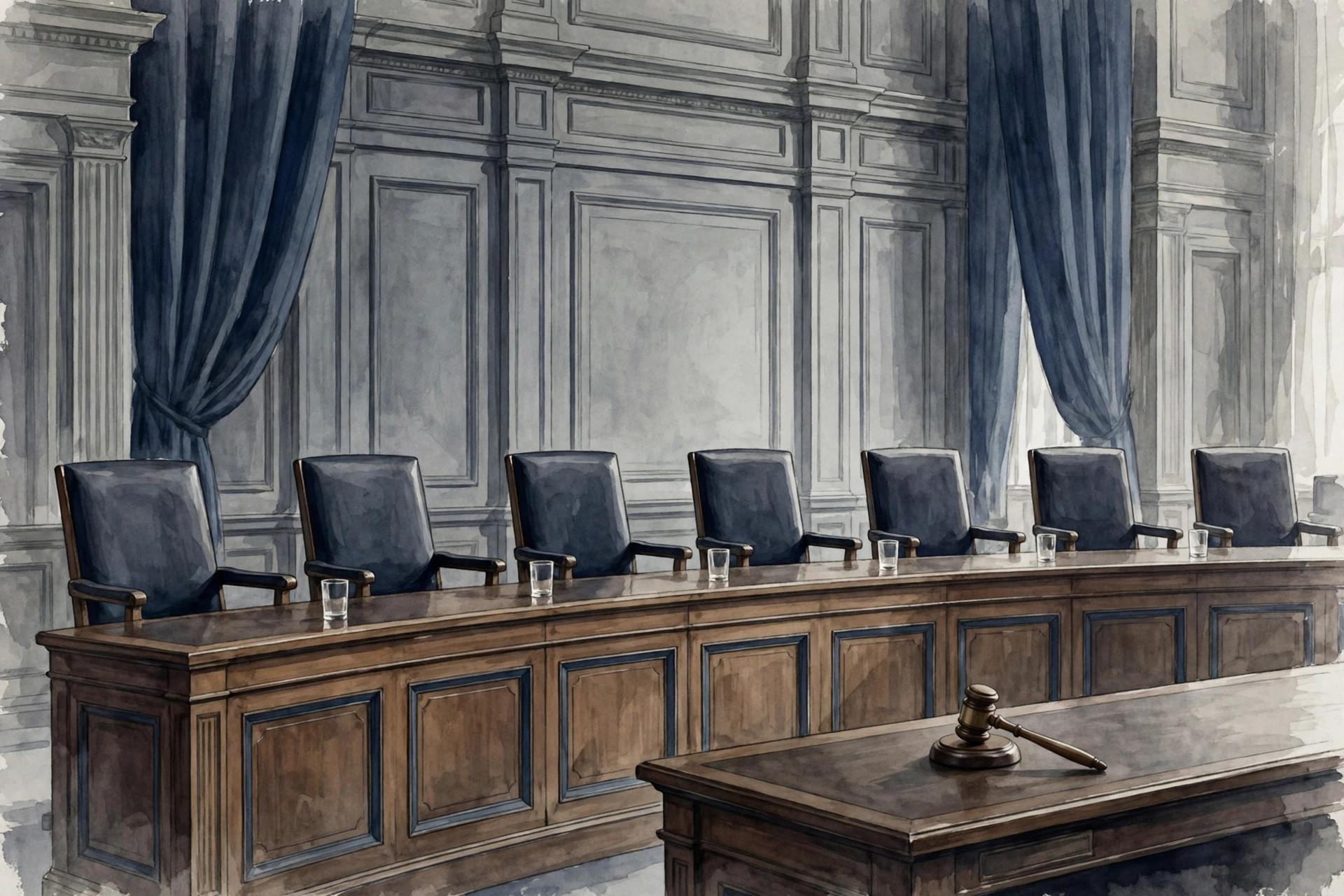
The Senate Health, Education, Labor and Pensions Committee, known as the HELP Committee, will hold a hearing on Tuesday, November 10, 2026, on the nomination of Catherine Eschbach to be General Counsel of the Equal Employment Opportunity Commission. The hearing, scheduled for 10:00 a.m. Eastern Time in Room 430 of the Dirksen Senate Office Building, will examine a nominee for a four-year term as the federal agency’s top lawyer — a post that has had no Senate-confirmed occupant since President Donald Trump dismissed the previous holder in January 2025.
This article is a preview of a hearing that has not yet taken place. It reports no outcome, no vote, and no confirmation, because none has happened yet. What it does is set out who Eschbach is, why the post has been vacant for nearly two years, what legal complication surrounds her current role, and what senators on both sides are likely to ask when she appears before the committee. Readers should treat any account that describes the hearing’s result before November 10 as premature.
The EEOC is the federal agency charged with enforcing laws against workplace discrimination, including discrimination based on race, sex, religion, disability, age and other protected characteristics. Its General Counsel is a powerful figure within that system: the General Counsel oversees the agency’s litigation programme, decides which cases to bring in federal court, and shapes the legal theories the agency advances. A vacancy at the top of that programme, lasting nearly two years, is therefore not a bureaucratic footnote. It affects how the agency litigates, how it sets priorities, and how employers and workers understand the law.
EEOC General Counsel nomination hearing: the November 10 date
The HELP Committee announced the hearing as part of its schedule for the week beginning November 10, 2026. The hearing will take place at 10:00 a.m. Eastern Time, which is 9:00 a.m. Central Time, in Room 430 of the Dirksen Senate Office Building, the committee’s usual hearing room. The format will be familiar to anyone who has followed Senate confirmations: the nominee will make an opening statement, senators will ask questions in rounds, and the committee will later decide whether to report the nomination to the full Senate for a vote.
That later vote is not part of the November 10 hearing itself. A hearing is an opportunity for senators to examine a nominee’s record, views and qualifications, and for the nominee to answer questions under oath. The committee may vote to advance the nomination at a later business meeting, or it may not. The full Senate must then confirm the nominee before she can take office as General Counsel. Until that process is complete, Eschbach’s status remains that of a nominee, not a confirmed General Counsel, even though she has been serving in a senior legal role at the agency.
The timing of the hearing, in the second week of November, places it in a busy congressional period, with lawmakers returning to Washington after the election period and facing a crowded legislative calendar. That context may affect attendance and attention, but it does not change the hearing’s purpose: to test whether the nominee is fit for a four-year term as the EEOC’s chief litigator. Senators from both parties will have the opportunity to question her, and the transcript of the hearing will become part of the public record on which the confirmation decision is based.
Who Catherine Eschbach is — and her OFCCP record
Catherine Eschbach is a lawyer with experience on both sides of the employment-law divide: in private practice representing employers, and in government overseeing federal contractor compliance. Before joining the EEOC, she was a lawyer at Morgan Lewis, a large law firm whose employment practice represents companies in discrimination and labour matters. That private-practice background is common for EEOC nominees, who often come from firms that advise employers, and it is also a source of questions at confirmation hearings, where senators probe whether a nominee can enforce the law impartially regardless of past clients.
From March 2025, Eschbach served as Director of the Labor Department’s Office of Federal Contract Compliance Programs, known as OFCCP, the office that oversaw equal employment compliance by federal contractors. In that role, she oversaw the dismantling of OFCCP, a process that followed the Trump administration’s decision to end the federal contractor affirmative-action and compliance regime that the office had administered. Supporters of that decision described it as removing an outdated and burdensome system; critics described it as stripping away protections for workers employed by federal contractors. Eschbach’s role in that dismantling is therefore likely to be a central topic at the hearing, with senators from each party framing it very differently.
Since late 2025, Eschbach has been serving at the EEOC as principal deputy general counsel and as the agency’s acting chief lawyer. That experience gives her a direct familiarity with the EEOC’s litigation programme, its pending cases, and its internal operations — familiarity that a nominee from outside the agency would not have. It also, however, creates the legal complication discussed below, because the rules governing acting officials interact with the nomination process in ways that limit what a nominee can do while awaiting confirmation.
Why the EEOC has gone nearly two years without a confirmed lawyer
The vacancy dates to January 2025, when President Trump dismissed Karla Gilbride, the General Counsel appointed by President Joe Biden. Dismissals of agency general counsels at the start of a new administration are not unusual — a new president typically seeks to install his own appointees in senior legal roles — but the length of the vacancy that followed is notable. Nearly two years without a Senate-confirmed General Counsel means the EEOC’s litigation programme has been led on an acting basis for an extended period, with the limitations that acting status entails.
The administration’s first attempt to fill the post did not succeed. The White House selected Carter Crow, a Texas lawyer, for the role in 2025, but that nomination was withdrawn in April 2026 without a public explanation. Withdrawals of nominations happen for many reasons — from vetting issues to political calculations to a nominee’s personal circumstances — and the absence of an explanation in this case means the reason should not be speculated about in reporting. What can be said is that the withdrawal left the post vacant for additional months and set the stage for Eschbach’s nomination.
Eschbach was nominated in September 2026, according to reporting on the nomination, and the November 10 hearing is the next step in that process. The gap between nomination and hearing is normal for Senate confirmations, which require background checks, paperwork, and committee scheduling. The longer gap — between Gilbride’s dismissal in January 2025 and Eschbach’s hearing in November 2026 — is the period that senators are likely to explore, asking why the post remained unfilled for so long and what effect the vacancy had on the agency’s work.
The Vacancies Act problem at the heart of the nomination
One of the more technical, but important, issues surrounding the nomination concerns the Federal Vacancies Reform Act, the law that governs who may serve in an acting capacity in a Senate-confirmed post. Under that law, a person who has been nominated for a post generally cannot continue to serve as the acting holder of that same post while the nomination is pending. The rule is designed to prevent a president from circumventing the Senate’s confirmation role by installing a nominee in an acting capacity indefinitely.
Applied here, the rule means that Eschbach cannot legally serve as acting General Counsel while her nomination to be General Counsel is pending. Her duties in that acting role have therefore been delegated to Deputy General Counsel Christopher Lage, according to the reporting on the nomination. That delegation is a legal workaround, not a solution: it keeps the agency’s legal work moving, but it means the person nominated to lead the litigation programme is not, at present, formally leading it in an acting capacity.
Senators are likely to ask about this arrangement at the hearing, both as a legal question and as a practical one. Legally, they may ask whether the delegation is sound and whether any actions taken under it could be challenged. Practically, they may ask how the agency’s litigation decisions are being made during the vacancy, and whether the arrangement has affected any pending cases. Eschbach’s answers will matter not only for her confirmation, but for confidence in the agency’s legal work during the interim period.
What the nomination would mean for Chair Andrea Lucas’s agenda
Bloomberg Law, in its reporting on the nomination, framed Eschbach’s appointment as a step that would help EEOC Chair Andrea Lucas advance an agenda focusing on discrimination against White workers and on religion-based bias. That framing is analysis by a news outlet, not a statement of fact by the agency or the nominee, and it should be attributed as such. It reflects a reading of the administration’s priorities and of Eschbach’s background, but it is not a programme that Eschbach has herself announced, and it should not be presented as her confirmed agenda.
That said, the framing points to a genuine question that senators are likely to explore: what priorities would a General Counsel Eschbach bring to the EEOC’s litigation programme? The General Counsel has significant discretion in choosing which cases to bring, which legal theories to advance, and how to allocate the agency’s litigation resources. A nominee’s views on the scope of anti-discrimination law, on religious accommodation, on race-based claims, and on the agency’s role in emerging areas such as artificial intelligence in hiring, will all shape the agency’s work if she is confirmed.
Both sides of that debate deserve a fair hearing in reporting. Supporters of the administration’s direction argue that the EEOC should vigorously enforce the law against all forms of discrimination, including discrimination against White workers and religious workers, and that previous administrations neglected those claims. Critics argue that the administration’s emphasis risks shifting resources away from the discrimination claims that have historically formed the bulk of the EEOC’s docket, including claims by Black, Hispanic, female and disabled workers. Eschbach’s testimony on November 10 will be the first public opportunity to hear how she herself frames her priorities, and it should be reported on its own terms, rather than through the lens of any single outlet’s framing.
What to watch at the hearing — and what comes after
Several lines of questioning are likely to dominate the hearing. First, Eschbach’s OFCCP record: senators will ask about the dismantling of that office, about what she regards as its successes and failures, and about what lessons she draws for the EEOC. Second, her private-practice background: senators will ask how she will handle cases involving former clients or the industries she previously advised. Third, the Vacancies Act arrangement: senators will ask about the delegation to Deputy General Counsel Lage and about the agency’s litigation decisions during the vacancy. Fourth, her substantive views: senators will ask about her approach to the EEOC’s core mission, including how she would prioritise cases and interpret key statutes.
After the hearing, the committee will decide whether to report the nomination favourably, unfavourably, or without recommendation, or to take no action. If the nomination is reported, it will go to the full Senate, where a confirmation vote requires a majority. If it is not reported, or if the Senate does not act, the nomination could lapse at the end of the congressional session, and the process would need to begin again. None of those outcomes is predetermined, and the hearing itself may influence senators who have not yet decided how to vote.
For workers, employers and lawyers who follow the EEOC, the hearing is therefore more than a procedural step. It is the first public examination of the person who, if confirmed, will lead the federal government’s workplace-discrimination litigation for the next four years. The questions senators ask, and the answers Eschbach gives, will shape expectations about the agency’s direction long after November 10. USN will report the hearing’s proceedings and the committee’s subsequent action as they happen, without prejudging an outcome that has not yet occurred.
Sources
USN reviewed reporting from multiple outlets for this story. Read more from Senate HELP Committee, Bloomberg Law and Law.com.