

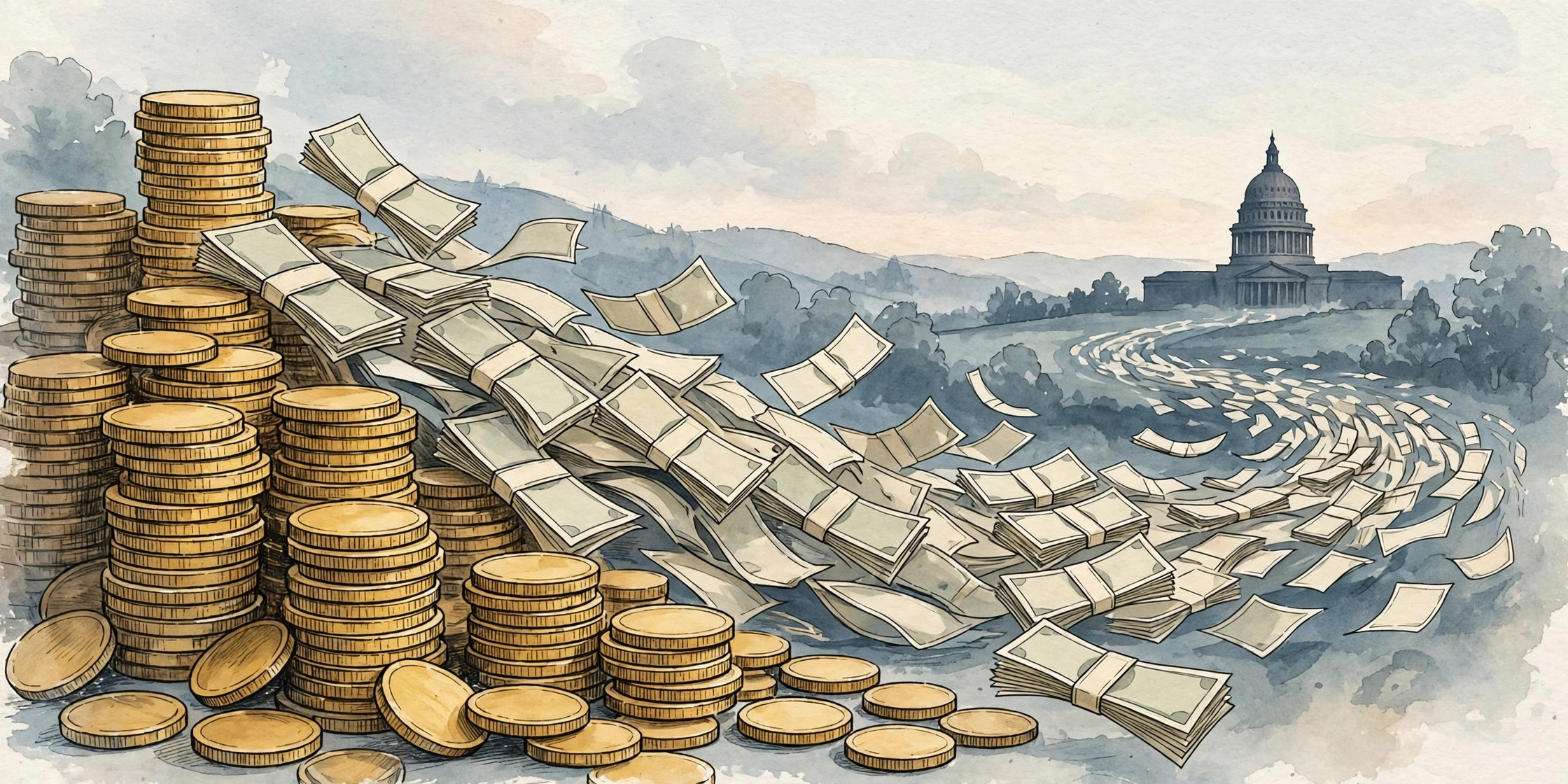
Elon Musk has passed 442 million dollars in spending on the 2026 midterm elections, according to campaign finance filings reported on 29–30 October, and he marked the moment with a stark warning about the future of American democracy. On Thursday 29 October 2026, Musk posted on X that a clean Democratic sweep of the House, Senate and presidency in 2028 would be “game over for America”. The post, and the spending total behind it, together capture the scale of one billionaire’s involvement in this election — and the argument his opponents are making about what that involvement means.
Musk’s warning was specific about what he predicted would follow a Democratic sweep. He listed three changes he said Democrats would pursue: statehood for Washington, DC and Puerto Rico, legalising the status of people living in America illegally, and increasing the size of the Supreme Court. He argued those changes would entrench a permanent Democratic majority, and said all that is needed to prevent it is 51 Republican senators in 2029 — urging voters to back Republican Senate candidates on 3 November 2026. The logic of the post is therefore not only about 2026, but about using the 2026 Senate map to build a firewall against a hypothetical 2028 outcome.
Prediction, not announced policy
It is important to be clear about the status of Musk’s claims. They are predictions about what Democrats might do after a hypothetical sweep in 2028, not descriptions of announced Democratic plans or enacted policy. No Democratic leader has announced a programme of DC and Puerto Rico statehood, mass legalisation and court expansion as a package for 2028, and the three items Musk lists have very different political histories. DC statehood has long been supported by many Democrats and opposed by most Republicans. Puerto Rico statehood has cross-party support in some quarters and is complicated by the island’s own political divisions. Expanding the Supreme Court has been debated among Democrats but has never commanded majority support in the party, let alone been adopted as policy. Legalisation of unauthorised immigrants has been proposed in various forms for decades without success.
Musk’s argument is therefore best understood as a forecast about incentives rather than a report of intentions: if Democrats won unified control, he believes they would use it to change the rules in ways that made it harder for Republicans to win again. Critics would respond that every party, when it wins power, pursues policies its supporters favour, and that describing that as the end of democracy confuses losing elections with losing the system itself. Supporters would respond that some changes — particularly those that alter the composition of the electorate or the courts — are different in kind from ordinary policy, because they affect the rules of future competition. That debate is political, not factual, and readers should judge Musk’s warning as an argument, not as a verified claim about the future.
Elon Musk midterm spending passes $442 million
The spending figures, by contrast, are factual and documented in filings. Musk contributed an additional 76.8 million dollars to his America PAC over about a week in October, taking his total spending on the 2026 midterm cycle beyond 442 million dollars. Some outlets round the total to 445 million dollars including later filings. Either figure makes Musk by far the largest individual spender in the cycle, and it follows his previous spending of 366 million dollars supporting Republican candidates and groups. He founded America PAC during the 2024 election cycle, and it has since become one of the most important vehicles for Republican outside spending.
Filings cited by CBS News show Musk donated 158 million dollars to the Senate Leadership Fund, the principal super PAC backing Republican Senate candidates, in two September contributions: 75 million dollars on 9 September and about 83 million dollars about two weeks later. Those two contributions accounted for more than half of the Senate Leadership Fund’s third-quarter receipts, CBS reported, and the fund subsequently transferred corresponding amounts to a Texas-based committee backing Republican Senate candidate Ken Paxton. Musk also gave 10 million dollars to the pro-Paxton Lone Star Liberty PAC through his trust, 20 million dollars to the Congressional Leadership Fund, 10 million dollars to the Republican Governors Association and 2 million dollars to the Republican Attorneys General Association, according to the Economic Times summary of filings.
The concentration of spending matters. A single donor providing more than half of a major super PAC’s quarterly receipts gives that donor unusual influence over the PAC’s strategy, even if the donations are legally independent of the candidates they support. American campaign finance law allows unlimited contributions to super PACs, provided they do not coordinate directly with candidates, and Musk’s spending is lawful under that framework. But legality and influence are different questions, and the scale of the spending invites scrutiny of whether the system of independent expenditure still functions as independence when one person funds such a large share of it.
The Texas race and the “buying a seat” charge
Democratic Texas Senate candidate James Talarico has made Musk’s spending a closing argument, saying Musk is trying to “buy” the seat for Paxton and contrasting it with his own campaign’s claim of 1.3 million individual donors. His campaign said it raised 64 million dollars in the third quarter against 18 million dollars for Paxton. Those figures, if accurate, tell a story of two very different fundraising models: a campaign powered by many small donors against a campaign boosted by very large outside spending. Talarico’s argument is that the contrast itself is the point — that a seat won with the help of hundreds of millions in billionaire spending is less democratically legitimate than one won with broad small-donor support.
Musk and Republican allies would reject that framing. Their argument is that spending money to support a candidate is a form of political speech, protected by the First Amendment, and that Democrats also benefit from large donors and outside groups, even if no single Democratic donor matches Musk’s total. They would also argue that the spending reflects genuine concern about the direction of the country, not a purchase: voters still have to cast ballots, and money cannot force anyone to vote for a candidate they oppose. That is true as far as it goes — but it does not fully answer the concern about unequal voice, since a campaign with vastly more money can reach more voters, more often, with more persuasive messages.
The Texas race itself is covered in detail in USN’s report on how the Texas Senate race is a statistical dead heat days before Election Day, and this article’s angle is national: the scale of Musk’s spending and the warning he attached to it. But the Texas connection is unavoidable, because so much of the money has flowed there, and because the race has become a symbol of the broader contest over money in politics. If Paxton wins, Musk’s supporters will credit the spending with helping to hold a crucial Senate seat. If Talarico wins, Democrats will claim that small donors beat a billionaire. Either result will be cited as evidence in the next debate about campaign finance reform — a debate that has produced little legislation in recent years, despite broad public concern about the role of money in elections.
What the polls and forecasts say
A CBS News House model published on 25 October 2026 projected Democrats winning 229 House seats, with outcomes potentially extending into the 230s, amid voter concern over inflation and the economy. That projection, if borne out, would give Democrats a House majority and make the Senate the decisive chamber for the remainder of Trump’s second term. It also gives context to Musk’s focus on 51 Republican senators: if the House flips, the Senate becomes the last line of defence for the Republican agenda, and the 2026 Senate results determine whether that defence holds.
Forecasts, however, are not results, and the House model carries the usual uncertainty of polling-based projections. The margin in many districts is small, turnout on Election Day can shift outcomes, and late-breaking events can move voters in the final days. Musk’s own warning is itself an attempt to move those voters, framing the election not as a routine midterm but as a decisive battle for the future of the system. Whether voters accept that framing, or see it as hyperbole from a billionaire with an interest in the outcome, will be part of what Tuesday decides.
What is already decided is the scale of Musk’s involvement. More than 442 million dollars from one person in one election cycle is unprecedented in American politics, and it raises questions that will outlast this campaign: whether such spending should be legal, whether it distorts democracy even when it is legal, and whether the public should know more about what donors expect in return. Musk has been unusually open about what he wants — a Republican Senate that can block a Democratic sweep in 2028. That openness is, in its own way, a form of transparency. It also makes the stakes of the argument unusually clear: this is not hidden influence, but influence exercised in the open, at a scale that dwarfs everything that came before it.
Sources
USN reviewed reporting from multiple outlets for this story. Read more from Republic World, The Economic Times and WION.
[…] Musk’s large-scale midterm spending and his warnings about the stakes of the election, in Elon Musk passing $442 million in midterm spending. Readers can also follow the broader contest for control of Congress in the 2026 midterm elections […]