

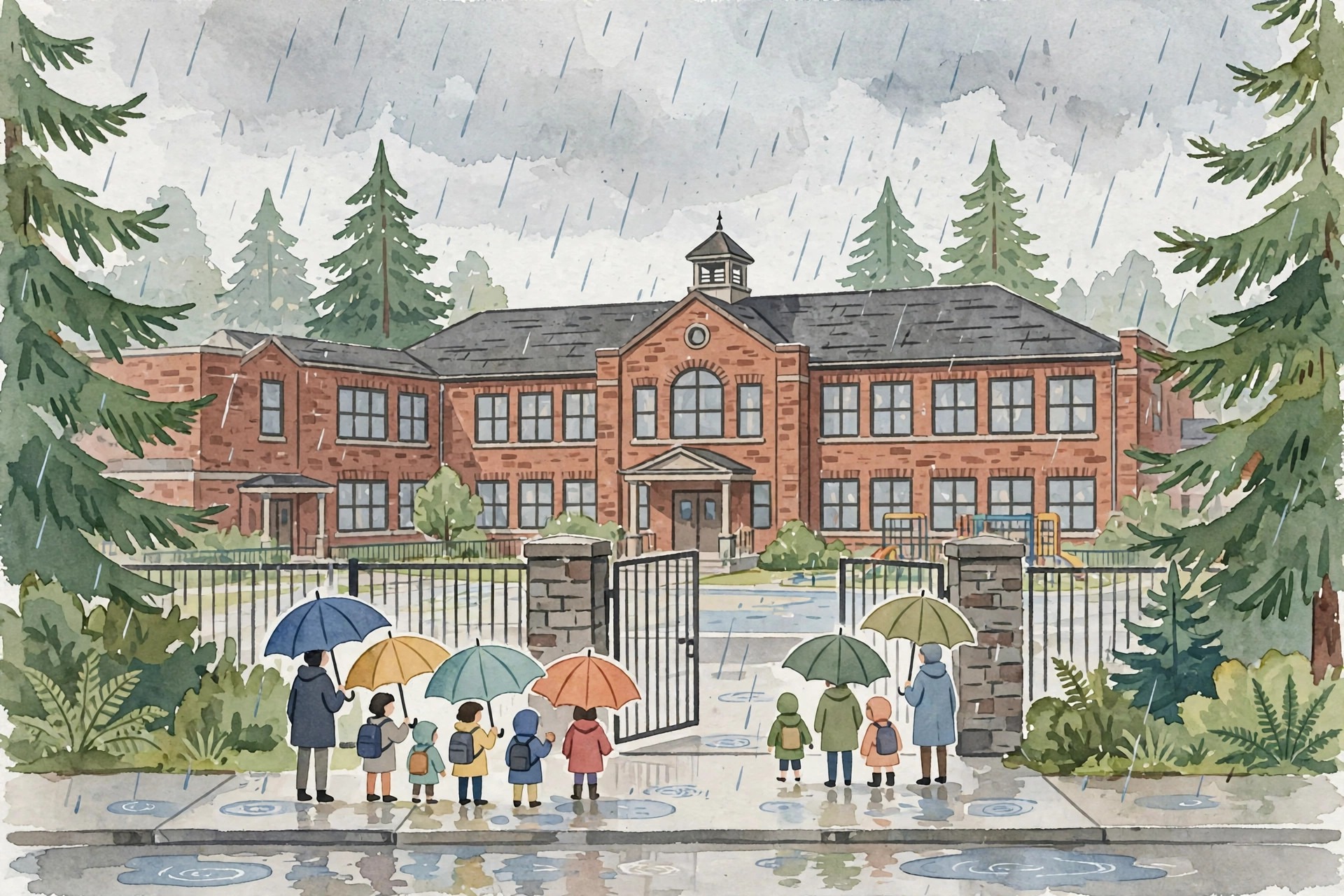
Portland School Closures: City Council Asks District to Pause
Portland’s City Council has sent a unanimous letter to Portland Public Schools urging the district to pause and revise its timeline for decisions on closing up to 14 school buildings ahead of the 2027-28 school year, until the district has publicly shared the financial, instructional, transportation and neighbourhood impacts of its proposals and families have had time to engage with that information. The letter, sent on October 30 to the school board and Superintendent Kimberlee Armstrong, was drafted by Councillors Tiffany Koyama Lane and Elana Pirtle-Guiney, both of whom have children attending Portland public schools, and was signed by all 12 councillors, a rare display of unanimity on an issue that has divided school communities across the city.
The council’s intervention does not, by itself, stop the closures. The school board, not the city council, decides whether schools close, and the board is scheduled to vote on the proposals in mid-December. But a unanimous council letter, following a similar plea from Oregon Governor Tina Kotek earlier in October, raises the political cost of proceeding on the current timeline, and it gives parent organisers, teachers and neighbourhood groups a powerful piece of evidence that their demand for more time and information is shared by the city’s elected leadership. The district, for its part, says it has held more than 50 engagement sessions and is adding opportunities for families, students and staff to share their views, a claim that sits uneasily alongside parents’ reports that they still do not have the information they need to judge the proposals.
Portland School Closures: Why the District Says It Must Act
Portland Public Schools, Oregon’s largest school district, with more than 43,000 students in 81 schools, says it faces a structural problem that cannot be wished away. Enrollment has fallen by 6,000 students since 2019, and the district expects it to decline by another 5,200 over the next decade, driven by demographic change, housing costs and families leaving the city or choosing other educational options. At the same time, personnel costs have risen, and the district says it has cut 171.8 million dollars in services since the 2023-24 school year, according to figures cited by parent organisers, while projecting another 65.2 million dollar deficit for 2027-28. In that context, district leaders argue, maintaining 81 buildings for a shrinking student population spreads staff too thinly, leaves some schools below sustainable enrollment thresholds, and undermines students’ educational experience.
The district’s rightsizing proposals, unveiled on October 5, offer three paths. Scenario A proposes closing 14 schools, 13 elementary schools and one middle school, and consolidating their students and programmes into receiving schools. Scenario B proposes closing 11 schools, 10 elementary schools and one middle school, with boundary, grade-level and programme changes. A third option would defer the decision and maintain the current school configuration for now, without addressing the district’s declining and uneven enrollment. The proposals could affect more than 7,000 students, according to reporting on the plans, and they include boundary redraws across the district and moves of programmes between campuses, which means that even families whose schools do not close could see their children’s school assignment, bus route or programme location change.
Superintendent Armstrong has acknowledged that closing a school does not save millions of dollars on its own, a concession that critics have seized on. If closures do not produce large savings, they argue, why impose their costs on children, families and neighbourhoods? The district’s answer is that savings are not the only, or even the primary, goal: consolidating students into fewer, fuller schools allows the district to offer richer programmes, more stable staffing and better support services than it can offer in half-empty buildings, even if the direct financial savings are modest. That argument depends on details the district has not yet fully provided, such as which staff would move where, what programmes receiving schools would gain, and how transportation times would change for students whose neighbourhood school closes. Those are exactly the details the council is asking the district to publish before it votes.
Portland School Closures: What Families Say They Still Do Not Know
The council’s letter asks a series of specific questions that go to the heart of families’ concerns. How will the proposed changes affect Title I schools and historically underserved communities? Up to six of the schools proposed for closure in one parent-organiser summary are Title I schools, which serve high proportions of students from low-income families and receive federal funding tied to that status. Closing a Title I school does not merely move students; it disrupts relationships with teachers, counsellors and community partners, and it can break the link between a school and the neighbourhood services, such as SUN Community Schools programmes, that are built around it. The council wants the district to show, school by school, how those effects have been weighed, rather than asking families to trust that they have been.
Transportation is another gap. A student whose neighbourhood elementary school closes may face a longer bus ride, a less safe walking route, or a new school across a busy road or a freeway, and parents of younger children in particular worry about the practicalities of a longer commute and a less familiar school community. The district’s proposals identify receiving schools for each closing school, for example Maplewood Elementary students would go to Hayhurst and Rieke, and Irvington Elementary students to Beverly Cleary for kindergarten through fifth grade and Beaumont for the middle school pathway, but identifying a receiving school is not the same as explaining how the transition will work, how class sizes will change, or how special education, language and enrichment programmes will be preserved in the move. Families have also asked for clear estimates of potential staff losses and savings, which the district has not yet provided in a form they can test.
Governor Kotek raised similar concerns in her October 13 letter to Armstrong and school board Chair Eddie Wang. Kotek did not ask the district to withdraw its proposals, but called for clearer information and more time for public input before the board makes decisions, writing that families had described feeling shock, disappointment and confusion about the plans, and that taking the time to get the decision right is not a delay in making difficult decisions but an essential part of commitment to community partnership. The district responded by pointing to its engagement sessions and by adding more opportunities for input, but the council’s unanimous letter suggests that, in the council’s judgement, those sessions have not yet given families the substantive information they need, as opposed to opportunities to express views about proposals whose details remain incomplete.
Portland School Closures: Alternatives and the December Vote
The debate is not only about whether closures should happen, but about what alternatives the district has considered and how it has weighed them. The Cascade Policy Institute, a free-market think tank, has argued that the district’s budget structure and its per-school spending patterns deserve closer scrutiny, and that consolidation should be judged against other savings and efficiency measures, not treated as inevitable. A proposed emergency resolution from school board member Mitch Green, titled Save Public Schools, goes further, calling on the district to pursue Education Stability Funds, to seek additional state funding and to press for revenue reform in the 2027 legislative session, rather than closing schools on the current timeline. Nine of the 12 city council members signed that resolution as well, underscoring that the council’s letter is part of a broader push for a different approach.
For now, the process continues on two tracks. The district says it will publish a draft list of schools recommended for closure in November, followed by a formal proposal and a school board vote in mid-December, while also continuing its engagement sessions and community forums. Families, teachers and community partners are watching closely to see whether the district pauses, as the council and the governor have urged, or proceeds on the existing schedule. The council’s letter does not guarantee a pause, but it changes the conversation: the question is no longer only which schools should close, but whether the district has given families the information they need to judge that question fairly.
The stakes are high for the students and neighbourhoods affected. A school is more than a building; it is a community anchor, a source of stability for children, and a place where families, teachers and local organisations build relationships over years. Closing a school can disrupt those relationships in ways that are difficult to reverse, and it can leave a neighbourhood with a vacant building and a sense of loss that outlasts any budget cycle. That is why the council’s call for more information and more time matters, and why the board’s December vote will be watched not only in Portland, but in school districts across Oregon that face similar enrollment and budget pressures.
Sources
USN reviewed reporting from multiple outlets for this story. Read more from City of Portland, The Portland Focal and Portland Public Schools.