

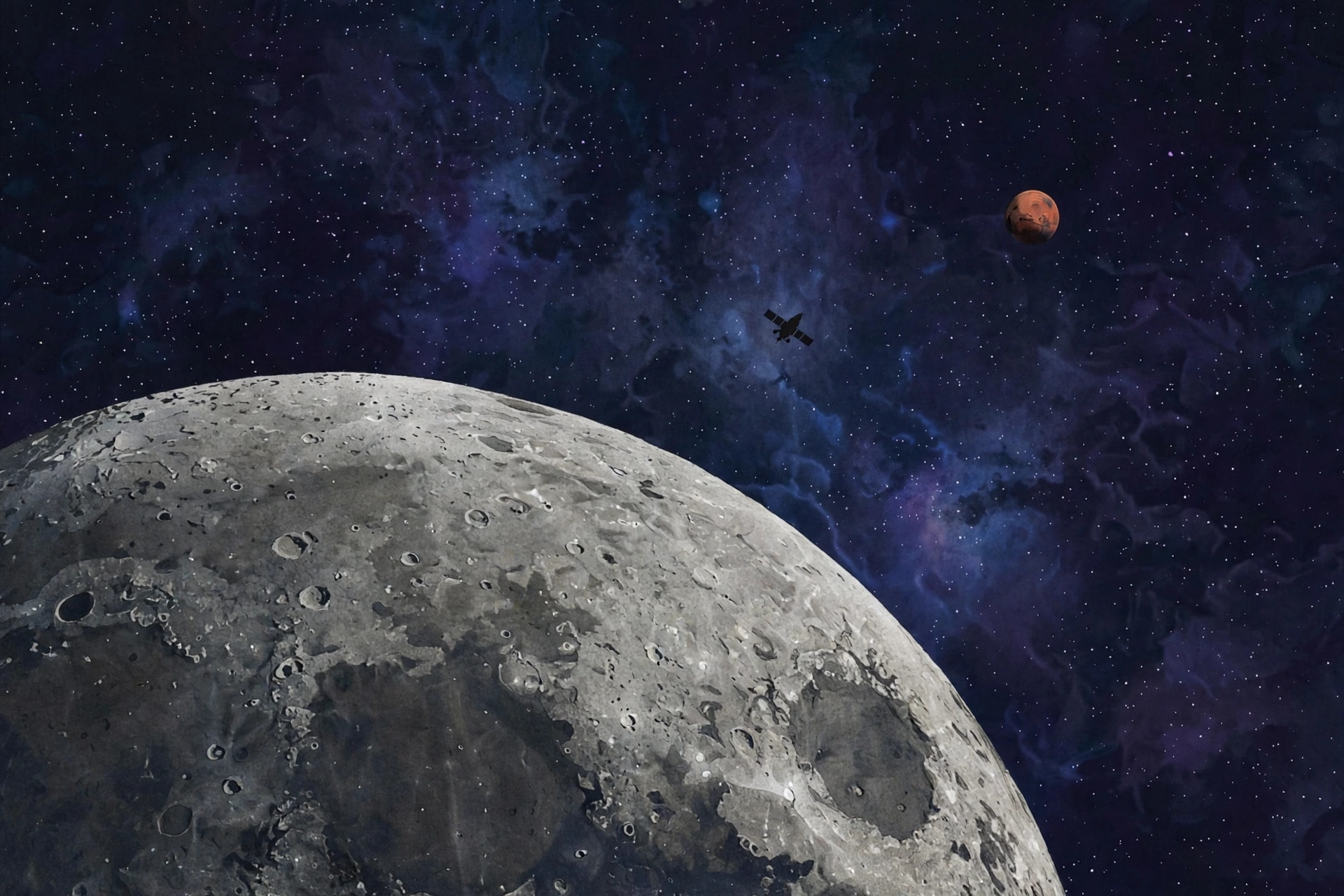
President Donald Trump has issued a proclamation titled the American Declaration of Freedom in Space, pledging that the United States will return astronauts to the Moon by 2028 and will pursue a permanent American presence in space, including a future mission to Mars.
The proclamation, signed on November 3, 2026, frames space exploration as a matter of national freedom and economic opportunity, arguing that American leadership in space is essential to prevent authoritarian rivals from dominating the final frontier. It calls for a renewed commitment to NASA’s Artemis programme and to commercial partnerships that can accelerate lunar and Martian exploration.
The White House published the full text of the proclamation on its website, where it is listed among the president’s November 2026 proclamations. The document does not allocate new funding or change NASA’s budget, but it sets out the administration’s vision for American space policy in the coming years.
American Declaration of Freedom in Space: what Trump signed
The proclamation opens by declaring that space is a domain of freedom, where American values of individual liberty, free enterprise and the rule of law should guide exploration and use. It argues that space should not be controlled by authoritarian regimes that would use it for military or coercive purposes.
It then sets out specific goals, including returning American astronauts to the lunar surface by 2028, establishing a sustainable lunar presence, and preparing for human missions to Mars. The proclamation says those goals are achievable if the United States commits the necessary resources and streamlines regulatory processes.
The document also emphasises the role of private companies, saying that commercial space firms have already transformed access to low Earth orbit and can play a similar role in lunar exploration. It calls for partnerships between NASA and the private sector to reduce costs and accelerate timelines.
Moon return by 2028: what the Artemis timeline means
The pledge to return to the Moon by 2028 aligns with NASA’s Artemis programme, which aims to land astronauts on the lunar surface for the first time since Apollo 17 in 1972. The Artemis programme has faced delays and cost overruns, but NASA has said it remains on track for a crewed lunar landing in the late 2020s.
The 2028 date is ambitious, given the technical challenges of lunar exploration, including the development of new landers, spacesuits and life-support systems. Critics have questioned whether the timeline is realistic, but supporters say a clear presidential commitment can help focus resources and political will.
The proclamation does not specify how the 2028 goal will be funded or whether it will require additional appropriations from Congress. That funding question will be central to whether the pledge can be met.
First American on Mars pledge and the longer-term vision
Beyond the Moon, the proclamation pledges that the United States will work towards sending the first American to Mars, a goal that has been stated by multiple presidents but never achieved. The document does not set a date for a Mars mission, recognising that such a mission would require decades of development and significant technological advances.
The Mars pledge is significant because it frames Mars exploration as a national priority, not just a scientific aspiration. The proclamation says a Mars mission would demonstrate American ingenuity and inspire future generations, much as the Apollo programme did in the 1960s.
Space experts say a Mars mission would require new propulsion systems, radiation shielding and life-support technologies that are still in development. The proclamation’s emphasis on commercial partnerships suggests the administration hopes private companies, including SpaceX, will play a major role in Mars exploration.
What the Outer Space Treaty says about freedom in space
The proclamation’s title — American Declaration of Freedom in Space — echoes the language of the 1967 Outer Space Treaty, which declares that space should be free for exploration and use by all states and should not be subject to national appropriation. The treaty, signed by the United States, the Soviet Union and other nations, remains the foundation of international space law.
The proclamation does not propose withdrawing from the treaty or changing its terms, but it interprets freedom in space in American terms, emphasising individual liberty and free enterprise. That interpretation has been welcomed by supporters who see it as a defence of American values, but questioned by critics who say it could be used to justify unilateral actions in space.
International reactions to the proclamation have been muted so far, with other spacefaring nations watching to see whether the United States will follow the proclamation with concrete policy changes or funding increases.
Reactions to Trump’s space proclamation
Reactions to the proclamation have been largely positive within the space industry, where companies and advocacy groups have welcomed the commitment to lunar and Martian exploration. The Commercial Spaceflight Federation and other industry groups have said the proclamation provides clarity and momentum for their work.
Some scientists and policy experts have been more cautious, noting that proclamations do not fund programmes and that NASA’s budget remains subject to congressional appropriations. They argue that the real test will be whether the administration follows the proclamation with budget requests that support the Artemis programme.
Political reactions have split along familiar lines, with supporters praising the vision and critics questioning whether the proclamation is more rhetoric than policy. The debate is likely to continue as Congress considers NASA funding for the coming fiscal year.
What happens next for Artemis and American space policy
The next steps for American space policy will depend on NASA’s budget, the progress of the Artemis programme and the willingness of Congress to fund lunar exploration. The proclamation sets a vision, but implementation will require concrete decisions about funding, timelines and partnerships.
For now, the proclamation serves as a statement of intent, signalling that the Trump administration sees space as a priority and is willing to use presidential proclamations to shape the debate. Whether that intent translates into a Moon landing by 2028 and a Mars mission in the following decades remains to be seen.
The proclamation’s core pledges can be summarised in three parts: return to the Moon by 2028, establish a permanent American presence in space, and prepare for a human mission to Mars. Those pledges, if fulfilled, would mark a new era in American space exploration.
Sources
USN reviewed reporting from multiple outlets for this story. Read more from the White House and NASA.