

Florida voters have elected Republican congressman Byron Donalds as the state’s next governor, handing him a narrow victory over Democrat David Jolly in the November 3, 2026 general election. The Associated Press called the race for Donalds, and with nearly all precincts reporting he held 50.1 percent of the vote to Jolly’s 48.7 percent, a margin of roughly 110,000 votes out of more than eight million cast. The result keeps the governor’s mansion in Republican hands for an eighth consecutive election, but by a far thinner margin than the party had grown used to in Florida, and it makes Donalds the first Black governor in the state’s history and the first Black Republican ever elected governor of any American state.
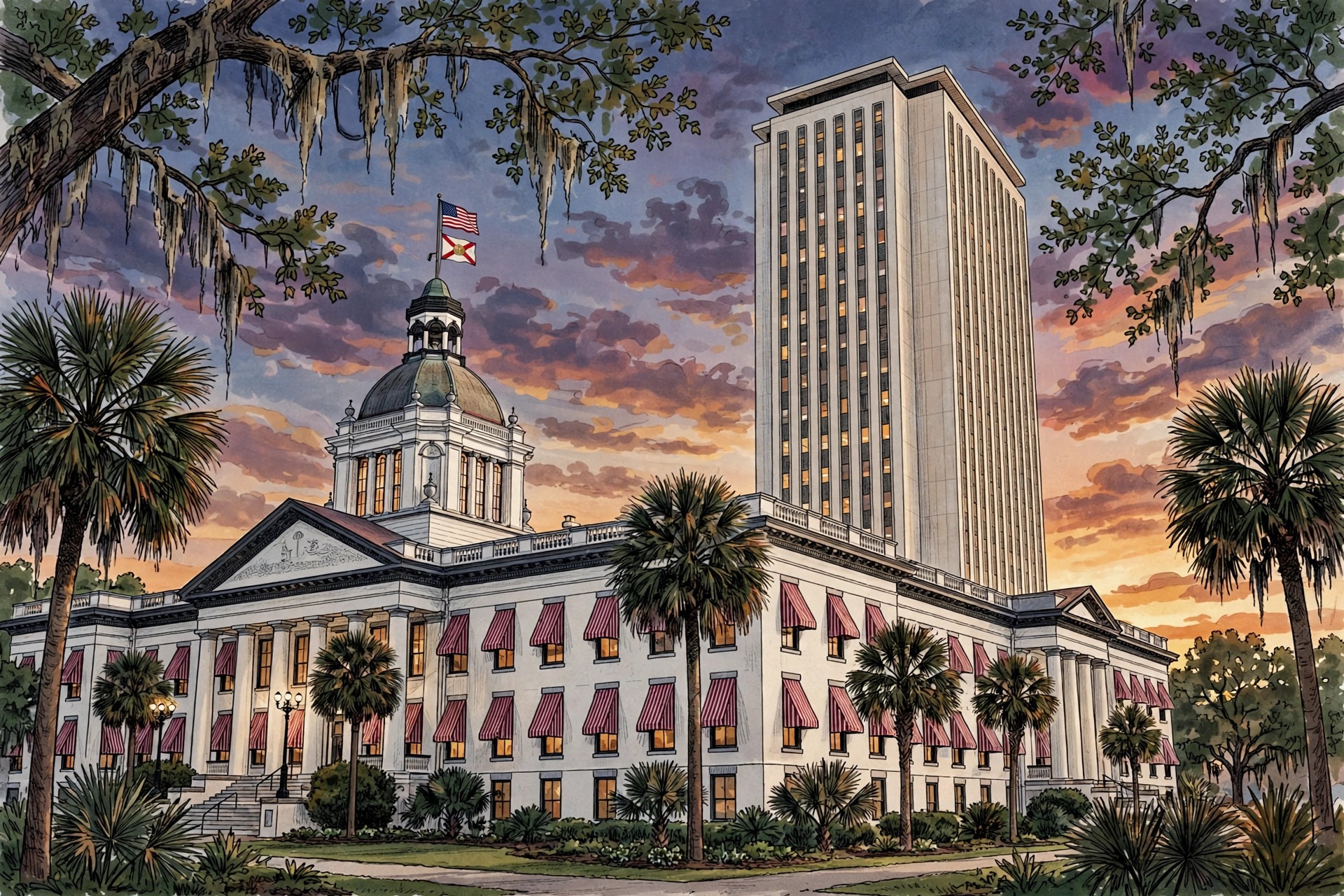
Donalds, who represents a southwest Florida congressional district anchored in Fort Myers and Naples, will succeed Governor Ron DeSantis, who could not seek a third consecutive term. He is scheduled to be sworn in as Florida’s 47th governor on January 5, 2027. The transition now underway in Tallahassee will shape the state’s direction on housing costs, property insurance, education and immigration, the issues that dominated a long and expensive campaign. Donalds campaigned as a continuation of the DeSantis-era approach, promising to carry forward its policies on schooling, deregulation and immigration enforcement while putting affordability, above all housing and insurance costs, at the centre of his own pitch to voters.
The closeness of the result is itself one of the night’s biggest stories in Florida. Just four years earlier, DeSantis had won re-election by nearly twenty points, and President Donald Trump carried Florida by more than thirteen points in 2024. Donalds won this time by about one and a half points. Early returns had actually shown Jolly narrowly ahead, before a strong Election Day turnout among Republican voters reversed the lead. Reports from election night put the Election Day Republican advantage at roughly 600,000 votes, enough to overcome Jolly’s edge in early and mail ballots. Florida now has about 1.5 million more registered Republicans than Democrats, a registration wall that held even in a midterm cycle when Democrats nationally were making gains and when Trump’s approval ratings were reported to be at record lows.
What Byron Donalds’ Florida governor victory means for South Florida voters
The statewide map tells a split story, and nowhere is that split clearer than in South Florida. A majority of voters in the state’s three most populous southeastern counties backed Jolly, not the eventual winner. In Miami-Dade County, Jolly took about 59.9 percent of the vote; in Broward County, about 65.5 percent; and in Palm Beach County, home to President Trump’s Mar-a-Lago residence, about 55.6 percent. Donalds trailed in all three, taking roughly 45.9 percent in Miami-Dade, 33.4 percent in Broward and 43.4 percent in Palm Beach. For the millions of Floridians who live in that corridor, the next governor will therefore be a leader they largely voted against, and his administration’s handling of the issues that matter most in the southeast, from condominium safety and insurance premiums to traffic, housing and sea-level planning, will be watched with particular scepticism there.
That regional divide also frames the governing challenge Donalds inherits. Florida’s southeast is the engine of the state’s population and economic growth, but it is also where the affordability squeeze bites hardest. Homeowners across the state have faced steep property insurance increases in recent years, and condominium owners in South Florida have faced special assessments and rising association costs since new safety rules followed the Surfside collapse. Donalds spoke during the campaign about affordability, including inflation, housing and insurance, but the details of how his administration will bring premiums down, or whether it will intervene further in the insurance market, remain to be set out in the transition and in the legislative session that follows his inauguration. Supporters argue that deregulation and a lighter tax burden will ease costs over time; critics, including Democrats who backed Jolly, argue that the state’s insurance troubles need direct state action and consumer protections, and they say they will hold the new governor to his affordability promises from day one.
Jolly’s own candidacy was unusual, and it helps explain why the race was as close as it was. A former Republican congressman who left the party in 2018 and registered as a Democrat in 2025, Jolly ran as a centrist challenger arguing that Florida had drifted too far in one direction and that a Democrat could win the governor’s office for the first time since 1994. His campaign drew energy from voters frustrated with the cost of living, and his strength in South Florida showed that the state’s largest urban counties remain firmly Democratic even as the rest of the state has moved right. In the end, though, the Republican registration advantage and Election Day turnout proved decisive. According to election-night reporting, Donalds said he had received a concession call from Jolly as well as a congratulatory call from President Trump, who had endorsed Donalds early and campaigned for the Republican ticket in Florida in the final weeks.
Florida governor election 2026: how Donalds won the Republican primary and the general election
Donalds did not arrive at the general election by accident. He won a contested Republican primary in August with about 47.8 percent of the vote, defeating Lieutenant Governor Jay Collins, who finished a distant second with about 25.2 percent, and investor James Fishback, who took about 10.5 percent. The primary victory came with Trump’s backing, which had been secured well before Donalds formally launched his bid, and it gave him a fundraising machine that ultimately raised a reported 176 million dollars, fuelled by billionaires and by the state’s most powerful industries, including energy, private prisons and real estate interests. That financial advantage let Donalds advertise heavily across Florida’s expensive media markets, while Jolly, though competitive, could not match the spending.
The campaign also tested how closely a Republican candidate in 2026 should embrace the president. Donalds entered the race as a prominent Trump ally, yet as polling showed a competitive contest and Trump’s approval ratings softening, his campaign at one point removed prominent mentions of the Trump endorsement from its website, an apparent effort to appeal to more moderate voters. The move drew attention precisely because it cut against Donalds’ reputation as a loyal Trump supporter, and his opponents seized on it as evidence of political calculation. Supporters dismissed the criticism, saying a general-election campaign naturally speaks to a broader audience than a primary campaign. Whatever the intent, the episode illustrated the balancing act facing Republicans in a state where Trump remains popular with the party base but where a close general election can be decided by independent and unaffiliated voters, of whom Florida has about 3.3 million.
Nationally, the Florida result stood out because it bucked the night’s broader trend. Democrats won the House of Representatives and flipped seats and governorships elsewhere, including in Georgia, yet Florida stayed Republican. For the national Republican Party, holding Florida mattered symbolically as well as practically: losing the country’s third most populous state, and the president’s adopted home state, would have been read as a rout. For Florida Democrats, the narrowness of the defeat, in a midterm with an unpopular incumbent president of the opposite party, will be both encouragement and frustration. It was their closest governor’s race in years, yet it still extended a losing streak that now stretches back to 1994, nearly thirty years without a Democrat in the governor’s mansion.
Amendment 3 and the January 2027 transition in Tallahassee
Voters decided more than the governor’s race on November 3. On the same ballot, Floridians approved Amendment 3, the property tax measure, with about 62 percent of the vote, comfortably above the 60 percent threshold required for constitutional amendments. The measure raises the homestead exemption on non-school property taxes to 150,000 dollars of assessed value in 2027 and 250,000 dollars in 2028, and it cuts the annual cap on assessment growth for non-homestead properties, such as second homes, rentals and commercial buildings, from 10 percent to 5 percent. It does not eliminate property taxes, and it leaves school taxes unchanged, but it will reduce bills for many homeowners from the 2027 tax year onward, with the first effects visible on tax notices in August 2027.
The amendment’s passage creates an immediate fiscal puzzle for the incoming Donalds administration and for local governments. Cities and counties warned during the campaign that the measure would cut the revenue that funds police, fire departments and other local services, while supporters argued that homeowners deserved relief after years of rising values and bills. How the state handles that tension, whether through spending restraint, replacement revenue or service cuts, will be one of the first tests of the new governor’s relationship with mayors and county commissions, including in South Florida, where local budgets are large and where voters backed both the tax cut and Donalds’ opponent. The amendment takes effect on January 1, 2027, days before Donalds takes office, so the transition team will inherit the implementation timetable from the start.
What happens next is procedural but important. The results remain unofficial until the state canvasses and certifies them, with the Elections Canvassing Commission scheduled to certify on November 17. Donalds’ team will use the weeks between certification and the January 5 inauguration to name agency heads, set legislative priorities and negotiate with a Republican-controlled legislature that may expect the new governor to advance its agenda quickly. Democrats in the legislature, meanwhile, will look for openings on affordability and insurance, arguing that a 1.4-point win is a mandate for moderation rather than for sweeping change. Both readings of the result will be tested in the first legislative session, when campaign promises meet the reality of budgets, votes and a closely divided electorate. USN has previously covered how tight the Florida races were heading into Election Day, including Trump’s final midterm rally in Daytona Beach as Florida races tightened, and the broader midterm picture in the toss-up House races that decided control of Congress.
For ordinary Floridians, the practical meaning of the election will emerge gradually: in insurance renewal notices, in property tax bills, in school board decisions and in the tone of state government. Donalds takes office as a historic figure, the state’s first Black governor, leading a state that voted for him narrowly and unevenly. His success will be judged less by the history of his election than by whether the affordability problems he campaigned on actually improve for the families who feel them most, including the South Florida voters who chose his opponent.
Sources
USN reviewed reporting from multiple outlets for this story. Read more from USA Today, The Real Deal and WCMU Public Media.