

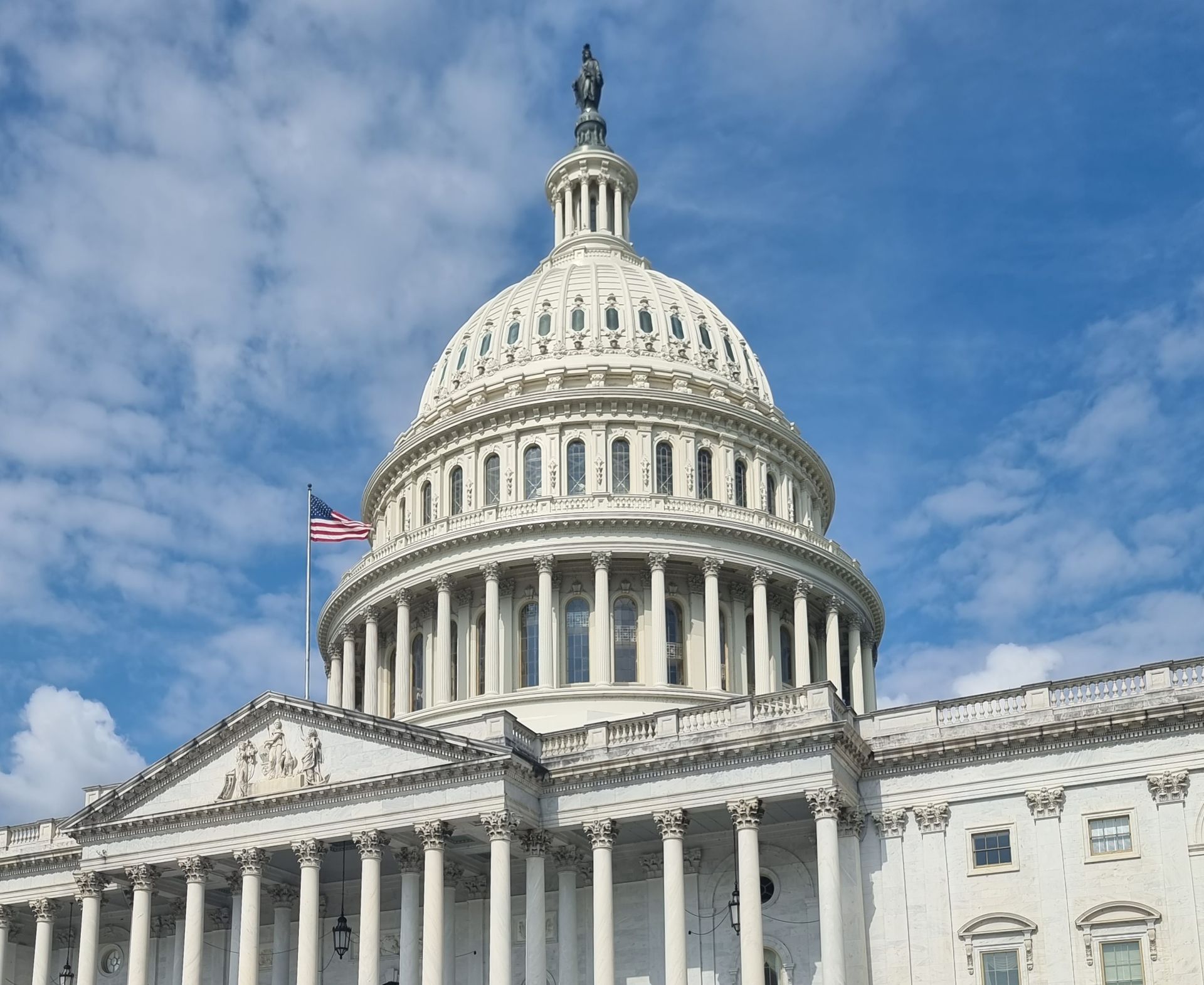
On the morning after an American midterm election, Washington tends to talk first about winners and losers. The quieter story, and often the more consequential one for how government actually works, begins a few weeks later, when letters start arriving at federal agencies. Those letters ask for documents, for explanations of decisions, for the status of recommendations that have sat unanswered for years, and for officials to appear and defend their record. In 2027, that routine machinery of accountability will matter more than usual, because the country is entering a period of divided government in which the executive branch and at least part of the legislative branch are controlled by opposing parties, according to projections reported on November 4 that remain unofficial and uncertified.
It is important to be precise about what is known and what is not. Race calls by news organisations are projections, not certifications. State authorities certify results on their own timetables, and some races were still uncalled when projections of a change in congressional control were first reported. Nothing in this article treats a projected majority as a certified one, and no agency outcome described here depends on a single uncalled race. The point is broader: whatever the final certified margins turn out to be, the structure of oversight in 2027 will change, because a Congress in which the president’s party no longer holds both chambers has different incentives, different tools, and a different audience for its questions.
That distinction matters because much of the public conversation about oversight focuses on televised hearings and committee chairmanships. Those are real, but they are only the visible surface. Beneath them sits a permanent executive-branch accountability system that operates whether or not a hearing is scheduled: inspectors general inside each major department, the Government Accountability Office working for Congress, the Office of Special Counsel, agency chief financial officers and program managers, and the internal controls that are supposed to catch errors before they become scandals. In divided government, that system is put under strain from both directions at once. Congress asks more of it, the White House may resist more of what it asks, and the watchdogs themselves become subjects of political argument.
What Federal Agency Oversight in 2027 Will Actually Test
The first test is capacity. Oversight is not free, and in recent years the offices that do it have grown smaller. An analysis by the Partnership for Public Service, based on Cabinet-department inspector general semiannual reports and personnel data, found that Cabinet-department inspector general offices issued on average 15 percent fewer audit reports and 25 percent fewer investigative reports in the first half of fiscal year 2026 than they averaged from 2020 to 2024. The same analysis found that the average Cabinet-department inspector general office had a staff more than 19 percent smaller than in December 2024, and that reports covering the second half of fiscal year 2025 took about twice as long to become public as the average from 2020 to 2024.
Those figures should be read carefully. A fall in the number of reports does not by itself prove that any particular program became more wasteful, and a smaller staff does not automatically mean that remaining auditors are doing worse work. What the figures do show is a narrower pipeline: fewer formal products, released more slowly, from smaller teams. In 2027, when congressional demand for those products is likely to rise, the gap between demand and capacity will itself become a story. Agencies will be asked to answer questions that their own internal watchdogs may not have had the staff to examine in depth, and Congress will have to decide whether to fund the watchdogs it is relying on, even when it disagrees with the administration those watchdogs sit inside.
The second test is independence. Inspectors general are unusual figures in American government. They work inside the agencies they examine, yet they are required by law to report to Congress as well as to the agency head. That dual reporting line is meant to protect them from being silenced by the very managers whose programs they audit. In practice, independence has always depended on norms as much as on statutes: a president can remove an inspector general, and recent removals have been a source of sharp dispute. Supporters of the removals have argued that a president is entitled to choose watchdogs he trusts and to reshape offices he considers ineffective or politicised. Critics have argued that removing many inspectors general at once, and replacing some with figures who have close political ties to the president, weakens the credibility of the whole system. Both claims are political arguments about the same institutional fact, and in 2027 they will be tested again, because any new inspector general nomination will require Senate consideration, and any vacancy left unfilled will leave an agency with an acting watchdog whose authority may be questioned.
The body that watches the watchdogs has itself come under scrutiny. The Council of the Inspectors General on Integrity and Efficiency, known as CIGIE, runs an Integrity Committee that reviews complaints against inspectors general and certain senior staff. A Government Accountability Office report published in May 2026 and publicly released in June 2026 examined that committee and found that it did not consistently follow its own intake, deadline and documentation procedures. From fiscal year 2021 through the first half of fiscal year 2025, the committee received 16,245 complaints, opened 460 cases for review, and completed 15 reports of investigation. Based on a sample, the auditors estimated that only about 24 percent of cases met all applicable time-frame requirements, and none of a small sample of five completed investigations finished within the statutory 150-day period, with durations ranging from 427 to 1,246 days. CIGIE concurred in principle with all eight recommendations the auditors made, according to reporting on the report, while its chair pointed to structural problems including frequent leadership changes and reliance on other inspector general offices to conduct investigations.
That finding does not mean every complaint was well founded; most complaints to such a body are routinely screened out, and a watchdog system that investigated every allegation at full length would collapse under its own weight. But it does mean that in 2027, when allegations about watchdogs themselves are likely to be traded politically, the process for handling those allegations will be judged against a documented record of missed deadlines and incomplete oversight. Agencies and Congress alike will need a credible answer to a simple question: if an inspector general is accused of misconduct, who investigates, how quickly, and with what public record?
The Backlog Nobody Can Compel Away
The third test is the oldest one in federal oversight, and the least dramatic: the backlog of recommendations that agencies have not yet implemented. The Government Accountability Office lists more than 5,000 open recommendations, roughly 450 of them classified as priority. The Council of the Inspectors General on Integrity and Efficiency tracks more than 12,000 open recommendations across inspector general offices, including more than 50 priority recommendations, according to a recent Congressional Research Service examination summarised in October 2026. The striking feature of this backlog is that neither the auditors nor the inspectors general can compel an agency to act. Under the law, an agency head who receives a Government Accountability Office recommendation must submit a written statement describing actions taken or planned to specified congressional committees, and inspectors general must report significant recommendations that remain incomplete. Beyond that, implementation depends on agency leadership, funding, legislation where a statute blocks a fix, and congressional pressure through hearings and appropriations.
Consider one concrete illustration from 2026. In an August 2026 letter to the director of the Office of Management and Budget, the Government Accountability Office noted that, government-wide, 77 percent of recommendations made five years earlier had been implemented, while the Office of Management and Budget’s own implementation rate was 50 percent. As of June 2026, that office had 176 open recommendations, including 20 priority recommendations. The letter highlighted three areas for focused attention: combating federal fraud, reducing improper payments, and fully developing a federal program inventory. On fraud alone, the auditors cited an estimated annual federal loss of between 233 billion dollars and 521 billion dollars, a range so wide that it itself illustrates why better measurement matters: without reliable fraud estimates by program, neither Congress nor agencies can know where prevention spending would do the most good.
A similar letter to the Department of State in September 2026 noted 148 open recommendations as of August 2026 and highlighted fraud-risk management and oversight of security assistance, including direct budget support that the department had assumed oversight for. These letters are not accusations of wrongdoing. They are the routine, almost bureaucratic, form that accountability takes most of the time: a list, a deadline, a request for a plan, and a copy sent to Congress. In divided government, however, routine lists become political documents. A committee can turn a priority recommendation into a hearing, a hearing into a funding condition, and a funding condition into a negotiation over a much larger bill. Agencies that treat the letters as paperwork will find them returning as leverage.
That dynamic cuts in both directions. An administration that believes oversight is being used as a partisan weapon may slow-walk document production, assert privileges, or argue that requests are overly broad. A Congress that believes an agency is stonewalling may escalate from letters to subpoenas, from subpoenas to contempt proceedings, and from contempt to appropriations riders. Each step has legal and political costs, and courts have historically been slow to resolve the sharpest disputes between the branches. The practical result, seen in earlier periods of divided government, is often not a dramatic courtroom showdown but a grinding negotiation: partial document productions, negotiated interview terms, and hearings in which officials answer narrowly while members ask broadly. The public sees the hearing; the real accountability work happens in the months of correspondence before it.
Where Agencies Will Feel the Pressure First
Not every agency will face the same pressure in 2027, and the differences are instructive. Agencies that handle large benefit payments, grants, contracts and loans will face questions about improper payments and fraud controls, because those are areas where auditors can quantify losses and where both parties have historically found common ground in criticising waste, even when they disagree about the underlying programs. Agencies that manage personnel reductions, reorganisations or large technology projects will face questions about whether internal monitoring kept pace with change, a concern already visible in reporting that some inspector general offices published far fewer audit reports for departments undergoing staffing cuts. Agencies involved in security assistance, foreign aid restructuring, or sensitive law-enforcement and immigration functions will face questions that are more directly partisan, where the facts themselves, such as how many people were affected or how much money was spent, may be disputed alongside the policy.
Appropriations will be the quiet lever throughout. Congress does not need to pass a new oversight law to influence an agency; it can attach reporting requirements to a funding bill, withhold a portion of funds until a report is delivered, or direct an agency to brief a committee before spending money in a particular way. Presidents, in turn, can argue that such conditions intrude on executive authority, and can use signing statements, impoundment disputes or veto threats to push back. None of this is new, but in a divided government with narrow projected margins, each appropriations negotiation becomes a venue for oversight by other means, and agencies caught in the middle must plan programs that can survive a funding fight they did not start.
Personnel decisions will be another early flashpoint. The Senate’s advice-and-consent role means that nominations for inspector general posts, for agency leadership, and for positions that control audit and evaluation functions will be scrutinised not only for qualifications but for views on independence. A nominee who pledges full cooperation with Congress may reassure senators while alarming the White House; a nominee who pledges loyalty to the administration may do the reverse. Acting officials, who can serve for limited periods, may face questions about whether major decisions should wait for a confirmed leader. Agencies should expect that their leadership vacancies, acting arrangements and internal reorganisations will be treated as oversight subjects in their own right, not merely as administrative details.
There is also a less visible pressure: the demand for data. Modern oversight increasingly runs on data systems rather than on paper files. Auditors ask whether an agency can match records across programs to detect duplicate payments, whether it can produce a reliable inventory of its own programs, and whether its technology projects have the planning and controls to stop a failing project early. The Government Accountability Office’s high-risk list, updated in February 2025, flags operations most vulnerable to waste, fraud, abuse and mismanagement, and several of its long-standing entries concern government-wide management problems rather than any single scandal: financial management, information technology acquisition, human capital, and the management of federal real property and contracts. Those entries persist across administrations because they reflect structural weaknesses, not partisan choices, and they give a divided Congress a set of subjects on which oversight can be bipartisan even when little else is.
What Good Oversight Looks Like From the Agency Side
For agency leaders, the practical lesson of divided government is not to prepare for a single hearing but to build a record that can withstand many different kinds of questioning. That means, first, answering the priority recommendations that are already on the books, or explaining clearly, in writing, why a recommendation cannot be implemented without legislation or additional funding. An unexplained open recommendation is an invitation to a hearing; a documented explanation, with a timetable and a named owner inside the agency, is much harder to turn into a headline.
Second, it means protecting the internal audit function even when its findings are unwelcome. An inspector general report that criticises a program is painful in the short term, but an agency that is seen to have suppressed or slow-walked such a report faces a far worse problem: the loss of credibility with the appropriators who fund it. Third, it means keeping contemporaneous records of major decisions, including who decided, on what evidence, and under what legal authority. In oversight disputes, the absence of a record is often treated as more suspicious than a record that shows a debatable judgement call.
Fourth, agencies should expect that whistleblower protections will be tested. Federal employees who report waste, fraud or abuse through proper channels are protected by law, but the practical protection depends on whether the Office of Special Counsel and the relevant inspector general act promptly and whether Congress treats retaliation allegations seriously regardless of which party controls the White House. In 2027, with partisan incentives to protect or to expose whistleblowers depending on whose program is at issue, consistent handling of retaliation claims will be one of the clearest measures of whether the system is working or merely performing.
Finally, agencies and Congress should both remember what oversight cannot do. Auditors cannot compel implementation, Congress cannot administer programs from Capitol Hill, and the White House cannot make audit findings disappear by disagreeing with them. The system was designed to create friction, not to eliminate it. When it works, that friction produces better estimates of fraud, fewer improper payments, clearer program inventories, and a public record that allows voters to judge both the administration and its critics. When it fails, the failure usually looks the same regardless of party: recommendations pile up, reports arrive late, vacancies linger, and hearings substitute for follow-through.
As 2027 begins, the most useful question for readers is therefore not which party will win a particular hearing, but whether the backlog is shrinking, whether inspector general offices are regaining staff and speed, whether priority recommendations are being closed with evidence rather than with promises, and whether the process for investigating watchdogs themselves meets its own deadlines. Those are measurable questions, and their answers will be visible in public reports long before the next election. Divided government does not guarantee better oversight, but it does guarantee more of it, and the agencies that prepare for sustained, documented, and sometimes uncomfortable questioning will be the ones best placed to show that they used public money and public authority as the law requires.
Sources
USN reviewed reporting from multiple outlets for this story. Read more from Government Executive, Partnership for Public Service and U.S. Government Accountability Office.