

By Farhan Khan, November 10, 2026
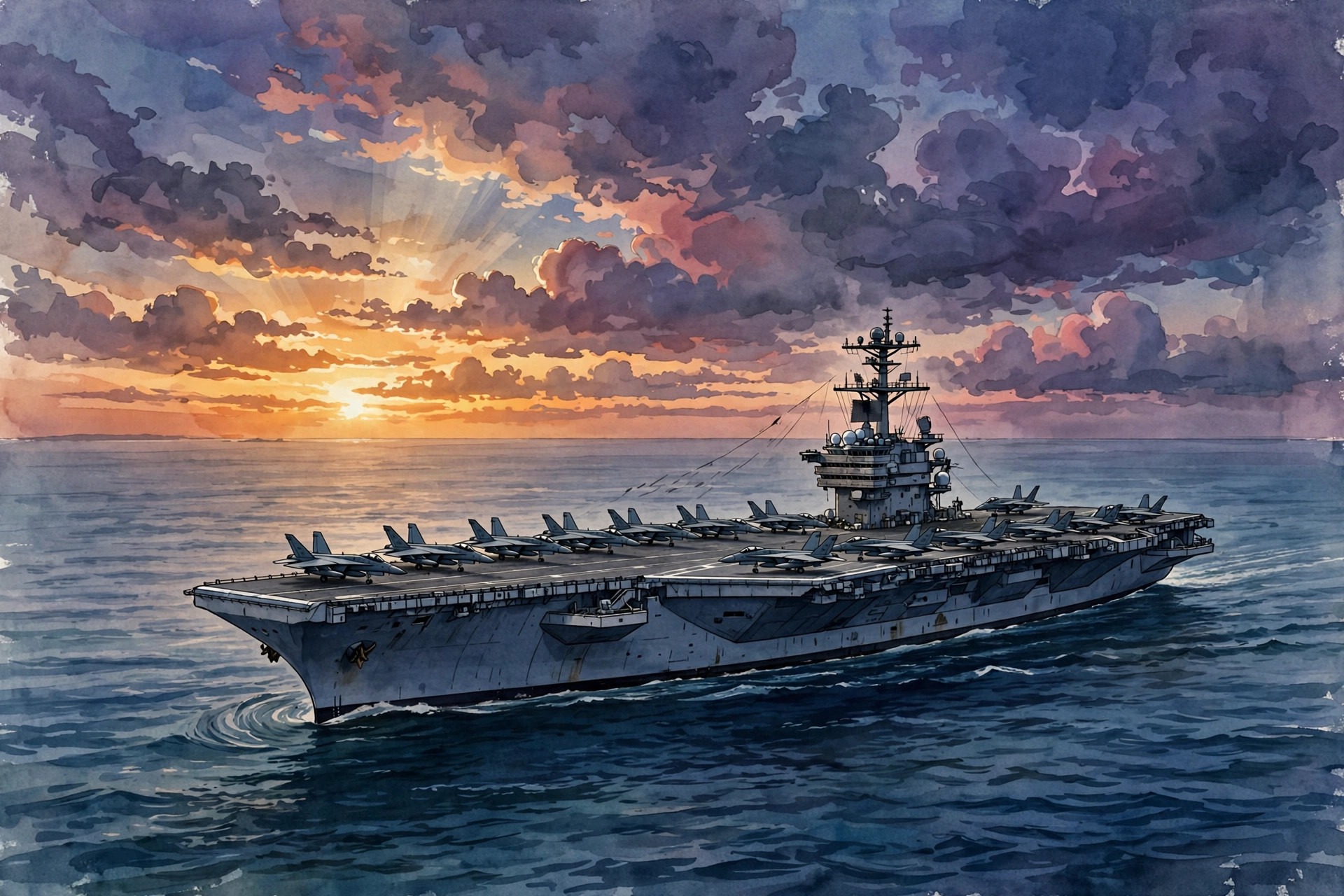
President Donald Trump told CNN in a telephone interview on Sunday 8 November that a new US offensive against Iran is “highly unlikely” if negotiations make progress. At the same time, he kept the threat of renewed strikes on the table, saying three US aircraft carriers in the region are fully “locked and loaded”. The Jerusalem Post reported that a third carrier strike group recently arrived.
The war between the United States and Israel on one side and Iran on the other began on 28 February 2026, and the status of the ceasefire or pause that followed remains contested. In the days before the interview, the US and Israel had prepared for a possible weekend strike that was never ordered, and Trump had given Vice President JD Vance and other officials a few days to pursue mediation.
Two conditions for holding fire
Trump set two conditions for holding fire. Tehran must sign a “very strong agreement” covering its nuclear programme, and it must reopen the Strait of Hormuz, the narrow waterway through which a large share of the world’s seaborne oil passes. A US naval blockade has been in place since July.
Trump also said he would strike again if necessary, and that the US “hit Iran really hard the first time”. The message was two-sided: an offer of restraint tied to a deal, and a warning that the military option remains ready.
Claims that are not verified
Trump made a series of claims in the interview that the article explicitly says are his own claims, not independently verified. He said the US has 38 Iranian bridges targeted and could knock them down “in literally one hour”. He said Iran retains only 10 percent of its missile capability and 15 percent of its drone capability. And he described Iran as “a failing nation” that is “withering away financially”, adding that the US could “finish them off”.
Those figures and descriptions are presented here as Trump’s claims, not as established facts. The article is careful to mark them that way, and so is this rewrite.
Tehran’s answer
Iran’s Foreign Minister Abbas Araghchi responded the same day. He said Tehran would “rain down hell” if fighting resumed, and said there had been no progress in the talks, with mediators not having travelled since the shock of the midterm results. That directly contradicts Trump’s account of progress.
Iran’s standing offer is to reopen the Strait of Hormuz within two days if the US meets its terms: an end to the war on all fronts, unfreezing Iranian assets, lifting oil sanctions, and ending the counter-blockade of Iranian ports.
The two sides are therefore describing different realities. Trump says negotiations are making progress and a deal is possible. Araghchi says there has been no progress and the mediators have not even travelled. The gap between those accounts is the central fact of the interview.
Pressure continues
The pressure campaign continues regardless of the talks. On 7 November there were tanker-mine incidents in the region, and Washington announced Task Force Iron Gate, aimed at the land and Caspian routes Iran uses to move goods around the blockade.
The war is presented as a factor in the Republicans’ midterm defeat on 3 November, when they lost both chambers of Congress, and Trump acknowledged that it contributed to that defeat. The article suggests the interview can be read as an attempt to present a path to peace — a president who has been blamed for a war offering a way out of it, while keeping the carriers in place.
The interview also mentions the quiet backchannel talks led by JD Vance and the $20 million US reward offered for information on Iran’s nuclear programme. Those are the two other tracks running alongside the public negotiation: a private channel, and a public offer of money for information.
Whether the talks progress, or whether the carriers are used, will depend on what happens next — and on which side’s account of the negotiations turns out to be true.
Sources: Al Jazeera, The Times of Israel, The Jerusalem Post.