

By Farhan Khan, November 10, 2026
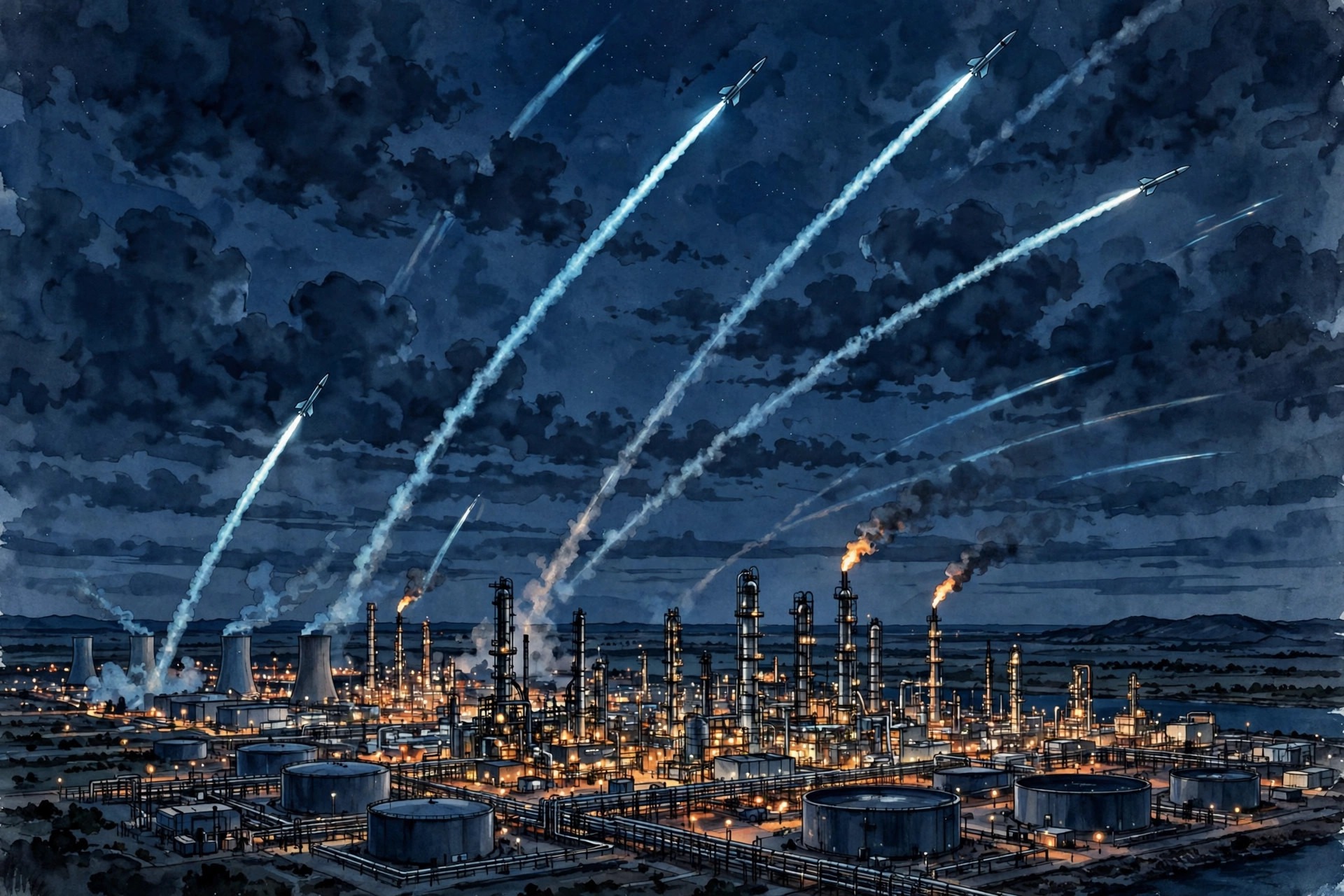
Yemen’s Houthis said on Saturday 7 November that they had fired missiles and drones at Saudi Aramco and JAFZA facilities in Jeddah, and at King Khalid International Airport in Riyadh. The claim has not been independently verified, and no images or videos of the strikes were published.
According to the Houthis, the attack involved two Prawns missiles, a Yasir drone and a Samar heavy missile aimed at the Jeddah facilities, and an explosive-laden drone sent towards the airport in Riyadh. Houthi spokesman Brigadier General Mohammed Al-Sadiq claimed the strikes achieved a precise hit.
The Saudi-led coalition in Yemen gave a different account. It said it intercepted a cruise missile on Saturday and a drone late on Friday. Saudi authorities said on Sunday they had then intercepted two more ballistic missiles, which they identified as Houthi.
The timeline matters here. The coalition says the drone was intercepted late on Friday, the cruise missile on Saturday, and the two ballistic missiles on Sunday — a sequence spread across three days, rather than a single salvo. The Houthi account, by contrast, presents the attack as one coordinated strike on Saturday 7 November, with the missiles and the drone fired at the Jeddah facilities and the Riyadh airport together. Neither account is backed by published images or video, which is why the claims remain unverified.
33 killed near Sanaa
Shortly after the strikes, 33 people were killed and 39 wounded in airstrikes on Bani Hushaysh, east of the Houthi-held capital Sanaa, according to the Houthi-run Health Ministry via Reuters. That figure comes from the Houthi-run ministry and has not been independently verified.
Riyadh denies it struck Sanaa. Saudi and Israeli officials told Arab News the reports were false and blamed an accidental explosion in an underground weapons depot. Israel said its forces did not strike in Yemen. The report notes that the June 2025 Iran war left US and Israeli officials split over coordinated airstrikes, with Israel opposed.
A Twitter account tied to the Houthi official dismissed the depot explanation. The two accounts — an airstrike on Bani Hushaysh, or an accidental explosion in a weapons depot — remain unresolved, and neither side has produced evidence that settles the question.
A renewed upsurge since July
A renewed upsurge in Houthi attacks is reported to have begun in July, following Israel’s June conflict with Iran. That has put the region on edge, as US and Israeli forces preparing for Iran have left Saudi and Gulf allies exposed.
The Houthis have been attacking Israel and Saudi Arabia for years. What has changed is the context: the June war with Iran, the American military build-up aimed at Tehran, and a region in which the Houthis see an opening to strike at Saudi targets while attention is elsewhere.
The article ends by noting that a quiet backchannel led by JD Vance is now full-scale war, while officials insist America first seeks to avert a second major conflict.
Warnings and withdrawals
Governments have responded by warning their citizens away. The UK Foreign Office has changed its travel advice to warn against all travel to the Saudi-Yemen border region and against all travel to Yemen.
The United States ordered the families of non-emergency staff to leave Saudi Arabia on 21 October. Washington has also announced Task Force Iron Gate, aimed at the land and Caspian routes Iran uses to move goods around the blockade — the routes that keep supplies flowing to Tehran and, the Americans say, to its allies, despite the naval blockade.
The exposure of Saudi Arabia and its Gulf allies is the thread running through the reporting. With American and Israeli forces focused on preparing for Iran, the Houthis have room to act, and the upsurge that began in July has not stopped. The warnings from London and the withdrawals ordered by Washington are a measure of how seriously governments now take the risk to the border region and to the kingdom itself.
The picture, as it stands, is one of competing claims. The Houthis say they hit Aramco facilities and Riyadh airport. The coalition says it intercepted what was fired. The dead near Sanaa are counted by a Houthi-run ministry, and the cause of the blast there is disputed. None of it has been independently verified.
Sources: Moneycontrol, The Hindu, Outlook India.