

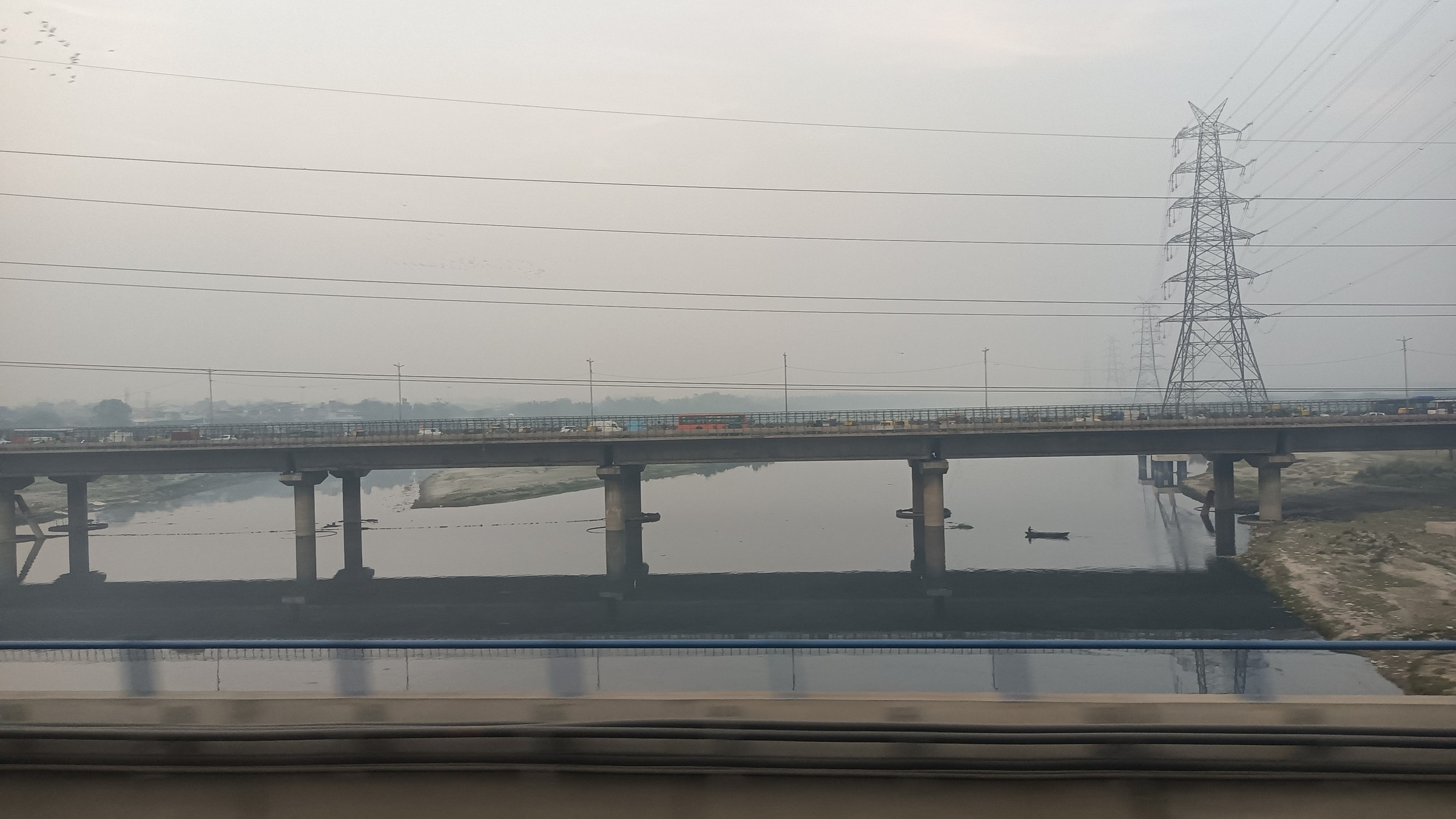
By Farhan Khan, November 9, 2026
The Delhi Yamuna Cruise launches on Tuesday, 10 November 2026 — Delhi’s first recreational cruise on the Yamuna.
The service, called the Namo Yamuna River Safari, will run on electric boats between Sonia Vihar and Jagatpur, in north-east Delhi. Union Minister for Ports, Shipping and Waterways Sarbananda Sonowal will inaugurate it at Sonia Vihar, with Delhi Lieutenant Governor Sardar Taranjit Singh Sandhu and Chief Minister Rekha Gupta present, according to a Press Information Bureau release issued on 9 November.
Ministers of State Shantanu Thakur and Harsh Malhotra are expected to attend, along with Delhi ministers Parvesh Sahib Singh and Kapil Mishra, MP Manoj Tiwari, and senior central and Delhi government officials.
Delhi Yamuna Cruise route: a six-kilometre run upstream of Wazirabad
The Inland Waterways Authority of India (IWAI) is developing the service with the Delhi Development Authority, the Delhi Tourism and Transportation Development Corporation, the Delhi Jal Board, and the Delhi government’s Irrigation and Flood Control Department.
The stretch sits upstream of the Wazirabad barrage. It covers about six kilometres, and the round trip from Sonia Vihar to the Shani Temple at Jagatpur takes about 40 minutes — some reports put it at 35 to 45 minutes. Each boat carries up to 30 passengers.
The jetty area at Sonia Vihar is being developed as a family picnic spot, with a restaurant, a food park, a children’s zone, a musical fountain, and water sports planned around it.
The timing is deliberate. Chhath Puja falls between 13 and 16 November in 2026, when large numbers of devotees gather on the Yamuna’s banks. Gupta had earlier said she wanted the cruise inaugurated before the festival.
The river here is designated National Waterway-110 under the National Waterways Act, 2016.
What the Delhi Yamuna Cruise will cost — for now
Fares have been reported as proposed, not final. Entry to the premises is reported at Rs 50, and a cruise ride at Rs 500 per person — Rs 550 in total. Tickets are planned to be sold online through the Delhi Tourism website, and some reports have also mentioned ticketing platforms.
Visitors should check at the launch itself. The official release issued on 9 November did not publish ticket prices or a timetable, and at least one report on the eve of the launch noted that those details had not yet been announced.
Electric boats, and a river that is still dirty
The boats are electric-powered, air-conditioned, and fitted with inboard bio-toilets with zero discharge, an announcement system, and safety jackets. The operator will be responsible for passenger comfort and safety.
Tourism Minister Kapil Mishra has said the project was developed in line with the National Green Tribunal’s requirements and environmental standards — a point the government has stressed because construction and activity on the Yamuna floodplain draw close scrutiny from the tribunal and environmental groups.
The choice of route matters. This section, upstream of Wazirabad, has historically recorded better water quality than the 22-kilometre stretch between Wazirabad and Okhla further downstream, where the Najafgarh drain and other drains join the river.
That contrast was on display in the days before the launch. On 29 October, Manoj Tiwari took a dip in the Yamuna at Sonia Vihar and said nearly half of the river’s Delhi stretch had been cleaned since the BJP government took office in the capital. A day later, thick white toxic foam was seen floating on the Yamuna near Kalindi Kunj, far downstream.
The numbers tell the same story. The river runs for about 52 kilometres through Delhi. At Palla, where it enters the capital, biochemical oxygen demand — a key measure of organic pollution — was within the bathing-water limit in September 2026, according to Delhi Pollution Control Committee monitoring. By the time the river reached the ISBT Bridge, that measure had risen to 30 milligrams per litre, ten times the prescribed bathing-water limit of 3 milligrams per litre.
Aam Aadmi Party Delhi president Saurabh Bharadwaj rejected the claim that the river had been transformed. He argued that the Palla to Wazirabad stretch had long been relatively clean, cited pollution control committee reports to say water quality there had been better even during his party’s time in government, and challenged Tiwari and Water Minister Parvesh Verma to drink water at the Kalindi Kunj ghat near the Okhla barrage instead.
The government, for its part, does not claim the river is already clean. Verma has said cleaning the Yamuna completely would take around two-and-a-half to three years. On 22 October 2026, Union Home Minister Amit Shah launched 43 Delhi Jal Board projects worth Rs 8,941.22 crore for water supply, sewage treatment, and Yamuna rejuvenation, and pledged that the government would clean the river’s Delhi stretch by May 2029.
A public clean-up drive on 18 October, called Chalo Yamuna, saw more than 35,000 people clean 70 locations along the river and remove 76,755 kilograms of waste in a single morning. A Central Pollution Control Board study released in October identified 12 drains as major pollution hotspots, and the government has said it is seeking technology and expertise from around the world, including from a Swedish firm specialising in sewage sludge management that met the water minister in early November.
A second attempt, after a missed deadline
The cruise did not appear overnight. IWAI and Delhi government agencies signed an agreement in March 2025 to develop cruise tourism along this stretch. Trial runs began on 26 October 2026, when Gupta inspected the service and took a ride with Mishra and other officials. The trial run was expected to continue for about a week before the formal launch.
The ferry service was originally supposed to launch on 20 February 2026, to coincide with the completion of one year of the BJP government in Delhi, but the launch was postponed because work on the project was incomplete.
At the trial run, Gupta said the river safari would give Delhi’s deep emotional and cultural bond with the Yamuna a new dimension while creating fresh opportunities for tourism and recreation. She also stressed that developing tourism facilities must go hand in hand with keeping the river clean and protecting the environment. The project is expected to create employment around the site, from boat operations to the food park and other visitor facilities being built at Sonia Vihar.
The Delhi cruise is a small part of a larger national programme. The National Waterways Act, 2016, declared 111 inland waterways as national waterways, with a total length of more than 20,000 kilometres, up from just five waterways before the Act. As of a government reply in Parliament, 32 of those waterways are operational for cargo and passenger movement. River cruise tourism is already active on the Ganga, the Brahmaputra, and the Kerala backwaters, including the long-distance cruise from Varanasi to Dibrugarh, and the government has said it plans to launch cruise tourism on the Narmada and the Yamuna as well.
Regular sailings, published fares and timings, and safety standards will matter more than the inauguration itself. So will the river.
Also read: Cancer Drug Prices in India Fall by Up to 96% as Revised MRPs Take Effect on November 9 — another major India story this week, on the revised prices for 1,364 anti-cancer drug formulations.
Sources: Press Information Bureau, DD India, Business Today