

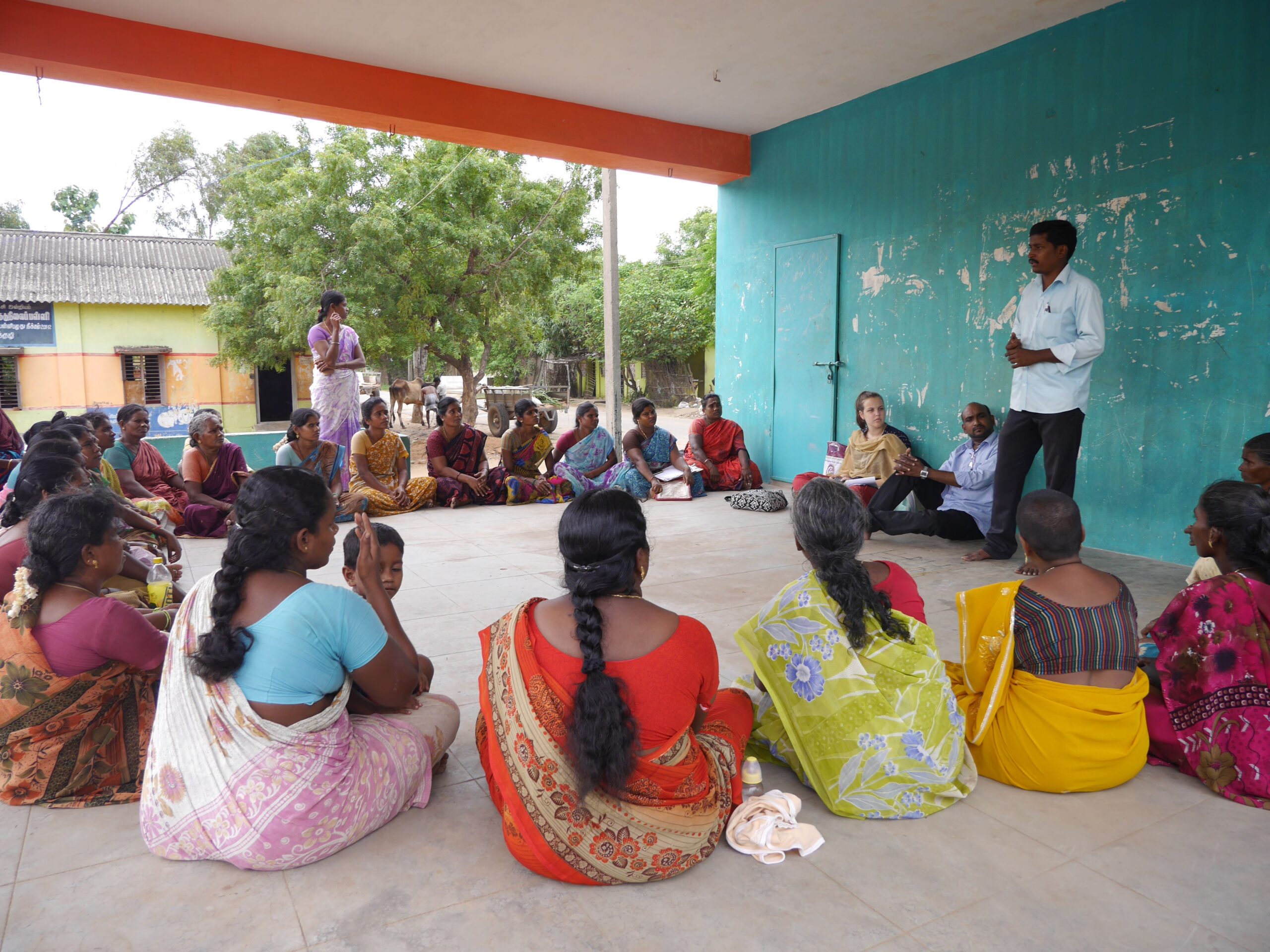
More than 3.76 crore rural women in India now belong to households earning at least Rs 1 lakh a year, according to a review of the Lakhpati Didi initiative released by the Ministry of Rural Development on 15 November 2026. The figure, measured as of June 2026, puts the programme past the halfway mark of its revised national target: six crore women by March 2029.
The update matters because of what it claims about scale. The initiative works through the country’s vast network of women’s self-help groups, and the ministry says that network now covers about 10.13 crore members in 94.40 lakh groups. If the numbers hold, the Lakhpati Didi drive is one of the largest organised attempts anywhere to lift rural household incomes through women’s enterprise, rather than through direct cash transfers.
An independent evaluation by the Indian Institute of Management Ahmedabad, cited in the same release, reported that participating households saw average monthly income rise by 61 per cent and average monthly savings rise by 61.7 per cent. The study covered 6,531 respondents across 17 states and Union Territories. Those are striking gains, and they are also the figures that will draw the closest scrutiny, because the programme’s progress is counted from income records kept by the groups themselves.
The headline numbers: 3.76 crore and counting
The central figure in the ministry’s backgrounder is 3.76 crore. That is the number of rural women from self-help group households who had been enabled as Lakhpati Didis by June 2026. A further 5.70 crore women have been identified as potential Lakhpati Didis, meaning their households have been assessed as close to the income line and are receiving support to cross it.
The gap between the two numbers is the programme’s workload for the next two and a half years. To reach six crore by March 2029, about 2.24 crore more women must cross the threshold, out of a pool of 5.70 crore already identified as potential candidates. On paper, the pipeline is more than twice the size of the remaining target. Whether that pipeline converts at the required pace is the question the next two years will answer.
The pace so far has been fast. The initiative crossed one crore in August 2024, two crore in August 2025, and its original three-crore target in December 2025, ahead of schedule. The government then revised the national target upward to six crore in February 2026. The June 2026 figure of 3.76 crore means roughly three-quarters of a crore women were added in the six months after the three-crore milestone.
Behind the headline count sits the machinery that produces it. As of 12 November 2026, the Deendayal Antyodaya Yojana-National Rural Livelihoods Mission, known as DAY-NRLM, had mobilised approximately 10.13 crore self-help group members into 94.40 lakh groups across the country. The Lakhpati Didi initiative does not build a separate delivery system; it rides on this existing network of village organisations and cluster-level federations.
Who counts as a Lakhpati Didi?
The definition is precise, and it matters more than the label suggests. A Lakhpati Didi is a member of a self-help group whose household earns at least Rs 1 lakh in a year. The benchmark counts total household income, not the woman’s individual earnings, and it counts income from both farm and non-farm activities.
Two conditions in the definition do quiet but important work. First, the income is calculated after expenses, so it is net income rather than gross takings from a shop, a dairy animal or a harvest. Second, the income must be sustainable across agricultural seasons or business cycles, which means a single good harvest or a one-off sale should not, on its own, qualify a household.
The identification process is community-led. Trained Community Resource Persons assess household livelihoods, record income and expenditure details in a Digital Aajeevika Register, and prepare individual business plans for households. Women identified as potential candidates are then given coordinated support over three years, covering skills, finance, livelihood assets and market access. State missions validate the reported achievements, and the national and state missions monitor progress through the same digital register.
This structure explains why the programme can claim national scale without a large new bureaucracy. The self-help groups already existed, the community workers already worked in the villages, and the initiative added a common income yardstick, a planning process and a set of digital tools on top of them.
From two crore to six crore: a target that kept rising
The initiative was announced on 15 August 2023, with an initial target of two crore women. The target was raised to three crore in the Interim Budget of February 2024. When the three-crore mark was crossed in December 2025, ahead of schedule, the government set the present target of six crore Lakhpati Didis by March 2029, a decision taken in February 2026.
The groundwork began well before the announcement. In October 2021 the government advised states to promote sustainable livelihoods and diversify farm and non-farm activities among self-help group households, and in December that year it asked states to set time-bound targets. In June 2022 it introduced a mobile application-based household income survey to build an evidence base for identifying income gaps.
A national conclave in September 2023 brought state missions, development partners and line ministries together, and the government released a strategy note on enabling two crore Lakhpati Didis. The strategy was presented to the Prime Minister in October 2023, and implementation action points followed the same month. Consultations with states identified 12 priority livelihood sub-sectors, including bamboo, honey, goat rearing, poultry and tasar silk.
Training followed the planning. Between November 2023 and March 2024, about 5.5 lakh community cadres received structured training in 12 modules delivered over 15 hours. The Lakhpati Didi portal was launched in February 2024, and the Digital Aajeevika Register began recording the livelihoods and income of each household in May 2024. The initiative has since been mentioned by the Prime Minister in national addresses, and a Lakhpati Didi tableau featured in the Republic Day parade in January 2025.
The engine underneath: DAY-NRLM and 94 lakh self-help groups
None of this would be possible without the institutional base built by DAY-NRLM, which the government launched in June 2011. The mission organises women from poor rural households into self-help groups that promote regular savings and collective financial activity, and connect members with banks, credit, training and markets. Village organisations and cluster-level federations sit above the groups and strengthen the network.
The ministry’s release is explicit that this foundation provided the delivery mechanism for the Lakhpati Didi initiative, allowing the government to build on existing community institutions rather than establish a separate structure. That choice kept costs down and gave the programme immediate reach into villages across the country, but it also means the programme’s results depend entirely on the health of the self-help group network in each state.
The scale of that network is difficult to overstate. With about 10.13 crore members in 94.40 lakh groups as of 12 November 2026, DAY-NRLM touches roughly one in every eight rural households in the country. The Lakhpati Didi target of six crore women represents well over half of that membership, which means the programme’s ambition is not a pilot or a showcase. It is an attempt to change the income profile of most of the network.
The groups also carry the programme’s financial logic. Self-help groups pool savings, lend to members, and have historically shown very high loan repayment rates, which makes banks willing to lend to them. The Lakhpati Didi approach adds enterprise planning to that financial base: a household business plan, prepared with a trained community worker, becomes the route from a small loan to a durable source of income.
Lakhpati Didi households: income up 61 per cent, savings up 61.7 per cent
The strongest evidence offered for the programme’s effect comes from the independent evaluation by IIM Ahmedabad. Covering 6,531 respondents in 17 states and Union Territories, the study reported that average monthly household income in Lakhpati Didi households rose by 61 per cent, while average monthly savings rose by 61.7 per cent.
Those figures, if representative, describe a substantial change in household economics. A 61 per cent rise in monthly income is not a marginal improvement; it suggests that the combination of diversified livelihoods, enterprise support and access to finance is producing real gains for the households that complete the process. The parallel rise in savings matters too, because savings are what protect a household when a crop fails or a family member falls ill.
The study’s sample, however, is small relative to the programme’s size. 6,531 respondents across 17 states and Union Territories is a meaningful evaluation sample, but it covers a fraction of one per cent of the 3.76 crore women counted as Lakhpati Didis. The results describe the households surveyed, and the ministry’s release does not say how those households were selected or whether they were typical of the wider group.
The release also does not publish the absolute income and savings levels behind the percentages, so it is not possible to tell from the figures alone how much money a typical household gained each month. A 61 per cent rise from a very low base is a different story from the same percentage rise on an already comfortable income. The percentages show direction and scale of change; the missing rupee figures would show its weight.
The digital backbone: portals, registers and business plans
A large part of the programme’s recent expansion has come through digital tools. The Didi Business Plan tool and a financial-literacy application for community workers were introduced in July 2025. An application for individual enterprise loans followed in February 2026, and an upgraded version of the LokOS platform, through which potential candidates are identified, arrived in May 2026.
On 29 June 2026, the government launched a platform for producer groups and enterprises along with a public dashboard, and a review involving all states took place at the Rashtriya Grameen Vikas Sammelan on 28 and 29 June 2026. A digital enterprise-tracking application called SHE-LEAPS was also launched on 29 June 2026. Together, these tools are meant to do three things: record household income consistently, track each household’s business plan, and let state and national missions see progress in something close to real time.
The ministry also says it strengthened data governance during 2025-26, introducing checks to identify unusual income entries and asking state missions to reconcile discrepancies and certify reported figures. That step is a direct response to the most obvious risk in a programme counted this way: when progress is measured from income records entered by the same system that is judged on them, the temptation to overstate is built in, and only independent checks can keep the numbers honest.
Whether those checks are enough will be tested as the target rises. The jump from 3.76 crore to six crore requires the system to find, support and verify more than two crore additional households in under three years. The digital register makes that task manageable in principle; it also makes any weakness in verification visible, because the figures are now published and comparable year to year.
What the figures do not settle
For all the progress the release records, several questions remain open. The first is about how the headline count is produced. The 3.76 crore figure rests on household income records maintained through the Digital Aajeevika Register and certified by state missions. The ministry says data governance checks were strengthened, but the release does not publish an independent audit of the count itself. The IIM Ahmedabad study evaluated outcomes in a sample of households; it did not verify the national tally.
The second question is about money. The initiative has no separate budget allocation of its own, according to a written reply given by the ministry in the Lok Sabha in July 2025. It works instead by converging existing schemes and funds, including DAY-NRLM resources, credit from banks and support from other departments. That design keeps the programme lean, but it also means there is no single budget line to inspect when asking what the drive actually costs or whether funding is keeping pace with the doubled target.
The third question is about what the income line means in practice. A household earning Rs 1 lakh a year is earning about Rs 8,300 a month, before dividing that income among its members. Crossing that line is a genuine step out of deep poverty for many families, but it is not prosperity, and the label of Lakhpati Didi should not be read as a claim that these households are now secure. The programme’s own definition requires the income to be sustainable, which is the right test, but sustainability can only be judged over time, not at the moment a household first crosses the line.
Finally, the figures describe June 2026, five months before the release. That lag is normal for a count assembled from state-level records, but it means the published total is a snapshot of the recent past rather than a live reading of November 2026. The next update will show whether the pace of the last six months has been maintained, and whether the pipeline of 5.70 crore potential candidates is turning into completed Lakhpati Didis at the rate the 2029 target requires.
What the release does establish is the direction of travel. In three years, a programme that began with a target of two crore women has counted 3.76 crore past an income line of Rs 1 lakh a year, identified nearly six crore more as close to it, and set itself the task of doubling the achievement by March 2029. The test now is not whether the count can grow, but whether the incomes behind it hold, and whether the households that crossed the line stay across it.
Sources
USN reviewed reporting from multiple outlets for this story. Read more from PIB, IANS and YourStory.