

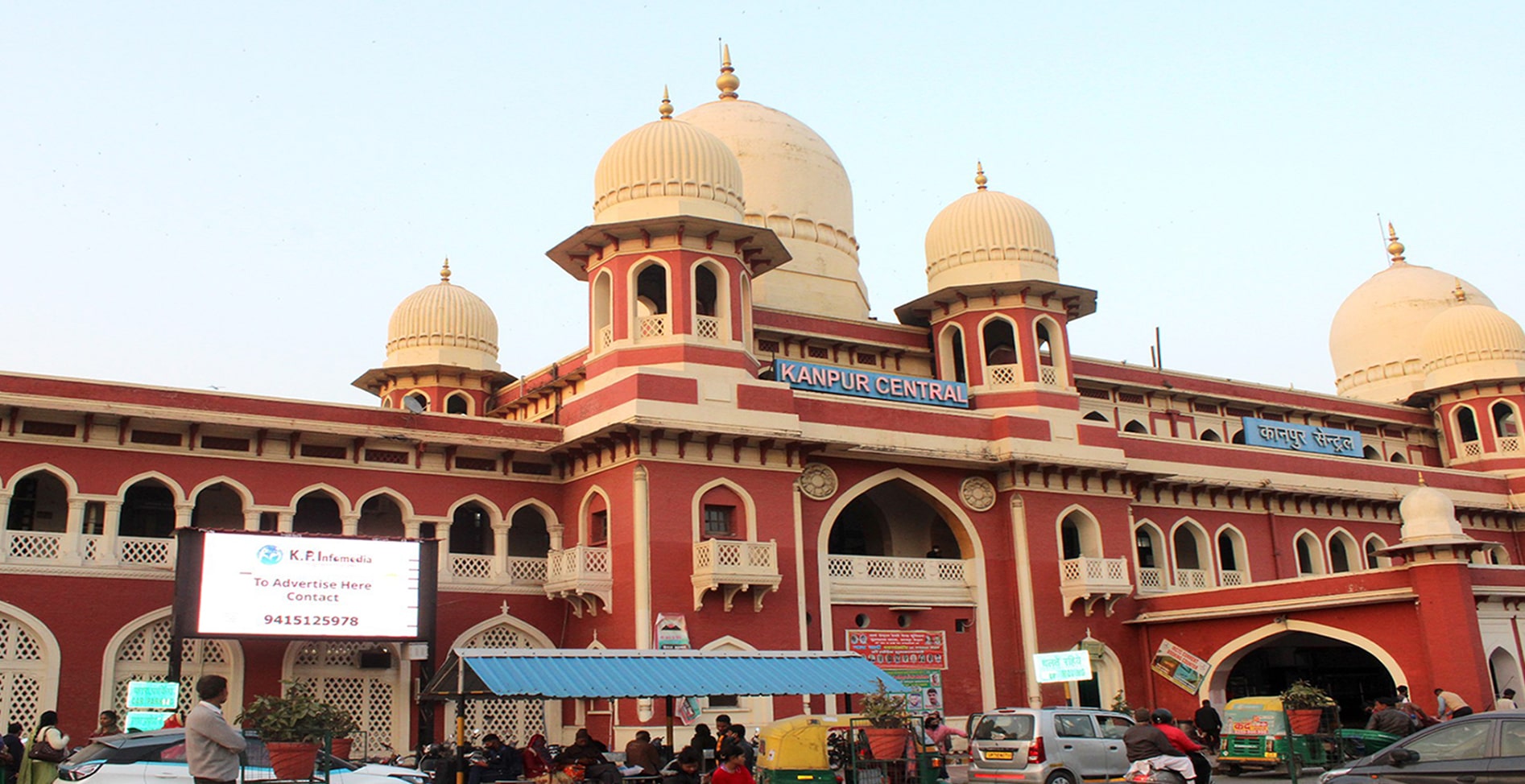
Kanpur’s long wait for a new direct train to the national capital ended on 16 November 2026, when Railway Minister Ashwini Vaishnaw flagged off the inaugural run of the Kanpur Express between Kanpur Central and Anand Vihar Terminal in Delhi. The new daily overnight service will cover 428 kilometres with 22 modern LHB coaches, and the flag-off ceremony doubled as the platform for two much larger announcements for the city: a 16-kilometre elevated railway corridor through Kanpur and a proposed bullet train corridor linking Delhi with Guwahati via Kanpur.
The ceremony was held at Kanpur Central, with Kanpur MP Ramesh Awasthi alongside the minister, who joined through video conferencing. Kanpur Mayor Pramila Pandey, Akbarpur MP Devendra Singh Bhole and senior railway officials were also present. The minister conveyed best wishes from Uttar Pradesh Chief Minister Yogi Adityanath to the people of Kanpur on the occasion.
For a city that describes itself as one of Uttar Pradesh’s leading industrial, leather and educational centres, the new train is more than a timetable addition. It is the first new regular service on the Kanpur–Delhi route in about 25 years, according to local reports quoting the city’s MP, and it arrives with a package of infrastructure promises that could reshape how the city moves, both within its own limits and on the national rail map.
A new overnight link between Kanpur and Delhi
The Kanpur Express will run daily in both directions as train numbers 14153 and 14154, operating as the Kanpur Central–Anand Vihar (T)–Kanpur Central Mail. The service was approved by the Railway Board in September 2026, and the Ministry of Railways published the timetable and halts in its approval announcement before the flag-off.
The overnight pattern is the heart of the service. Train 14153 will leave Kanpur Central at 8.40 pm and reach Anand Vihar Terminal at 4.50 am the next morning, a journey of 8 hours and 10 minutes. In the return direction, train 14154 will depart Anand Vihar Terminal at 11.25 pm and arrive at Kanpur Central at 7.25 am, taking eight hours. The timings are designed for passengers who want to travel after the working day and arrive in the morning, whether for business, study or family visits.
Anand Vihar Terminal matters as much as the departure point. It is a major multimodal transit gateway on the eastern edge of Delhi, connecting passengers onward across the National Capital Region. A direct overnight link into that terminal gives Kanpur’s travellers a straightforward route into Delhi, Noida and Ghaziabad without changing trains in the middle of the night.
The train will use 22 modern Linke-Hofmann-Busch coaches, the safer and more comfortable design that Indian Railways now uses for its express services. LHB coaches are lighter, ride more smoothly and carry modern safety features, and their use on this route signals that the service is intended as a lasting addition rather than a temporary arrangement.
Kanpur Express timings, route and halts
The 428-kilometre route runs along one of the busiest rail corridors in northern India, the Kanpur–Delhi section of the Howrah–Delhi main line. Between its two termini, the train will halt at eight stations: Phaphund, Etawah, Tundla, Hathras, Aligarh, Khurja, Dadri and Ghaziabad.
The choice of halts reflects the economy of the region the train passes through. Phaphund provides access to the industrial areas of Auraiya district, including the NTPC power plant at Auraiya and the GAIL petrochemical complex at Pata. Etawah and Aligarh are substantial towns in their own right, while Tundla, Hathras, Khurja and Dadri serve a belt of smaller towns whose residents regularly travel to Delhi for work, education and medical care. Ghaziabad, the final halt before Anand Vihar, is itself a major commuter destination.
The overnight schedule also spreads the benefit across the day. A passenger boarding at Kanpur in the evening reaches Delhi before dawn, while a passenger leaving Delhi late at night is back in Kanpur in time for the start of the working day. For traders, students and daily commuters, that pattern is often more useful than a daytime train, because it leaves the whole day free at both ends of the journey.
There is one important detail passengers should note. The train flagged off on 16 November ran as an inaugural special, numbered 04195. The formal notification for regular commercial operation of trains 14153 and 14154 was still to be issued at the time of the flag-off, according to reporting on the launch. Travellers should therefore check the confirmed start date of the regular service before booking, rather than assuming the daily timetable began on the day of the ceremony.
Why the city waited about 25 years for this train
The excitement around the launch is easier to understand against the history of the route. The last major addition to Kanpur’s regular rail services to Delhi was the Shram Shakti Express, introduced around 2001. Since then, the city has relied on that train and on long-distance services passing through Kanpur Central, many of which are heavily booked days in advance.
Kanpur Central is one of the busiest stations in the country, a junction on the Howrah–Delhi main line where trains from across northern India converge. Its imposing main building, completed in 1930 in the Indo-Saracenic style, has watched the city’s railway traffic grow for nearly a century. Today the station handles hundreds of trains, and securing a berth on a Delhi-bound service on short notice has long been difficult for ordinary passengers.
The demand for an additional train had been raised repeatedly by the city’s elected representatives, and Kanpur MP Ramesh Awasthi had pressed the case with the Railway Ministry. The approval of the new service in September 2026, followed by the flag-off in November, closes a demand that the city had carried for years. The naming of the train as the Kanpur Express, rather than a generic mail or express title, was itself presented as a response to the wishes of the city’s residents and business community.
The new service is also expected to ease pressure on the Shram Shakti Express, which has carried much of the Kanpur–Delhi overnight load on its own for a quarter of a century. With two overnight options, passengers should find it easier to get a seat, and the busiest travel days — festival seasons, examination periods and the start of the working week — should become less frantic.
A 16-km elevated corridor to end crossing jams
The second announcement made at the flag-off may matter even more to daily life in Kanpur than the new train itself. The Railway Minister said a 16-kilometre elevated railway track will be built between Anwarganj and Mandhana, running through the city, to provide a permanent solution to the traffic congestion at railway crossings that has troubled Kanpur for decades.
Anyone who has driven across Kanpur will recognise the problem. Level crossings slice through busy roads, and every passing train brings traffic to a standstill. The delays add up across a day, holding up buses, trucks, ambulances and schoolchildren, and they have been a source of frustration for generations of the city’s residents. An elevated corridor lifts the railway above the roads, removing the conflict entirely.
According to the minister, the Detailed Project Report for the elevated corridor has been completed and the necessary approvals have been obtained. Construction work is expected to commence shortly. The corridor answers a long-pending demand of Kanpur residents that dates back to 2017–18, and its progress to the construction stage represents the clearing of that demand, not a new idea announced on the day.
The elevated track also fits into a wider pattern of railway investment in the city. Kanpur Central is being redeveloped, and the minister said several other railway infrastructure projects would also be taken up in the city in the coming period. Taken together, the announcements point to a coordinated attempt to modernise both the trains that serve Kanpur and the tracks that run through it.
Kanpur Central station’s Amrit Bharat makeover
The third strand of the day’s announcements concerned the station itself. The Railway Minister said work on the redevelopment of Kanpur Central Railway Station is progressing at a rapid pace, and the station is being modernised under the Amrit Bharat Station Scheme, the national programme to upgrade railway stations across India.
Under the scheme, stations are rebuilt with better passenger facilities: improved platforms and circulation areas, modern waiting halls, cleaner toilets, lifts and escalators, digital information systems and better integration with local transport. For a station of Kanpur Central’s age and traffic, the work involves rebuilding much of the passenger-facing infrastructure while keeping the trains running.
The redevelopment matters because a station is the first and last thing a traveller experiences. A modern, well-organised station reduces crowding at the gates, shortens the walk to the platform and makes the wait for a train safer and more comfortable, particularly for elderly passengers, women travelling alone and families with children. The minister’s statement that the work is moving quickly will be tested by passengers in the months ahead, as the new facilities open in stages.
The station’s redevelopment also connects with the other announcements. An elevated corridor through the city, a modernised terminus and a new overnight train are three parts of the same idea: that Kanpur’s railway infrastructure should match the size and importance of the city it serves. Whether that idea is delivered on time and to a good standard will be judged by the people who use the station every day.
The proposed bullet train North Corridor
The most ambitious announcement of the day was also the one furthest from completion. The Railway Minister spoke about a proposed Bullet Train North Corridor that would connect Delhi, Agra, Kanpur, Varanasi, Lucknow and Ayodhya, and would extend further to Patna, Siliguri and Guwahati. It is, at this stage, a proposed corridor: no construction timeline or funding details were announced alongside it.
Once operational, the corridor is expected to transform travel times across the region. The journey between Delhi and Kanpur is expected to take around 1 hour and 45 minutes, compared with roughly eight hours on the new overnight train. The journey between Lucknow and Kanpur would take about 27 minutes, and Kanpur and Prayagraj would be connected in around 1 hour and 15 minutes, according to the figures shared at the event.
The corridor would place Kanpur on a high-speed spine running from the national capital through the Gangetic plain to the north-east, linking some of the most populous cities in the country. The minister said the high-speed line would improve connectivity between Kanpur and other major cities and support regional and economic development, including easier movement for business travellers, tourists and students.
It is worth keeping the announcement in proportion. India has only one high-speed rail corridor under construction, between Mumbai and Ahmedabad, and that project has taken many years to advance. A second corridor of this scale would require land acquisition, environmental clearances, financing and years of construction before a single passenger boards. The North Corridor should therefore be read as a statement of direction — the government intends Kanpur to be part of India’s high-speed future — rather than as a service passengers can plan around today.
For travellers, the practical picture is straightforward. A new overnight train between Kanpur Central and Anand Vihar Terminal has been flagged off, with a published timetable, eight halts and 22 modern coaches. The inaugural run took place on 16 November 2026, but the regular daily service begins only when the Railway Board issues its notification for commercial operation. Passengers should confirm the start date and book through official railway channels once that notification is out.
Beyond the train, the city’s railway future now has three markers to watch: the start of construction on the 16-kilometre Anwarganj–Mandhana elevated corridor, the staged opening of the redeveloped Kanpur Central station, and any formal step — a survey, a sanction or a funding decision — that turns the proposed bullet train North Corridor from an announcement into a project.
Together, the announcements add up to the most significant single day for Kanpur’s railways in years. A new train answers an immediate need, the elevated corridor addresses a daily frustration, and the station redevelopment and the bullet train proposal point to a longer ambition. The test, as with every railway announcement, will be in the delivery: whether the trains run on time, whether the construction starts as promised, and whether the city feels the difference on its platforms and its roads.
Sources
USN reviewed reporting from multiple outlets for this story. Read more from PIB, DD India and The Indian Express.