

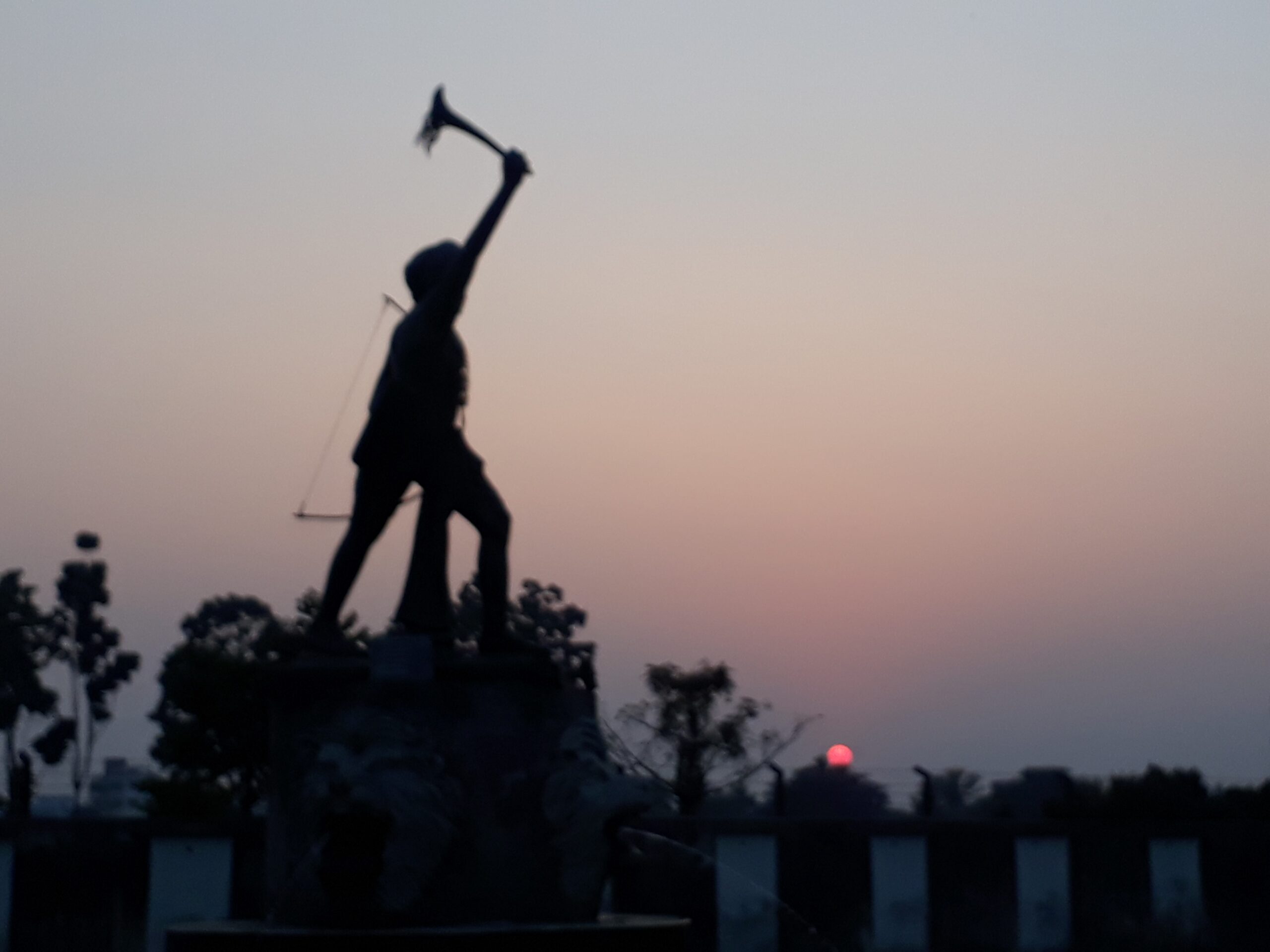
Prime Minister Narendra Modi on Sunday, 15 November 2026, joined the Janjatiya Gaurav Diwas programme in Gadchiroli, Maharashtra, through video conferencing, and used the occasion — the 151st birth anniversary of tribal freedom fighter Bhagwan Birsa Munda — to inaugurate and lay the foundation stones of 246 development projects worth around Rs 3,000 crore for tribal communities across India. The programme, held in a district long associated with both rich tribal culture and the challenge of left-wing extremism, brought together tribal community members from across the country for a day that combined remembrance, celebration and a substantial announcement of new public investment.
According to the Prime Minister’s Office, whose statement was released through the Press Information Bureau, the projects are aimed at strengthening education, healthcare, livelihood opportunities and community infrastructure in tribal areas, while also preserving tribal heritage and culture. The distinction within the package matters: 173 of the 246 projects were formally inaugurated, meaning the facilities are complete and ready for use, while foundation stones were laid for the remaining 73, meaning construction of those projects has now been formally announced and set in motion. The two groups should not be confused, and the value of the package — around Rs 3,000 crore — covers the full set of 246 projects together.
The Prime Minister addressed the gathering virtually and interacted with tribal community members from several parts of the country, hearing directly from beneficiaries of government welfare schemes about how those schemes had affected their lives. Maharashtra Chief Minister Devendra Fadnavis attended the programme in Gadchiroli. Earlier in the day, the Prime Minister also paid floral tributes to Bhagwan Birsa Munda at the Parliament complex in New Delhi, while President Droupadi Murmu, herself from a tribal community, paid homage at Prerna Sthal in the Parliament House Complex and joined tribal artists in a cultural performance there.
Janjatiya Gaurav Diwas: Honouring Birsa Munda’s Legacy
Janjatiya Gaurav Diwas is observed every year on 15 November, the birth anniversary of Birsa Munda, to recognise the contribution of tribal communities to India’s freedom struggle and to national development. The observance began in 2021, and the Prime Minister said during the programme that it had since grown into a national celebration, with more than two lakh programmes organised across the country last year and participation from crores of citizens. The 2026 edition carried particular weight because it marked the 151st anniversary of Birsa Munda’s birth, placing the freedom fighter’s life and message at the centre of the day’s events.
Birsa Munda was born on 15 November 1875 at Ulihatu, in what is today the Khunti district of Jharkhand, into a Munda tribal family. In the late 1890s he led the Ulgulan — the Great Tumult — a tribal uprising against British colonial rule, exploitative landlords and the loss of tribal land and forest rights in the Chotanagpur region. He died in Ranchi jail on 9 June 1900, at the age of 24, yet his short life left a lasting imprint: his portrait hangs in the Central Hall of Parliament, a distinction held by no other tribal leader, and his name is now carried by institutions, a major hockey stadium and public places across the country.
The choice of Gadchiroli as the venue for the national programme was itself significant. The district, in the eastern corner of Maharashtra, is home to large tribal populations and has for years been among the areas most affected by Maoist and Naxalite violence. Holding the central celebration of tribal pride there, and announcing a large development package from that stage, was presented by the government as a statement that tribal regions once defined in public debate by conflict would now be defined by schools, health facilities, markets and cultural institutions.
246 Projects Worth Around Rs 3,000 Crore
The headline figure of the day was the scale of the package: 246 development projects worth around Rs 3,000 crore, spread across education, healthcare, livelihoods and community infrastructure. The Prime Minister’s Office said the projects were designed to improve the quality of life of tribal communities and to ensure better access to essential services, with particular emphasis on reaching remote and underserved tribal regions where government services have historically arrived last.
The arithmetic of the package is straightforward and worth setting out plainly. Of the 246 projects, 173 were inaugurated on the day. The remaining 73 were foundation stone projects — 19 new Eklavya Model Residential Schools, 12 Tribal Multipurpose Marketing Centres and 42 other projects under the Pradhan Mantri Janjati Adivasi Nyaya Maha Abhiyan, known as PM-JANMAN, and the Dharti Aaba Janjatiya Gram Utkarsh Abhiyan, known as DAJGUA. Together, the inaugurated projects and the newly announced ones add up to the full 246, and the two categories will now move on very different tracks: one set is open for use, the other must be built.
That distinction is important for judging the announcement fairly. An inauguration marks a finished facility — a school that can admit children, a centre that can open its doors, a museum that can receive visitors. A foundation stone marks a commitment and a starting point, and its value will only be realised when construction is completed and the facility begins serving people. The government has not published a project-by-project completion schedule in the release, so the public test of the 73 foundation stone projects will be whether they appear, finished and functioning, in the months and years ahead.
Eklavya Schools and PM-JANMAN Centres Lead the Rollout
Education sits at the heart of the package. Among the 173 inaugurated projects were 38 Eklavya Model Residential Schools, known as EMRS, built to provide quality residential schooling to tribal children, many of whom live far from the nearest good school. The Eklavya school network has become one of the government’s principal instruments for tribal education, offering free residential education with an emphasis on academic learning alongside sports and cultural activity, and the addition of 38 completed schools in a single day represents a significant expansion of that network.
Alongside the schools, the Prime Minister inaugurated 100 Multi-Purpose Centres under PM-JANMAN, the mission focused on Particularly Vulnerable Tribal Groups. According to the Prime Minister’s Office, these centres will serve as hubs for service delivery and community activities in tribal settlements — places where residents can access government services, gather for community programmes and connect with welfare schemes without travelling long distances to block or district headquarters. For families in scattered hamlets, a functioning centre of this kind can be the difference between a scheme existing on paper and a scheme actually reaching them.
The foundation stone side of the education push is equally deliberate. Nineteen more Eklavya Model Residential Schools were announced, extending the same model to new locations, and the government said the new schools would further strengthen its commitment to providing quality education to tribal children. Taken together, the 38 completed schools and the 19 announced ones show a programme that is being expanded in both directions at once — finishing what is ready while starting what comes next.
Heritage on Display: Museum and Research Institute Inaugurated
Two of the most symbolically important inaugurations of the day were cultural rather than administrative. The Prime Minister inaugurated the Tribal Research Institute building at Itanagar in Arunachal Pradesh, a facility intended to support research into tribal languages, customs, history and knowledge systems in the north-east. Such institutes play a quiet but important role: they document oral traditions, preserve artefacts and scholarship, and give tribal communities a formal institutional voice in how their own heritage is studied and presented.
In Aizawl, Mizoram, the Prime Minister inaugurated the Ropuiliani Tribal Freedom Fighter Museum, dedicated to the memory of a nineteenth-century Mizo chieftainess who resisted British colonial rule and is remembered as a symbol of tribal resistance and sacrifice. The museum, according to the Prime Minister’s Office, commemorates the courage, valour and sacrifices of Mizo tribal freedom fighters while showcasing the rich cultural traditions, historical legacy and heritage of the Mizo people. Its opening on Janjatiya Gaurav Diwas underlined a theme that ran through the day’s events: that tribal history is national history, and that the freedom struggle had many centres beyond the ones most often remembered.
The heritage strand of the package also extended to livelihoods. The 12 Tribal Multipurpose Marketing Centres for which foundation stones were laid are intended to strengthen market access for tribal producers — giving artisans, farmers and forest-produce collectors organised places to sell what they make and grow, rather than depending on intermediaries who capture most of the value. If these centres are completed and run well, they could connect tribal producers directly with larger markets, including buyers in cities who value handmade and forest-based products but rarely reach the villages where they originate.
From Security to Opportunity: The Prime Minister’s Message on Naxal Violence
The Prime Minister’s address carried a sharp political edge alongside its development message. He said tribal communities had suffered the most from Naxal violence, and accused previous governments of leaving them to fend for themselves while armed groups denied them even their voting rights. The remarks were delivered in Gadchiroli, a district where that history is not abstract, and they framed the development package as part of a larger shift — from a time when tribal areas were, in his words, abandoned to violence, to a present in which the state is building schools, centres and roads in the same places.
He also recalled the restrictions that once governed bamboo, a forest produce central to the livelihoods of many tribal families, presenting the removal of such barriers as an example of how his government had worked to restore tribal rights over forest resources. The argument, as presented in his address, was that earlier administrations neither understood tribal communities nor cared about their welfare, while his government had made concerted efforts to develop tribal areas that had long lacked basic facilities.
On the question of scale, the Prime Minister said his government had allocated more than Rs 1 lakh crore for the development of tribal areas. That figure is consistent with the combined outlays of the two flagship missions discussed later in this article, and it was offered as evidence that the day’s Rs 3,000 crore package was part of a much larger and continuing flow of investment rather than a one-day announcement. He also pointed to poverty reduction as a broader achievement of the period since Independence, saying that 50 crore people coming out of extreme poverty was among India’s biggest achievements since Independence, and credited targeted welfare initiatives, including those aimed at tribal communities, with contributing to that change.
On security, the Prime Minister said that around 125 districts had been affected by Maoist and Naxalite violence in 2014, and that sustained action against the insurgency had since improved the sense of security among tribal families, particularly women. The claim frames security as a precondition for development: schools and marketing centres can only function where teachers, health workers and traders can travel and work safely. Whether that improvement is sustained, and whether it reaches the most remote villages, will be judged by conditions on the ground rather than by speeches.
Two Flagship Missions Behind the Push
The projects announced on Sunday sit within two large central missions that now carry most of the government’s tribal development effort. The first is PM-JANMAN, the Pradhan Mantri Janjati Adivasi Nyaya Maha Abhiyan, launched in November 2023 with a financial outlay of approximately Rs 24,000 crore. It focuses on 75 Particularly Vulnerable Tribal Groups — the smallest and most isolated tribal communities — living across 18 states and one Union Territory, and it covers basic needs including housing, roads, drinking water, electricity, health and education in settlements that larger schemes often fail to reach.
The second is the Dharti Aaba Janjatiya Gram Utkarsh Abhiyan, known as DAJGUA, launched on 2 October 2024 with a budgetary outlay of Rs 79,156 crore. Where PM-JANMAN concentrates on the most vulnerable groups, DAJGUA takes a broader village-level approach, seeking to saturate tribal villages with the full range of government services and infrastructure. Together, the two missions account for more than Rs 1 lakh crore of planned spending, which is the basis for the figure the Prime Minister cited in his address.
Understanding the two missions helps explain the shape of the Gadchiroli package. The 100 Multi-Purpose Centres inaugurated under PM-JANMAN are the kind of last-mile infrastructure that mission was designed to deliver, while the 42 additional foundation stone projects under PM-JANMAN and DAJGUA extend the same approach to new villages. The Eklavya schools, meanwhile, sit alongside these missions as the education backbone, giving tribal children residential schooling that their own villages often cannot provide.
Both missions are also relevant to how the new projects will be judged. Large outlays do not by themselves guarantee results, and the history of tribal development in India includes schemes that were announced with fanfare and then stalled in implementation. The test for PM-JANMAN and DAJGUA, and for the 246 projects announced on Janjatiya Gaurav Diwas, will be visible and practical: whether the schools admit and retain students, whether the multi-purpose centres stay staffed and open, whether the marketing centres actually buy and sell produce, and whether the promised facilities appear in the villages named in the announcements.
A Fortnight of Celebration Comes to a Close
The Gadchiroli programme marked the culmination of Janjatiya Gaurav Pakhwada, a fortnight of events observed across the country from 1 to 15 November 2026. During the Pakhwada, a range of national and grassroots-level programmes were organised, including the President’s interaction with students of Eklavya Model Residential Schools, a National Tribal Literary Festival, training programmes for tribal healers, health and nutrition camps for Particularly Vulnerable Tribal Groups, and community service drives in tribal villages under the Dharti Aaba Janbhagidari Abhiyan.
The breadth of that fortnight reflects how the observance has evolved since its launch in 2021. What began as a single day of remembrance has become a two-week programme reaching into schools, health camps and village gatherings, with the intention of making tribal culture and history visible well beyond the communities themselves. The literary festival and the healers’ training programmes are part of that effort — treating tribal knowledge, from literature to traditional medicine, as a living heritage worth recording and supporting rather than as a relic of the past.
The human moments of the day also mattered. During his virtual interaction, the Prime Minister spoke with beneficiaries of welfare schemes from different states, including Vajir from Hathakundi village in Netrang tehsil of Gujarat’s Bharuch district, who spoke about the New Gujarat Pattern Yojana and its impact on his tribal community. Such exchanges are a regular feature of these programmes, and they serve a dual purpose: they give the Prime Minister first-hand accounts to cite, and they give the beneficiaries a national platform for experiences that would otherwise remain local.
What Happens Next for Tribal Communities
The immediate significance of the Gadchiroli programme is clear: 173 completed projects are now, in principle, available to tribal communities, and work has formally begun on 73 more. For the families who will use the new Eklavya schools, the multi-purpose centres, the research institute and the museum, the value of the day will be measured in everyday terms — a child admitted to a good residential school, a health camp that actually arrives, a producer who gets a fair price at a marketing centre.
The longer significance depends on delivery. The 19 new Eklavya schools and 12 marketing centres announced on Sunday exist, for now, as foundation stones and commitments. Their progress will need to be tracked publicly, project by project, if the announcement is to become the transformation it promises. The same applies to the 42 additional projects under PM-JANMAN and DAJGUA: their locations, timelines and completion dates are the details that will determine whether the package is remembered as a turning point or as another entry in a long list of announcements.
There is also a wider question that the day’s events raised but did not settle. The Prime Minister presented development and security as two sides of the same effort in tribal regions — arguing that the retreat of Maoist violence had made development possible, and that development would in turn consolidate peace. If that account holds, the districts once defined by conflict could become known for their schools, museums and markets instead. But that outcome will depend on sustained investment, honest monitoring and the willingness of governments at every level to keep returning to the same villages long after the cameras of a national celebration have moved on.
Janjatiya Gaurav Diwas 2026 will be remembered for its numbers — 246 projects, around Rs 3,000 crore, 38 schools, 100 centres — and for the figure at its centre, a 24-year-old freedom fighter whose 151st birth anniversary gave the day its meaning. The numbers, however, are only the beginning of the story. The rest will be written in the villages, classrooms and marketplaces where these projects must now prove themselves.
Sources
USN reviewed reporting from multiple outlets for this story. Read more from Press Information Bureau, The New Indian Express and The Times of India.