

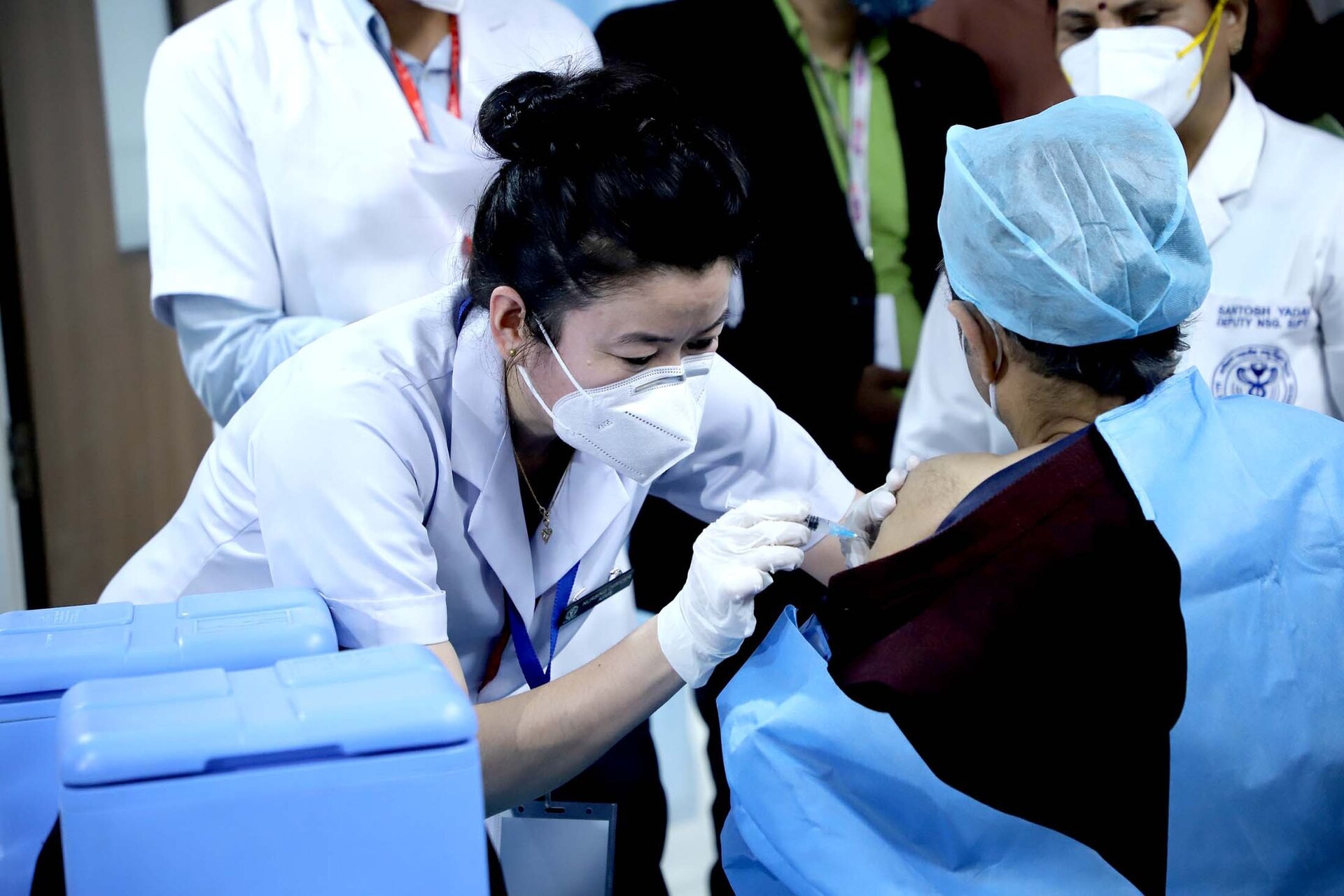
India has administered more than one crore doses of the human papillomavirus (HPV) vaccine in less than nine months, the Union Ministry of Health and Family Welfare announced on 21 November 2026, marking a major milestone in the country’s effort to prevent cervical cancer. The National HPV Vaccination Campaign has now reached nearly 87 per cent of its annual target group of about 1.2 crore 14-year-old girls, and six states have already covered every girl in their identified target populations.
The scale of the achievement is what makes it stand out. A nationwide immunisation drive aimed at adolescent girls, delivered free of cost through government health facilities, has moved from launch to one crore doses in roughly the time of a single school year. The campaign was launched by Prime Minister Narendra Modi in February 2026, and the health ministry says the pace reflects coordinated work between the Centre and the states, backed by teachers, frontline health workers and a digital tracking platform that follows every dose.
Behind the headline number sits a disease that India has lived with for far too long. Cervical cancer is the second most common cancer among women in India, and the country accounts for about a fifth of the world’s cervical cancer cases and roughly a quarter of the deaths the disease causes each year. Global estimates for 2022 put India’s burden at around 1,27,526 new cases and 79,906 deaths in a single year. A vaccine given to a 14-year-old girl today is protection against a cancer that might otherwise appear decades later, which is why health officials describe the campaign as an investment rather than a statistic.
The ministry’s announcement, carried in a Press Information Bureau release on 21 November, stresses that the campaign is free, safe and voluntary, and that it is offered only with parental consent. Every dose is given as a single injection at a designated government health facility. The remaining task is clear as well: about 13 per cent of the annual target group, roughly 15 to 16 lakh girls, are yet to be reached, and the ministry says its focus now shifts to finding them.
A Milestone Nine Months in the Making
The National HPV Vaccination Campaign began on 28 February 2026, when Prime Minister Narendra Modi launched it as a nationwide drive to vaccinate 14-year-old girls against the virus that causes most cervical cancers. The campaign set out to reach an estimated 1.2 crore girls each year, a figure drawn from the Registrar General of India’s 2021 population estimates. By 21 November, in less than nine months, more than one crore doses had been administered.
That speed is unusual for a new vaccine programme aimed at adolescents. Childhood immunisation in India has a long and successful history, but reaching teenagers is a different challenge. Fourteen-year-olds are not brought to clinics by the same routines that carry infants to vaccination sessions. They are in school, spread across thousands of classrooms, and their parents must be persuaded, not merely reminded. The campaign therefore had to build a new delivery channel almost from scratch, working through schools, teachers and community health workers rather than relying on the infant immunisation network alone.
Union Health Minister J.P. Nadda welcomed the milestone publicly on the day of the announcement, congratulating the six states that have reached full coverage of their identified target populations and noting that 12 states have now crossed the 80 per cent mark. The ministry’s release describes the achievement as the result of sustained coordination between the Union health ministry and state and Union Territory governments, supported by district administrations, public health institutions and frontline teams.
The timing of the announcement also matters. It came on the same day that the Union Health Secretary, Punya Salila Srivastava, launched a separate patient education initiative for cancer in Mumbai, underlining how much of the government’s cancer agenda is now focused on early action rather than late treatment. The two announcements together point to a strategy that pairs prevention for the young with better information and screening for adults.
For parents, the practical details are straightforward. The vaccine is provided free of charge at government health facilities, it is a single dose, and it is voluntary. Parents can book a slot for their daughter through the government’s U-WIN digital platform and download a digital vaccination certificate afterwards. The ministry has encouraged parents and guardians of eligible girls to visit their nearest designated government health facility or use U-WIN to get information and book a slot.
How the HPV Vaccination Drive Reached 87 Per Cent Coverage
The headline figure, nearly 87 per cent, needs to be understood precisely. It is the share of the identified annual target cohort that has been vaccinated, not a share of every girl in the country. The cohort is defined as approximately 1.2 crore 14-year-old girls, based on the Registrar General of India’s 2021 population estimates. Against that denominator, more than one crore doses means the campaign has covered close to nine in every ten girls it set out to reach this year.
That distinction is important because it is also the honest way to read the remaining gap. About 13 per cent of the target group, somewhere around 15 lakh girls, have not yet received the vaccine. Some of them live in areas where the campaign has been slower to arrive. Some may have missed school-based sessions. Some parents may still be undecided. The ministry says programme managers are using the U-WIN platform to identify districts with coverage gaps and girls who are yet to be vaccinated, so that the remaining work can be planned rather than guessed at.
The state-by-state picture shows how uneven the progress has been, and why a single national average hides real differences. Six states have achieved 100 per cent coverage of their identified target populations: Gujarat, Uttar Pradesh, Andhra Pradesh, Mizoram, Madhya Pradesh and Bihar. That is a striking list because it mixes large states with small ones, and states with very different health systems, which suggests the result owes more to organisation and political attention than to wealth or infrastructure alone.
Behind the six leaders sits a second group of strong performers. Assam has recorded 95.63 per cent coverage, followed by Telangana at 95.28 per cent, Karnataka at 93.16 per cent and Uttarakhand at 90.17 per cent. Chhattisgarh, at 86.21 per cent, and Rajasthan, at 85.23 per cent, have crossed the 80 per cent mark. Kerala stands at 77.02 per cent, Tamil Nadu at 76.12 per cent, Odisha at 74.90 per cent, and the Union Territory of Dadra and Nagar Haveli and Daman and Diu at 72.99 per cent. The ministry’s release presents these figures as evidence that states with diverse geographical, demographic and socio-economic conditions have all been able to make progress, using locally adapted strategies.
The absolute numbers tell a complementary story. Uttar Pradesh leads the country with more than 29.33 lakh girls vaccinated, followed by Bihar with over 13.70 lakh and Gujarat with more than 7.75 lakh. Uttar Pradesh alone accounts for nearly three in every ten doses administered in the country so far, which reflects both the size of its population and the intensity of its campaign. Bihar’s figure is equally notable, given the state’s size and the logistical difficulty of reaching girls in its rural districts.
What the numbers do not yet show is how the campaign will handle the final stretch. The first 87 per cent is often the easier part of any vaccination drive, because it captures the girls who are in school, reachable and willing. The last 13 per cent typically includes girls who are out of school, living in remote areas, or whose families have doubts. Reaching them will cost more effort per dose than the doses already given, and the ministry’s statement that it remains focused on the remaining eligible girls will be tested by how quickly the coverage figure moves from here.
Six States at 100 Per Cent, and the States Close Behind
The six states that have reached full coverage of their identified target populations deserve a closer look, because each of them arrived there by a different route. Gujarat combined a strong primary health network with school-based sessions. Uttar Pradesh, the largest state in the country, used its sheer administrative scale, with district-level planning and a large frontline workforce. Bihar, which has historically struggled with health indicators, integrated state-led initiatives with the national campaign. Andhra Pradesh, Mizoram and Madhya Pradesh each brought their own local arrangements to the same national framework.
The ministry’s release notes that state-led initiatives in Bihar, Tamil Nadu and Sikkim have been integrated with the national campaign to strengthen outreach and implementation. That detail matters, because it shows the campaign was not imposed as a single rigid template. States were allowed to adapt the drive to their own circumstances, while the Centre set the target, supplied the vaccine and tracked the results.
The near-leaders are also worth attention. Assam, at 95.63 per cent, and Telangana, at 95.28 per cent, are within touching distance of full coverage, and Karnataka at 93.16 per cent is not far behind. These states show that high coverage is not limited to the six that have already finished. The gap between 95 per cent and 100 per cent is small in percentage terms, but it still represents thousands of individual girls in each state, and closing it will require the same door-to-door persistence that the campaign’s first phase relied on.
At the other end of the table, the states above 70 per cent, including Kerala, Tamil Nadu and Odisha, are not failing. Their figures reflect a different starting point and, in some cases, a more cautious approach to parental consent. Kerala and Tamil Nadu both have strong health systems and high literacy, and their somewhat lower coverage figures may reflect a deliberate emphasis on informed consent and careful counselling rather than speed alone. The ministry has not criticised any state by name, and the release frames the variation as evidence of locally adapted implementation rather than as a league table.
One question the state figures raise is whether the 100 per cent label means the same thing everywhere. The ministry is careful to say that the six states have achieved full coverage of their identified target populations. The word identified is doing real work in that sentence. It means the denominator is the list of girls each state identified as its target, based on population estimates and local records. If a state’s list misses girls who are not enrolled in school or not recorded in local registers, those girls would not appear in either the numerator or the denominator. That is a limitation of any target-based measure, and it is one reason the ministry’s promise to use U-WIN data to find girls yet to be vaccinated will matter in the months ahead.
Why Fourteen Is the Right Age: The Science Behind the Campaign
The choice of 14-year-old girls as the target group is deliberate, and it rests on the biology of the virus and the timing of protection. Cervical cancer is caused, in the vast majority of cases, by persistent infection with certain high-risk types of the human papillomavirus. The vaccine works best when it is given before a person is exposed to the virus, which is why the campaign targets girls at 14, well before the age at which exposure typically begins.
The vaccine used in the campaign is Gardasil, a well-established quadrivalent vaccine that protects against four of the most common strains of HPV, types 16, 18, 6 and 11. Types 16 and 18 are the high-risk strains most closely linked to cervical cancer. The World Health Organisation’s Strategic Advisory Group of Experts on Immunization recommended in 2022 that the vaccine could be given as a single dose to women up to the age of 20, and India’s campaign follows that single-dose schedule. A single dose makes the programme far easier to deliver at national scale than a two- or three-dose course, because every girl needs only one visit.
The evidence base for the vaccine is extensive. More than 800 million HPV vaccine doses have been administered worldwide, and nearly two decades of scientific research and real-world experience have demonstrated strong protection against the HPV infections the vaccine targets and against the precancerous conditions those infections can cause. The ministry’s release cites this global record as the foundation of the campaign, and it is a record that has been built up across many countries with different health systems and different populations.
India’s own contribution to that evidence base is growing. The indigenous quadrivalent vaccine Cervavac, introduced in 2023, gave the country a domestically developed option and added momentum to the case for a national programme. The current campaign uses the established Gardasil vaccine, but the existence of an Indian-made alternative strengthens the longer-term supply picture and reduces dependence on imports for future rounds of the programme.
It is important to be clear about what the vaccine does and does not do. It protects against the HPV infections that cause most cervical cancers, but it does not treat an existing infection, and it does not remove the need for screening later in life. A girl vaccinated at 14 will still need cervical cancer screening as an adult, because no vaccine covers every cancer-causing strain and no programme reaches every person. The campaign is therefore best understood as the first layer of a prevention system, not a substitute for the rest of it.
That system is already operating at a large scale. On the same day as the vaccination milestone, the health ministry reported that more than 153 crore screenings have been carried out under national programmes, including 37.1 crore screenings for oral cancer, 17.4 crore for breast cancer and 9.7 crore for cervical cancer. Vaccination and screening work on different timelines: the vaccine protects the next generation, while screening catches disease in the present one. Both are needed, and the government is presenting them as two halves of the same effort.
U-WIN and the Digital Backbone of the Rollout
Behind the vaccination figures sits a piece of digital infrastructure that has quietly become central to how India runs immunisation. The U-WIN platform supports real-time monitoring of the campaign, tracks beneficiaries, and maintains digital vaccination records. Programme managers use it to watch progress district by district, to spot coverage gaps, and to identify girls who are still to be vaccinated, so that planning and resources can be directed where they are most needed.
For parents, U-WIN is the public face of the campaign. It allows them to book a vaccination slot for their daughter and to download a digital certificate once the dose has been given. That matters more than it might seem. A digital certificate gives a family a permanent record of the vaccination, and slot booking reduces the uncertainty of turning up at a health facility without knowing whether the vaccine will be available. In a programme that depends on parental trust, small conveniences of this kind help.
The platform is part of a wider digital health system that the government has been building for several years. The same day the vaccination milestone was announced, the Union Health Secretary told a meeting of cancer specialists in Mumbai that around 99 crore Ayushman Bharat Health Account, or ABHA, IDs have been created and about 100 crore health records have been linked under the Ayushman Bharat Digital Mission. The health secretary stressed that linking cancer screening records with ABHA would help ensure continuity of care, so that a person’s health history follows them rather than being lost between facilities.
The digital approach has its critics as well as its supporters. A system that tracks every dose also depends on the quality of the data entered at the field level, and on connectivity in rural areas where health workers may be recording vaccinations on phones with patchy networks. The ministry says the integration of digital monitoring with field-level implementation is helping states strengthen programme management, but the true test of the system will be whether the U-WIN records match the reality on the ground when independent checks are carried out.
There is also a question of what happens to the data. Health records are sensitive, and the government’s emphasis on responsible data sharing, voiced by the health secretary at the same Mumbai meeting, acknowledges that trust in the digital system is as important as trust in the vaccine itself. Parents who are asked to register their daughters on a government platform will reasonably want to know that the information is used only for health purposes. The ministry has not published a detailed account of how U-WIN data is protected, and that is a gap the government would do well to close as the campaign continues.
Safety, Consent and the Work of Winning Parents’ Trust
No vaccination campaign aimed at adolescent girls can succeed without the consent of parents, and the ministry has placed that fact at the centre of its messaging. The vaccine is described throughout the official release as free, safe and voluntary, and parental consent is required before any dose is given. That emphasis is not accidental. It reflects the lessons of earlier immunisation drives, where rumours and misinformation spread faster than official information and slowed uptake.
The campaign has invested heavily in the people who talk to parents. Healthcare professionals, including paediatricians, gynaecologists and specialists from premier institutions such as AIIMS, have been involved in building awareness and answering questions about the safety and effectiveness of the vaccine. School teachers, Accredited Social Health Activists, known as ASHAs, and Auxiliary Nurse Midwives have worked directly with parents and communities, explaining the vaccine, addressing concerns and countering misinformation.
The safety arrangements around each vaccination session are specific. All sessions are conducted at designated government health facilities under the direct supervision of trained medical officers, and vaccination sites are linked to round-the-clock healthcare centres so that any rare adverse event following immunisation, known as an AEFI, can be assessed and managed promptly. The ministry says the campaign follows established vaccination safety protocols, supported by trained personnel and appropriate medical arrangements.
That emphasis on safety is warranted. The vaccine’s global safety record is strong, but every large vaccination programme will see a small number of coincidental health events after vaccination, and how those events are handled determines whether public confidence survives them. A transparent system that investigates adverse events openly and reports its findings is the best defence against rumour, and the ministry’s statement that it will continue to emphasise transparent communication and scientific evidence points in that direction.
The campaign’s communication challenge is not only about safety. It is also about a subject that many families find difficult to discuss: a vaccine that protects against a sexually transmitted virus, given to a 14-year-old girl. In communities where such topics are rarely spoken about openly, the campaign’s messengers, teachers and ASHA workers, matter as much as its medical facts. They are the people who can explain, in a family’s own language and in its own home, why a vaccine given now protects against a cancer that might appear thirty years later. The ministry credits community engagement and the spread of credible, science-based information with building the public confidence that the coverage figures reflect.
Trust, once built, still needs to be maintained. The campaign will face its hardest test not in the districts that have already reached 100 per cent, but in the places where parents are still undecided or where rumours have taken hold. The remaining 13 per cent of the target group will not be reached by announcements alone. They will be reached by the same slow, person-to-person work that delivered the first 87 per cent.
The Disease the Campaign Is Fighting — and What Comes Next
Cervical cancer remains one of the most serious public health problems facing women in India, and the numbers behind the campaign explain why the government has treated it as a national priority. According to the Global Cancer Observatory’s GLOBOCAN 2022 estimates, India recorded about 1,27,526 new cases of cervical cancer and 79,906 deaths from the disease in 2022. The cancer ranks as the second most common cancer among women in India, and the country accounts for nearly a fifth of the world’s cases and about a quarter of the world’s deaths from the disease. Put in human terms, a new case is diagnosed roughly every four minutes in India, and a woman dies from the disease approximately every seven minutes.
Those figures are estimates, and other sources give somewhat different numbers. India’s National Cancer Registry Programme, for example, has estimated around 79,000 new cases and 43,000 deaths for 2024. The difference between the two sets of figures reflects different methods and different years, and it is a reminder that the true burden is large by any measure. Whichever estimate is used, cervical cancer kills tens of thousands of Indian women every year, and almost all of those deaths are preventable.
The World Health Organisation has set a global target to eliminate cervical cancer as a public health problem, built around three goals known as 90-70-90: 90 per cent of girls vaccinated against HPV by the age of 15, 70 per cent of women screened by the age of 35 and again by 45, and 90 per cent of women with pre-cancer or cancer receiving treatment. India’s campaign, at 87 per cent of its annual cohort, is close to the vaccination leg of that target for the girls it reaches this year, but the target is a rolling one: every year brings a new cohort of 14-year-olds, and the campaign will need to repeat its performance annually to hold the line.
The next steps are already visible. The ministry says it will keep working with state governments, district administrations, medical professionals, frontline workers, educational institutions and communities to close the remaining coverage gaps, strengthen awareness and ensure equitable access. In practice, that means finding the girls the first phase missed, keeping the vaccine supply flowing to the districts that need it, and maintaining the consent and counselling work that brought parents on board.
The same day the vaccination milestone was announced, the government also launched NCG VISHWAS, an artificial intelligence-enabled patient education initiative from the National Cancer Grid, covering breast, cervical and oral cancers in Hindi, Marathi, Tamil and English. The initiative, launched by the Union Health Secretary at the National Cancer Grid’s annual meeting in Mumbai, is designed to help patients and families understand cancer, its treatment and its prevention. It is a reminder that the vaccination campaign sits inside a larger cancer control effort, one that includes screening, treatment, digital records and patient education.
The real measure of this campaign will not be visible for many years. A girl vaccinated at 14 in 2026 will not show the benefit in cancer statistics until the 2040s and 2050s, when she reaches the ages at which cervical cancer usually appears. If the programme holds its coverage year after year, the models suggest a substantial fall in cases and deaths. If coverage slips, or if the annual cohorts are not reached with the same consistency, the benefit will be smaller. That is the nature of prevention: its success is measured in cancers that never happen, and in women who never need to know how close they came.
For now, the milestone stands on its own terms. More than one crore doses, nearly 87 per cent of the year’s target group, six states at full coverage of their identified targets, and a delivery system that reached girls in every part of the country. The campaign’s own statement puts it plainly: every dose administered today is a step towards a future in which fewer women suffer from cervical cancer. The work of the coming months will decide how many more steps follow.
Sources
USN reviewed reporting from multiple outlets for this story. Read more from Press Information Bureau, The Hindu and The Indian Express.