

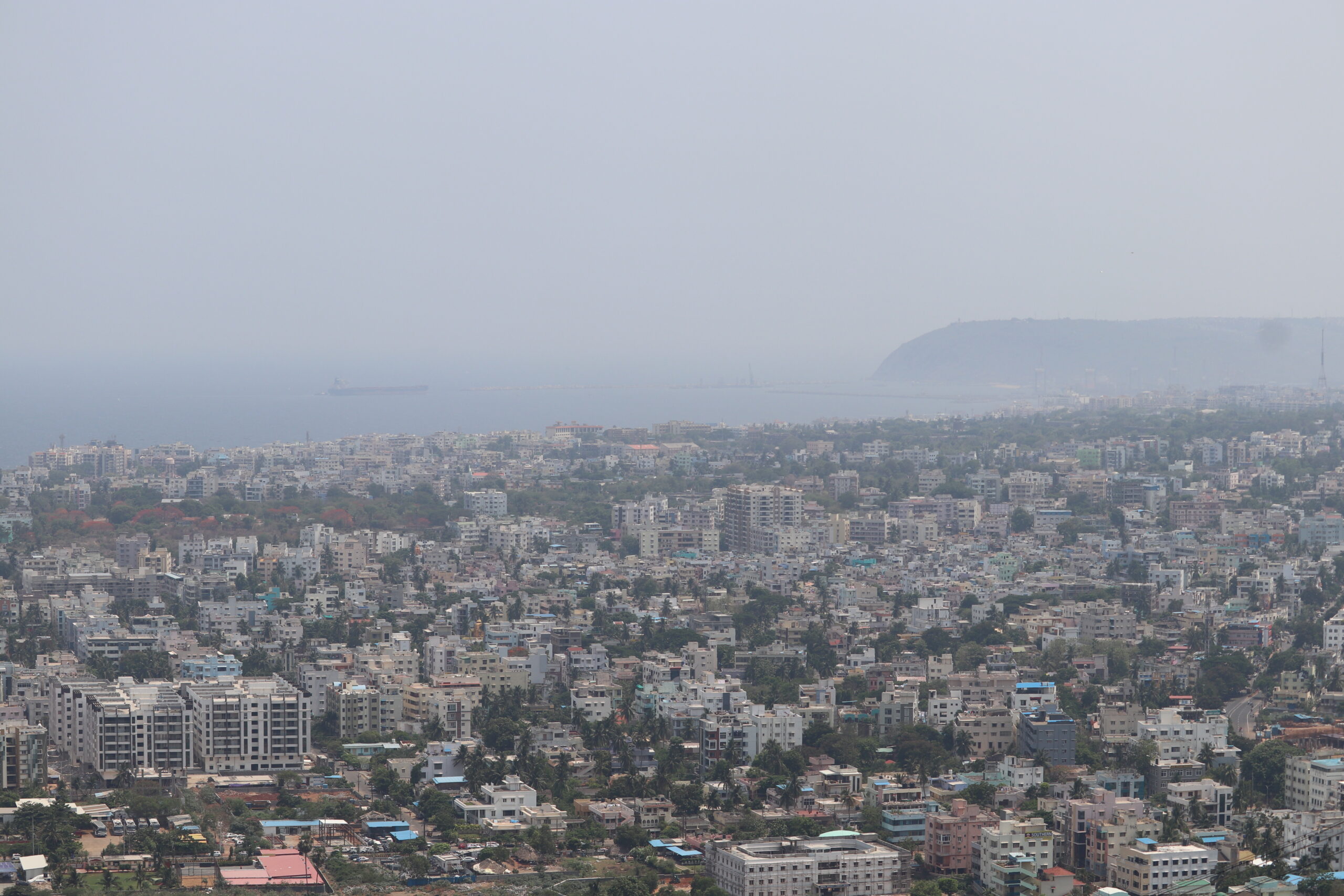
Andhra Pradesh is being positioned at the centre of India’s next big maritime push. Union Minister for Ports, Shipping and Waterways Sarbananda Sonowal, delivering the keynote address at the 31st CII Partnership Summit 2026 in Visakhapatnam on 12 November 2026, called for transforming the state into India’s Eastern Maritime Gateway, connecting the country’s eastern and central hinterland with international markets. The address, reported in a Press Information Bureau release issued the same day, set out a programme built on port development, shipbuilding, ship repair and logistics, and invited global shipbuilders, technology companies, equipment manufacturers, port operators and investors to take part in it.
The centrepiece of the announcement was a proposed greenfield shipbuilding cluster at Dugarajapatnam, in Andhra Pradesh’s Tirupati district. According to the Press Information Bureau, the project has received in-principle approval under the National Shipbuilding Mission, with an estimated investment of about Rs 30,000 crore and a targeted annual capacity of 1.2 million gross tonnage. A special-purpose vehicle involving the Andhra Pradesh Maritime Board and the Visakhapatnam Port Authority has been formed to take the project forward. The distinction matters: in-principle approval and the formation of a special-purpose vehicle are early institutional steps, not the completion of a shipyard. No construction start date or commissioning schedule was announced at the summit, and no funding breakdown for the proposed investment was given.
Sonowal framed the plan as part of a wider national maritime transformation. Under the leadership of Prime Minister Narendra Modi, he said, India is advancing that transformation through Sagarmala, Maritime India Vision 2030 and Maritime Amrit Kaal Vision 2047, with an estimated investment of Rs 80 lakh crore. Andhra Pradesh, he said, is an important partner in that national effort, and realising the vision requires close partnership between the Central Government, the Government of Andhra Pradesh and domestic and international investors. He expressed confidence that the state, under the leadership of Chief Minister N. Chandrababu Naidu and with the support of the Centre, will play a defining role in India’s maritime future and contribute significantly to the vision of Viksit Bharat 2047.
The minister also praised the Andhra Pradesh Chief Minister’s record, noting that just as Naidu had anticipated the digital economy in the 1990s and helped establish Hyderabad as a major technology destination, the state now has a historic opportunity in the maritime sector of the 21st century. That comparison was the thread running through the address: a state that once bet early on information technology is now being asked to bet early on shipbuilding, ports and the trade that flows through them.
A Rs 30,000-Crore Bet on Shipbuilding at Dugarajapatnam
The proposed Dugarajapatnam cluster is the largest single announcement in the minister’s address, and its scale is considerable. The project is planned across 3,488 acres, the largest land allocation among the five greenfield shipbuilding clusters shortlisted under the National Shipbuilding Mission, according to the Directorate General of Maritime Administration. The site lies along the Visakhapatnam-Chennai Industrial Corridor and has about 2.1 kilometres of waterfront, with plans envisaging water depths of 13 to 15 metres after dredging. The cluster is designed to add annual shipbuilding capacity of 1.2 million gross tonnage on India’s east coast, a figure that measures the size of the ships the yards could build, using gross tonnage, which is based on enclosed vessel volume.
The proposed cluster envisages an anchor shipyard alongside ship repair yards and heavy engineering facilities. The proposed marine infrastructure includes dry docks, ship lifts and outfitting berths. Under the Shipbuilding Development Scheme, at least one anchor yard must reach an annual capacity of 500,000 gross tonnage within 10 years of commissioning. That condition sets a clear test for the project: the cluster’s value will ultimately be judged not by the size of the announced investment, but by whether a working anchor yard of that scale is built and kept busy.
The institutional vehicle for the project is already in place. The Andhra Pradesh Maritime Board and the Visakhapatnam Port Authority have formed a 50:50 special-purpose vehicle, National Shipbuilding and Heavy Industries Park Andhra Pradesh Limited, known as NSHIP-AP. The company will handle investor engagement, land due diligence and discussions with prospective anchor shipyards. Its remit also covers shared infrastructure such as dredging, waterfront facilities, internal logistics and utilities, as well as land allotment for yards and ancillary units. The national scheme uses a Centre-state partnership to develop common infrastructure that can serve more than one shipyard or supplier, rather than leaving each yard to build everything on its own.
Even so, the project is at a preparatory stage. The revised techno-economic feasibility report is under review by the Directorate General of Maritime Administration, land acquisition is progressing, and discussions with prospective anchor shipyards remain open. An anchor investor has not yet been formally selected. The proposed Rs 30,000 crore is the envisaged investment for the cluster as a whole, and the ministry’s summit announcement gave no funding breakdown, no construction start date and no commissioning schedule. Readers should therefore treat the cluster as an announced proposal with in-principle approval, not as an operating industrial park.
Andhra Pradesh as India’s Eastern Maritime Gateway
The gateway idea is the organising theme of the minister’s address. Sonowal said Andhra Pradesh’s strategic advantages include its approximately 1,053-kilometre coastline along the Bay of Bengal, access to major international shipping routes and proximity to major Asian manufacturing and trading economies. Those strengths, he said, position the state to become India’s principal maritime gateway to ASEAN, East Asia and the wider Indo-Pacific. In his words at the summit: “If Hyderabad became Cyberabad, Andhra Pradesh today has the opportunity to become India’s Maritime Gateway to the East.”
The minister outlined three clear ambitions for the state. The first is to make Andhra Pradesh India’s leading destination for port-led development, in line with the Sapta Dhara roadmap for Viksit Bharat 2047. The second is to develop the state into a globally competitive shipbuilding and ship-repair hub. The third is to position Andhra Pradesh as India’s eastern maritime gateway to ASEAN, East Asia and the Indo-Pacific. Together, the three ambitions describe a state that does not merely handle cargo passing through its ports, but builds the ships, repairs them, makes the containers and runs the logistics around them.
The summit itself underlines the pitch to outside investors. The 31st CII Partnership Summit 2026 was held in Visakhapatnam on 12 and 13 November under the theme “Navigating the New World Order: Trade | Technology | Trust | Thought Leadership”, bringing together government officials, industry leaders and international participants to explore opportunities in trade, investment, technology and global partnerships. Sonowal used that platform to extend a direct invitation to global shipbuilders, technology companies, equipment manufacturers, port operators and investors to partner in the state’s maritime development programme.
The gateway argument also rests on geography beyond the coastline. The minister described Andhra Pradesh as a gateway for India’s eastern and central hinterland, meaning that cargo from landlocked and inland regions could move through the state’s ports to international markets. That hinterland connection is what turns a coastal state into a gateway: the ports matter because of the factories, mines, farms and cities behind them, and the shipbuilding cluster matters because it gives the gateway its own industrial base rather than leaving it as a transit point.
Four Greenfield Ports Under Construction
Shipbuilding is only one part of the plan. Four major greenfield port projects are under construction in Andhra Pradesh: Mulapeta, Machilipatnam, Ramayapatnam and Kakinada SCJ Port. According to the minister, they will significantly enhance the state’s cargo handling capacity and industrial potential once they are completed. They sit alongside the state’s established ports at Visakhapatnam, Gangavaram and Krishnapatnam, which already give Andhra Pradesh an operating maritime base.
The four projects matter because a shipbuilding cluster on its own does not make a maritime economy. Ports create the cargo flows that justify ship repair and logistics investment, and they create the industrial demand that fills new port-linked industrial areas. The minister presented the ports and the shipbuilding cluster as parts of a single programme: port development first creates capacity and trade, shipbuilding and repair then add manufacturing depth, and logistics ties the two together. Whether that sequence works in practice will depend on the pace at which the four greenfield ports move from construction to operation.
At Visakhapatnam Port itself, the minister said he had laid the foundation for projects worth nearly Rs 600 crore to further expand capacity, improve ease of doing business and generate employment. The port is the state’s flagship facility, and the new projects are aimed at building on its recent performance rather than starting from scratch. The emphasis on ease of doing business also signals that the government sees port efficiency, not just port capacity, as part of the pitch to shippers and investors.
Visakhapatnam Port’s Record Cargo Year
The case for Andhra Pradesh as a maritime hub is helped by the numbers from its largest port. Visakhapatnam Port handled a record 91.17 million tonnes of cargo in the financial year 2025-26, registering nearly 10 per cent growth and sustaining continuous growth for the fourth consecutive year, according to the Press Information Bureau release. That record gives the gateway pitch a factual anchor: the state is not only promising future capacity, but already moving more cargo through its principal port than ever before.
Record cargo volumes also explain why the government is willing to commit political capital to a shipbuilding cluster in the state. A port handling more than 91 million tonnes a year generates demand for ship repair, bunkering, logistics and ancillary services, and it gives prospective shipbuilders a reason to locate nearby. The minister’s argument is that this existing trade can be converted into manufacturing: ships that call at Visakhapatnam today could, in time, be built and repaired on the Andhra Pradesh coast.
Technology is part of that pitch as well. Sonowal said smart ports powered by artificial intelligence, predictive analytics, automation and digital logistics platforms would be central to improving efficiency and competitiveness, and that Andhra Pradesh has the opportunity to take a leading role in that transformation. The point connects the port programme to the state’s earlier technology story: just as Hyderabad’s rise rested on information technology, the maritime programme is being presented as resting on modern port technology and digital logistics.
The National Shipbuilding Mission and the Five-Cluster Plan
Dugarajapatnam is not a standalone project. It is one of five locations to receive in-principle approval under the National Shipbuilding Mission, alongside Thoothukudi in Tamil Nadu, Kucchadi in Gujarat, Dighi in Maharashtra and Kendrapara in Odisha. The five-cluster approach spreads the national shipbuilding push across India’s coastline rather than concentrating it in a single state, and it means Dugarajapatnam will be competing with, and measured against, the other four sites as they develop.
The mission sits within the wider national maritime framework the minister described: Sagarmala, Maritime India Vision 2030 and Maritime Amrit Kaal Vision 2047, with an estimated investment of Rs 80 lakh crore across the national maritime transformation. That national context is important for understanding the Dugarajapatnam announcement. The cluster is a state-level project, but it draws its policy support, its in-principle approval and its funding logic from a national programme aimed at strengthening domestic shipbuilding capacity and reducing dependence on foreign-built ships.
Two further schemes mentioned by the minister show how the government is trying to build the ecosystem around shipbuilding. Sonowal highlighted the Rs 10,000-crore Container Manufacturing Scheme to promote indigenous container production, and the proposed Rs 10,000-crore Coastal Cargo Promotion Scheme. Containers and coastal cargo are the unglamorous parts of maritime trade, but they determine whether Indian ports and Indian ships can compete on cost. A shipbuilding cluster that sits beside container manufacturing and a coastal cargo push is a more complete industrial proposition than a shipyard on its own.
What Happens Next at Dugarajapatnam
The next steps for the Dugarajapatnam cluster are administrative and commercial rather than ceremonial. The revised techno-economic feasibility report must clear its review by the Directorate General of Maritime Administration. Land acquisition, already progressing, must be completed for the 3,488-acre site. NSHIP-AP must convert its discussions with prospective anchor shipyards into a committed anchor investor, and the anchor yard must then be designed, financed and built to the scale the scheme requires. None of those steps has a published timetable in the material released around the summit.
That absence of dates is worth stating plainly. The announcement gives the public a destination, an estimated investment and a capacity target, but not a schedule. The honest way to follow this story is to watch for four milestones: completion of the feasibility review, completion of land acquisition, the naming of an anchor shipyard investor, and the start of construction. Until those milestones appear, the cluster remains a proposed project with in-principle approval, and the Rs 30,000-crore figure remains an envisaged investment rather than money spent.
The state and central governments also have to show that the shared infrastructure model works. NSHIP-AP’s job is to build the common facilities, dredging, waterfront, internal logistics and utilities, so that individual yards do not each have to fund them alone. If that model works, it lowers the entry cost for shipbuilders and suppliers. If it stalls, the anchor yard negotiation becomes harder, because the first investor would face the full cost of a greenfield site. The 50:50 joint venture structure, with the Andhra Pradesh Maritime Board and the Visakhapatnam Port Authority as partners, is designed to share that risk between the state and the Centre.
Why the East Coast Matters for Trade and Jobs
The wider significance of the announcement lies in where it sits on the map. India’s east coast faces the Bay of Bengal and the shipping lanes to Southeast Asia, East Asia and the Indo-Pacific, some of the fastest-growing trade routes in the world. A shipbuilding and port hub in Andhra Pradesh would put Indian yards closer to those routes, and closer to the Asian manufacturing economies whose goods move along them. That is the strategic logic behind the gateway language: the state is not simply adding port capacity, it is positioning itself on the trade routes that will carry a growing share of world commerce.
There is also a domestic logic. Shipbuilding is a labour-intensive, supplier-heavy industry: a single yard supports steel fabrication, equipment manufacturing, electrical work, painting, logistics and repair services. A cluster of the size proposed at Dugarajapatnam, if it is built, would create demand across that supply chain in Andhra Pradesh and in the hinterland states whose goods and workers feed into it. The minister linked the port projects at Visakhapatnam to employment generation, and the same argument applies, on a larger scale, to the shipbuilding cluster.
For now, the story is an announcement with a clear direction and an unfinished timetable. The Press Information Bureau release of 12 November 2026 records the vision, the in-principle approval, the estimated investment, the capacity target and the special-purpose vehicle. The reporting that followed confirmed those details and added the site’s scale, the joint venture’s name and the preparatory state of the project. What comes next will be decided by feasibility reviews, land acquisition and investor negotiations, and those are the developments to watch before the Eastern Maritime Gateway moves from a summit address to a working shipbuilding coast.
Sources
USN reviewed reporting from multiple outlets for this story. Read more from PIB, ThePrint and Maritime Gateway.