

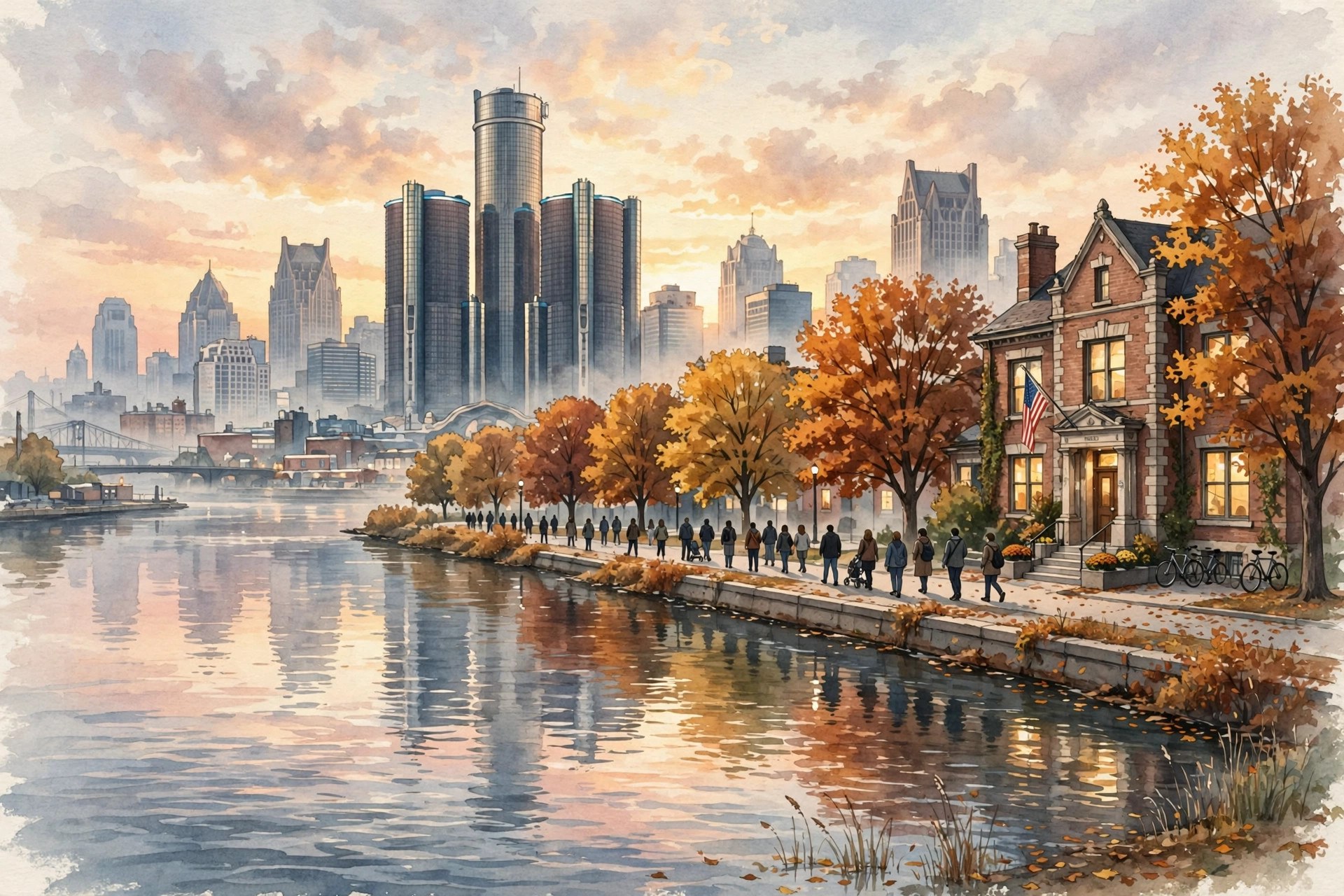
Detroit went into Election Day on November 3, 2026, with an expectation that set it apart from many past midterms: city officials anticipated turnout of around 45 percent, a figure that, if reached, could represent a midterm record for the city. All 156 polling places were open, according to reporting that cited City Clerk Janice Winfrey, and the city prepared for a day in which national stakes, household costs and local concerns would bring voters out in numbers more often associated with presidential elections than with midterms. This article describes that expectation and the Election Day operation, without presenting a final turnout percentage or a local race winner, neither of which is verified in the material available for this story.
Midterm elections in the United States usually draw fewer voters than presidential elections. Voters are less likely to turn out when the presidency is not on the ballot, when campaigns receive less national attention, and when the sense of urgency feels lower. That is why a projected 45 percent turnout in Detroit attracted attention. It suggested that voters in Michigan’s largest city saw the 2026 election as unusually consequential, and that local election officials expected participation to reflect that sense of importance. Whether the final certified figure ultimately matches the anticipation will be known only after ballots are counted, checked and certified, but the anticipation itself tells a story about how Detroiters viewed this election.
City Clerk Janice Winfrey’s office was at the centre of the Election Day operation. Running an election in a city the size of Detroit involves recruiting and training poll workers, testing voting equipment, preparing ballots, securing polling places, coordinating with the county and state, and ensuring that voters who need assistance can receive it. Opening all 156 polling places is itself a logistical achievement, because each location requires staffing, supplies, accessibility arrangements and a plan for handling problems during the day. Voters who arrived to find their usual polling place open, staffed and functioning would have experienced the visible end of weeks of preparation that most voters never see.
What drove Detroiters to vote in such anticipated numbers? The national picture provides part of the answer. Across the country, voters told pollsters that the cost of living was a dominant concern. Exit polling reported by Reuters and SSRS found that around nine in ten voters called the cost of living crucial or a major factor. In Detroit, that concern is not abstract. It shows up in grocery prices, rent, utility bills, transportation costs and the price of filling a car. For households living on tight budgets, small increases in everyday costs can force difficult choices, and elections become a way to express frustration or hope about whether government can ease those pressures.
Fuel costs were a particularly visible part of that story in 2026. Reporting on the election period noted Election Day petrol prices around 4.15 dollars per gallon, described as a record for an election day, with diesel around 6.29 dollars. Analysts linked part of that pressure to the war involving Iran, with Moody’s cited as estimating that the conflict cost a typical household around 2,147 dollars. In a city built around cars, where many workers drive to jobs, schools and health care, fuel prices are not a distant economic indicator. They are a daily expense, and they shape how voters judge national policy on energy, foreign affairs and the economy. A voter filling a tank in Detroit on Election Day would have had a tangible reminder of those issues before casting a ballot.
National stakes also mattered. The 2026 midterms decided control of Congress, governorships and state offices across the country, and Michigan voters were choosing in contests that would affect federal policy on spending, health care, education and foreign affairs. In Detroit, where federal funding supports housing, infrastructure, public health and community programmes, the composition of Congress is not a remote question. It affects how much money flows to cities, what conditions are attached to that money, and which priorities receive attention in Washington. Voters who might otherwise sit out a midterm may have turned out because they understood that connection.
Local concerns added another layer. Detroit has its own history, challenges and civic identity, shaped by its industrial past, its population changes, its neighbourhoods and its efforts to rebuild and attract investment. Local elections, ballot measures and city services affect roads, water, public safety, schools and economic development in ways that residents experience directly. Even when national races dominate television coverage, local voters often vote with their neighbourhood in mind: the condition of their street, the safety of their block, the quality of their child’s school, and the availability of jobs and services nearby. A high-turnout election in Detroit is therefore likely to reflect a mix of national anger or enthusiasm and local attachment to the city itself.
The mechanics of Election Day in Detroit also deserve attention, because turnout is not only about enthusiasm. It is about access. Voters need to know where to vote, to be able to reach their polling place, to have time off work or childcare arrangements, and to feel confident that their ballot will be counted. Cities that open all their polling places, staff them adequately and communicate clearly about locations and hours remove barriers that can suppress turnout, particularly for older voters, voters with disabilities, voters without cars and voters working long shifts. Detroit’s plan to open all 156 locations was therefore not just a statistic; it was a statement about access.
Detroit voter turnout record midterm and why 45 percent would matter
Why would 45 percent matter as a possible midterm record? Because it would show that a city often described in terms of low turnout or disengagement can, under the right conditions, mobilise a large share of its electorate in a non-presidential year. That has implications beyond a single election. Political parties, candidates and civic organisations pay attention to where voters turn out, because turnout shapes who campaigns in a city, what issues receive attention and how resources are allocated. A city that votes in large numbers is harder to ignore. A city that votes in smaller numbers risks being treated as less influential, even when its needs are great.
It is important to be precise about what the 45 percent figure is. It was an anticipated figure, reported before or as voting was under way, not a final certified result. Final turnout is calculated after all valid ballots are counted, including postal ballots that arrive by the deadline, ballots cast during early voting, and ballots that require additional verification. That process takes time, and the final percentage can differ from early expectations. Reporting a final figure before certification would be misleading, and this article does not do so. What can be said is that officials anticipated a level of participation that would be notable for a midterm, and that the city’s Election Day operation was built around that expectation.
Early voting and postal voting also form part of the modern turnout story, even when Election Day itself draws the most attention. Many voters now cast ballots before Election Day, either by mail or in person, which spreads the work of election administration over days or weeks and reduces pressure on polling places. Detroit’s Election Day operation, with all polling places open, existed alongside those earlier voting options. The combination of early, postal and Election Day voting means that turnout is best understood as the sum of a longer voting period, not only as the number of people who appear in person on a single Tuesday. Election officials must reconcile those different streams, check signatures where required, and ensure that no voter is counted twice, which is part of why certification takes time.
For poll workers, Election Day in a high-turnout midterm is demanding work. Workers arrive early, set up equipment, check in voters, answer questions about ballots and precincts, assist voters who need help, and manage lines during busy periods. They also handle problems: voters at the wrong location, voters whose registration needs checking, equipment issues and voters who arrive near closing time. The quality of that work affects voters’ experience and their confidence in the result. A city that anticipates high turnout must therefore invest in training and support for those workers, because a single polling place that struggles can affect hundreds of voters.
Detroit’s experience also reflects a broader Michigan story. Michigan is a closely contested state in national elections, and its cities, suburbs and rural areas often vote differently. Turnout in Detroit can affect statewide margins, because the city represents a large concentration of voters. Candidates for statewide and federal office therefore pay close attention to Detroit, campaigning there, opening offices, and seeking support from community leaders, unions, churches and civic groups. A high-turnout Detroit does not by itself decide a statewide race, but it changes the arithmetic for every candidate who needs votes from across the state.
Community organisations play a role that is easy to overlook in national coverage. Churches, neighbourhood associations, labour groups, student organisations and non-partisan civic groups often encourage registration, explain voting procedures, offer rides to polling places and remind neighbours to vote. In Detroit, where community ties are strong in many neighbourhoods, that grassroots work can be as important as television advertising in turning anticipation into actual votes. It also helps explain why turnout can vary between neighbourhoods, even within the same city, depending on organisation, outreach and local enthusiasm.
There is also a question of trust. Voters are more likely to turn out when they believe their vote will be counted fairly and that election officials will run a transparent process. Detroit, like other large cities, has faced scrutiny and misinformation about elections in recent years, and officials have responded by emphasising procedures, observation, and public reporting of results. Opening all polling places, staffing them properly and communicating about the count are part of building that trust. When voters see a well-run Election Day, they are more likely to return in future elections, which helps sustain turnout over time.
Looking beyond Detroit, the city’s anticipated turnout fits a national pattern in 2026 in which many voters treated the midterms as unusually important. National results included Democratic Senate flips in North Carolina, South Carolina, Texas, Ohio, Kansas and Iowa, and projections of a Democratic House majority, although the House had not been formally called by the Associated Press in early November 4 reporting. Those national results were driven by many local stories like Detroit’s: cities and communities where voters turned out because of costs, national policy and local concerns. Detroit’s story is therefore both local and national — a city election that reflects wider American discontent and engagement.
What happens next in Detroit will be determined by the certified count, not by anticipation. Election officials will finish counting, reconcile ballots, canvass results and publish a final turnout figure. Analysts will then compare that figure with past midterms to determine whether a record was set, and by how much. They will also examine turnout by neighbourhood, by age group and by voting method, to understand who voted and why. Those details will matter for future campaigns and for civic organisations planning their outreach for the next election.
For now, the verified story is clear in its essentials: Detroit anticipated around 45 percent turnout, a possible midterm record; all 156 polling places were open; City Clerk Janice Winfrey was cited in reporting on the city’s preparations; and voters were motivated by a combination of cost-of-living pressures, fuel costs linked in part to the Iran war, national stakes and local concerns. That combination, rather than any single issue, is the most plausible explanation for why officials expected such strong participation. The final numbers, when certified, will complete the story, but the anticipation itself already shows a city that took this midterm seriously.
Sources
USN reviewed reporting from multiple outlets for this story. Read more from USA Today, Gulf News and Moneycontrol.