

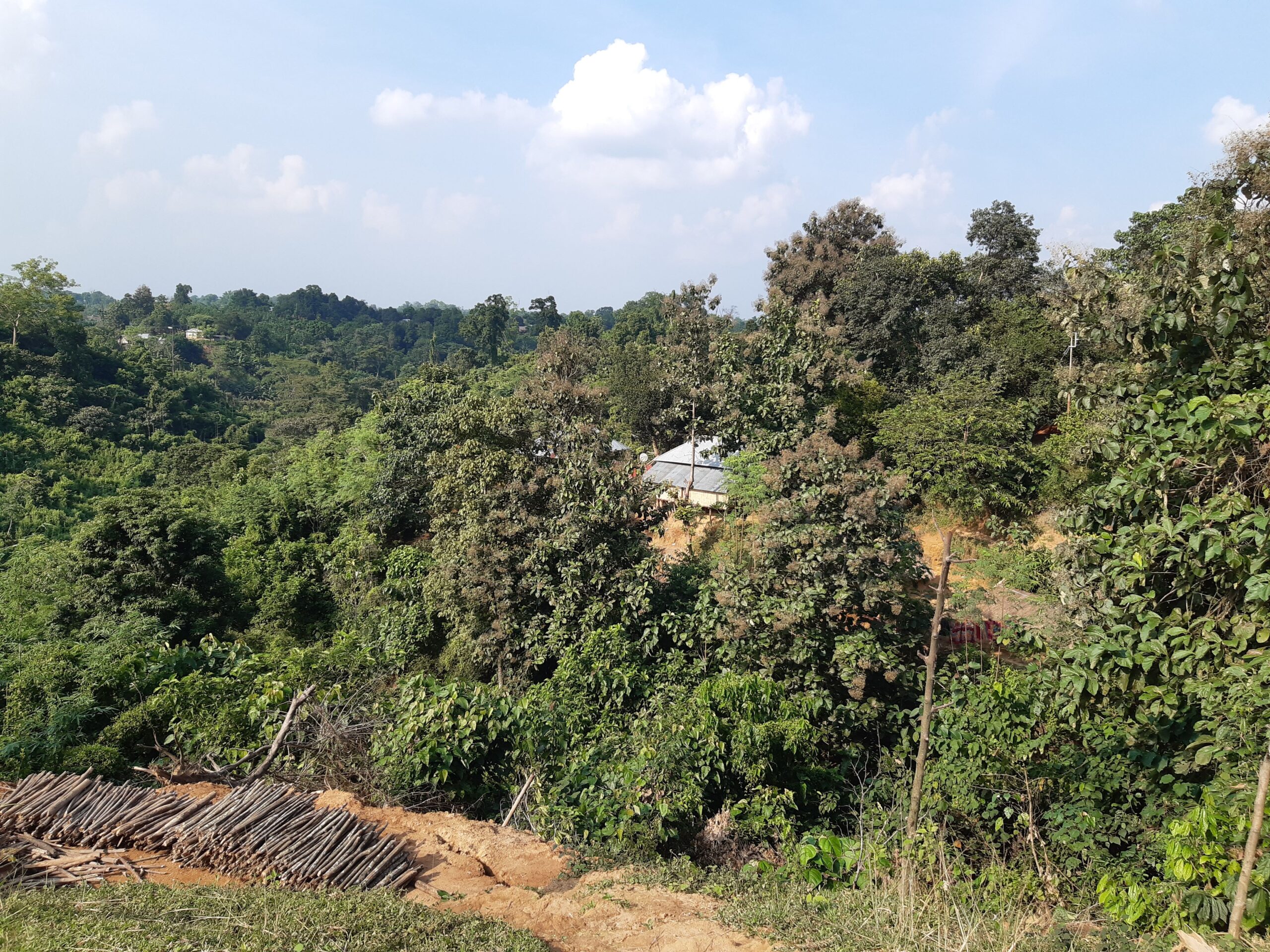
India has taken the Forest Rights Act, 2006, fully online. The Ministry of Tribal Affairs has launched a National FRA Digital Platform that will carry a forest rights claim through every stage of its journey, from the day a villager files it before the Gram Sabha to the day a digitally signed title reaches the claimant. The launch took place during Janjatiya Gaurav Pakhwada, the fortnight of tribal pride programmes observed across the country from 1 to 15 November 2026, and was set out in detail in a backgrounder issued by the Press Information Bureau on 16 November 2026.
The platform arrives with a substantial record behind it. As on 31 August 2026, about 54 lakh claims had been received under the Act. Of those, 43.56 lakh, or 80.64 per cent, had been disposed of, and 25.42 lakh titles had been distributed, covering nearly 238 lakh acres of forest land. The latest state-wise data shows 24.18 lakh individual titles and 1.24 lakh community titles. The figures were also corroborated in Parliament: in a written reply in the Lok Sabha on 23 July 2026, the Ministry of Tribal Affairs reported 25,42,359 titles distributed as on 30 June 2026, including 8,46,958 titles issued in the three years from 30 June 2023.
The law at the centre of this story is formally the Scheduled Tribes and Other Traditional Forest Dwellers (Recognition of Forest Rights) Act, 2006. It received the President’s assent on 29 December 2006 and came into force on 31 December 2007, with the Rules notified on 1 January 2008. Its purpose was to correct a historical gap. For generations, forest-dwelling communities lived in and depended on forests for their homes and livelihood, yet their rights over the land they used went unrecorded when state forests were consolidated during the colonial period and after independence. The Act gives those rights legal recognition, and it does so for two groups: forest-dwelling Scheduled Tribes, and other traditional forest dwellers who have mainly lived in forests and depended on them for at least three generations, or 75 years, before 13 December 2005.
The Ministry of Tribal Affairs is the nodal agency for the Act, while state governments and Union Territory administrations carry out the work on the ground. The Act is being implemented in 20 states and in the Union Territory of Jammu and Kashmir. That division of responsibility matters, because the new digital platform can only be as effective as the state machinery that feeds it.
What the National FRA Digital Platform actually does
The platform is designed to replace a paper trail that has, for nearly two decades, moved slowly between village assemblies, sub-divisional offices and district headquarters. Under the new system, a claim begins with its submission before the Gram Sabha, the assembly of all adult members of a village, and ends with the issue of a digitally signed title. Every stage in between, including verification, mapping of the land, the resolutions of the committees that decide the claim, and the final decision, is meant to be recorded on the same system.
That matters for two reasons. The first is transparency. A claimant who can see where a file stands is in a stronger position than one who must travel repeatedly to a block or district office to ask. The second is monitoring. The ministry compiles monthly progress reports sent by states and Union Territories, and a single national system gives it a clearer picture of where claims are stuck, which districts are disposing of them quickly, and where rejections are clustering. District Collectors and District Magistrates have been advised to dispose of pending claims on time, and the ministry holds regular review meetings with state tribal welfare departments. Grievances received by the ministry are sent to the states and Union Territories concerned for action.
The platform also has an unusual development history. The ministry had posed a problem statement on an artificial intelligence-powered FRA Atlas and a WebGIS-based decision support system at the Smart India Hackathon 2025. In January 2026, it said it had become the first ministry in the Government of India to bring all five finalist teams from that competition, rather than only the winner, into a structured post-hackathon programme, working alongside technical experts from IIT Delhi and the National Informatics Centre to co-develop a single national platform. Whether all of the components outlined at that stage, including AI-powered digital archives, an FRA Atlas for spatial visualisation and a claimant-facing chatbot, are live on the platform from the start has not been spelled out in the ministry’s backgrounder, and that is something to watch as the rollout proceeds.
Forest rights titles: the numbers behind the 25.42 lakh figure
The headline figure, 25.42 lakh titles over nearly 238 lakh acres, deserves a closer look, because it conceals a sharp imbalance. Of the 25,42,369 titles distributed as on 31 August 2026, 24,18,207 were individual titles and only 1,24,162 were community titles. In other words, fewer than one in twenty titles belongs to a village as a whole rather than to a single family. That matters because community rights, over grazing land, fishing grounds, water bodies and minor forest produce, and community forest resource rights, over the forest a village has traditionally managed, are the part of the Act that protects shared livelihoods and gives the Gram Sabha a legal role in conservation. Individual titles secure a family’s home and field; community titles secure the commons.
The state-wise picture is equally concentrated. Five states account for the bulk of the titles distributed. Chhattisgarh leads with 5,34,068 titles, including 52,636 community titles, the largest community figure in the country. Odisha follows with 4,73,936, Madhya Pradesh with 2,89,461, Telangana with 2,31,456 and Andhra Pradesh with 2,28,489. Together, those five states account for roughly seven in ten of all titles issued. Chhattisgarh’s lead on community titles is notable: its 52,636 community titles are more than five times Odisha’s 9,432, the next highest figure, even though Odisha is second overall. Madhya Pradesh, with 28,754 community titles, is the only other state in five figures on that count.
The disposal rate tells a similar story of progress with a long tail. Of the roughly 54 lakh claims received, 43.56 lakh had been disposed of by 31 August 2026, a rate of 80.64 per cent. But disposal is not the same as approval. About 10.45 lakh claims were still pending, according to figures discussed at a regional review conference in Srinagar on 23 October 2026, and around 18.13 lakh claims have been rejected across the country. The gap between claims received and titles issued, roughly 54 lakh against 25.42 lakh, is therefore made up of both rejections and cases still in the pipeline. The ministry has stressed that every rejection must come with an order giving reasons, and that the order must be sent to the claimant so that the right of appeal is preserved. That rule is easy to state and harder to enforce across thousands of village-level committees, which is one reason the digital platform’s audit trail could matter.
How a claim travels from the Gram Sabha to a signed title
The process begins in the village. The Gram Sabha, the assembly of all adult members of a village, with the full and unrestricted participation of women, elects a Forest Rights Committee of ten to fifteen members. At least two-thirds of the committee’s members must be from Scheduled Tribes, and at least one-third must be women. The committee helps the Gram Sabha receive and verify claims. The Gram Sabha receives the claims, verifies them and maps the land, and then passes a resolution.
That resolution goes to the Sub-Divisional Level Committee, which examines it and prepares the record of forest rights, the list of rights proposed for recognition. It sends this to the District Level Committee, whose decision is final and binding. Each of these committees includes officers of the state’s revenue, forest and tribal affairs departments. They also include three members of Panchayati Raj Institutions, two of whom are Scheduled Tribe members and at least one of whom is a woman. A title, once issued, is signed by three district officers for the state government: the Divisional Forest Officer, the District Tribal Welfare Officer and the District Collector. The holder gets a certified copy, and for a community title, the Gram Sabha gets it.
A person who disagrees with a Gram Sabha resolution or a sub-divisional decision can petition the next committee within 60 days. Under the Forest Rights Rules, the committee may allow up to 30 more days. Once titles are issued, the rights are entered in revenue and forest records. The Forest Rights Rules have required this since 2008, and a 2012 amendment set a time limit of three months. A State Level Monitoring Committee, chaired by the Chief Secretary and required to meet at least once in three months, monitors the process.
The design is deliberately bottom-up: the village assembly starts the process, and the district committee, not a distant office, takes the final decision. But the design also depends on the village assembly functioning as intended, with women participating fully and the committee’s composition rules honoured. In practice, the quality of Gram Sabha meetings varies widely, and that variation is one reason implementation has been uneven across states. The digital platform does not change who decides a claim, but it does create a record of each step, which makes it harder for a claim to disappear without a trace.
What the law protects, and what it does not
The Act recognises three kinds of title. An individual title covers the land a family lives on or farms, up to four hectares, and only the area actually occupied. A married couple receives it in both their names; in the case of a single-headed household, it is registered in the name of the single head. A community forest rights title covers what a village uses together, such as grazing, fishing, water bodies and minor forest produce, and the community holds the title, with any conditions written on it. A community forest resource title gives the Gram Sabha or community the right to protect, regenerate, conserve and manage the forest within its customary boundary, the forest the village has traditionally had access to.
Forest dwellers own the minor forest produce they have traditionally collected, such as bamboo, honey, lac, tendu leaves and medicinal plants, and they may collect, use and dispose of it. Particularly Vulnerable Tribal Groups have rights over their habitat, the area they have customarily lived in, including in reserved and protected forests. The ministry issued guidelines on habitat rights on 5 January 2026, and habitat rights have so far been granted to 11 Particularly Vulnerable Tribal Groups in three states: Odisha, Chhattisgarh and Madhya Pradesh. That is a small number against the 75 Particularly Vulnerable Tribal Groups recognised across the country, and extending habitat rights further is one of the clearest tests of how seriously the law’s most ambitious promise is being taken.
The Act also sets limits. Rights apply to forest land occupied before 13 December 2005. For land held for a home or for cultivation, the right covers only the area actually occupied, up to four hectares. A title passes to the holder’s heirs, but it cannot be sold or transferred. That non-transferability is a deliberate safeguard against distress sales and land alienation, but it also means a title cannot be used as collateral in the ordinary way, which is why linking title holders to credit and welfare schemes has required separate government directions. No member of either covered group can be evicted or removed from the forest land they occupy until the recognition and verification of their rights is complete. The central government also provides for small areas of forest land, each under one hectare, to be used for government facilities when the Gram Sabha recommends it, including schools, hospitals, anganwadis, fair price shops, drinking water, minor irrigation canals, roads and community centres.
The rights cover forest land of every kind, including reserved and protected forests, sanctuaries and national parks. That breadth has always been the most contested part of the law. Conservationists have worried that recognising rights inside protected areas could weaken wildlife protection, while tribal rights advocates have argued that the Act’s conservation provisions, which empower forest rights holders and the Gram Sabha to protect wildlife, forests, biodiversity and water sources, make communities partners in conservation rather than its opponents. Nearly twenty years on, that tension has not been resolved, and it plays out state by state, forest by forest.
Why the leading states lead, and where the gaps remain
The concentration of titles in five states reflects where the forest-dwelling tribal population is largest, but it also reflects administrative effort. Chhattisgarh, Odisha and Madhya Pradesh have the deepest tribal belts in central India, and their state governments have built the machinery to process claims at scale. Telangana and Andhra Pradesh have invested in linking their forest rights records to revenue and banking systems: Andhra Pradesh links its Giribhumi FRA portal with the state’s revenue and banking systems, and Telangana’s online title system is integrated with the BhuBharathi revenue portal. Those integrations are exactly the kind of plumbing the national platform is meant to generalise.
The gaps are equally visible. More than 10 lakh claims remain pending, and the ministry’s own review process has had to push states towards time-bound action. In September and October 2026, the ministry held three regional review conferences, in Bengaluru, Kolkata and Srinagar, with 19 states and the Union Territory of Jammu and Kashmir. They reviewed progress and called for time-bound action plans. The Srinagar conference asked states and Union Territories to prepare district-wise action plans identifying the stage and cause of delays in each pending claim, along with the authority responsible for resolving it. That is an admission that delay has causes that differ from district to district, and that a national platform alone will not fix them.
The community rights gap is the most persistent. Community titles make up barely 5 per cent of all titles, and community forest resource rights, the strongest form of community control, have been recognised far more slowly than individual titles. Part of the reason is procedural: a community claim requires mapping a customary boundary, which is harder than measuring a family’s field, and it requires a Gram Sabha that is confident enough to assert a collective right. Part of it is institutional: forest departments have historically been more comfortable dealing with individual cultivators than with village assemblies claiming management rights over forests. The ministry’s backgrounder notes that a joint communication of July 2026 allows community forest resource management plans to be aligned with forest department working plans, while stating that the Gram Sabha’s authority remains central. How that balance works in practice will determine whether community rights catch up.
There is also a digital divide question that the platform itself raises. A system that moves claims online assumes connectivity, devices and digital literacy in some of the most remote villages in the country. The ministry has pointed to the FRA mobile application and to the portal demonstrations given to states. But the claimant-facing side of the system will only help if it works in local languages and on basic phones. The backgrounder does not give figures for how many claims have already been processed through the digital system, or how many villages have been onboarded, so the scale of the rollout is, for now, unquantified.
From paper titles to bank loans: linking rights to livelihoods
A title is a legal document, but its value to a family depends on what it unlocks. The ministry’s backgrounder makes that link explicit: entering titles into revenue records makes it easier for the owners to get benefits under PM-KISAN and other agriculture, fisheries and livelihood schemes. That is why the June 2026 advisory to expedite the incorporation of the record of forest rights into revenue and forest records matters as much as the platform itself. A title that sits in a file but not in the revenue record cannot be used to claim a crop loan, a Kisan Credit Card, crop insurance or a direct benefit transfer.
Some states have already built those links. In Maharashtra, a government resolution of 10 July 2026 provides separate village forms, 7E for the record of rights into revenue records and 12E for the crop register, for individual forest rights holders. These forms help them obtain crop loans, Kisan Credit Cards, crop insurance and direct benefit transfers. Andhra Pradesh’s Giribhumi portal links forest rights records with the state’s revenue and banking systems. Telangana’s integration with BhuBharathi does the same. These are state-level innovations, and the national platform’s test will be whether it spreads them or merely records them.
The livelihood link extends beyond farming. Forest dwellers own the minor forest produce they have traditionally collected, and the Pradhan Mantri Janjatiya Vikas Mission works on improving the value of that produce, promoting community-owned enterprises and expanding access to domestic and digital markets. As of March 2026, 4,172 Van Dhan Vikas Kendras had been sanctioned, covering 12.48 lakh beneficiaries, and according to data as of 31 July 2026, 2,911 of these centres were functional, with reported sales of around 168 crore rupees. A title that secures the right to collect tendu leaves or honey is worth more when there is a functioning centre to buy, process and sell them. The ministry funds dedicated FRA cells at state and district levels for two years under the Dharti Aaba Janjatiya Gram Utkarsh Abhiyan, the programme launched on 2 October 2024 to close infrastructure gaps in tribal villages, and provides 15 lakh rupees for each community forest resource management plan prepared by a Gram Sabha, plus 1 lakh rupees for technical support.
Free courses on the Forest Rights Act are available on iGOT, the online learning platform of Mission Karmayogi, and states are organising legal literacy camps on forest rights. That training matters because the Act is unusually dependent on villagers knowing their rights and on officials knowing the procedure. A platform can digitise a process, but it cannot substitute for a Gram Sabha that understands what it is being asked to decide.
What happens next, and what to watch
The launch of the National FRA Digital Platform is best understood as the start of a second phase for the Act, not its completion. The first phase, from 2008 to the present, established the legal framework and distributed 25.42 lakh titles. The second phase has three stated priorities, set out in the ministry’s own conclusion: entering recognised rights in revenue and forest records, linking forest rights holders to livelihood schemes, and supporting Gram Sabhas to manage community forest resources. The platform is meant to serve all three, but the hard work sits with the states, which must link their records to the portal, dispose of the pending claims, and make the district committees meet on time.
There are clear markers to watch in the coming months. The first is the pending claims figure: whether the roughly 10.45 lakh pending claims begin to fall, and whether the district-wise action plans sought at the Srinagar review conference are published and followed. The second is the community share: whether community titles and community forest resource rights grow faster than individual titles, and whether habitat rights extend beyond the 11 Particularly Vulnerable Tribal Groups that have received them so far. The third is the revenue-record link: how many of the 25.42 lakh titles are actually entered in revenue and forest records, and how many title holders are receiving PM-KISAN, crop loans and other benefits as a result. The fourth is the platform itself: how many claims are filed and decided through it, in how many states, and whether the claimant-facing tools work in the languages and on the devices that forest villages actually use.
The sceptical case is straightforward, and it deserves to be stated plainly. A digital platform can make a slow process faster, but it cannot by itself make an unwilling administration act, resolve the tension between conservation and community rights, or put a Gram Sabha on its feet. The high rejection figure, around 18.13 lakh claims, and the slow pace of community rights recognition are reminders that the Act’s promise has always depended on implementation, not legislation. The supportive case is that the direction of travel is now measurable: titles are counted, published and debated in Parliament, regional review conferences are naming delays district by district, and state innovations such as Maharashtra’s village forms and Andhra Pradesh’s revenue-linked portal are being held up as models. For a law whose founding complaint was that forest dwellers’ rights went unrecorded, a system built around recording every step is, at least, the right kind of answer. The judgement will come from the next set of numbers: fewer pending claims, more community titles, and more titles that actually open the door to a loan, a pension or a market.
Sources
USN reviewed reporting from multiple outlets for this story. Read more from Press Information Bureau, DD India and eGov Magazine.