

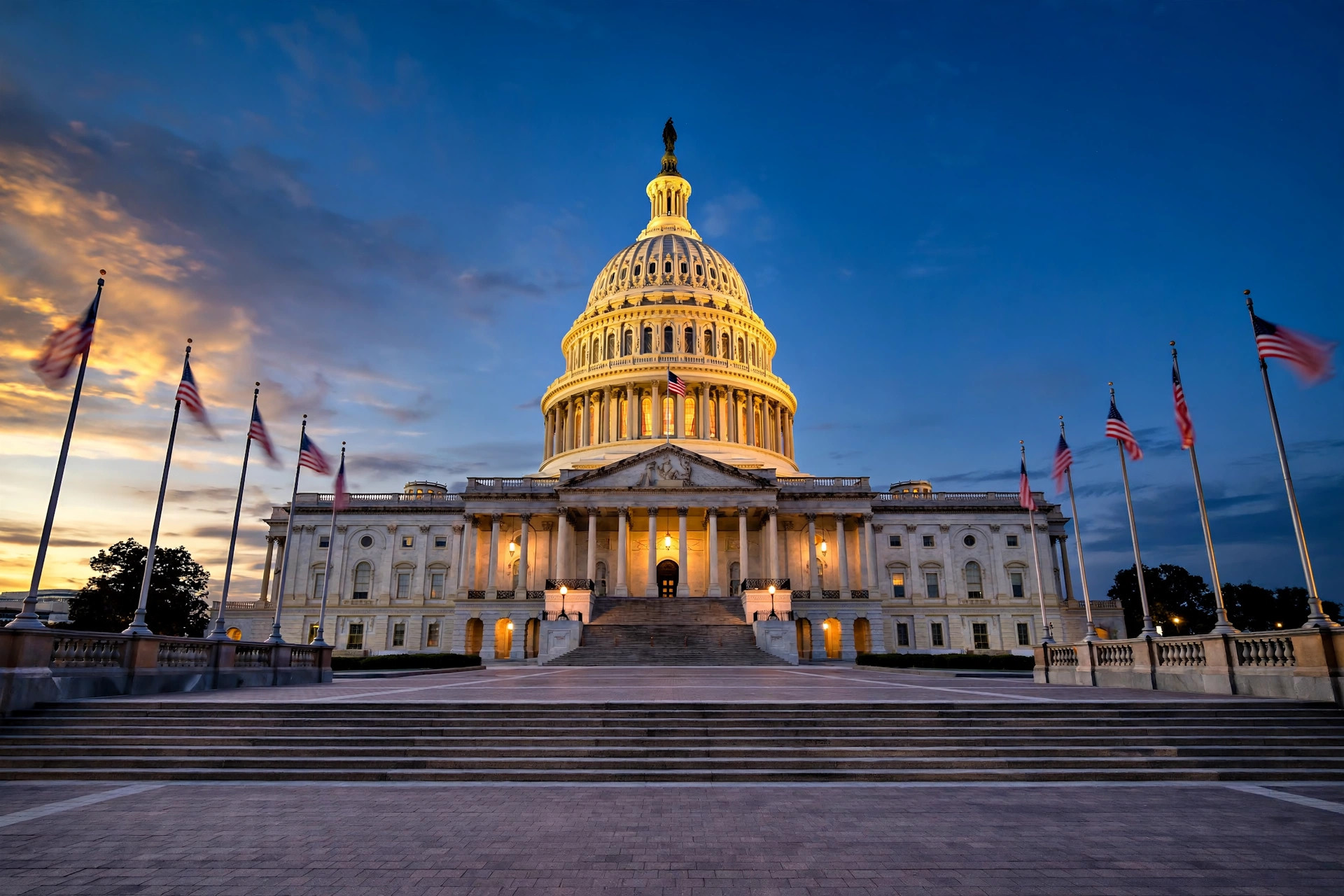
House Democrats have secured at least 259 seats in the next Congress, the party’s best result in a House election in decades and its largest majority since 1990. The milestone was reached on Tuesday, 24 November 2026, when Democrat Victoria Broderick defeated Republican Representative Scott DesJarlais in Tennessee, two days after Democrat Chuck Hubbard’s victory over Republican Representative Virginia Foxx in North Carolina had carried the party to 258 seats. The result extends a sweeping Democratic victory in the midterm elections of 3 November and sets up a period of divided government, with Democrats due to control both chambers of Congress while a Republican president remains in the White House.
The scale of the win matters because it changes how the House will work. A majority of 259 seats in the 435-member chamber gives the incoming Democratic leadership far more room to lose votes from its own side and still pass legislation than the narrow Republican majorities of the past two years allowed. It also raises the expectations placed on the party. Voters who delivered the majority did so, according to reporting on the election, largely because they were angry about high prices, worried about the cost of health care and concerned about corruption. Democratic leaders now have to show that a large majority can turn those concerns into laws, investigations and results before the next election cycle begins to dominate Washington.
Three House races were still outstanding when the 259-seat total was reached, with one in Minnesota and two in Louisiana heading to a runoff on 12 December. That means the final Democratic total could still rise. Republicans, by contrast, will hold at least 173 seats, one of their lowest totals in decades. The new Congress, the 120th, convenes in January 2027, and the speaker election is scheduled for 3 January.
How the 259-seat total was reached
The Democratic total built up over nearly three weeks of counting, recounts and late calls after election day. Democrats gained 45 House seats in the results counted so far, five more than the 40 seats they gained in the midterm elections of 2018, during President Donald Trump’s first term. The gains were spread widely, reaching from states that usually vote Republican to the Midwest and the East Coast, a breadth that surprised many analysts who had expected a narrower Democratic victory.
The Associated Press, which tracks the race calls, put the Democratic total at at least 258 seats on Sunday, after the Hubbard call. CNN, reporting the same Hubbard victory, put the figure at at least 259, apparently counting a Minnesota race in which Democrats lead but which has not yet been formally called. On Tuesday, the Associated Press itself moved to 259 when it called the Tennessee race for Broderick, resolving the difference. The Minnesota race remains uncalled, with a recount scheduled to begin on 30 November. On either count, the Democratic majority is the largest the party has won since the 1990 election. It is larger than the 258 seats Democrats won in 1992, the election that first brought Bill Clinton to the presidency, and larger than the 257 seats Democrats won in 2008, the year Barack Obama was first elected president.
The Senate picture reinforces the scale of the Democratic victory. Democrats will hold 56 of the 100 Senate seats in the new Congress, their largest Senate advantage in more than a decade. Taken together, the two results give Democrats control of the legislative branch for the first time in this presidency, while the White House stays in Republican hands.
The largest House majority since 1990, in numbers
The numbers tell the story of a wave election. A party needs 218 seats for a majority in the House. At 259 seats, Democrats hold 41 more than that threshold, which means the incoming speaker, expected to be Hakeem Jeffries of New York, could lose dozens of Democratic votes on a bill and still pass it without Republican support. That is a sharp contrast with the outgoing Republican majority, where Speaker Mike Johnson of Louisiana spent two years managing a margin so thin that a handful of members could block or reshape the party’s agenda.
For Republicans, the fall to at least 173 seats is a historic low by recent standards. The party won 247 House seats in the 2014 election and 230 in 1994, the year Newt Gingrich led Republicans back to a House majority. The current total is far below both of those marks, and it leaves Republicans with limited power to stop Democratic bills in the House, although they can still use the Senate filibuster, the courts and the presidential veto as checks once Democrats take over.
The size of the majority also matters inside the Democratic caucus itself. A large majority contains many different kinds of Democrats, from progressives who want rapid and far-reaching change to centrists from competitive districts who want the party to focus narrowly on the cost of living. Managing that range will be one of Jeffries’s first tests, and the size of the cushion gives him room to let some members vote against controversial measures without endangering passage.
The North Carolina race that carried Democrats to 258
The seat that carried Democrats to 258 was North Carolina’s Fifth Congressional District, where Hubbard, a former journalist, challenged Foxx, a veteran Republican first elected to the House in 2004. Initial results showed Hubbard ahead by only 331 votes out of roughly 287,000 cast, a margin so small that Foxx requested a machine recount. The recount ended on Saturday, 21 November, and confirmed Hubbard’s lead, with later reporting putting the margin at about 330 votes.
Foxx conceded on Sunday. In a statement, she said the voters of the district had exercised their constitutional rights and made their voices heard, adding that while she was saddened not to have won, she retained great faith in the nation, the state and the people of North Carolina. She said she had telephoned Hubbard to congratulate him and wished him well as he represents the district in the 120th Congress. A spokesperson for the Democratic Congressional Campaign Committee confirmed that the call had taken place.
Hubbard’s victory is notable not only for its closeness but for who he defeated. Foxx was not a backbencher. She chaired the House Rules Committee, one of the most powerful panels in the chamber, and her defeat removes a senior Republican from a position that controls which bills reach the floor and under what terms they can be debated and amended.
Virginia Foxx and the Rules Committee
The Rules Committee is often described as the speaker’s committee, because it sets the terms for floor debate on most major legislation. Its chair decides, in practice, how much time a bill gets, which amendments can be offered and whether a bill can be changed at all once it reaches the floor. Losing the chair of that committee is therefore a double blow for Republicans: they lose both a seat and a senior figure who knew how to use the House’s procedures to protect the party’s priorities.
Foxx had served in the House for more than two decades, and her tenure as Rules chair placed her at the centre of the Republican effort to manage a narrow and often divided majority. Her defeat fits the wider pattern of the election, in which several senior Republicans lost seats they had held for years, as voters punished the party in power over the cost of living and the war in Iran, among other issues.
For Democrats, the symbolism is also useful. Hubbard is a newcomer to Congress, and his win over a committee chair allows the party to present the result as evidence that voters wanted change, not only in the balance of power but in the people exercising it. Whether that symbolism translates into governing success will depend on what the new majority does with its first months in office.
The Tennessee race that took Democrats to 259
The seat that carried Democrats to 259 was Tennessee’s Fourth Congressional District, where Broderick, who had lost to DesJarlais by more than 40 points in 2024, defeated the eight-term Republican by fewer than 400 votes out of about 196,000 cast, a margin of about 0.18 percentage points. The Associated Press called the race on Tuesday, 24 November, three weeks after election day, although DesJarlais had already conceded on 16 November, after provisional ballots widened Broderick’s lead. She will be the only Democrat in Tennessee’s nine-member House delegation. Her victory also settled the counting dispute between the news organisations tracking the results: the Associated Press total now matches the 259 seats CNN had reported two days earlier.
What Democrats plan to do first
Democratic leaders have said they are preparing a 100-day agenda focused on the cost of living. According to reporting on their plans, it includes swift votes to reverse Republican cuts to Medicaid and to restore the Affordable Care Act tax credits that Republicans allowed to expire. Both measures are presented by Democrats as direct responses to the affordability concerns that dominated the campaign, and both would face difficult paths: restoring tax credits and reversing spending cuts would need Senate approval and would have to survive a presidential veto or win the president’s signature.
Beyond legislation, Democrats have promised a broad oversight agenda. They have said they will use their subpoena powers to investigate the administration, including examining how the president and his family have become wealthier since he returned to office, an allegation the White House has rejected. The White House has warned Democrats that such investigations could amount to what it has called blatant criminality, a claim Democrats dismiss as an attempt to discourage legitimate congressional oversight. No charges or findings have been made in connection with those planned investigations, and the investigations themselves have not yet begun.
Jeffries, who is in line to become the first Black speaker of the House if his colleagues elect him on 3 January, has not ruled out a third attempt to impeach Trump. He has also said that investigations will be guided by the evidence, the facts and the Constitution. The breadth of the majority gives Democrats the votes to open investigations and to pass articles of impeachment in the House, but conviction in the Senate would still require a two-thirds vote, a threshold Democrats do not hold.
Divided government and the Senate
The new balance of power is a classic case of divided government. Democrats will write the bills that pass the House and the Senate, but the president can veto them, and overriding a veto requires two-thirds majorities in both chambers, far more than Democrats hold. That means the most likely outcomes in the next two years are negotiation, stalemate or a mix of both, depending on the issue.
There are areas where the two sides might find agreement. The cost of living, the price of prescription drugs and the funding of the government are all issues on which both parties claim to want action, even if they disagree sharply on the details. There are also areas, notably oversight of the administration and the future of the war in Iran, where confrontation is far more likely than compromise.
The outgoing Congress still has work to finish before January. Government funding runs out on 11 December, and lawmakers must either pass the remaining spending bills or approve another short-term funding measure to avoid a shutdown. The Senate has passed a major energy permitting bill, and the House must decide whether to take it up. Those decisions will be made by the outgoing Republican majorities, but they will shape the agenda the new Democratic Congress inherits.
The pressure to deliver on prices and health care
Democratic members themselves have been open about the pressure the large majority creates. Representative Jason Crow of Colorado, a former Army Ranger, said earlier this month that Democrats should feel pressure, pointing to people losing health care, livelihoods and farms, and to families he said were being harmed by immigration enforcement. If members do not feel urgency and desperation to deliver, he said, they do not belong under the Capitol dome. His remarks were reported as a warning to his own party as much as a criticism of Republicans.
Representative Alexandria Ocasio-Cortez of New York, a leading progressive voice, called the result a mandate for change, while Representative Tom Suozzi, a centrist Democrat from New York, argued that the party should spend about three-quarters of its time on affordability and only about a quarter on accountability. The difference between those two views captures the central tension inside the new majority: how much time and political capital to spend investigating the administration, and how much to spend on the cost-of-living measures voters said mattered most.
Suozzi’s argument is that even investigations should be framed in terms of people’s household budgets, connecting any inquiry into the administration’s finances to the question of how it affects ordinary families. That framing is likely to shape how Democratic leaders present their agenda in the first months of the new Congress, when public attention is at its highest.
What happens next before January
The remaining House races will be settled in the coming weeks. A recount in Minnesota is scheduled to begin on 30 November, and the two Louisiana runoffs will be held on 12 December. Those results could add to the Democratic total or narrow it slightly, but they will not change which party controls the House. Republicans will also choose their minority leadership, with Representative Jim Jordan of Ohio, elected by his colleagues to lead the minority, vowing that Republicans will fight their way back to power over the next two years.
For now, the story of the 2026 midterms is complete in its broad outlines. Democrats won the House by a margin not seen since 1990, won the Senate by their largest margin in more than a decade, and did so on a message centred on affordability, health care and accountability. The harder part begins in January, when a majority of 259 seats will be judged not by how it was won, but by what it delivers.
Sources
USN reviewed reporting from multiple outlets for this story. Read more from Associated Press, CNN and The Hindu.