

India’s energy system has crossed a milestone that would have looked improbable a dozen years ago. According to a Press Information Bureau backgrounder published on 13 November 2026, the country’s total installed power capacity stood at around 560 GW in October 2026, more than double the 249 GW recorded in 2014. Within that total, non-fossil fuel sources accounted for 308 GW as of 31 July 2026, or about 55 per cent of installed capacity, and India now ranks third in the world in installed renewable energy capacity. The figures, drawn from the Ministry of New and Renewable Energy and related official data, were released days after New Delhi hosted the Bharat Renewable Energy Summit and Expo, and they set out the scale of a transition that now touches rooftops, farms, factories, ports and railways at the same time.
The headline numbers are striking, but they are only the starting point. Behind them sit a series of individual schemes approved in 2026, a rooftop solar programme that has now reached more than 65 lakh households, a wind sector recording its best year ever, and newer bets on green hydrogen, floating solar and geothermal energy that are still at an early stage. This article sets out what the government reported on 13 November, what each part of the energy mix contributed, and where the official figures need to be read with care.
One caution belongs at the outset. Installed capacity is a measure of what power plants can generate at their peak, not of the electricity actually produced and consumed. Solar plants generate only when the sun shines, wind farms only when the wind blows, and the 55 per cent share itself combines figures from different dates: the 308 GW non-fossil figure is dated 31 July 2026, while the 560 GW total is from October 2026. None of that makes the figures wrong, but it means the milestone is best understood as a snapshot of capacity built, not a claim that more than half of India’s electricity already comes from clean sources.
India Renewable Energy Capacity at a Glance: 560 GW and 308 GW Non-Fossil
The central figures in the 13 November backgrounder describe a power system that has grown fast and changed its composition at the same time. Total installed power capacity reached around 560 GW in October 2026, up from 249 GW in 2014, an increase of roughly 311 GW in twelve years. Non-fossil capacity, which covers renewable sources together with nuclear power, stood at 308 GW as of 31 July 2026. The government puts that at 55 per cent of total installed capacity, and it places India third globally in renewable energy installed capacity.
Investment has followed the capacity. The backgrounder reports that India attracted USD 63.7 billion of investment into its renewable energy sector between July 2024 and June 2026, a two-year inflow that reflects both domestic capital and foreign interest in solar manufacturing, wind projects and storage. That money has gone into generation plants, factories making panels and turbines, and the grid and storage infrastructure needed to carry variable renewable power to consumers.
The breadth of the transition matters as much as its size. The backgrounder covers solar, wind, hydro, bio-energy, geothermal energy and green hydrogen, and it presents them as parts of one programme rather than separate initiatives. Policy support, infrastructure development, domestic manufacturing and wider energy access are described as the four forces shaping the change, from rooftop solar for households to large wind farms, floating solar plants and storage projects. The message from the government is that renewable energy is no longer a niche within the power sector but the main direction of its growth.
The timing of the release was deliberate. It followed the Bharat Renewable Energy Summit and Expo, known as BRESE 2026, held in New Delhi from 2 to 5 November under the theme “Invest. Innovate. Inspire”. The summit brought together policymakers, investors, industry leaders, manufacturers and innovators, with Australia, Denmark, the European Union, France, Germany, the Netherlands, Norway, Sweden and the United Kingdom taking part as country partners. Thirteen Indian states and union territories, including Gujarat, Rajasthan, Maharashtra, Uttar Pradesh and Andhra Pradesh, showcased their renewable energy potential, investment opportunities and manufacturing capabilities, while an exhibition brought together more than 400 manufacturers, technology providers, startups and research institutions. Discussions covered renewable energy financing, clean energy manufacturing, energy storage, emerging technologies and workforce development.
Solar Power Leads the Way: From 2.8 GW to 175 GW
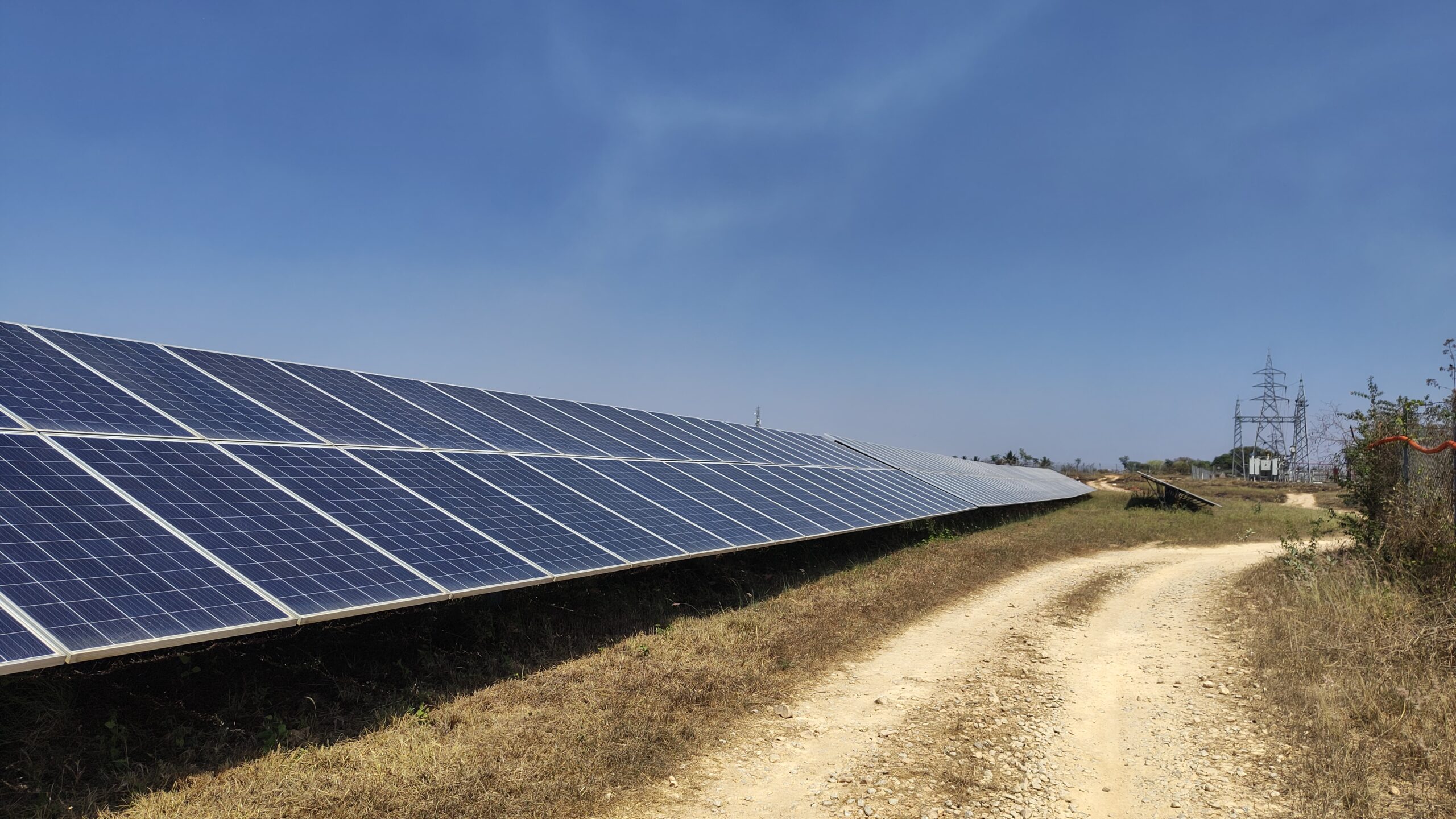
Solar power is the largest single component of India’s renewable energy capacity, and its growth accounts for most of the story. Installed solar capacity reached around 175 GW as of 31 October 2026, compared with just 2.8 GW in 2014, an increase of more than sixty times in twelve years. No other part of the energy system has expanded at anything like that pace, and solar alone now accounts for well over half of the country’s non-fossil capacity.
The pace of additions has also accelerated. India became the world’s second-largest solar growth market in 2025, adding more than 37 GW of solar capacity during the year, ahead of the United States, which added 34 GW. That ranking matters because it shows the expansion is not only large in absolute terms but is happening faster in India than in almost every other major economy. The growth has been driven by a combination of falling panel prices, large utility-scale solar parks, government auctions and, increasingly, rooftop installations on homes, shops and public buildings.
Solar’s rise has changed the shape of the power system. A decade ago, solar was a marginal source that needed heavy subsidy to compete. Today it is the cheapest source of new electricity in much of the country, and its expansion is pulling investment into domestic manufacturing, battery storage and grid upgrades. At the same time, the concentration of generation in daylight hours creates a new challenge: the grid must be able to absorb large amounts of solar power at midday and replace it in the evening, which is why storage and flexible generation have become central to the government’s planning.
The states that hosted the early solar parks remain important, but the backgrounder’s account of the summit shows the geography widening. Gujarat and Rajasthan, with their deserts and high sunshine, were early leaders, and Maharashtra, Uttar Pradesh and Andhra Pradesh were among the states presenting their potential at the summit. The spread matters because it brings investment and jobs to more regions and reduces the distance between generation and demand.
PM Surya Ghar and the New Floating Solar Push
The most direct contact most Indians have with the energy transition is on their own roofs. The PM-Surya Ghar: Muft Bijli Yojana, launched in February 2024 with a total outlay of Rs 75,021 crore, aims to provide rooftop solar installations to one crore households across the country. As of 2 November 2026, the scheme had benefited 65.26 lakh households, with around Rs 35,800 crore in subsidy transferred to beneficiaries. Nearly 21 lakh households had received zero electricity bills by October 2026, and a cumulative 19.1 GW of rooftop solar capacity had been commissioned under the scheme.
Those figures describe a programme that has moved from announcement to large-scale delivery. Rooftop solar turns a household from a pure consumer of electricity into a small producer, cutting its monthly bill and reducing the load on the distribution network during the day. The zero-bill figure is the most tangible measure of that effect for families, though it applies to a minority of participants so far: about one in three of the households with installations. The subsidy transfer of Rs 35,800 crore shows the scale of public money behind the programme, and the 19.1 GW of commissioned rooftop capacity is itself larger than the entire solar capacity of many countries.
A newer scheme extends solar power from rooftops to water. The government approved the Pradhan Mantri Surya Sarovar Yojana on 31 July 2026, with an outlay of Rs 5,070 crore, to develop floating solar photovoltaic projects combined with energy storage systems. The target is 5,000 MW of floating solar capacity, with co-located storage of at least two hours’ duration, equivalent to 10,000 MWh. Projects are to be sanctioned during the financial years 2026-27 to 2030-31.
Floating solar has two attractions. It uses reservoirs, lakes and other water bodies rather than farmland, avoiding competition with agriculture, and the water cools the panels, which can improve their efficiency. Pairing the panels with storage addresses the main weakness of solar power by allowing electricity generated at midday to be used in the evening. The scheme is new, and the 5,000 MW target is an ambition rather than a delivered result, but its approval on the same day as the non-fossil milestone underlines how the government is trying to open new ground for solar growth beyond land-based parks and rooftops.
Wind, Hydro and Bio-Energy: The Supporting Pillars
Wind energy remains the second pillar of India’s renewable expansion. India ranks fourth globally in installed wind power capacity, which stood at 59.20 GW as of 29 October 2026. The sector recorded its highest-ever annual addition in the financial year 2025-26, adding 6.05 GW, a 46 per cent increase over the previous year, and around 28 GW of additional wind capacity is currently under implementation. Domestic manufacturing has strengthened alongside the additions: wind turbine manufacturing capacity reached about 24 GW in March 2026, up from 10 GW in 2014, and the sector has achieved 70 to 80 per cent indigenisation across key components.
Wind complements solar in an important way. Wind speeds in many parts of India are strongest during the monsoon months, when solar output is lower, and at night, when solar produces nothing. That seasonal and daily pattern makes wind a natural partner for solar in a grid that needs power around the clock. The government is also looking offshore: the Union Cabinet approved a viability gap funding scheme worth Rs 7,453 crore on 19 June 2024 to support 1 GW of offshore wind projects, a first step into a resource that is large but more expensive to develop than onshore wind.
Hydropower continues to provide the flexible, reliable generation that balances variable solar and wind output. Cumulative hydropower capacity, including large and small projects, stood at 57.49 GW as of 29 October 2026. To accelerate smaller projects, the government approved the Small Hydro Power Development Scheme in March 2026, with an outlay of Rs 2,584.60 crore for the financial years 2026-27 to 2030-31. The scheme aims to add about 1,500 MW of small hydro capacity through projects of 1 MW to 25 MW, with particular support for projects in hilly and north-eastern regions, where small streams can power local communities without the large dams that have often proved controversial.
Bio-energy adds a rural and agricultural dimension to the transition. Bio-power capacity stood at 11.75 GW as of 29 October 2026. The compressed biogas ecosystem has expanded, with 839 CBG plants registered as of 2 November 2026, of which 210 had been commissioned and 255 were under construction. Biomass cogeneration capacity included 9,821.32 MW from bagasse-based projects and 1,047.85 MW from non-bagasse projects as of 30 September 2026, reflecting the sugar industry’s role in turning cane waste into power. Grid-connected waste-to-energy capacity stood at 324.24 MW, with off-grid plants contributing another 554.16 MW. The National Bioenergy Programme supports waste-to-energy, biomass and biogas projects through financial assistance, and its first phase covered the financial years 2021-22 to 2025-26 with an outlay of Rs 858 crore.
The newest bio-energy initiative is the largest. The government approved the Galvanizing Organic Bio-Agro Resources Dhan, or GOBARdhan, National Circular Bioenergy Scheme on 6 August 2026, with an outlay of Rs 23,731 crore for the financial years 2026-27 to 2035-36. The scheme aims to increase domestic compressed biogas production nearly tenfold and to build a national circular bioeconomy, turning farm waste, cattle dung and municipal organic waste into fuel and fertiliser. If it delivers, it would give farmers a new income stream from waste they currently burn or discard, while cutting methane emissions from rotting organic matter.
Green Hydrogen and Geothermal: The Next Frontier
Green hydrogen is the government’s bet for the parts of the economy that electricity alone cannot easily clean up, such as steel, fertilisers, refining and long-distance transport. The National Green Hydrogen Mission was launched in 2023 as an umbrella programme to build a green hydrogen ecosystem, approved in January 2023 with an outlay of Rs 19,744 crore and a target of five million metric tonnes of annual green hydrogen production by 2030.
The commercial signals so far are encouraging, though they remain promises rather than production. Indian companies have signed green hydrogen offtake commitments totalling 5.5 lakh metric tonnes per annum since 2023, described by the government as the world’s largest such supply commitment, and more than 70 per cent of those commitments are earmarked for exports. In 2026 alone, companies signed 18 new offtake agreements covering more than four lakh metric tonnes per annum of green hydrogen equivalent. Green hydrogen projects are expected to attract investments of around Rs 90,000 crore. Against that, the physical base is still small: around 8,000 tonnes per annum of green hydrogen production capacity had been commissioned by February 2026, a fraction of the 2030 target. The gap between commitments and commissioned capacity is the key test for the mission in the years ahead.
Transport is where the mission is most visible to the public. In July 2026, the government launched 12 pilot projects under the mission, covering 70 hydrogen-powered vehicles across 21 routes, and India’s first indigenous hydrogen fuel cell-powered train began operations on the Jind-Sonipat section in July 2026. Pilot projects are designed to test whether hydrogen vehicles work reliably in Indian conditions, and their results will shape whether the technology scales up or remains a demonstration.
Geothermal energy is an even earlier-stage opportunity. The National Policy on Geothermal Energy, notified on 15 September 2025, provides a framework for exploring and developing the country’s geothermal resources. The Geological Survey of India has estimated India’s geothermal potential at around 10,600 MW, based on exploration of 381 hot springs, of which 42 geothermal manifestations have been identified as promising areas. The policy promotes technology partnerships, knowledge transfer and joint research and development, and India has established cooperation mechanisms with Australia, Iceland, Saudi Arabia and the United States. Five projects were sanctioned during July and August 2025, including a pilot production plant, resource assessment projects and a solar-geothermal hybrid plant, aimed at establishing the technical and economic viability of geothermal applications. At 10,600 MW of estimated potential, geothermal will never rival solar in scale, but it offers something solar cannot: steady power day and night from heat stored beneath the earth.
Investment, Manufacturing and the Summit That Framed the Numbers
The USD 63.7 billion invested in India’s renewable energy sector between July 2024 and June 2026 is one of the most consequential figures in the backgrounder, because it shows that the transition is now attracting capital at a scale that can sustain it. Investment has flowed into solar panel and cell factories, wind turbine plants, battery storage, transmission lines and the projects themselves. Domestic manufacturing capacity has grown in step: wind turbine manufacturing reached about 24 GW by March 2026, and solar manufacturing has expanded under production-linked incentive schemes that aim to reduce dependence on imported panels.
The Bharat Renewable Energy Summit and Expo in November 2026 was designed to keep that momentum going. More than 400 manufacturers, technology providers, startups and research institutions took part in the exhibition, and the discussions ranged across financing, manufacturing, energy storage, emerging technologies and workforce development. The presence of nine country partners and thirteen states and union territories signalled that the summit was as much about attracting investment and sharing technology as about celebrating capacity figures.
Manufacturing matters for energy security as well as for jobs. A country that imports most of its solar panels and batteries is vulnerable to supply disruptions and price swings in other countries, just as it is vulnerable when it imports oil and gas. Building factories at home does not remove that risk entirely, since raw materials such as polysilicon and lithium still come largely from abroad, but it keeps more of the value chain inside India and gives the government more control over the pace of deployment.
Workforce development was also on the summit’s agenda, and it is a practical constraint on how fast the transition can proceed. Installing 37 GW of solar in a year, maintaining wind farms, building storage and running biogas plants all require trained engineers, technicians and operators. The scale of the build-out means India needs a pipeline of skilled workers to match the pipeline of projects, and the summit’s focus on skills suggests the government recognises that gap.
What the Numbers Do and Do Not Prove
The 13 November backgrounder is an official account of progress, not an independent audit, and its figures should be read with that in mind. Three cautions stand out. First, the headline 55 per cent share mixes dates: the 308 GW non-fossil figure is dated 31 July 2026, while the 560 GW total is from October 2026, so the share is approximate rather than exact. Second, installed capacity is not the same as electricity generated. A gigawatt of solar produces far less energy over a year than a gigawatt of coal or nuclear power, because the sun does not shine all day. The share of actual electricity coming from non-fossil sources is therefore lower than the 55 per cent capacity share, and the government has not published a generation share alongside these figures.
Third, approvals, targets and offtake commitments are not the same as delivered projects. The floating solar scheme, the GOBARdhan scheme and the small hydro scheme have been approved with funding and targets, but their capacity is yet to be built. The green hydrogen offtake commitments of 5.5 lakh tonnes a year are contracts and expressions of intent, while commissioned production capacity stood at only about 8,000 tonnes a year in February 2026. The 500 GW non-fossil target for 2030, which the government has set as its long-term goal, will require the current pace of additions to be sustained and the newer technologies to move from pilot to scale.
None of these cautions diminishes the scale of what has been built. Solar capacity has grown more than sixty-fold since 2014, wind has had its best year ever, 65 lakh households have rooftop solar, and investment of USD 63.7 billion in two years shows that capital markets believe in the direction of travel. The honest reading of the 13 November figures is that India has built the foundation of a clean energy system faster than most observers expected, and that the harder work, turning capacity into reliable, round-the-clock clean electricity at a price households and industry can afford, is now under way. The next test will be whether the schemes approved in 2026 deliver on the ground, whether storage and grids keep pace with solar and wind, and whether the generation share of clean energy begins to catch up with the capacity share the government reported this week.
Sources
USN reviewed reporting from multiple outlets for this story. Read more from Press Information Bureau, DD India and Business News Week.