

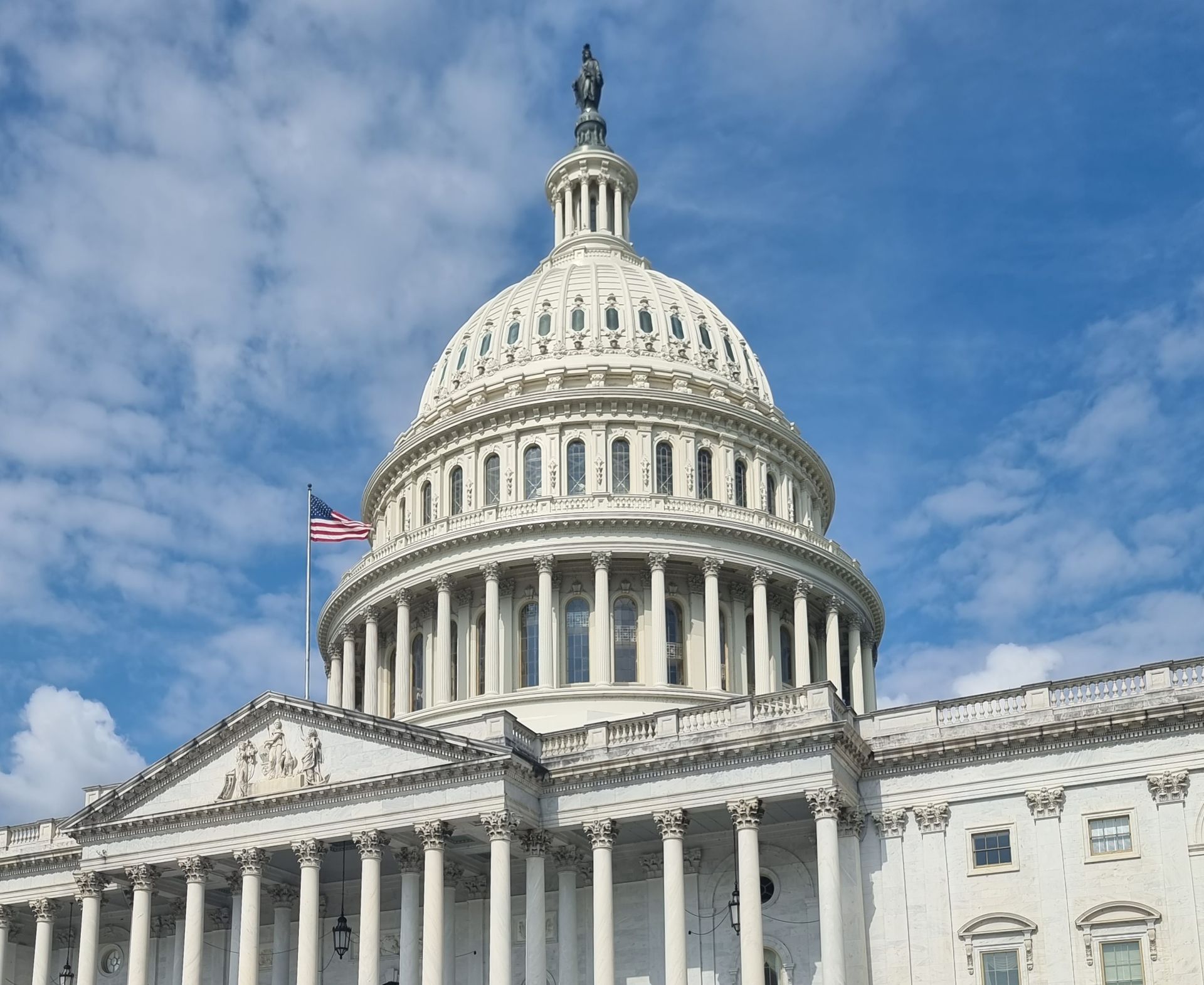
When the new Congress is sworn in on 3 January 2027, Democrats will take control of both chambers with a question at the top of their foreign-policy agenda: what, if anything, can they actually do to force President Trump to end the war with Iran? The war began on 28 February 2026, launched by Mr Trump without approval from Congress, and Democrats have voted repeatedly since then to end the fighting. The midterm elections, in which they won the House and the Senate, have given them the power to try again, with new votes, new investigations, and the most potent weapon Congress possesses: the power of the purse.
The answer to the question is more complicated than the election result alone might suggest. Democrats will control the agenda in both chambers, which means they can bring measures to a vote that the previous Republican majorities would not have allowed. They will control the committees, which means they can hold hearings, issue subpoenas, and demand documents about how the war has been conducted. And they will control the spending process, which means that every new dollar the Defence Department wants will need their approval. But none of those powers, on its own, can end the war. A binding resolution to end American involvement would face a presidential veto, and overriding that veto would require a two-thirds majority in both chambers, a threshold Democrats do not have on their own. Money already allocated can still be spent. Negotiations with Iran, reported to be continuing mainly through Qatar, will go on regardless of what Congress does. The new Congress can challenge the war, and can make it harder to continue, but it cannot end it by itself.
That distinction, between challenging the war and ending it, is the key to understanding what will happen after 3 January. The Democrats have three broad options, and each of them works in a different way, with different limits and different chances of success. The first is a fresh war powers vote, in both chambers, to declare that American involvement should end. The second is a programme of investigations, using the oversight powers of Congress to examine how the war was started and how it has been fought. The third, and potentially the most effective, is the power of the purse: using the defence budget to prohibit the spending of money on hostilities against Iran. Each option deserves to be understood on its own terms, because each tells a different part of the story of what a Democratic Congress can and cannot do.
Iran war powers resolution: the votes Congress has already taken
The history of the war powers votes so far is a history of near-misses and non-binding gestures. In June 2026, Congress passed a concurrent resolution under the War Powers Resolution of 1973, a measure that expressed the view of Congress that the war should end. But concurrent resolutions are non-binding, and Mr Trump ignored it. A concurrent resolution does not have the force of law, it does not require the president’s signature, and it cannot compel the president to do anything. It was a statement, not a command, and the administration treated it as such.
A month later, in July 2026, the House took a stronger step. It passed a war powers measure by 214 votes to 208, directing the president to end American involvement in the war unless Congress authorised it. The vote was close, and it showed how divided the House was on the question, but it was a binding measure in a way that the concurrent resolution had not been, and it represented the first time that a chamber of Congress had voted, by a majority, to direct an end to the fighting.
The Senate, however, did not follow. A similar measure failed in the Senate on 24 September 2026, by 49 votes to 50, a single vote short of a majority. The closeness of that vote was itself significant. Four Republicans, Susan Collins, Lisa Murkowski, Rand Paul and Thom Tillis, voted with the Democrats in favour of the measure, while one Democrat, John Fetterman, voted against it. The result showed that opposition to the war was not confined to one party, and that a small number of Republican crossovers could, in a differently composed Senate, make the difference between failure and success.
It is also important to use the correct vote numbers, because different outlets have reported the history differently. One account suggested that both chambers had passed measures in June. The account that is supported by the Times of Israel and by CBS News, and that this article follows, is the one set out above: a non-binding concurrent resolution in June, a House war powers measure passed 214 to 208 in July, and a Senate measure that failed 49 to 50 on 24 September. That is the record on which the new Congress will build, and it is the record that should be used when describing what has already happened.
New Democratic Congress can force votes from January 3 — but not override a veto alone
The most immediate change on 3 January 2027 will be one of control. Democrats will take charge of both chambers, and with that control comes the power to set the agenda. Measures that were blocked, delayed or buried under the previous majorities can be brought to the floor. War powers resolutions that could not get a vote can get one. The leadership of both chambers will be Democratic, the committees will be chaired by Democrats, and the schedule will be set by Democrats. That is a real and significant change, and it is the foundation for everything else the new Congress might do on the war.
With that control, Democrats will be able to bring fresh war powers resolutions to a vote in both chambers. A new resolution, passed by the House and by the Senate, would be a formal and binding direction to the president to end American involvement unless Congress authorised it. It would be a stronger statement than the concurrent resolution of June, and it would carry the weight of both chambers speaking together, in the new Congress, after an election in which the war was a central issue.
But a binding resolution, if it passed both chambers, would face a presidential veto. Mr Trump launched the war without congressional approval, and there is no reason to suppose he would accept a congressional direction to end it. A veto would send the resolution back to Congress, and overriding it would require a two-thirds majority in both chambers. Democrats do not have two-thirds majorities, and they would need a substantial number of Republican crossovers to reach that threshold. The September vote, in which four Republicans voted with the Democrats, shows that crossovers are possible, but four is a long way from the number needed for a two-thirds majority, and there is no evidence in the reporting so far that enough Republicans are prepared to vote to override a veto on this question.
The veto, in other words, is the central obstacle to the war powers route. Democrats can force a vote, and they can probably pass a resolution in both chambers, but they cannot by themselves make that resolution law over the president’s objection. The war powers route is therefore best understood as a political weapon as much as a legal one: a way to force every member of Congress to take a public position, to put the administration on record as defying Congress, and to build the case for the other options that Congress has. It is a necessary step, but it is not, on its own, a sufficient one.
Democrats power of the purse: the defence budget as the strongest lever on Iran
The more immediate lever available to the new Congress is the power of the purse. Under the Constitution, Congress controls the spending of public money, and no money can be spent by the government unless Congress has appropriated it. Once the new Congress sits on 3 January, every new dollar that the Defence Department wants will need the approval of the House and the Senate, and Democrats, as the majority in both chambers, will be in a position to attach conditions to that approval.
The most direct use of that power would be to put a clause into the defence budget prohibiting funds from being used for hostilities against Iran. Such a clause, if it became law, would make it illegal for the Defence Department to spend appropriated money on the war. It would not require a two-thirds majority to pass Congress in the first place, although it would, like any other spending measure, be subject to a presidential veto if Mr Trump chose to reject the entire defence budget in order to strike the clause out. That is a high-stakes confrontation, because a veto of the defence budget would affect the funding of the entire military, not just the war in Iran, and the president would have to weigh the political cost of such a veto against the cost of accepting the restriction.
Senator Chris Murphy has said that Democrats would have a “mandate” to use their spending powers to pursue an end to the war, possibly by attaching conditions to defence funding. The word “mandate” is a political claim, not a legal one, but it captures the sense among Democrats that the election gave them the authority to use the tools available to them. The power of the purse is the oldest and most fundamental of those tools, and it is the one that the administration would find hardest to ignore, because it goes to the heart of the government’s ability to function.
The power of the purse is also, however, subject to a significant limit. The administration can keep spending money that has already been allocated. Funds appropriated in previous budgets, and not yet spent, remain available, and the Defence Department can continue to use them for operations already under way. A restriction on new funding does not automatically stop operations that are being paid for out of old money. That means the effect of a funding clause would be gradual rather than immediate, biting as old funds run out and new funds are withheld, rather than stopping the war overnight.
Negotiations with Iran, reported to be continuing mainly through Qatar, add a further complication. If a diplomatic track is open, Congress will have to consider whether a funding restriction helps or hinders that track, and whether it strengthens or weakens the administration’s hand in the talks. Those are political judgments, not legal ones, and they will be debated within the Democratic caucuses as well as between the parties. The power of the purse is a powerful tool, but it is not a simple one, and its use will require careful calculation about timing, about the defence budget as a whole, and about the negotiations that are already under way.
Investigations and the constitutional question: Meeks, hearings and subpoenas
A second option available to the new Congress is investigations. With control of the committees, Democrats will be able to hold public hearings, issue subpoenas, and demand documents on how the war has been conducted. That is a power that the minority party does not have, and it is one that can be used to build a public record, to expose decisions that were taken in secret, and to create political pressure for a change of policy.
Representative Gregory Meeks, the senior Democrat on the House Foreign Affairs Committee and expected to chair it in the new Congress, has made the constitutional status of the war the centrepiece of his agenda. He has said: “We’re inching closer to having both chambers of Congress declare this an illegal war.” That language, if it were adopted by both chambers, would be a formal declaration that the war was launched without the authority that the Constitution requires, and that its continuation is unlawful. It would be a political and legal statement of the first importance, even if it did not by itself stop the fighting.
Investigations can also serve a practical purpose. By demanding documents and testimony about how the war was planned, how it has been conducted, and what it has cost, Congress can give the public information that the administration has not volunteered. That information can then be used to inform the debate about funding, about war powers, and about the future of the conflict. It can also be used to hold individuals accountable, if the investigation finds that laws were broken or that Congress was misled.
The three options, taken together, form a strategy. War powers votes to force a public position and to create a formal record. Investigations to expose how the war was conducted and to build the case that it is illegal. And the power of the purse to restrict the money that makes the war possible. Each option reinforces the others, and each is stronger for being pursued alongside the others. A war powers resolution that is vetoed is more powerful if it is followed by a funding restriction. A funding restriction is more defensible if it is preceded by hearings that show why the war should end. And hearings are more effective if they are conducted by a Congress that has already voted to end the war. That is the logic of the Democratic strategy, and it is the logic that will shape the first months of the new Congress.
What the new Congress cannot do, on its own, is end the war by a single vote. The veto, the two-thirds threshold for an override, and the availability of already-allocated money all stand in the way of a quick resolution. What it can do is use the powers it has, in combination, to make the war harder to continue, more expensive politically, and more difficult to justify. That is a slower and less certain path than a single decisive vote, but it is the path that the Constitution, as it stands, actually offers. The test for Democrats after 3 January will be whether they can pursue it with the discipline and the unity that it requires, and whether they can persuade enough Republicans to join them to make the decisive steps possible.
Sources
USN reviewed reporting from multiple outlets for this story. Read more from Times of Israel, News18 and Sunday Guardian.