

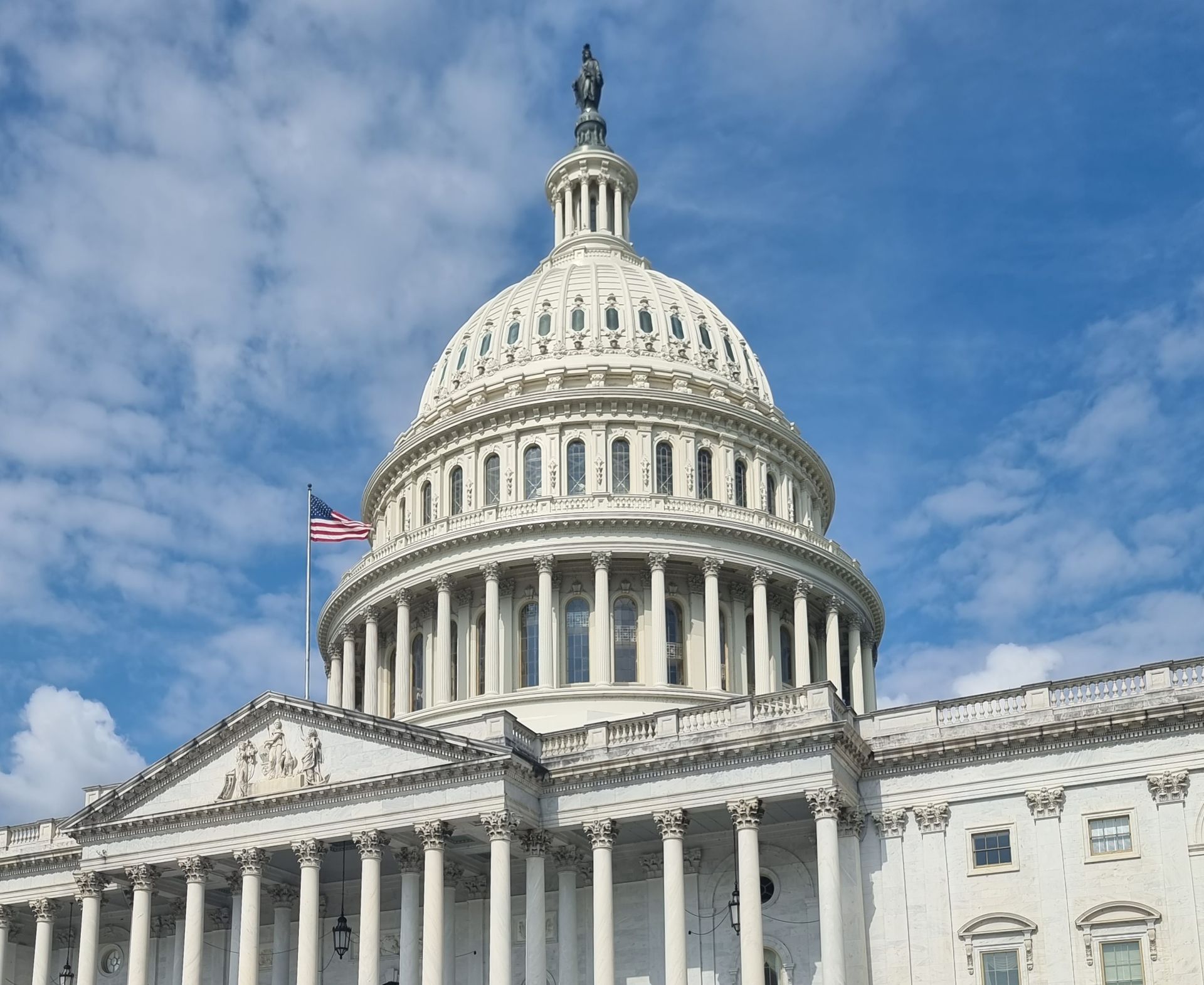
Congress returns to Washington on Monday, November 9, for a lame-duck session that will run through Christmas, with a Thanksgiving break in between, and the lawmakers who gather on Capitol Hill will be working under an unusual set of circumstances. The voters have spoken, and Democrats won control of both the House of Representatives and the Senate in the midterm elections on Tuesday, November 3. Yet Republicans still hold the gavels in both chambers, and they will keep them until the new Congress is sworn in on January 3, 2027. The outgoing Congress therefore has about eight weeks to deal with the unfinished business of the year, and the most urgent item on its list is money: federal funding runs out on December 11, and if Congress does not act by then, parts of the government will shut down.
A lame-duck session is the period between an election and the day the new Congress takes office, when members who lost their seats or are retiring still vote. The 20th Amendment to the Constitution sets the end of each congressional term at noon on January 3 of odd-numbered years. This year’s session runs from the week of November 9 until Christmas, and it will be one of the most consequential lame-duck sessions in recent years, because it must settle questions that Congress spent much of the autumn putting off. The funding deadline is the only hard deadline on the calendar, but it is not the only item that needs attention, and the politics of a Congress that has just been voted out of power add a further layer of difficulty to every negotiation.
The stakes are high. If lawmakers miss the December 11 deadline, the resulting shutdown would be the fourth government shutdown of President Donald Trump’s second term. The previous shutdowns have already tested public patience and disrupted federal services, and another closure in the weeks before Christmas would be felt quickly by federal workers, travellers and families relying on government services. The question facing the lame-duck Congress is not whether the deadline matters, but whether a divided and outgoing legislature can agree on how to meet it.
The December 11 funding deadline
The current stopgap funding measure, the Continuing Appropriations and Extensions Act, 2027, signed on September 2, 2026, funds the government at fiscal year 2026 levels through Friday, December 11, 2026. A lapse would begin on Saturday, December 12, if nothing passes. Congress has two broad options: pass the full-year spending bills for fiscal year 2027, or pass another stopgap measure that extends current funding into the next Congress. Neither option is straightforward. As of November 3, the House had passed three of the 12 annual appropriations bills and the Senate had passed none, leaving a large amount of work to be done in a short period.
The main dispute, according to reporting on the negotiations, is over defence spending. The Trump administration wants a record 1.5 trillion dollars for defence, a figure Senate Democrats reject. That disagreement sits at the centre of the funding debate, and it is the reason a simple agreement has proved elusive. Most Senate action needs 60 votes, which means bipartisan support is required by the mathematics of the chamber, and neither party can impose its preferred outcome on its own. The result is a negotiation in which both sides have leverage and neither side has a clear path to victory.
The consequences of a lapse would be wide-ranging. Paychecks for military personnel, Transportation Security Administration officers and other federal workers would be delayed. Passport processing would slow. Small business and Federal Housing Administration loan pipelines would slow. The Internal Revenue Service would slow its work as the tax filing season approaches. National parks and museums would close. Social Security checks, which are mandatory spending, would keep going, but the discretionary services that millions of Americans rely on would be disrupted. The experience of previous shutdowns suggests that the effects would be felt within days, and that public pressure to reopen the government would build quickly.
Surface transportation programmes also expire on December 11, the same day as the funding deadline, adding a further item to the list of measures that need attention. The Export-Import Bank, farm programmes and the Community Health Center Fund all lapse on December 31, and without action farm programmes would revert to permanent law written in the 1930s and 1940s. Health programmes ending on December 31 include mandatory funding for the Community Health Center Fund and a temporary 2.5 percent increase in Medicare doctor payments. The calendar is therefore crowded with expiring authorities, and the lame-duck session must deal with them alongside the funding question.
The debt-limit fight
Alongside the funding deadline, Congress faces a decision about the debt limit, the statutory cap on how much the federal government can borrow. Senate Majority Leader John Thune has said that an increase could come during the lame-duck session. The limit is projected to be reached in the first half of 2027, with some estimates placing the date as early as February 2027, and the statutory limit stands at 41.1 trillion dollars. Raising the limit now would remove a future deadline from the calendar, but it would also deny the incoming Democratic House the chance to use the 2027 borrowing deadline to extract concessions from the administration.
That political calculation is central to the debate. Republicans have reportedly weighed raising the debt limit now, before Democrats take over in January, precisely because doing so would take the issue off the table for the new Congress. Democrats, for their part, have an interest in keeping the leverage that a future debt-limit deadline would give them. The result is a negotiation in which the substance of the debt limit, a technical question about the government’s borrowing authority, is entangled with the politics of the transition of power. Whether an increase is included in the lame-duck session, and in what form, remains uncertain, and much will depend on whether Republicans can unite behind a proposal.
One option discussed in Washington is to include a debt-limit increase in a third reconciliation package, a budget procedure that allows certain legislation to pass the Senate with a simple majority rather than 60 votes. Such a package could also fund the war with Iran, send states up to 10 billion dollars to tighten voting rules and address other Republican priorities. The use of reconciliation would avoid the need for Democratic votes, but it would require unity within the Republican Party, which has just suffered a national rebuke at the ballot box. Whether that unity can be found in the weeks after an election defeat is an open question.
What the incoming Democratic majority plans to do
While Republicans still control the floor for the next eight weeks, the incoming Democratic majority has already set out its priorities for January. House Democratic Leader Hakeem Jeffries says his incoming majority will be united right out of the gate on reinstating the enhanced Affordable Care Act subsidies that expired in 2025 and reversing an estimated 1 trillion dollars in Medicaid cuts. The subsidies and the Medicaid cuts are among the most specific items on the Democratic agenda, and Jeffries has said the party will act on them in the first week of the new Congress. Aides have said Democrats plan a legislative blitz in their first 100 hours back in power, covering the subsidies, the Medicaid cuts, tariffs and the war in Iran.
The health care language, however, faces a practical constraint. With Republicans still controlling the floor for the next eight weeks, any health care provision that actually passes this year would have to ride on the funding bill Republicans are writing, not the one Democrats will write in January. That means the Democratic health care agenda is, for the lame-duck session, largely a statement of intent rather than a legislative programme that can be enacted. The real test will come in January, when the new Congress takes office and the party’s large majority gives it the votes to pass its priorities in the House, even if the Senate and the White House present further obstacles.
Jeffries has launched his bid to become Speaker of the House, and no challenger had emerged as of Friday. He is expected to be sworn in on January 3 as the first Black Speaker of the House, a historic milestone that reflects the scale of the Democratic victory. House Democratic leadership elections are scheduled for November 18 and 19, and Senate Democrats are expected to vote on their leadership in December. House Republican leadership elections are scheduled for November 10. The leadership contests will shape the new Congress, but they will not change the arithmetic of the lame-duck session, in which Republicans still hold the gavels.
Oversight, investigations and the subpoena threat
The incoming Democratic majority has also signalled a more combative approach to oversight. Representative Robert Garcia of California, the likely next chair of the House Oversight Committee, marked the election result with a two-word message posted on X: Lawyer up. Garcia has previewed plans for investigations, including a possible subpoena for Attorney General Todd Blanche in connection with the handling of documents related to Jeffrey Epstein. Democrats have alleged that records were withheld or redacted, and they argue that public hearings are needed to establish what happened. The Department of Justice denies shielding the president, and the allegation remains unproven. Any subpoena, however, cannot go out until the new Congress is seated in January, when Democrats will hold the committee chairmanships and the power to compel testimony.
Garcia has also said he would use every tool available to investigate what he has described as corporate corruption, immigration enforcement abuses and the Epstein matter, and he has previously said he would seek to subpoena both the president and First Lady Melania Trump to testify under oath. Jeffries has said the party has not ruled anything in and has not ruled anything out on impeachment, while signalling that investigations and subpoenas, rather than immediate impeachment, are the intended starting point. The oversight agenda will run principally through the Judiciary Committee, which Jeffries has said will be led by Representative Jamie Raskin of Maryland, and the Oversight and Government Reform Committee, which Garcia is expected to lead.
The lame-duck session itself may also see votes on war powers and on the impeachment of Defence Secretary Pete Hegseth, which Representative Thomas Massie has pursued. Those votes would be largely symbolic, given that the outgoing Congress cannot bind its successor, but they would signal the direction of the debate that will dominate the new Congress. The war in Iran, which Democrats have said they want to end, is likely to be a central issue in both the lame-duck session and the new Congress, and it is one of the areas where the outgoing and incoming majorities are most sharply divided.
Other business: defence, science and quantum research
Beyond funding and the debt limit, the lame-duck session must deal with the National Defense Authorization Act, the annual bill that sets Pentagon programmes and spending. The defence bill is one of the few measures that Congress passes every year, and it is a central year-end goal for both parties. Negotiations over the bill are complicated by the same defence spending dispute that affects the funding bill, and by questions about oversight of the war in Iran and about policy riders attached to the legislation. Whether the bill can be completed before Christmas will depend on whether the two parties can find common ground on those issues.
Science policy also faces a shake-up. The lame-duck session must deal with science funding and with a rule from the Office of Management and Budget on grantmaking that is due to expire in December. The National Quantum Initiative, which supports research into quantum computing and related technologies, is also due for reauthorization. These items attract less public attention than the funding deadline or the debt limit, but they matter to universities, research institutions and the technology sector, and their fate will be decided in the same crowded calendar as the larger fiscal questions.
A bipartisan Senate permitting reform deal is also awaiting a post-election vote, and a narrow tax package is under consideration. The Senate is scheduled to vote on November 9 on the permitting reform vehicle, a bill that would change how major infrastructure projects are approved. The proposal, known as the Bipartisan American Affordability and Jobs Act, was released on September 30, and it has support from both parties in principle, though the details remain contested. Whether it can pass in the lame-duck session, or whether it will be left for the new Congress, is uncertain.
A session shaped by the election result
The lame-duck session of 2026 is shaped above all by the election result. In most years, a lame-duck session is a period in which the outgoing Congress ties up loose ends before handing over power. This year, the loose ends include the most fundamental questions of government: how to fund the state, how much the government can borrow, and how to handle the transition from one party’s control to the other’s. The Republicans who will vote on those questions in November and December include members who have just lost their seats, and whose votes will still count. That is the nature of a lame-duck session, and it is one of the reasons the period is often described as one of the most unpredictable in the congressional calendar.
The session will also be shaped by the knowledge that the new Congress, when it takes office on January 3, will have a different set of priorities. Democrats have said they will move quickly on health care, tariffs and the war in Iran, and that they will use their oversight powers aggressively. Republicans, in their final weeks in control, have an incentive to settle as much as possible on their own terms before that change takes place. The tension between those two impulses, the outgoing majority’s desire to lock in its preferences and the incoming majority’s desire to start afresh, will run through every negotiation in the session.
For the public, the most important question is the simplest one: will the government stay open after December 11? The answer will depend on whether Congress can agree on a funding measure, whether in the form of full-year bills or another stopgap. The history of lame-duck sessions suggests that a shutdown is possible but not inevitable, and that the pressure to reach a deal tends to increase as the deadline approaches. The coming weeks will test whether that pattern holds, and whether a Congress that has just been voted out of power can still perform its most basic function: keeping the government funded.
Sources
USN reviewed reporting from multiple outlets for this story. Read more from AIP, Gibson Dunn and Dawn.