

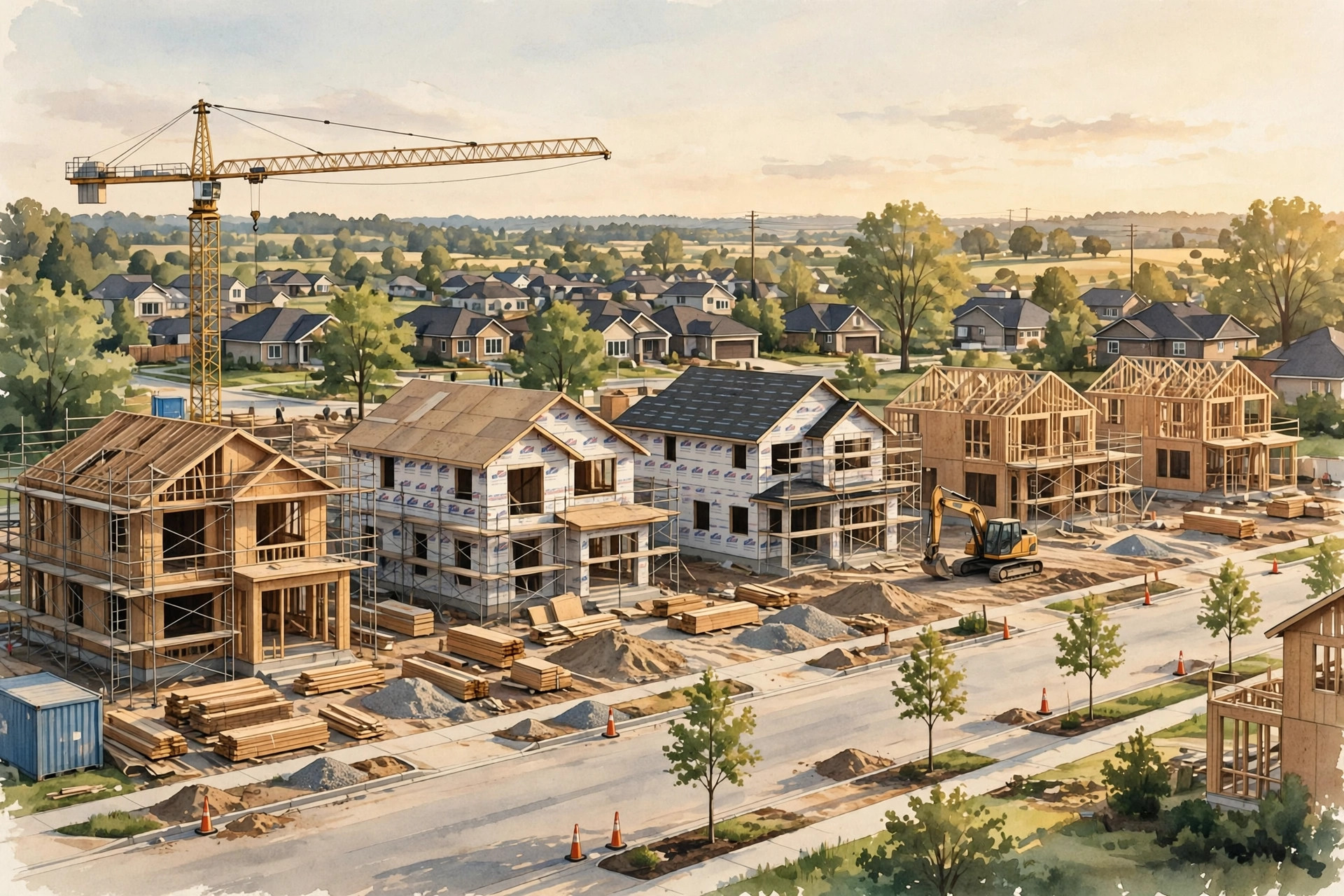
The United States Senate has passed the 21st Century ROAD to Housing Act by a vote of 85 to 5, sending the largest housing bill Congress has advanced in decades to the House of Representatives for approval. The vote on 2 November 2026 marked a rare moment of broad bipartisan agreement in a Congress where compromise has often proved elusive, and it followed months of negotiation between the two chambers over the shape of a package designed to address the country’s housing affordability crisis. Senate leaders from both parties presented the result as an important step toward giving more families a realistic path to homeownership, while acknowledging that the bill still needs House approval and a presidential signature before any of its provisions can take effect.
The legislation is the product of years of work, much of it channelled through the Senate Banking, Housing, and Urban Affairs Committee. Its chairman, Tim Scott, a Republican from South Carolina, and its ranking member, Elizabeth Warren, a Democrat from Massachusetts, issued a joint statement welcoming the vote. “Today’s bipartisan vote is an important step toward addressing America’s housing affordability crisis and giving families across this country a fair shot at the American Dream,” they said. The statement also described the bill as reflecting priorities from the White House, the Senate, and the House, an unusual three-way endorsement that helps explain how a package of this size survived the legislative process. Senator Kevin Cramer, a Republican from North Dakota who sits on the Banking Committee, struck a similar note, saying the vote was the result of steady collaboration between the parties and between the two chambers, and urging the House to act swiftly so the bill could reach the president’s desk as soon as possible.
The scale of the vote itself is part of the story. An 85-5 margin in the modern Senate is uncommon for major legislation, and it suggests that the bill’s sponsors succeeded in assembling a package with something for lawmakers across the political spectrum. That breadth was deliberate. Each chamber had developed its own version of the legislation, and committee leaders spent months resolving differences over individual provisions, adding measures designed to appeal to different factions, and removing or softening provisions that threatened to sink the whole effort. The final product that passed the Senate was therefore less a single idea than a consolidation of many standalone housing proposals, gathered into one vehicle with the aim of moving them together.
Why the 21st Century ROAD to Housing Act matters for homebuyers
The case for the bill rests on numbers that describe a housing market in which buying a home has become harder for ordinary households. The median home price in the United States sits above 405,000 dollars, while the median annual household income is below 84,000 dollars, according to the most recent federal statistics cited in reporting on the legislation. That gap between prices and incomes is the central fact of the affordability debate, and it explains why so many families feel that homeownership is slipping out of reach even when they have steady jobs. The median age of first-time buyers jumped to 40 in 2025, seven years older than the median age just five years earlier, according to an analysis by the National Association of Realtors. In other words, Americans are waiting longer to buy their first home, and many are reaching middle age before they can do so.
Supporters of the bill argue that the root problem is supply: there are simply not enough homes, particularly homes at prices that middle-income and working families can afford. Senator Cramer put the point directly, saying that for generations, owning a home symbolised the American Dream, and that it has become increasingly out of reach for many Americans largely because there are not enough homes. “There’s a supply shortage in the communities across our country,” he said. “The 21st Century ROAD to Housing Act is going to help millions of Americans become homeowners.” That framing, supply first, runs through much of the legislation, which focuses on making it easier and faster to build homes, to finance them, and to convert existing buildings into housing, rather than on direct subsidies alone.
The bill’s supporters also include some of the largest organisations in the housing world, including the National Association of Home Builders, the National Association of Realtors, and the National Housing Conference. Hundreds of organisations have expressed support for the package, a breadth of backing that reflects both the scale of the affordability problem and the range of provisions assembled in the bill. Builders want faster approvals and fewer barriers to construction. Realtors want more homes on the market and smoother transactions. Affordable housing advocates want more resources for low-income households and stronger protections for existing affordable homes. The ROAD Act attempts to speak to each of those interests, which is both its political strength and a source of complexity, since a package that tries to do many things must be judged on whether its many parts work together.
What the housing bill does: faster building, more financing, and new rules for investors
Among the bill’s central measures is a streamlining of environmental reviews for new housing construction. Under current practice, environmental review requirements can add time and cost to housing projects, particularly smaller developments where the scale of review may seem disproportionate to the scale of the project. The legislation updates how the National Environmental Policy Act applies to smaller housing projects, with the aim of letting modest developments proceed without the delays associated with full-scale review. Supporters present this as a common-sense reform that preserves environmental protections for larger projects while removing unnecessary obstacles for the kind of infill and small-scale housing that many communities need most. Critics of such streamlining, in other contexts, have warned that faster review can mean less scrutiny, and the balance between speed and oversight is likely to remain a subject of debate as the bill moves through the House and, if enacted, into implementation.
The bill also lifts the cap on banks’ private investments in affordable housing from 15 percent to 20 percent, a change designed to draw more private capital into affordable development. The logic is straightforward: banks already invest in affordable housing, and a higher cap allows them to do more of it without running into a regulatory ceiling. Alongside that change, the legislation keeps a range of banking provisions drawn from the House version, including measures meant to expand community banks’ access to funding sources for mortgages and home construction loans. Community banks play an outsized role in smaller markets, where large national lenders may have limited presence, and supporters argue that giving those banks more flexibility will help housing finance reach places that larger institutions overlook.
Another provision establishes a pilot program to convert vacant and abandoned buildings into livable housing. Empty commercial and residential buildings are a familiar sight in many American towns and cities, and converting them into homes is often faster and less expensive than building from scratch. The pilot approach allows the idea to be tested before it is expanded, with lessons from early projects informing later decisions. The bill also revises the federal definition of manufactured housing to include units not built on a permanent chassis, and it authorises a specialised grant program for areas with manufactured housing communities. Manufactured homes are one of the most affordable paths to homeownership for many households, and updating the rules that govern them, including mortgage lending standards through the Federal Housing Administration, could make that path smoother.
For the rental market, the bill includes provisions that affect landlords and voucher holders. It carries a portion of the Choice in Affordable Housing Act, sponsored by Senator Cramer and Senator Chris Coons, a Democrat from Delaware, which reduces Department of Housing and Urban Development inspection delays. Units financed through other federal housing programs would automatically satisfy voucher inspection requirements if inspected within the past year, reducing duplication and making it easier for new landlords to participate in the Housing Choice Voucher program. The aim is to expand the supply of homes available to voucher holders, who often struggle to find landlords willing to navigate the program’s administrative requirements. The bill also includes provisions authored by Cramer to address the appraisal workforce shortage, an often-overlooked bottleneck in homebuying. In North Dakota, communities have experienced an average wait time of 21 days for home appraisals, compared with a national average of six to nine days, and more than two-thirds of appraisers are older than 51, while just 13 percent are younger than 35. The legislation responds by adding state-credentialed trainee appraisers to the national Appraiser Registry and allowing grants for appraiser certification and licensing agencies.
The 15-year ban on large investors buying single-family homes
One of the most closely watched provisions in the bill is its 15-year ban on large institutional investors buying single-family homes. The ban applies to entities that own more than 350 housing units, and it bars them from purchasing single-family homes for the next 15 years. The provision responds to a widespread concern that large investors, by buying up single-family homes, compete directly with ordinary families and push prices higher, particularly in markets where supply is already tight. Supporters of the ban argue that single-family homes should primarily be available to people who will live in them, not to large firms assembling rental portfolios. The 350-unit threshold is designed to target genuinely large operators rather than small landlords or local investors, and the 15-year duration gives the restriction real weight rather than treating it as a short-term gesture.
The ban comes with important exemptions. Manufactured housing, multifamily homes, and build-to-rent properties are exempted from the restriction, which means large investors can continue to invest in those categories. The exemption for build-to-rent is particularly significant, since it preserves a channel through which institutional capital can add to housing supply by funding new rental homes rather than buying existing ones. That distinction, between buying existing homes and building new ones, is central to the bill’s logic: the aim is to discourage competition for the existing stock of single-family homes while still encouraging investment that expands the total supply of housing. Whether that balance works in practice will depend on how investors respond, and on whether build-to-rent development grows fast enough to offset any reduction in investor purchases of existing homes.
The final bill also omits a Senate provision that would have required large institutional investors to sell rental homes they build to individuals within seven years of construction. That provision was among the most contentious in the negotiations, and its removal illustrates the compromises that shaped the final package. Supporters of the seven-year sell requirement argued that it would ensure build-to-rent homes eventually entered the ownership market. Its opponents argued that it would discourage the very construction the bill is meant to encourage. The decision to drop it, while keeping the 15-year purchase ban, reflects a judgment by negotiators that the ban alone was sufficient to address the core concern about investor competition for existing homes, without adding a requirement that might deter new building.
The four-year ban on a Federal Reserve digital currency
Beyond housing, the bill carries a provision that has drawn attention in financial and technology circles: a four-year ban on the Federal Reserve issuing a central bank digital currency, commonly known as a CBDC. The ban reflects long-running concerns among some lawmakers that a digital currency issued directly by the central bank could reshape the relationship between citizens, commercial banks, and the government, with implications for privacy and financial freedom. Supporters of the ban argue that Congress should decide such a fundamental question explicitly, rather than allowing it to develop through central bank action alone. The four-year duration gives Congress time to consider the issue while preventing the Federal Reserve from moving ahead in the meantime.
The ban includes a carefully worded exemption for any dollar-denominated currency that is open, permissionless, and private, and that fully preserves the privacy protections of United States coins and physical currency. That exemption is designed to distinguish between a central bank digital currency, which would be issued and potentially controlled by the Federal Reserve, and decentralised or private digital currencies that operate without central bank control. The distinction matters because the debate over digital currency is not simply about technology; it is about who issues money, who can track its use, and what protections apply to holders. By exempting open and private dollar-denominated currencies, the provision attempts to target central bank issuance specifically, while leaving other forms of digital money untouched.
The inclusion of a digital currency provision in a housing bill is an example of how large legislative packages often carry measures that are only loosely related to their main subject. Such provisions, sometimes described as riders, can help build the coalition needed to pass a bill, by giving lawmakers with different priorities a reason to support the package. They can also complicate the bill’s passage, if members who support the main provisions object to the added measures. In this case, the digital currency ban survived the negotiations and became part of the Senate-passed package, which suggests that its supporters were able to make the case for it within the broader bargain, even though it has little direct connection to housing supply.
Other provisions: disaster recovery, public housing, and community development
The joint version of the bill also strengthens several programs that support affordable and resilient communities. It increases the funding cap on the Department of Housing and Urban Development’s Rental Assistance Demonstration program, which would allow 100,000 more public housing units to be converted to project-based rental assistance managed by local housing authorities. That conversion gives housing authorities access to private and public capital that helps preserve affordable units and keep them livable, addressing a long-standing problem in which public housing deteriorates for lack of investment. The bill also creates a new Office of Disaster Management and Resiliency at the Department of Housing and Urban Development and reauthorises its Community Development Block Grant Disaster Recovery program for the next three years, with the aim of helping communities rebuild more quickly after disasters, including by building new housing away from floodplains.
Other provisions include the Build Now Act, which would incentivise communities with limited housing stock to build at a faster rate than the national median, either by providing bonus funding or by reducing the amount they receive from Community Development Block Grants. The Preservation and Reinvestment Initiative for Community Enhancement, known as the PRICE Act, would authorise a competitive grant program for seven years, providing funding to improve manufactured housing communities by renovating existing units, increasing the number of housing units, and adding community services. The bill also prioritises housing projects in Opportunity Zones, creates a Community Development Block Grant pilot program to incentivise housing development, and requires the Federal Housing Administration to increase multifamily loan limits. Together, these measures illustrate the package’s breadth: it is not a single reform but a collection of changes touching nearly every corner of federal housing policy.
What happens next in the House
The bill now heads to the House, where its prospects are considered strong but not guaranteed. Reporting on the Senate vote noted that the bicameral package will likely pass the House because it includes measures designed to appeal to factions in both parties, and because House leaders have already been involved in shaping its contents. Republican leaders in particular are hoping to get the bill to the president’s desk as soon as possible, so they can point to successful affordability-focused legislation. That political incentive, combined with the Senate’s overwhelming margin, gives the House good reason to move quickly. At the same time, the House will need to reconcile its own priorities with the Senate-passed text, and any changes it makes would require further Senate action, which could slow the process.
If the House passes the bill without changes, it would go directly to the president for signature. If the House amends it, the two chambers would need to agree on a final version, either through a conference process or by one chamber accepting the other’s changes. That procedural reality means the Senate’s 85-5 vote, while impressive, is not the end of the story. It is a strong signal of bipartisan support, but the bill’s final form and its fate will be decided in the House in the coming weeks. For families waiting to buy a home, the practical effects of the legislation, if enacted, would unfold over months and years, as agencies write rules, banks adjust lending, builders plan projects, and local governments respond to new incentives. The Senate vote is therefore best understood as a major legislative milestone rather than an immediate solution to the affordability crisis, and its ultimate significance will depend on what happens next in the House and beyond.
Sources
USN reviewed reporting from multiple outlets for this story. Read more from The Center Square, Senator Kevin Cramer and Smart Growth America.