

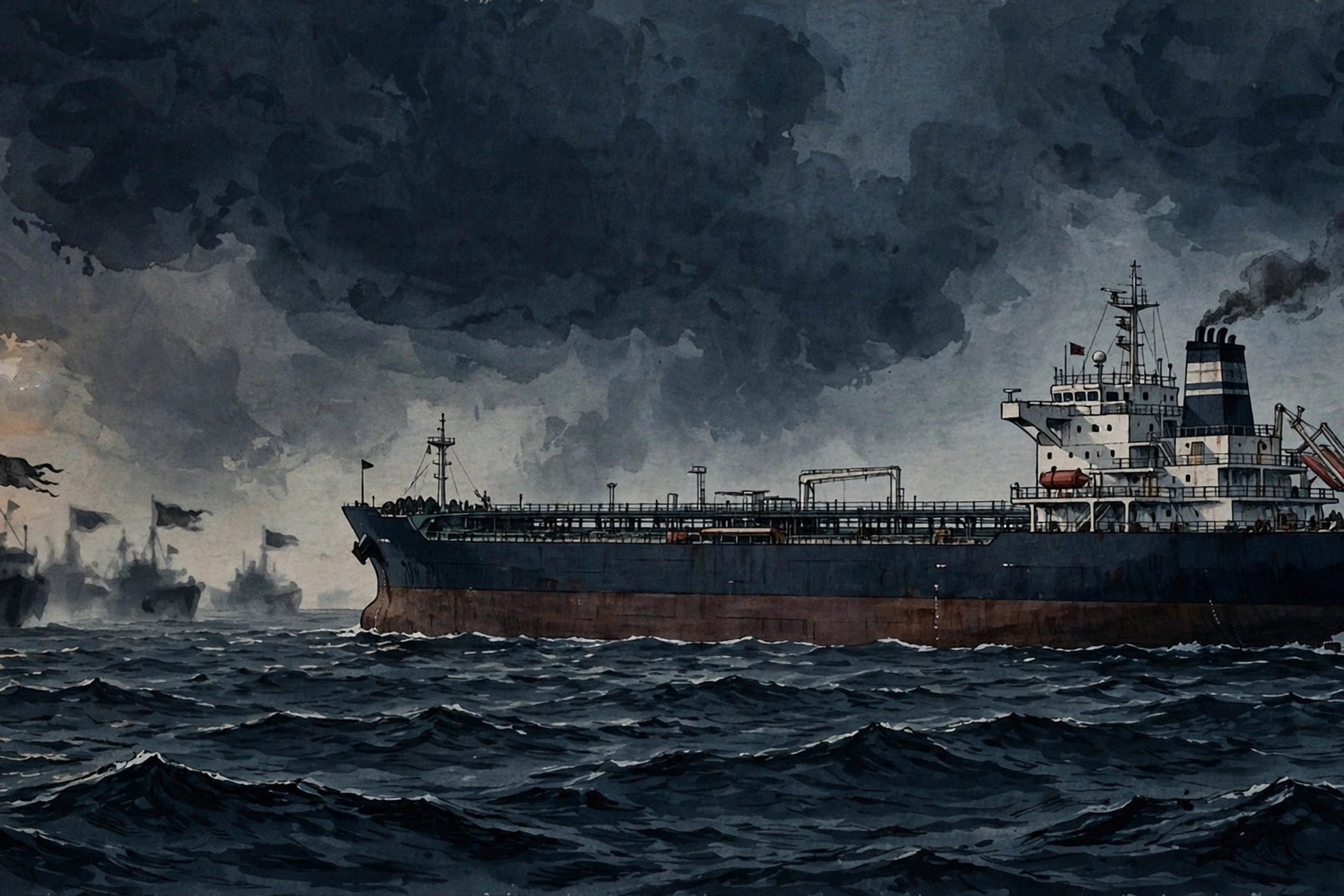
Washington — The United States Treasury Department announced a sweeping set of sanctions on November 4, 2026, targeting what it described as a vast criminal network supporting Iran’s shadow fleet. The action, taken under a campaign the department calls Operation Economic Outcast, focuses on maritime fraud — false flags, questionable registries, and certifications that, according to Treasury, allowed sanctioned vessels carrying Iranian petroleum to keep moving through global waters under disguised identities.
The designations are allegations and administrative actions by the Treasury Department, not findings by a court. Treasury’s Office of Foreign Assets Control can block property and prohibit transactions with designated persons and entities, but those measures do not, by themselves, prove criminal guilt. No response from the named individuals or companies was reported in the sources used for this article, and this report does not present Treasury’s characterisations as adjudicated findings. That distinction matters, because sanctions announcements often use strong language, while the people and firms named may dispute the claims or seek removal from the list through administrative channels.
At the centre of the November 4 action, according to Treasury, is an India-based network led by Suniel Kumar Sharma and his spouse, Jaspreet Preeti Shahid. Treasury alleges that their network provided false flags and certifications to sanctioned vessels carrying Iranian petroleum, including vessels said to be acting for the Iranian military and its proxies. In practical terms, a flag determines which country’s laws govern a ship and which registry vouches for its seaworthiness and ownership. A false or unauthorised flag, if the allegation is correct, would allow a vessel to evade scrutiny, enter ports, obtain insurance, and arrange services that would otherwise be denied to a sanctioned ship.
How the Alleged Iran Shadow Fleet Sanctions Scheme Worked
A shadow fleet is a loose term for tankers and other vessels that operate outside normal, transparent shipping channels to move oil from sanctioned producers. Such vessels often change names, switch flags, turn off tracking transponders, conduct ship-to-ship transfers at sea, and use complex ownership structures to obscure who ultimately controls them. The goal, enforcement officials say, is to break the paper trail that would link a cargo to its origin and to the parties that profit from it.
Treasury’s allegation in this case adds a further layer: not merely that vessels hid their movements, but that they were supplied with the documents that make a ship appear legitimate. Certificates of registry, safety certificates, and related paperwork are the shipping world’s identity documents. Port authorities, insurers, and charterers rely on them. If those documents are issued by a purported registry that has no authority from the state it claims to represent, the vessel can present a veneer of compliance while, according to Treasury, operating in service of sanctioned Iranian oil trade.
Treasury said the network purported to represent states including Guyana, Eswatini, and Laos. That claim is significant because small flag states are often targeted by fraudsters precisely because their registries may be less well known to port officials, and because verifying a registration in real time can be difficult. Treasury further said that one registry continued operating despite being publicly disavowed by Eswatini authorities. If that account is accurate, it would mean the registry was not merely mistaken about its authority, but persisted after the state it claimed to represent had rejected it.
The practical consequences of such a scheme, according to sanctions officials, extend beyond paperwork. A vessel with apparently valid documents can more easily obtain bunkering, repairs, crew services, and insurance, and can call at ports that would turn away a vessel openly identified as sanctioned. Each of those services involves businesses and banks that may themselves face sanctions risk if they deal, knowingly or unknowingly, with a designated vessel or network.
Operation Economic Outcast and the November 4 Designations
Operation Economic Outcast is the name Treasury has given to a broader campaign aimed at networks that support Iran by land, sea, or air. Treasury Secretary Scott Bessent was quoted in the announcement saying the campaign would sanction those who continue supporting the Iranian regime through those channels. The language signals an intent to pursue not only the vessels and cargo owners at the centre of sanctions evasion, but also the intermediaries — registries, certifiers, service providers, and facilitators — that make evasion possible.
The designations announced on November 4 were made under Executive Order 13902, which targets Iran’s petroleum, petrochemical, and aviation sectors. That order gives Treasury broad authority to designate persons operating in those sectors, or providing material support to them. Once designated, a person’s property in the United States is blocked, and Americans are generally prohibited from dealing with them. Foreign firms that continue to transact with designated parties also risk secondary sanctions, a powerful deterrent in global shipping and finance.
The Sharma network, as described by Treasury, illustrates the maritime side of that strategy. By targeting the people and entities said to supply flags and certifications, Treasury is aiming at a bottleneck: without credible documents, a shadow tanker has fewer places to go and fewer services it can buy. Enforcement officials have long argued that chasing individual tankers is a game of whack-a-mole, because vessels can be renamed and reflagged, while targeting registries and certifiers can disrupt many vessels at once.
Fugo Ground Services and the Aviation Side of the Action
The November 4 action was not limited to shipping. Treasury also sanctioned Türkiye-based Fugo Ground Services Inc. for services to Iran’s aviation sector, including service agreements with six already-sanctioned Iranian airlines. Ground services — handling, catering, fuelling arrangements, and related support — are essential to keeping aircraft flying, and Treasury’s action treats the provision of such services to sanctioned airlines as support for a sanctioned sector.
The inclusion of an aviation firm alongside a maritime network underscores the breadth of Operation Economic Outcast. Iran’s sanctioned economy relies on multiple transport modes, and Treasury’s campaign is designed to follow the money and services across them. A ground handler in Istanbul, a registry claiming to act for a flag state, and a tanker carrying petroleum may seem unrelated, but in Treasury’s framing they are parts of a single ecosystem that allows sanctioned trade to continue despite restrictions.
As with the maritime allegations, the claims against Fugo Ground Services are Treasury’s designations, not court findings. The company has not, in the sources used here, publicly responded to the action. Its designation means its assets under United States jurisdiction are blocked and American persons are barred from dealing with it, but it does not, by itself, establish criminal liability or resolve any factual disputes about the nature of its agreements with the airlines named.
What Sanctions Mean, and What They Do Not Prove
It is important for readers to understand what a Treasury designation does and does not do. A designation is an executive-branch action, based on information available to the government, and it takes effect immediately. It can have severe commercial consequences, cutting a firm off from dollar transactions, correspondent banking, and many international partners who choose to avoid sanctions risk. At the same time, designated parties can challenge their listing, provide information to Treasury, and in some cases be removed if the government is satisfied that the basis for designation no longer applies.
That process is different from a criminal trial, where allegations must be proved beyond a reasonable doubt, or a civil trial, where they must be proved by a preponderance of the evidence. Sanctions announcements, by their nature, present the government’s case in its strongest terms. They do not include the designated party’s defence, unless that party chooses to make one publicly. For that reason, responsible reporting attributes the core claims — false flags, fake certificates, support for sanctioned vessels and airlines — to Treasury, rather than stating them as independently established facts.
The absence of a reported response in the sources used here does not mean no response exists or will not emerge. Companies and individuals facing sanctions sometimes issue statements through lawyers, trade associations, or national authorities. Flag states whose names are invoked also have an interest in clarifying whether a registry was authorised. Readers should watch for any such statements, and for any action by Guyana, Eswatini, Laos, India, or Türkiye in response to the designations.
Why Maritime Fraud Has Become a Sanctions Priority
The focus on false flags and fake certificates reflects a shift in how sanctions enforcement works. In earlier years, much attention centred on identifying specific tankers and their cargoes. That approach remains important, but enforcement agencies have increasingly concluded that the infrastructure of deception — registries, classification societies, insurers, and service providers — is where intervention can have the greatest effect.
A single fraudulent registry can, in theory, serve dozens of vessels. A single certifier can lend credibility to a fleet. Disrupting those nodes, officials argue, raises the cost and risk of evasion for everyone who relies on them. It also sends a signal to legitimate maritime businesses: due diligence on flags and certificates is not a formality, and failure to verify a registry’s authority can carry sanctions consequences.
For the shipping industry, the November 4 action is therefore a compliance warning as much as a law-enforcement measure. Shipowners, charterers, insurers, and port operators will be expected to scrutinise flags and certificates more carefully, particularly where a vessel’s claimed registry is obscure, recently changed, or inconsistent with its trading pattern. Banks that finance shipping will likewise face pressure to verify that their clients are not relying on fraudulent documentation.
Whether the November 4 designations achieve their intended effect will depend on enforcement, cooperation from flag states, and the willingness of third countries to act against registries operating from their territory. Treasury can block assets and prohibit American transactions, but dismantling a global network requires partners. The coming weeks will show whether other governments take parallel action, whether the named network seeks delisting, and whether shadow-fleet operators find new intermediaries to replace those designated. For now, the action stands as Treasury’s latest, and broadest, attempt to close the documentary loopholes that, in its view, keep Iranian petroleum moving.
Sources
USN reviewed reporting from multiple outlets for this story. Read more from U.S. Treasury, Arab News and Türkiye Today.