

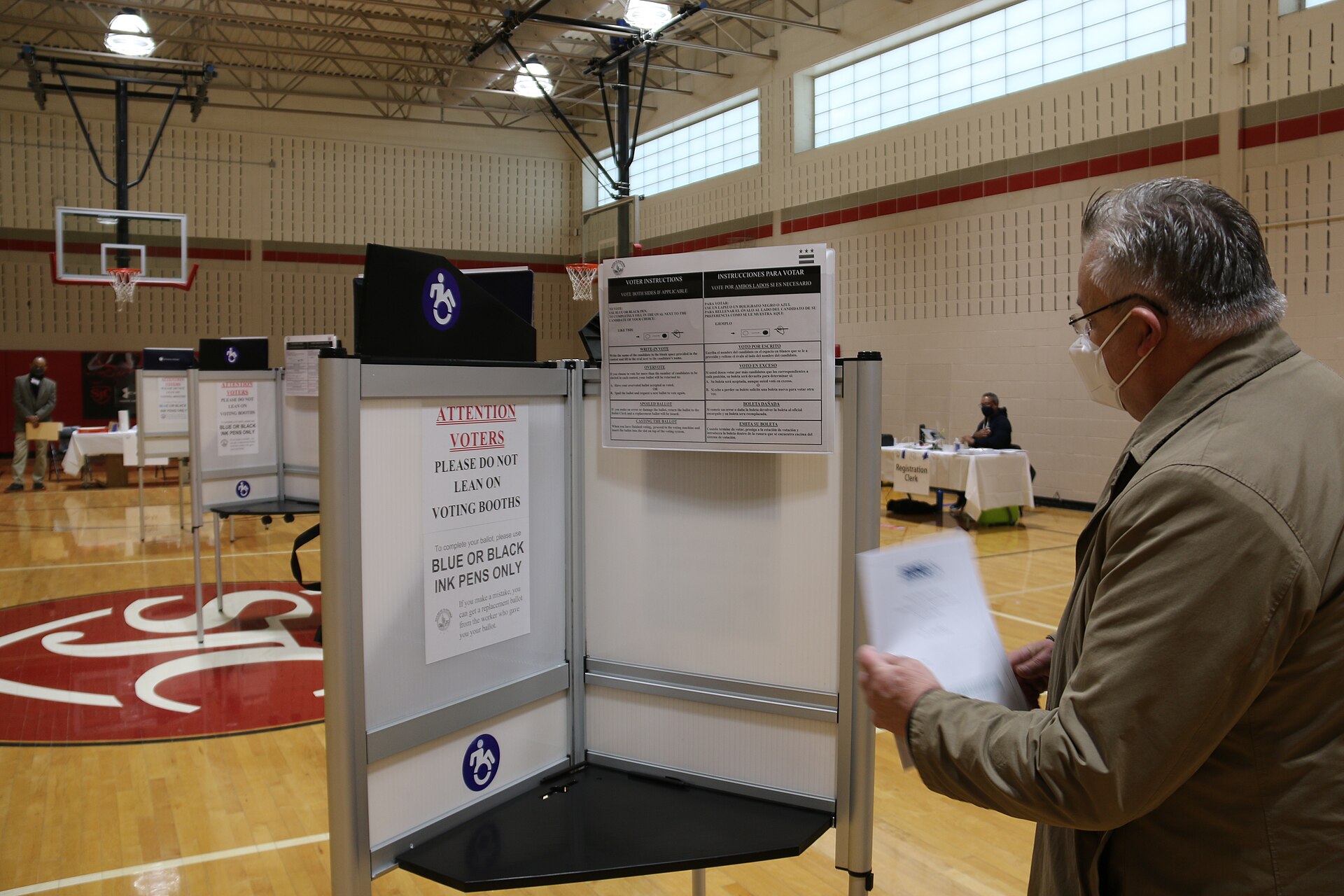
Democrats have won the races to become the top election official in three states where Republicans had held the office, a result that could reshape how elections are run in some of the most closely watched states in the country. The secretary of state is often one of the least understood offices on the ballot, but it is one of the most consequential: the officeholder oversees voter registration, ballot access, the counting of votes, and, in many states, the certification of results. Winning it is not just a symbolic victory. It is control of the machinery of democracy itself.
In Georgia, Indiana and Ohio, Democratic candidates defeated Republican incumbents or Republican-backed successors, ending years of Republican control of the office in each state. The results were part of a broader Democratic wave in the 2026 midterms, but they stand out because of the specific power of the office and because of the recent history of election disputes in these states. In each case, the Democratic victory was framed by supporters as a win for voting rights and election integrity, and by critics as a loss for election security. The truth, as with most political contests, lies somewhere in the details of what each new officeholder actually does.
Why Secretaries of State Matter So Much
The secretary of state is, in most states, the chief election officer. That means the officeholder is responsible for maintaining voter rolls, ensuring that polling places are properly staffed and equipped, overseeing the counting of ballots, and certifying the results. The officeholder also typically has authority over business registrations, notaries, and other administrative functions, but it is the election role that attracts the most attention, particularly since the disputed 2020 election and the subsequent efforts to change election laws across the country.
Because of that role, the office has become a target for both parties, and for outside groups that see control of election administration as a way to influence future outcomes. In recent cycles, candidates for secretary of state have raised record sums, and the races have attracted national attention and national money. The 2026 results suggest that voters in Georgia, Indiana and Ohio were willing to entrust that power to Democrats, at least for now, and that the Republican incumbents’ records on election administration were not enough to hold the office.
Georgia: A Closely Watched Change of Hands
Georgia’s secretary of state race was perhaps the most closely watched of the three, given the state’s recent history as a battleground and its role in the 2020 election controversy. Georgia’s Republican secretary of state had become a national figure for his role in resisting pressure to overturn the 2020 results, but he had also faced criticism from Democrats for his handling of voter roll purges and other election policies. The Democratic challenger campaigned on expanding access to the ballot, restoring voting rights to people with past convictions, and making it easier to vote by mail and early in person.
The Democratic victory in Georgia is significant not only for what it means for future elections in the state, but also for what it signals about the state’s political direction. Georgia has been trending Democratic in recent presidential elections, but Republicans have maintained control of many state offices. Winning the secretary of state office gives Democrats a foothold in the state’s election machinery, and it could affect how future elections are administered, particularly in a state where the margin of victory in presidential races is often very narrow.
Indiana: A Surprise in a Republican State
Indiana’s result was, for many observers, the most surprising of the three. Indiana is a reliably Republican state in presidential elections, and Republicans have dominated state government for years. The Democratic victory in the secretary of state race therefore represents a significant breakthrough, and it suggests that voters were willing to split their tickets or to punish the Republican incumbent for specific failures, even in a state where they otherwise support Republicans.
The Indiana race focused heavily on election administration issues, including the state’s voter ID law, its handling of mail ballots, and its use of technology in elections. The Democratic candidate argued that the Republican incumbent had been too restrictive in his approach to voting access, and that Indiana should make it easier, not harder, for eligible voters to participate. The Republican incumbent argued that his policies were necessary to prevent fraud and to maintain confidence in elections. Voters sided with the Democrat, a result that will be studied by strategists in both parties as they assess the appeal of voting rights messages in Republican-leaning states.
Ohio: A Swing State’s Election Office Changes Parties
Ohio’s secretary of state race was also closely watched, given the state’s status as a perennial swing state and its history of close elections. Ohio’s Republican secretary of state had been a prominent figure in national debates about election law, and he had supported measures that Democrats criticised as restrictive. The Democratic challenger campaigned on a platform of expanding voting access, improving election technology, and increasing transparency in the counting process.
The Democratic win in Ohio gives the party control of an office that will be central to the administration of the 2028 presidential election in a state that could decide the outcome. Ohio has been trending Republican in recent presidential elections, but it remains competitive in statewide races, and the secretary of state office is one that Democrats can use to influence the rules and the administration of future elections. The result also suggests that Ohio voters, like voters in Georgia and Indiana, were receptive to a message focused on voting access and election integrity.
What the New Secretaries of State Will Do
The immediate question now is what the new Democratic secretaries of state will do with their power. In all three states, they are expected to move quickly to expand voting access, including through changes to voter registration, early voting, and mail voting rules. They are also expected to review voter roll maintenance practices, to invest in election technology and security, and to increase transparency in the election process. How far they can go will depend on the laws in each state, on the cooperation of the legislature, and on the courts, which have played an increasingly active role in election disputes.
The new officeholders will also face intense scrutiny from Republicans, who will be watching for any changes that they believe could advantage Democrats in future elections. The history of secretary of state offices is that they are often accused of partisanship, regardless of which party holds them, because the decisions they make about election administration inevitably affect the parties’ chances. The new Democrats will need to demonstrate that they are administering elections fairly and impartially, even as they pursue policies that their party supports.
The National Implications
Nationally, the results in Georgia, Indiana and Ohio are part of a broader story about the 2026 midterms and about the future of American elections. Democrats’ success in winning secretary of state races in these states suggests that voters are concerned about voting rights and election administration, and that they trust Democrats more than Republicans on these issues, at least in these states. That is a significant shift from previous cycles, when Republicans often had an advantage on election security messaging.
The results also have implications for the 2028 presidential election. The secretaries of state in Georgia, Indiana and Ohio will oversee the administration of that election in their states, and their decisions could affect turnout, ballot access, and the counting of votes. In a close presidential race, those decisions could be decisive. That is why both parties will be watching these offices closely over the next two years, and why the 2026 secretary of state results may prove to be one of the most consequential outcomes of the entire midterm cycle.
For now, Democrats can celebrate a significant victory in the states, even as they face the challenge of governing effectively and fairly in offices that are under constant scrutiny. The new secretaries of state in Georgia, Indiana and Ohio will have the opportunity to shape the future of elections in their states, and their performance will be judged not only by their own party, but by voters of all parties who expect elections to be free, fair, and accessible. Whether they succeed will be one of the key stories of the next two years.
Sources
USN reviewed reporting from multiple outlets for this story. Read more from Democracy Docket, NBC News and Politico.