

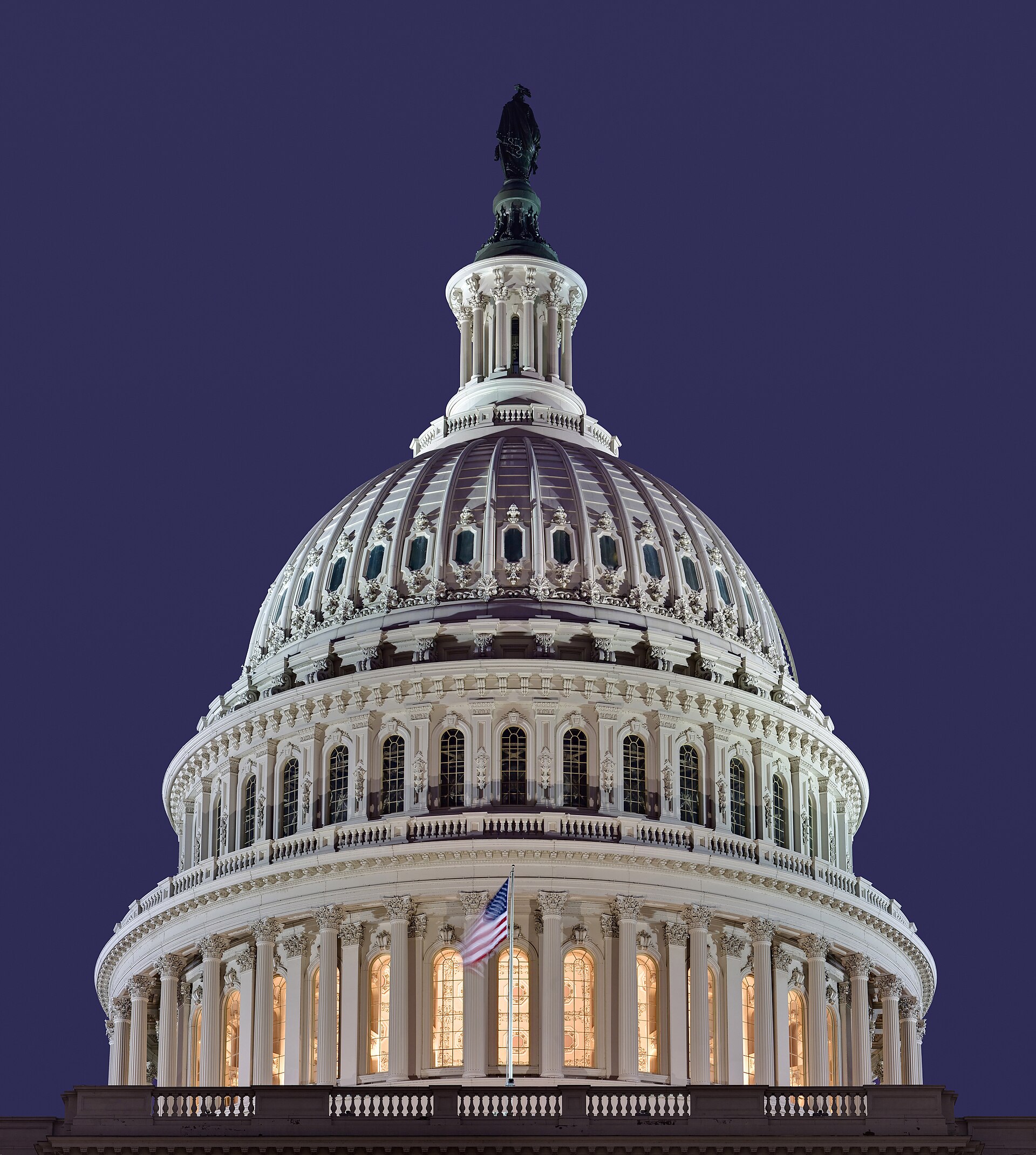
Democrats are projected to retake control of the United States Senate after flipping seven seats previously held by Republicans in the 2026 midterm elections, a result that redraws the balance of power in Washington for the second half of the presidential term. The seven changes came in Iowa, Kansas, Maine, North Carolina, Ohio, South Carolina and Texas, according to election-night and post-election reporting on the results. Republicans, by contrast, were not projected to flip any Democratic-held Senate seat, leaving the night as a one-directional shift rather than a trade of seats between the two parties.
The outcome matters because Senate control determines far more than a single number on a scoreboard. The majority party sets the floor schedule, decides which bills receive votes, controls committee chairmanships and staffing, and controls the pace at which presidential nominations for judges, ambassadors and executive-branch posts move forward. A change of majority therefore changes what can pass, what can be blocked and what can even reach a vote, even when the House and the presidency are held by different parties. In this case, the projected Democratic majority arrives at a moment when the legislative agenda in Washington has been sharply contested, and it gives Democrats a new institutional lever in negotiations over spending, oversight and confirmations.
Control was projected while the count was still incomplete. Two races, in Alaska and Mississippi, remained uncalled when the majority was projected, meaning the complete tally of the Democratic majority was still unknown even as the direction of control became clear. That distinction is important: a projected majority is not the same as a official complete tally. Election officials in every state must still complete counting, canvassing and confirmation, and late-arriving ballots permitted under state law can still move individual margins. The uncalled races could add to either party’s total, but reporting indicated they would not reverse the overall projection of Democratic control.
How the 2026 Senate Flips Reshaped the Map
The breadth of the map is what made the night striking. The seven flips did not cluster in one region or one kind of state. They stretched from New England to the Deep South, from the Midwest to the Southwest, and they included states that have voted reliably Republican in recent Senate contests as well as states that have long been competitive. Flipping a seat in a state where a party has held an advantage for years requires more than a favourable national mood; it requires a candidate who can win over voters who do not normally vote for that party, a campaign organisation capable of turning out supporters across the state, and an opponent vulnerable enough to lose voters in the middle.
In Texas, the most closely watched of the flips, Democrat James Talarico defeated Republican Ken Paxton, according to reporting on the race. Texas has been one of the most difficult states for Democrats to win statewide in recent decades, and a Senate victory there carries symbolic weight well beyond the single seat. Talarico’s projected win suggested that a Democratic candidate could assemble a winning coalition in a large, diverse and fast-growing state even in a contest shaped by national polarisation. For Republicans, losing Texas in a Senate race raised immediate questions about candidate selection, turnout in the state’s largest metropolitan areas and the party’s standing with suburban voters who have shifted in recent cycles.
Kansas produced another historic marker. Democrat Adam Hamilton was projected to win there, becoming the first Democrat elected to the Senate from Kansas in nearly a century. That span alone explains why the result drew national attention. A state that has sent Republicans to the Senate for generations does not change hands lightly, and Hamilton’s victory was presented in reporting as evidence that voters were willing to break long-standing partisan habits when the contest, the candidates and the issues aligned in a particular way. The Kansas result also underscored that the 2026 map contained opportunities for Democrats in places that strategists in both parties had long treated as out of reach.
Ohio offered a different kind of story: a return rather than a breakthrough. Former Senator Sherrod Brown, a familiar figure in Ohio politics, was projected to return to the Senate after winning back a seat he had previously held. Brown’s comeback gave Democrats a seasoned legislator with deep ties to labour, manufacturing and working-class communities in a state that has trended Republican in presidential elections. His projected return also illustrated a recurring feature of midterm politics: voters sometimes bring back a known quantity when they judge that experience and a record on local economic issues matter more than party labels alone.
A Historic First in Michigan and Gains Beyond the Seven Flips
Beyond the seven seats that changed party hands, Michigan produced a milestone of its own. Abdul El-Sayed was projected to become the first Muslim member of the United States Senate, a historic first for a chamber that has never before seated a Muslim senator. The significance of that result extends beyond party arithmetic. Representation in the Senate has long lagged the diversity of the country, and firsts of this kind are often read as markers of how the electorate and the institutions it chooses are changing. El-Sayed’s projected victory was reported as a breakthrough for Muslim Americans in national politics, regardless of how observers judged his policy positions.
The other flips, in Iowa, Maine, North Carolina and South Carolina, each carried their own local dynamics, but together they reinforced the same national pattern. In Maine and North Carolina, competitive races that had been forecast as close went to Democratic challengers. In Iowa and South Carolina, states where Republicans have enjoyed structural advantages in recent Senate elections, Democratic victories suggested that the electorate was more open to change than many pre-election assessments had assumed. Taken together, the seven results meant that Democrats did not merely defend their own territory; they expanded it, while Republicans were unable to offset those losses anywhere on the map.
What a Projected Democratic Majority Changes in Washington
The practical consequences of the projected majority will unfold over months, not overnight. A Democratic majority can schedule votes on legislation that previously stalled, can use committee hearings to set the terms of public debate, and can advance or block nominations that require Senate confirmation. That power is real, but it is also bounded. Passing most major legislation still requires a broad coalition, and the Senate’s rules, including the filibuster for most bills, mean that a narrow majority does not automatically translate into enactment of a party’s full agenda. The majority’s most immediate and reliable leverage is therefore likely to be felt in confirmations, oversight and agenda-setting rather than in sweeping new laws passed on party-line votes alone.
For the White House, the projected loss of the Senate complicates the remainder of the term. Nominations that might once have moved smoothly will now face closer scrutiny and, in contested cases, outright opposition. Judicial vacancies, in particular, become harder to fill when the Senate majority belongs to the opposing party, and the pace of confirmations often slows sharply in that environment. At the same time, the president retains veto power and executive authority, so a change in Senate control does not remove the presidency from the legislative process. It creates a period of divided government in which negotiation, rather than one-party action, becomes the normal route to legislation.
For Democrats, the challenge now shifts from winning seats to using them. A majority built on victories in states as different as Kansas, South Carolina, Texas and Maine will not necessarily agree on every priority. Senators elected in deeply Republican-leaning states may face different political pressures from colleagues elected in more Democratic states, and holding a coalition together on difficult votes will require compromise within the party as well as across the aisle. The size of the complete majority, once Alaska and Mississippi are called and all results are official, will shape how much room Democratic leaders have to lose votes and still prevail.
For Republicans, the night prompted a different set of questions. Losing seven seats without flipping any raises questions about candidate quality, campaign strategy and the party’s appeal in states where it had previously been secure. Party leaders and strategists will examine turnout patterns, the performance of incumbents and challengers, and the issues that moved voters who split their tickets or stayed home. Those internal debates, which often begin in the days after a defeat, will influence candidate recruitment and messaging well before the next election cycle.
As counting continues, observers should treat every remaining figure as provisional. The projected majority is a meaningful and widely reported outcome, but the exact margin, the complete party totals and the official results in each state will only be settled when officials finish their work. Until then, the story of the 2026 Senate is best described in the terms reporting has used: seven Republican-held seats flipped, none moved the other way, control is projected to change hands, and two races remain uncalled.
Sources
USN reviewed reporting from multiple outlets for this story. Read more from USA Today, Outlook India and Economic Times.