

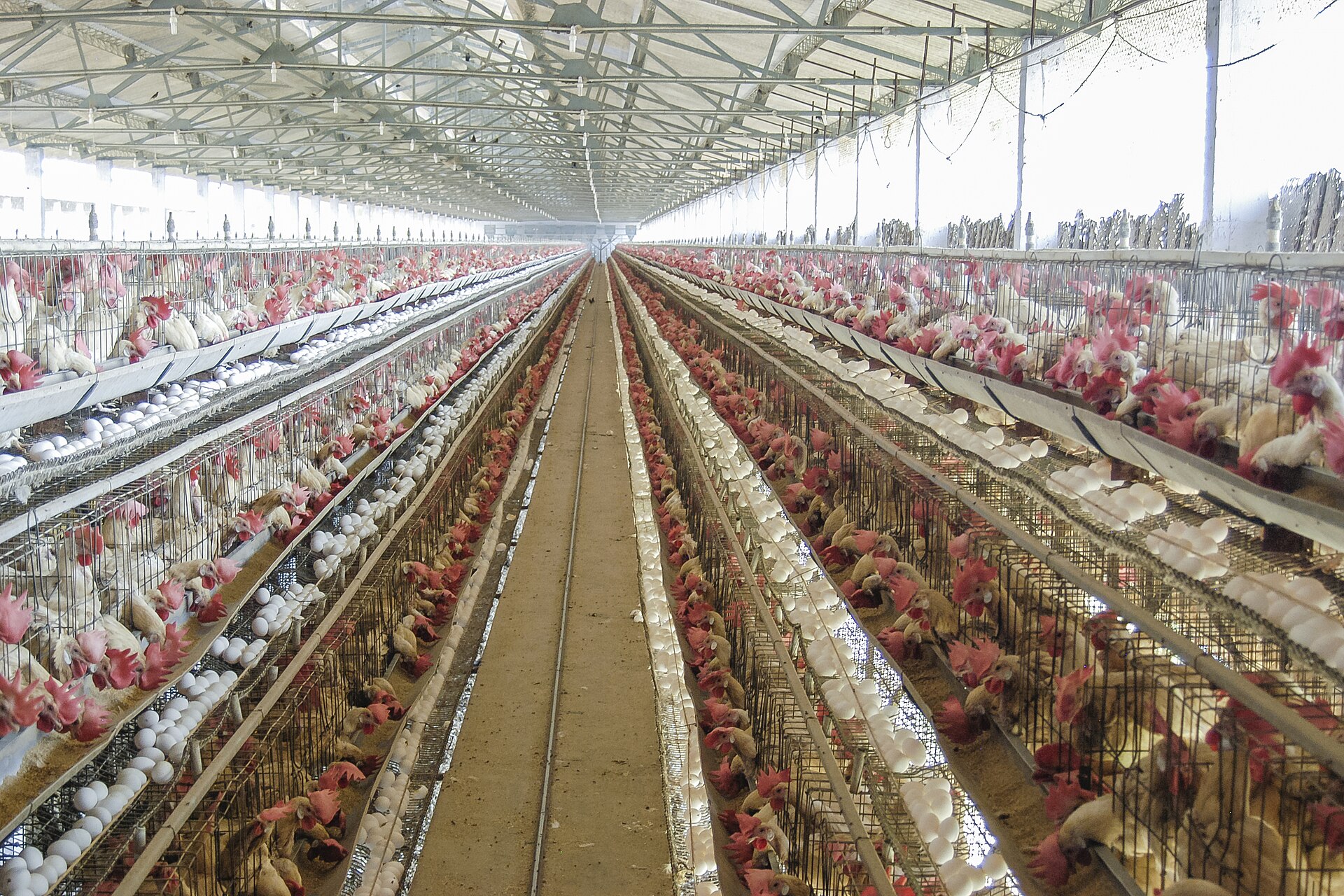
India will dedicate its first indigenous vaccine against H5N1 bird flu to the nation on 20 November 2026, in a ceremony at Bhopal that marks a significant step in the country’s long fight against a disease that has repeatedly devastated its poultry farms. Union Agriculture and Farmers Welfare Minister Shivraj Singh Chouhan will dedicate the vaccine at the Indian Council of Agricultural Research’s National Institute of High Security Animal Diseases, known as ICAR-NIHSAD, where the vaccine was developed. The announcement was made by the Ministry of Agriculture and Farmers Welfare on 18 November 2026.
The vaccine is an inactivated vaccine designed to protect chickens against the H5N1 virus of Clade 2.3.2.1a, the strain that has been responsible for most bird flu outbreaks in Indian poultry. According to the government’s announcement, it is the first vaccine of its kind developed in India against this particular strain, and at present no specific commercial vaccine is available against the H5N1 virus of this clade. That gap is the reason the development matters: until now, India has had no home-grown vaccine matched to the strain actually circulating in its poultry flocks.
For the millions of Indians who depend on poultry farming for their livelihood, the announcement carries practical significance that goes well beyond the laboratory. Bird flu outbreaks do not only kill birds. They trigger large-scale culling, shut down the movement and sale of poultry, push up the prices of eggs and chicken, and leave small farmers facing losses they cannot easily absorb. A vaccine developed in India, against the strain circulating in India, offers the prospect of adding prevention to a control strategy that has so far relied mainly on surveillance, culling and restrictions after an outbreak has already begun.
What the Vaccine Is, and What It Is Not
The first thing to be clear about is what this vaccine is for. It is a veterinary vaccine, developed for chickens. It is not a vaccine for people, and it should not be described as one. The distinction matters because bird flu is a disease that sits at the boundary between animal health and human health, and confusion about who a vaccine protects can spread faster than the virus itself. The government’s announcement is explicit: this is an inactivated H5N1 vaccine for chickens, targeting the highly pathogenic avian influenza virus of Clade 2.3.2.1a.
An inactivated vaccine is made from a virus that has been killed, so that it cannot cause disease, but that can still train the bird’s immune system to recognise and fight the live virus. It is a well-established approach in veterinary medicine, and it is the approach the scientists at ICAR-NIHSAD chose for this vaccine. The vaccine is described as indigenous because it was developed in India, by an Indian research institute, against a strain identified through India’s own disease surveillance. That matters for more than national pride: a vaccine matched to the strain circulating in Indian flocks is more likely to be effective against the outbreaks Indian farmers actually face than a vaccine developed elsewhere against a different strain.
It is equally important to be clear about what the announcement does not say. The dedication ceremony on 20 November is the formal presentation of the vaccine to the nation. It is not, by itself, the start of a nationwide vaccination campaign. The announcement does not set out when the vaccine will become commercially available, how it will be distributed to poultry farms, what vaccination schedules farmers should follow, or what it will cost. Those details, as reporting of the announcement has noted, will be important in judging the vaccine’s eventual impact, and they have not yet been published. Farmers should therefore treat the dedication as a research and disease-control milestone, not as a signal to change their current biosecurity practices.
Why India’s Bird Flu Vaccine Matters for Poultry Farmers
To understand why a poultry vaccine can be national news, it helps to understand what a bird flu outbreak does to a farming community. Highly pathogenic avian influenza can cause nearly 100 per cent mortality among infected birds, according to the government’s announcement. When the virus is detected on a farm, the response is swift and severe: infected and exposed birds are culled, movement of poultry in the surrounding area is restricted, and trade in poultry products from the affected zone is disrupted. For a small farmer, a single outbreak can wipe out a flock built up over months, and with it the income the family was counting on.
The losses extend far beyond the farm gate. The government’s announcement notes that a major outbreak of bird flu could reduce India’s GDP growth by up to 1.5 per cent, and that more than 20 per cent of the country’s poultry population could be at risk if the disease spreads without control. The 2006 outbreak, the first detected in India, caused estimated direct and indirect losses of between 2,200 crore rupees and 3,000 crore rupees. An outbreak in Manipur resulted in losses equivalent to 0.5 per cent of the state’s GDP. These are not abstract figures. They represent destroyed flocks, lost jobs in feed mills and hatcheries, empty market stalls, and families pushed into debt.
Until now, India’s main defences against bird flu have been reactive. Surveillance networks watch for sudden bird deaths, laboratories confirm the virus, and veterinary authorities move in with culling and movement restrictions to contain the spread. That approach has kept many outbreaks from becoming catastrophes, but it has a built-in cost: containment works by destroying birds, which is exactly the loss farmers fear. Vaccination, if it is deployed as part of a scientifically monitored control strategy, offers something different. It protects birds before they are exposed, reducing the number of outbreaks that need to be contained by culling in the first place. That is why the development of a vaccine matched to the circulating strain is described by the government as an important step in strengthening poultry disease control.
A Disease India Has Battled Since 2006
Bird flu is not a new problem in India. The disease was first detected in the country in 2006, and since then more than 500 combined outbreaks of the H5N1 and H5N8 subtypes have been reported, according to the government’s announcement. That history explains why the vaccine has been so long in coming, and why its development has been treated as a priority by the country’s animal health researchers. Two decades of recurring outbreaks have built up a detailed picture of which strains circulate in India, and that picture points again and again to Clade 2.3.2.1a.
The strain’s name needs a brief explanation, because it appears in every report of the new vaccine. H5N1 is the subtype of the influenza A virus that causes highly pathogenic avian influenza in birds. Within that subtype, viruses are grouped into clades, which are branches of the virus family tree. Clade 2.3.2.1a is one such branch, and studies cited in the government’s announcement have shown that it has been responsible for most bird flu outbreaks in chickens. A vaccine that targets this specific clade is therefore aimed at the virus Indian poultry farmers are most likely to encounter, rather than at bird flu in general.
The persistence of the disease also explains why the vaccine alone will not end the problem. Bird flu viruses circulate in wild birds, which cannot be vaccinated, and they can spill over into poultry again and again. New outbreaks can appear in states that have been free of the disease for years, and a strain can change over time. That is why animal health experts consistently describe vaccination as one tool among several, alongside surveillance, rapid testing, biosecurity on farms, and the culling and movement controls that remain necessary when an outbreak is confirmed. The vaccine strengthens the toolkit. It does not replace it.
The Fresh Outbreaks Behind the Timing
The announcement comes at a moment when bird flu is once again in the news for the worst of reasons. In Tamil Nadu’s Cuddalore district, H5N1 infection was confirmed in November after sudden bird deaths were reported at poultry farms. As of 13 November, 35,647 birds had died in the affected zone, and authorities began culling operations within a one-kilometre radius of the affected premises while restricting poultry movement. Around 40,000 chickens were subsequently reported to have been culled as part of the containment measures. For the farmers in that zone, the outbreak was not a statistic but a sudden and total loss.
Andhra Pradesh has also reported outbreaks. In October, bird flu was confirmed in poultry in Anantapur district, including Siddarampuram village in Bukkarayasamudram mandal, and the state government declared infected and surveillance zones, restricting poultry movement to limit the spread. These are the latest in a wider pattern. According to the Department of Animal Husbandry and Dairying’s annual report for 2025-26, outbreaks during 2025 affected states including Maharashtra, Chhattisgarh, Jharkhand, Andhra Pradesh, Madhya Pradesh, Telangana, Karnataka and Bihar, among others. The geography is a reminder that bird flu is not a problem of one state or one season. It is a recurring national risk.
The timing of the vaccine announcement, days after fresh detections in Tamil Nadu, underlines the urgency that surrounds the disease. Every outbreak is a test of the surveillance and response system, and every outbreak carries a cost in culled birds, disrupted trade and anxious farmers. The vaccine will not help the flocks already lost in Cuddalore or Anantapur, and it cannot be deployed retrospectively. What it offers is a better position for the next outbreak, and the one after that, provided that the path from dedication to deployment is followed through with the same seriousness as the research that produced the vaccine.
Inside ICAR-NIHSAD: The Bhopal Institute Behind the Breakthrough
The vaccine was developed at ICAR-NIHSAD in Bhopal, an institute whose name describes its role. The National Institute of High Security Animal Diseases is a specialised research institute under the Indian Council of Agricultural Research, and it is one of the country’s key centres for work on dangerous animal diseases. Its high-security laboratories allow scientists to work safely with pathogens that cause severe disease in animals, including the highly pathogenic avian influenza virus, and to test vaccines and diagnostic methods under controlled conditions.
That the vaccine was developed there is significant in two ways. First, it means the research was carried out close to the disease itself: NIHSAD is also the laboratory to which samples are sent when bird flu is suspected, and it is the institute that confirms the virus in outbreak investigations. The scientists who developed the vaccine therefore work with the same strains that are killing birds in the field, not with a distant or outdated reference virus. Second, it means India now has a domestic source of expertise in this area. The capacity to develop, test and produce a vaccine against a circulating strain is a capability that cannot be bought quickly in an emergency. It has to be built over years, through sustained investment in laboratories, scientists and surveillance.
The dedication ceremony itself will take place at the institute, which is fitting for a development that is as much about India’s research capacity as about a single product. When a minister dedicates a vaccine to the nation, the ceremony is a public statement that the government regards the work as important enough to mark formally. For the scientists involved, it is recognition of years of research. For the poultry sector, it is a signal that the government intends the vaccine to move from the laboratory towards the farm, even though the practical details of that move have yet to be announced.
From Dedication to the Farm: What Happens Next
The most important question now is what happens after 20 November. A vaccine that stays in a laboratory protects no chickens. For the vaccine to make a difference, several steps still lie ahead, and none of them is automatic. Production has to be scaled up, so that enough doses exist for the flocks that need them. Distribution has to reach the farms where the risk is highest, including the small and medium-sized farms that are the backbone of Indian poultry production. Veterinary authorities have to decide which birds are vaccinated, in what order, and on what schedule. And farmers have to be told clearly what the vaccine does, what it costs, and how it fits with the biosecurity measures they already follow.
None of those details has been announced yet, and it would be wrong to fill the gap with speculation. What can be said is that the experience of other animal vaccination programmes in India offers both encouragement and a warning. India has run large-scale animal vaccination campaigns before, and its veterinary services know how to reach remote farms. But such campaigns also require sustained funding, cold chains to keep vaccines effective, trained staff to administer them, and records to track which flocks have been covered. A vaccine is only as good as the system that delivers it, and the system for this vaccine has yet to be described in public.
There is also the question of how vaccination will be combined with the existing control measures. In many countries, vaccination against highly pathogenic avian influenza is used alongside surveillance and culling, not instead of them, and vaccinated flocks are monitored to make sure the virus is not circulating silently among protected birds. That kind of monitoring requires laboratory testing and data collection, which in turn requires coordination between the central government, state animal husbandry departments and the poultry industry. The announcement of the vaccine is the beginning of that conversation, not its conclusion, and the decisions made in the coming weeks will determine whether the dedication ceremony is remembered as a turning point or as a promising announcement that was never followed through.
The Public Health Dimension: Chickens, Mammals and People
Bird flu is primarily a disease of birds, but it has a public health dimension that cannot be ignored, and the government’s announcement addresses it directly. According to the World Health Organization, 1,003 human cases of H5N1 avian influenza, including 479 deaths, have been reported across 25 countries, including India, since 2003. Those numbers are small compared with the scale of seasonal influenza, but the severity of the disease in the people who do catch it is the reason health authorities watch H5N1 so closely.
The announcement also notes a development that has added to that concern. In recent times, infections caused by Clade 2.3.2.1a have been detected in different animal species, including mammals, along with three human cases. The detection of the virus in mammals does not mean it has become a human disease, and health experts stress that human infections remain uncommon and that sustained human-to-human transmission has not been established. People most at risk are those who have close, unprotected contact with infected birds or contaminated environments, which is why poultry workers and culling teams are advised to use protective equipment. But the spread of the virus into new animal species is a reminder that controlling it in poultry is also a way of reducing the chances of it reaching people.
That is the broader logic behind the vaccine. Reducing the amount of virus circulating in poultry reduces the opportunities for the virus to infect other animals and people, and it reduces the chances of the virus changing in ways that could make it more dangerous. It is the same logic that links animal health and human health in the approach often called One Health: the health of people, animals and the environments they share cannot be separated. A chicken vaccine, developed in this light, is not only an agricultural product. It is a public health measure as well, and that is part of why its dedication is being treated as a national event.
What Farmers and Consumers Should Watch Now
For poultry farmers, the practical advice remains what it has been during every outbreak. Unusual or sudden deaths among birds should be reported to veterinary authorities without delay, and sick or dead birds should not be handled with bare hands. Biosecurity measures on the farm, including restricting the movement of people and equipment between flocks, remain the first line of defence, and they will remain important even after a vaccine becomes available. Farmers should wait for official guidance on the new vaccine, including who will be eligible, when it will be available, and how it will be administered, rather than acting on rumours or unofficial claims.
For consumers, the message is equally straightforward. Poultry and eggs should be handled hygienically and cooked thoroughly, as health authorities have long advised, and there is no reason to change eating habits on the basis of the vaccine announcement. The announcement is good news for the poultry sector, but it does not change the food safety advice that applies during any outbreak. Consumers who hear claims about the vaccine, or about the safety of chicken and eggs, should rely on statements from the government and veterinary authorities rather than on messages circulating on social media.
The dedication of India’s first indigenous H5N1 chicken vaccine on 20 November is, on the evidence of the government’s own announcement, a genuine milestone: the first home-grown vaccine against the strain responsible for most bird flu outbreaks in Indian poultry, developed by an Indian institute, at a moment when fresh outbreaks are a reminder of what is at stake. Whether it becomes a turning point will depend on what follows the ceremony: production, distribution, clear guidance for farmers, and the continued surveillance and biosecurity that no vaccine can replace. The research has been done. The next chapter belongs to the system that must carry the vaccine from Bhopal to the farms where it is needed.
Sources
USN reviewed reporting from multiple outlets for this story. Read more from PIB, NDTV and DD India.