

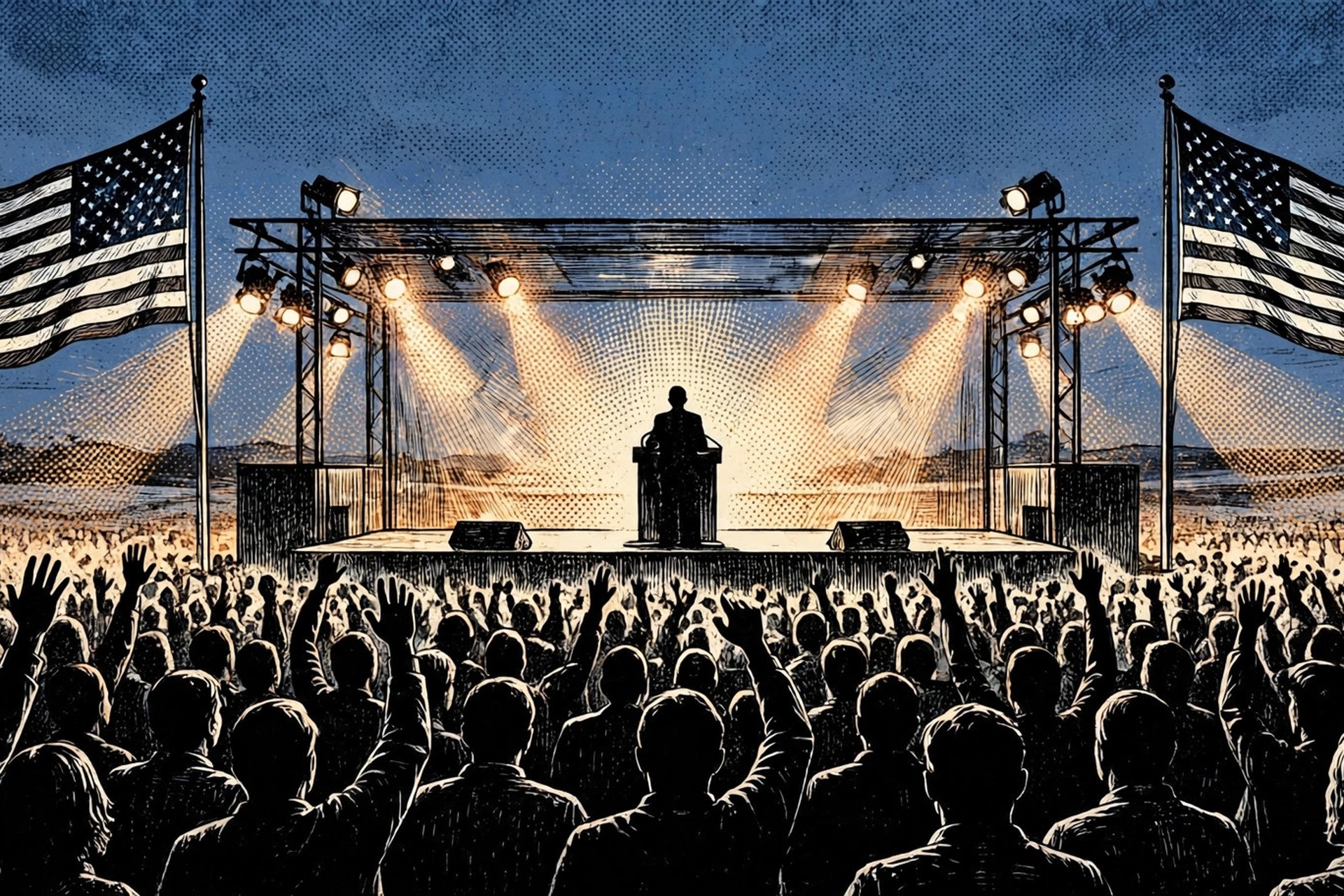
WASHINGTON — President Donald Trump has restored the Kansas and Iowa rallies he cancelled a day earlier, in a final-weekend reversal that captures the frantic, stop-start rhythm of the last days before the midterm elections. On Friday, 30 October 2026, a White House official told Reuters that the rallies were back on. “Rallies are BACK ON! … he will hold back-to-back rallies in Kansas and Iowa on Sunday,” the official said, in addition to nearly 20 tele-rallies already planned. The restoration came just a day after Trump had cancelled the in-person stops — Salina, Kansas, on Saturday, 31 October, and Dubuque, Iowa, on Sunday, 1 November — and the Republican National Committee had announced a tele-rally sprint in their place.
The official’s explanation for the change was scheduling, not strategy: the rallies were, in the official’s words, “rearranged to accommodate the tele-rallies recently added.” That explanation is attributed to an anonymous White House official, and it should be read as such — an account from inside the campaign operation, not an independently verified fact about why the decision changed. What is confirmed is the sequence itself: cancellation on Thursday, restoration on Friday, and a Sunday programme that now includes both in-person rallies and tele-rallies. This article reports the reversal as its news. The cancellation itself was already reported in detail, and it is treated here as background, not re-reported at length.
Trump Kansas and Iowa Rallies Restored: The 24-Hour Reversal
Thursday’s cancellation had been presented as a deliberate shift. Instead of travelling to Kansas and Iowa in person, Trump would hold about 20 tele-rallies — telephone rallies that can reach voters in multiple states without the travel, security and staging that an in-person event requires — as part of a 72-hour sprint to election day on Tuesday, 3 November. The RNC’s announcement framed tele-rallies as a way to cover more ground in the final weekend, when every hour of a candidate’s or a president’s time is contested.
Friday’s restoration does not abandon that plan; it adds to it. The Sunday in-person rallies will now sit alongside the tele-rally programme, giving the campaign both formats in the same weekend. That combination suggests a campaign trying to have it both ways: the reach of telephone events, which can be dialled into by voters across a state, and the energy and television pictures of a hall or arena rally, which no telephone call can reproduce. It also suggests that Thursday’s decision was not as settled as it first appeared, or that the reaction to it — from candidates, supporters or the campaign’s own organisers — prompted a second thought.
Exact Sunday venues and times in Kansas and Iowa beyond “back-to-back rallies on Sunday” were not included in the Reuters report of the restoration, and this article does not invent them. Readers in those states should check the campaign’s official announcements for venue details, which may be released closer to the events. What matters for the national story is not the hall address but the signal: in the final weekend, the president will be on the ground in two states where his party is fighting competitive races, not only on the telephone.
Why Kansas and Iowa Matter in the Final Weekend
The stakes in Kansas help explain why a cancelled rally there drew so much attention. Senator Roger Marshall, a Republican, faces an unexpectedly competitive race against Democrat Adam Hamilton. A CNN poll cited by USA Today put Hamilton ahead of Marshall, 49% to 45%. That poll should be attributed and dated, not treated as a result: polls measure a sample at a moment in time, with margins of error, and a four-point lead in one poll is not a victory. But a competitive Kansas Senate race is itself notable, in a state where Republicans usually expect a comfortable margin, and it helps explain why the campaign would want the president physically present rather than only on a telephone line.
Iowa’s stakes are different but also real. The state holds several competitive congressional races, and House control — the central prize of the midterms — could turn on a handful of districts in states like Iowa. A presidential rally in Iowa is therefore not only about Iowa’s own races; it is about turnout, enthusiasm and media coverage in a state that sits at the centre of the House map. Tele-rallies can urge supporters to vote, but an in-person rally can dominate a local news cycle in a way that a telephone call, however widely dialled, rarely does.
Friday itself illustrated the pace of the final weekend. Trump campaigned in Florida, in Daytona Beach, on 30 October — a rally already reported separately, and mentioned here only as itinerary context. The Florida stop, the restored Kansas and Iowa stops, and the tele-rally programme together form a schedule that is, by any measure, intensive. Since 1 October, Trump has hosted 25 rallies in 19 states, according to Reuters reporting on 29 October. That figure provides the background for the “four weeks of travel” framing that has surrounded the campaign’s final month, and it makes Thursday’s cancellation — and Friday’s restoration — look less like a slowing down than a rearrangement of an already crowded calendar.
The Thursday Exchange That Preceded the Cancellation
Thursday’s events included a sharp exchange with reporters that should be reported accurately and in context, without drawing medical conclusions from it. Trump told reporters he did not have to go to Kansas, and when a Reuters reporter asked a question framed around being “sick of traveling,” he replied: “Oh you’re sick to ask that question. You are sick.” The quote, as reported by USA Today, is a rebuke to a question, not a statement about health, and it should not be used to diagnose anything about the president’s condition. Campaign travel is gruelling by any standard, and a president who has held 25 rallies in a month may be tired, frustrated with a line of questioning, or both — but the quote alone proves neither, and this article does not speculate.
The exchange matters, if at all, because it showed the sensitivity around the Kansas decision on the day it was made. Cancelling a rally in a competitive Senate state invites questions about whether the campaign is retreating, conserving energy, or rethinking its map. The campaign’s answer on Thursday was tele-rallies. Its answer on Friday was tele-rallies plus in-person rallies. The shift from one answer to the other, within 24 hours, is the story — not a single heated sentence in a press exchange.
Tele-Rallies Versus In-Person Rallies: What Each Format Does
Tele-rallies and in-person rallies serve different campaign purposes, and understanding that difference helps explain why a campaign might try both. A tele-rally can reach tens of thousands of voters in a single call, across multiple districts, at low cost and without travel. It is efficient for get-out-the-vote messaging in the final 72 hours, when the goal is less persuasion than mobilisation: reminding supporters that election day is near, where to vote, and that their vote matters in a close race.
An in-person rally does something else. It creates pictures, sound and a sense of momentum that local television and social media can carry far beyond the hall. It rewards local organisers and volunteers, gives down-ballot candidates a stage alongside the president, and signals to opponents and donors that a state is being contested seriously. Its drawback is time: travel, security, staging and the rally itself consume most of a day that could otherwise be spent on multiple telephone events. The campaign’s final-weekend plan — tele-rallies plus restored in-person stops — is an attempt to capture both advantages, at the cost of an even more demanding schedule.
Whether that attempt succeeds will be judged, in part, by turnout and results on Tuesday, and in part by whether the restored rallies draw the crowds and coverage the campaign hopes for. Neither outcome can be predicted from Friday’s announcement alone. Polls, including the CNN poll in Kansas, suggest competitive races, but polls are not results, and the restoration of a rally is not evidence that a race has tightened or loosened. It is evidence that the campaign decided, on reflection, that being there in person was worth the time.
For the full background on Thursday’s cancellation and the tele-rally sprint it replaced, see USN’s earlier report on Trump cancelling the final-weekend rallies, and for Friday’s Florida stop, see Trump’s Daytona Beach rally.
Sources
USN reviewed reporting from multiple outlets for this story. Read more from Reuters, Reuters and USA Today.