

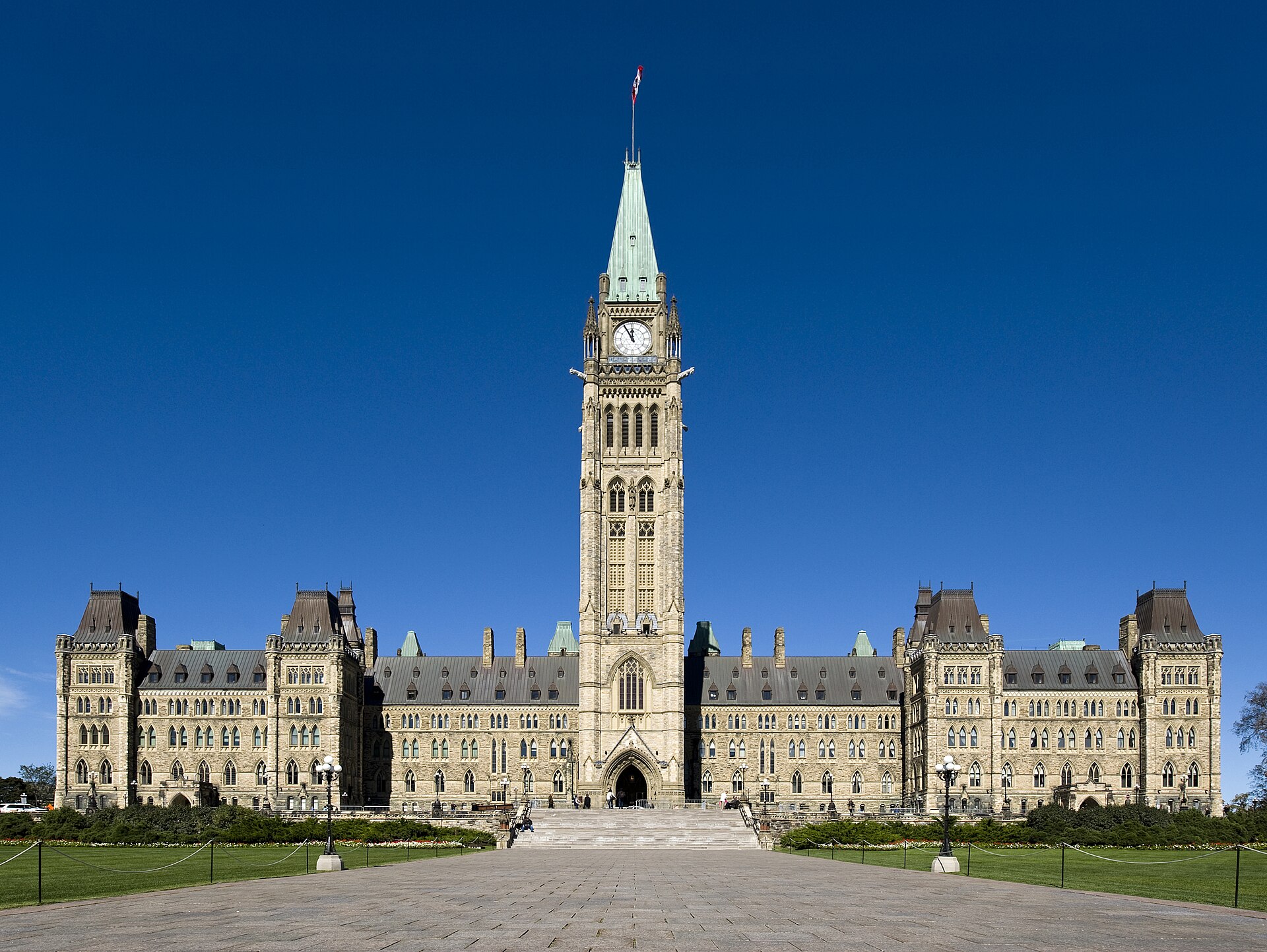
Ottawa greeted the projected Democratic sweep in the 2026 United States midterm elections with two messages at once. There was relief, even celebration, in some Canadian political quarters, and there was deliberate caution from the federal government itself. Ontario Premier Doug Ford described the result as a victory for Canada, while Canada-United States Trade Minister Dominic LeBlanc told reporters in Ottawa on November 4 that the outcome, however interesting, would not change his government’s focus or its work. That split captures Canada’s position the day after the vote: the politics in Washington have shifted, but the tariffs hurting Canadian exporters have not yet moved, the negotiations to remove them are still with the White House, and the new Congress will not take its seats until January 2027.
The official line from Ottawa is, in substance, that nothing about the negotiating table changes in the short term. LeBlanc said he planned to speak in the coming days with United States Commerce Secretary Howard Lutnick and Trade Representative Jamieson Greer, the officials on the American side of the trade file. He also made a point that matters for every expectation built on the midterm result: trade negotiations are held with the Trump administration, not with an incoming Congress. A future House and Senate can pass laws, hold hearings and put political pressure on an administration, but they do not sit across the table from Canadian negotiators, and they cannot by themselves sign a trade deal. For a government that walked away from talks in August, that distinction is not a technicality. It is the reason LeBlanc refused to treat the election result as a shortcut to relief.
The talks that LeBlanc is returning to had, by Ottawa’s own account, started to move again just before the election. Prime Minister Mark Carney said on November 1, after a conversation with President Donald Trump, that the two sides had agreed their teams would work in the coming weeks on the outlines of a mutually beneficial trade deal. Carney later told reporters that American negotiators were asking less and offering more than they had earlier, a sign, in his telling, that Washington’s position had softened as the vote approached. Trump, for his part, said the United States was very close to a deal with Canada. Neither side has published agreed text, and Carney himself said work remained to be done. Readers should therefore treat the November 1 exchange as a renewed commitment to negotiate, not as a completed agreement, and the earlier US-Canada trade concept reported by USN remains the right frame: a concept in progress, with its details still to be settled.
What Canada After the Midterms Can and Cannot Change on Tariffs
To understand why Ottawa is cautious, it helps to recall how the current tariff stack was built. Formal trade talks collapsed in August 2026, after Carney said Washington was seeking terms that would infringe on Canadian sovereignty. The Trump administration then imposed an additional 50 percent tariff on about 20 billion dollars’ worth of Canadian goods, ranging from dairy to cosmetics and furniture, and Canada retaliated with its own counter-tariffs. On top of that layer sit sectoral tariffs that matter enormously to Canadian industry, notably on autos, steel, aluminium and forestry products, and Trump had threatened a further escalation on autos from January 1, 2027. That January date is now one of the sharpest deadlines in the file: even if talks progress through November and December, Canadian negotiators know that a new tariff threat is already scheduled unless a deal intervenes.
The affordability argument that shaped the American vote is also the argument Canadian officials hope will shape the negotiation. United States voters cited the cost of living as a central concern heading into the midterms, and a survey by the Cato Institute in September, as reported in Canadian and international coverage, suggested that about three quarters of Americans believed tariffs had raised prices. Democrats campaigned against the tariff policy, and several Democratic voices have argued that the levies function as a tax on American consumers as well as a burden on Canadian exporters. That framing gives Ottawa a political argument in Washington that it did not have a year ago. It does not, however, give Ottawa a legal mechanism to lift tariffs unilaterally, and it does not guarantee that a Democratic Congress, once seated, will prioritise Canadian tariff relief over its own domestic agenda.
Canadian domestic politics is pulling in a related but different direction. Conservative Leader Pierre Poilievre said on November 4 that the midterm outcome clearly demonstrated that Americans hate tariffs, calling a tariff on Canada a tax on Americans, and he argued that Carney should use what he called Canada’s immense leverage and the goodwill of the American people to secure tariff-free trade. Ford’s celebratory reaction pointed the same way, from a premier’s perspective: a political opening should be used, quickly. The federal government’s answer to that pressure has been to welcome the opening without surrendering its negotiating discipline. LeBlanc insisted that Canada’s counter-tariffs were imposed to protect Canadian industries and to prevent an unfair playing field, not to create political pressure in American battleground states. That denial matters because it goes to the credibility of Ottawa’s position in Washington, where any suggestion that Canadian policy is designed to sway American elections would be seized on by critics of a deal.
That credibility question became sharper in the days around the vote. The United States embassy in Ottawa issued a fact sheet accusing Canadian politicians of trying to influence the midterm elections, pointing in particular to past comments by Industry Minister Melanie Joly about using retaliatory tariffs to exert political pressure, and to Ontario’s advertising campaign against Trump’s tariffs. Joly has rejected the suggestion that Canada would meddle in American elections, and LeBlanc repeated the denial in Ottawa. The episode is best read as a warning about how fragile the post-election mood remains: the same tariffs that are the subject of negotiation are also, in American political debate, evidence in an argument about foreign interference. Ottawa will want the next phase of talks to be judged on their economic terms, not entangled in that dispute, and that is one more reason its public language since the vote has been restrained.
Canada Budget Diversification and the USMCA Review Clock
The second half of Canada’s post-midterm strategy does not depend on Washington at all. Carney’s government was due to present its budget on November 5, described by the prime minister as a plan to make Canada master of its own destiny, with Finance Minister Francois-Philippe Champagne saying its goals include boosting trade within Canada and diversifying trading relationships. LeBlanc said explicitly that this diversification focus had not changed with the election result: it was the focus before the vote, it remained the focus on November 4, and it would be the focus in the budget. The message to Canadian businesses is therefore a double one. Pursue a better deal with the United States where one is available, but do not plan on a return to the pre-tariff normal, because Ottawa does not believe that normal is coming back.
That diversification drive already has visible landmarks. On October 30, Canada and the European Union launched a new security and economic partnership, the Alliance for the Future, deepening defence, trade and technology ties, and Canada pledged support for a large European loan for Ukraine. The Canada-EU alliance reported by USN is not a substitute for the American market, which still takes the large majority of Canadian exports, but it is a signal of intent: Ottawa is building alternative partnerships while it negotiates, rather than waiting for Washington to decide. September trade data underlined both the opportunity and the exposure. Canada posted a trade surplus of 5.35 billion Canadian dollars in September, its highest since May 2022, helped by gold and energy exports to the United States, yet exports in many tariff-hit categories fell, and the share of exports headed to the United States exceeded 70 percent for the first time in 13 months. Diversification, in other words, is a long project, not a single budget announcement.
The third clock running alongside the tariff talks and the budget is the future of the United States-Mexico-Canada Agreement itself. The agreement, which replaced NAFTA and took effect in 2020, has moved from an automatic long-term extension into a system of annual reviews, a change announced by Trade Representative Greer. Annual reviews mean that North American trade rules will be reassessed regularly rather than treated as settled, which gives each government recurring leverage and recurring uncertainty in equal measure. For Canada, the review cycle cuts both ways. It creates scheduled moments at which a Democratic Congress could weigh in on the terms of North American trade, but it also means that no deal struck in the coming weeks can be assumed to be permanent. Canadian exporters planning investment in autos, steel or forestry will be watching not only for tariff relief, but for how durable any relief proves to be when the next review arrives.
What, then, can the projected new Congress actually do for Canada? The most optimistic Canadian reading, voiced by senior Democratic Congressman Jamie Raskin to Canada’s public broadcaster CBC on November 4, is that Democrats are going to put an end to these tariffs and seek to repair ties with close friends such as Canada. That is a political commitment, not a legislative outcome, and it faces real constraints. Tariff authority in the United States rests substantially with the executive, Congress would need to pass legislation to curtail it, and any such bill would face a likely presidential veto that would require a two-thirds majority in both chambers to override. Democrats are also projected to take office with a full domestic agenda, from health care and affordability to oversight of the administration, and Canadian tariff relief will compete for floor time with those priorities. Hearings, resolutions and public pressure are plausible early in 2027. A veto-proof tariff-repeal law is a much higher bar, and Ottawa’s caution reflects that arithmetic.
There are also forces in the United States that could help Canada without any action from Congress at all. Tariffs featured as an election issue in northern border states such as Michigan and Maine, where Republican candidates spoke out against the president’s attacks on Canada, and business groups on both sides of the border have warned about higher input costs and disrupted supply chains. If the White House concludes, after its midterm defeat, that a Canada deal helps its own affordability argument, it may move for domestic political reasons rather than because Congress compels it to. That is the window former Canadian diplomat Colin Robertson identified: the period between the election and January, when the new lawmakers are sworn in, as an ideal moment for Ottawa to finalise a deal. It is a plausible window, but it is also narrow, and it closes if either side overplays its hand or if the interference dispute hardens attitudes in Washington.
For now, the honest summary of Canada’s post-midterm position is neither triumph nor disappointment. No tariff has been lifted because of the election, no deal has been signed, and no date has been set for one. What has changed is the political context in which negotiations happen: an American electorate that punished the party in power partly over prices, a Canadian government with a diversification budget and a European partnership to point to, and a scheduled auto-tariff deadline that concentrates minds on both sides. The next tests are concrete and near: whether LeBlanc’s planned calls with Lutnick and Greer produce a negotiating timetable, whether the November 5 budget gives diversification real funding rather than rhetoric, and whether the concept discussed on November 1 becomes published text before the January deadline. Until those tests are met, Canada’s message will likely stay exactly where LeBlanc put it on November 4: interested in the result, unchanged in its plan, and negotiating with the White House it has, not the Congress it hopes for.
Sources
USN reviewed reporting from multiple outlets for this story. Read more from The Economic Times, The Straits Times and The News.