

TAIPEI — A fresh round of Chinese military activity around Taiwan in October has put the island, its neighbours and Washington on alert again, even though it was not the kind of full encirclement drill seen in previous years. It combined live-fire notices along China’s coast, an aircraft carrier east of Taiwan, and patrols Taipei says are designed to wear down its defences.
There is no verified evidence that Beijing staged a new, named, island-wide blockade exercise in October 2026. What can be documented is a more layered pattern: coastal firing drills, a carrier deployment in the wider western Pacific, and continuing activity off Taiwan’s eastern coast that had already drawn a sharp American response earlier in the month.
What happened during the October drills
Chinese maritime authorities issued a series of no-sail warnings in early October covering five areas from the Bohai Sea in the north-east, through the Yellow Sea and the East China Sea, to the South China Sea. The notices, published from October 8 onwards, set out closure windows between October 12 and October 20 for military training and live-fire shooting. Taiwan’s defence minister, Wellington Koo, told reporters on October 12 that Taipei would closely monitor all of the activity, on the principle of preparing for the worst.
Crucially, none of the five coastal zones was drawn around Taiwan itself. The closest was off Wenzhou, in Zhejiang province, about 278 kilometres from Taiwan’s main island, according to an analysis of the official coordinates. Other zones were far further away, including one off Zhanjiang in the South China Sea, more than 1,000 kilometres from Taiwan’s southern tip. Taiwan’s Maritime and Port Bureau said shipping around the island had not been affected, and Koo’s initial assessment was that the drills were firing practice by coastal artillery and related units, rather than a rehearsal for an invasion or blockade.
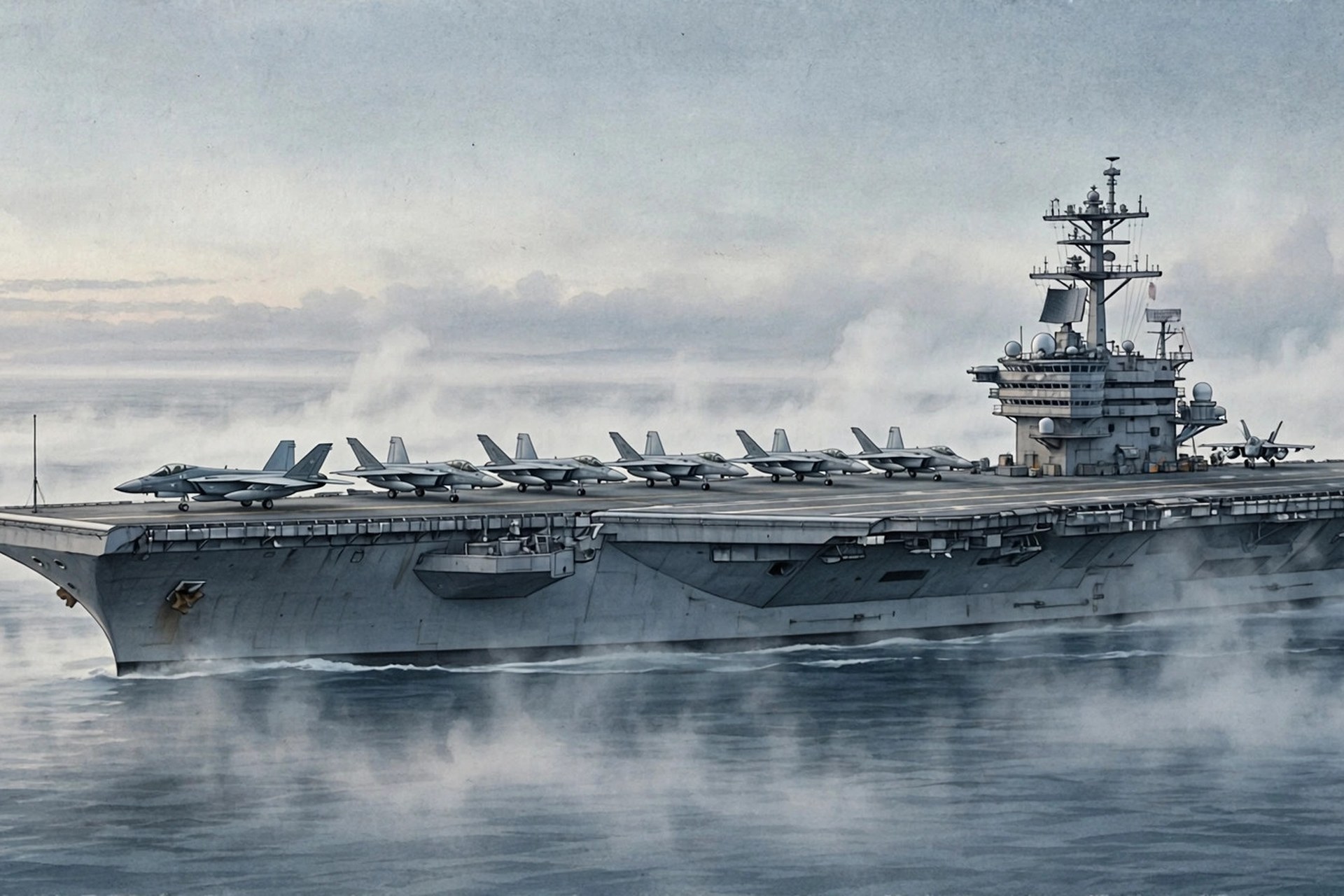
A separate, and strategically more significant, movement was under way at sea at the same time. Taiwan’s National Security Council Secretary-General, Wu Zhaoxie, said on October 29 that China’s first aircraft carrier, the Liaoning, had been conducting large-scale naval drills in waters east of the First Island Chain, the maritime line running through Japan’s Ryukyu Islands, Taiwan, the Philippines and towards the Malacca Strait. According to material shared by Wu, the deployment involved naval units from three of China’s five theatre commands — the Northern, Eastern and Southern theatres — as well as China Coast Guard vessels, maritime safety ships and other public vessels. The Liaoning group was positioned in the Philippine Sea, while other Chinese ships were reported to the north-west, south-west and east of Taiwan, and public vessels operated east of the island.
Independent analysis published in mid-October reached a similar, more cautious conclusion. The American Enterprise Institute and the Institute for the Study of War noted that the Liaoning had deployed in the western Pacific for what Beijing called routine drills on October 14 and 15, including launching aircraft in Taiwan’s eastern exclusive economic zone. The same analysis stressed that Beijing had not, at that point, organised a major exercise around Taiwan itself, as it had in previous years, and suggested China might be moving away from predictable, speech-linked exercises towards snap drills that demonstrate an ability to assemble forces quickly.
Taipei’s response: monitor, deter, and spend more
President Lai Ching-te used his National Day address on October 10 to set out Taiwan’s position in terms that were firm but deliberately avoided any declaration of independence. Taiwan cherishes peace but will not give up its freedom, he said, and there must be respect for the right of Taiwan’s people to exist. He has repeatedly argued that a stronger defence is intended to deter war rather than to start one, a message he repeated when Taiwan announced increased defence spending.
Koo echoed that approach after the firing notices appeared. He criticised the People’s Liberation Army’s constant exercises, saying they created unease across the Indo-Pacific region and deserved close attention and condemnation. At the same time, his ministry’s public assessment was measured: it described the coastal activity as artillery firing practice, said it had a full grasp of the situation, and reported no disruption to shipping. That dual tone — public warning combined with a calm operational assessment — has become typical of Taipei’s handling of Chinese exercises, which it must neither ignore nor overstate.
By late October, however, Taipei’s language hardened around the carrier deployment and the wider pattern east of the island. Wu said Taiwan was maintaining a high state of alert and argued that the exercises threatened Taiwan, Japan and the Philippines simultaneously. Taiwanese officials have also said they believe China is practising for a possible maritime blockade using overlapping military, paramilitary and civilian assets, including coast guard cutters and militia-linked vessels. That claim, which Beijing rejects, reflects a central fear in Taipei: that a future crisis might begin not with a formal declaration or a single massive exercise, but with a creeping, deniable presence that gradually makes a blockade look like routine law enforcement.
Beijing, for its part, has consistently rejected that interpretation. China’s Taiwan Affairs Office accused Lai of stoking confrontation across the Taiwan Strait after his National Day speech. On October 11, China’s Ministry of National Defense said Lai was exaggerating threats and seeking independence by force. Its spokesperson said the People’s Liberation Army routinely trains around Taiwan to deter independence moves and foreign interference, calling the activity perfectly justified and beyond reproach. Beijing did not directly tie the five coastal firing zones to Lai’s speech, but it has long treated speeches and foreign engagements by senior Taiwanese officials as pretexts for coercion, regardless of their content, according to independent analysts.
Washington’s response and the wider regional reaction
The United States, Taiwan’s most important international backer, had already taken a public position on Chinese activity east of Taiwan before the October firing notices appeared. On October 9 and 10, after Reuters reported the first known sighting of a Chinese militia boat off Taiwan’s eastern coast in August, a State Department spokesperson described China’s maritime actions there as deeply destabilising. The spokesperson said that by asserting authority around maritime areas Taiwan had peacefully administered for more than 70 years, China only exacerbated tensions and undermined the peaceful resolution of the issues it claimed to seek. Washington urged Beijing to cease its pressure and instead engage in meaningful dialogue with Taiwan’s democratically elected authorities.
That statement was about the broader pattern of coast guard patrols and militia activity since June, rather than a specific response to the October 12 to 20 firing drills, and it should not be read as a direct American reaction to those notices alone. It does, however, capture the current American line: concern about the east coast, where Taiwan’s Pacific-facing waters were once seen as a relative safe haven, combined with a continued refusal to accept any unilateral change to the status quo by force.
Regional concern has not been limited to Washington. In June, Britain, France, Germany and the United States jointly expressed concern about Chinese activities off Taiwan’s east coast as a threat to regional stability and freedom of navigation. Japan, whose Yonaguni Island lies close to Taiwan, is also directly affected. According to the mid-October analysis, the United States Marine Corps and Japan’s Self-Defense Force were due to deploy anti-ship missiles to Yonaguni during the Keen Sword combined exercise, a move analysts said Beijing would read as an effort to contain its surface fleet and deny it control of critical maritime chokepoints around Taiwan. The Philippines, which sits on the southern end of the First Island Chain, faces a similar calculation: Chinese naval and coast guard activity east of Taiwan also passes through waters relevant to its own security.
Why China military drills near Taiwan matter for escalation risk
Analysts are divided on how close the current pattern brings the region to a genuine crisis, but they agree on why the October activity deserves attention. First, geography matters. A carrier operating east of Taiwan, in the Philippine Sea, challenges the assumption that Taiwan could be resupplied or reinforced from the east in a crisis. Second, composition matters. When naval, coast guard, maritime safety and militia-linked vessels operate together, it becomes harder for Taipei, Tokyo or Washington to tell where a military exercise ends and a law-enforcement operation begins — and therefore harder to decide how to respond without escalating.
Third, tempo matters. Taiwan’s defence ministry has calculated, according to Taiwanese media reporting, that China is pouring about 110 billion yuan, roughly $15.5 billion, into Pacific training, about 7 per cent of its total defence budget, in an attempt to gain control over waters inside the First Island Chain, including the Taiwan Strait. Whether that figure is exact or not, the direction of travel is clear: more frequent, more dispersed and more sustained activity, rather than a single annual set-piece. That makes miscalculation more likely, because each side must interpret ambiguous movements in real time, often with incomplete information.
For now, October leaves a higher baseline of alert: Taiwan will keep monitoring every notice, Beijing says training will continue, and Washington says pressure must stop and dialogue must start.
Sources
USN reviewed reporting from multiple outlets for this story. Read more from Free Malaysia Today, American Enterprise Institute and ThePrint.